Spices & Dried Aromatics
Kashmiri Chili
Also: Kashmiri mirch, Kashmiri lal mirch, Kashmir chilli, Kashmiri red chili powder
India's coloring spice — brilliant scarlet heat so mild the flavor, not the fire, is the point.
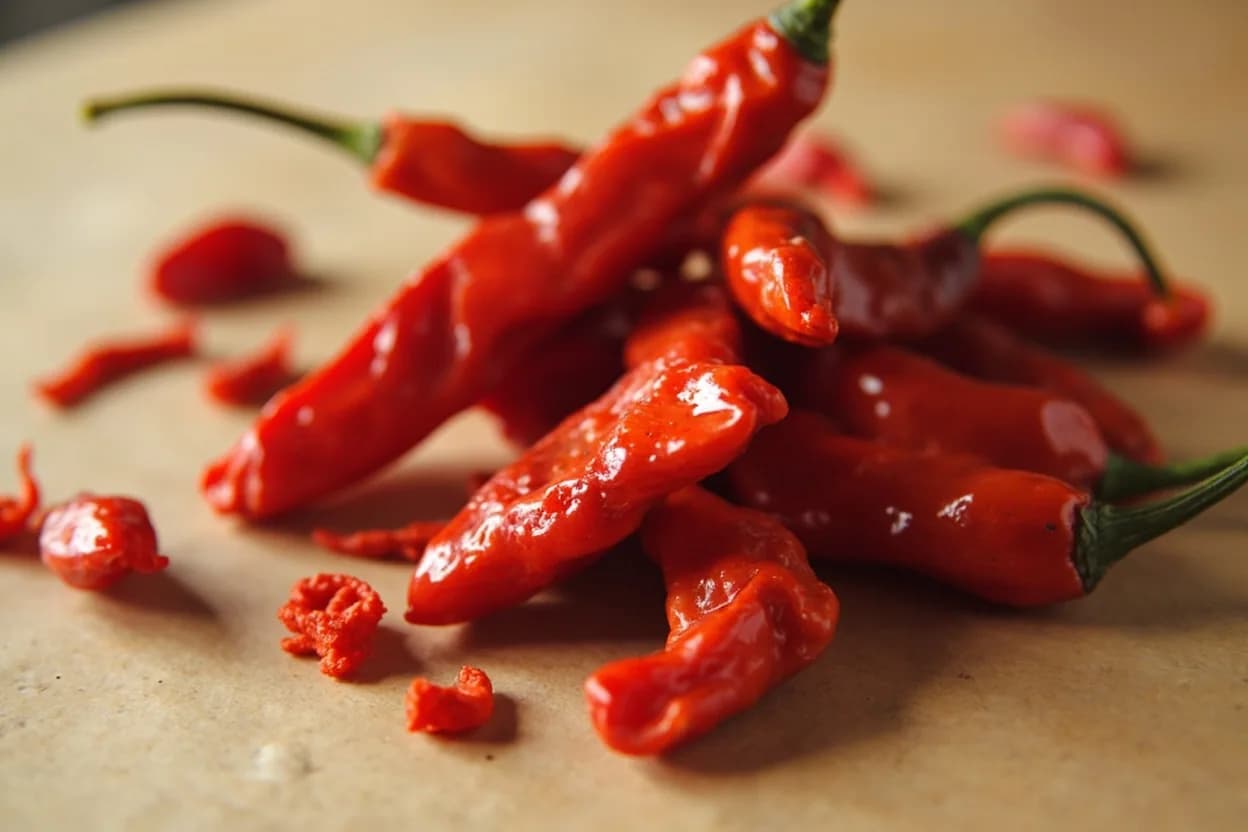
Kashmiri chili (Capsicum annuum) is a variety grown primarily in Jammu & Kashmir and parts of Himachal Pradesh, prized above all for its extraordinary crimson pigmentation and relatively mild heat (typically 1,000–2,000 Scoville units). When dried and powdered, it produces the signature vivid red color of tandoori chicken, rogan josh, and korma without the punishing heat of hotter Indian chilies. The flavor is gently fruity and slightly sweet, with a faint earthiness — it is used more as a colorant and mild flavor booster than as a heat source, with additional green chilies or cayenne added separately when fire is desired.
In photos
Flavour profile
Classic pairings
- YogurtNorth Indian
The standard marinade base for tandoori preparations — yogurt tenderizes protein while Kashmiri chili stains it a spectacular brick-red that deepens under tandoor heat.
- LambKashmiri
Rogan josh's defining color and gentle heat comes from Kashmiri mirch; the lamb's richness absorbs the fruity spice through slow braising.
- GheeNorth Indian
Bloomed in ghee at the start of a tarka, Kashmiri chili creates a brilliant red cooking fat that colors every ingredient it touches — foundation of many North Indian gravies.
- Garlic and ginger pasteNorth Indian
The aromatic base of virtually all North Indian cooking; Kashmiri chili melds seamlessly with the pungency of the ginger-garlic to build a complex, colored base.
- CreamMughlai
In butter chicken and korma, Kashmiri chili's color blooms into the cream sauce, producing the famous orange-red hue without adding heat.
- ChickenNorth Indian
Tandoori chicken's iconic color is almost entirely Kashmiri chili powder — it works equally as a dry rub for grilling.
Adventurous pairings
Stirred into strained yogurt with olive oil, Kashmiri chili creates a Middle Eastern-adjacent dip that borrows from both culinary traditions.
A Kerala-inspired pairing where the chili's fruity mild heat works with coconut's sweetness to produce a gently red, fragrant curry base.
- Halibut or cod
White fish rubbed with Kashmiri chili, lemon, and oil before pan-searing picks up gorgeous color and a light fruity warmth without obscuring the fish's delicacy.
- Honey
A glaze of honey, Kashmiri chili, and ginger on roasted carrots or chicken wings produces a jewel-bright, mildly spiced caramelized finish.
- Feta cheese
Kashmiri chili oil drizzled over baked feta bridges Indian spicing and Mediterranean cuisine through shared fruity, savory warmth.
Tread carefully
- Applications requiring intense heatavoid
Kashmiri chili is too mild to function as the primary heat source — supplement with cayenne, bird's eye, or dried red chilies when fire is needed.
- Overheating in dry panavoid
Like all ground chilies, Kashmiri mirch scorches fast in a dry pan; always add it to oil or liquid, or after aromatics have released moisture.
- Delicate white sauces expecting no coloravoid
The vivid pigmentation is non-negotiable — avoid it in béchamel or pale cream sauces where color is unwanted.
How to use it
- Bloom in ghee or neutral oil before adding aromatics to maximize color extraction and flavor development
- Mix into yogurt marinades for tandoori and tikka preparations — allow at least 4 hours for color and mild heat to penetrate
- Use as a finishing dust on creamy dips and raitas for visual contrast
- Combine with hot water to make a paste before adding to curries, ensuring even distribution without dry pockets
- Layer with garam masala and coriander in a dry rub for grilled lamb or chicken seekh kebabs
- Steep in warm oil to create a vibrant chili oil for drizzling
Appears in
Related flavours
Functional analogue in European cooking — both are mild, colored dried peppers used for pigmentation and fruity flavor rather than heat.
Korean red pepper flakes with comparable mild fruitiness and vivid red color, used similarly for visual impact in kimchi and banchan.
Ancho shares the mild, fruity dried-pepper character but brings a deeper chocolate-raisin note in place of Kashmiri chili's cleaner fruitiness.
References
- 1.An Invitation to Indian Cooking — Madhur Jaffrey
- 2.Indian-ish — Priya Krishna
- 3.Spices, Salt and Aromatics in the English Kitchen — Elizabeth David
- 4.The Flavor Bible — Karen Page & Andrew Dornenburg
Confidence: high
Notes
Authenticity note
Much of what is sold as 'Kashmiri chili powder' outside of India is a blend of regular red chili with annatto or other colorants. True Kashmiri mirch from Kashmir has a recognizably fruity, slightly sweet aroma; if your powder smells only of raw heat with no fruitiness, it is likely a substitute blend.
Color vs. heat
In authentic Kashmiri and Mughlai cooking, color and heat are managed separately — Kashmiri chili provides the former, while whole dried red chilies or green chilies provide the latter. This two-spice approach allows precise control that a single hot paprika cannot achieve.