Spices & Dried Aromatics
Kalonji (Nigella Seed)
Also: nigella seed, black seed, black cumin, charnushka, ketzah, habba sawda, onion seed
Tear-drop seeds with a bitter, onion-oregano note that transforms flatbreads, pastries, and pickles across three continents.
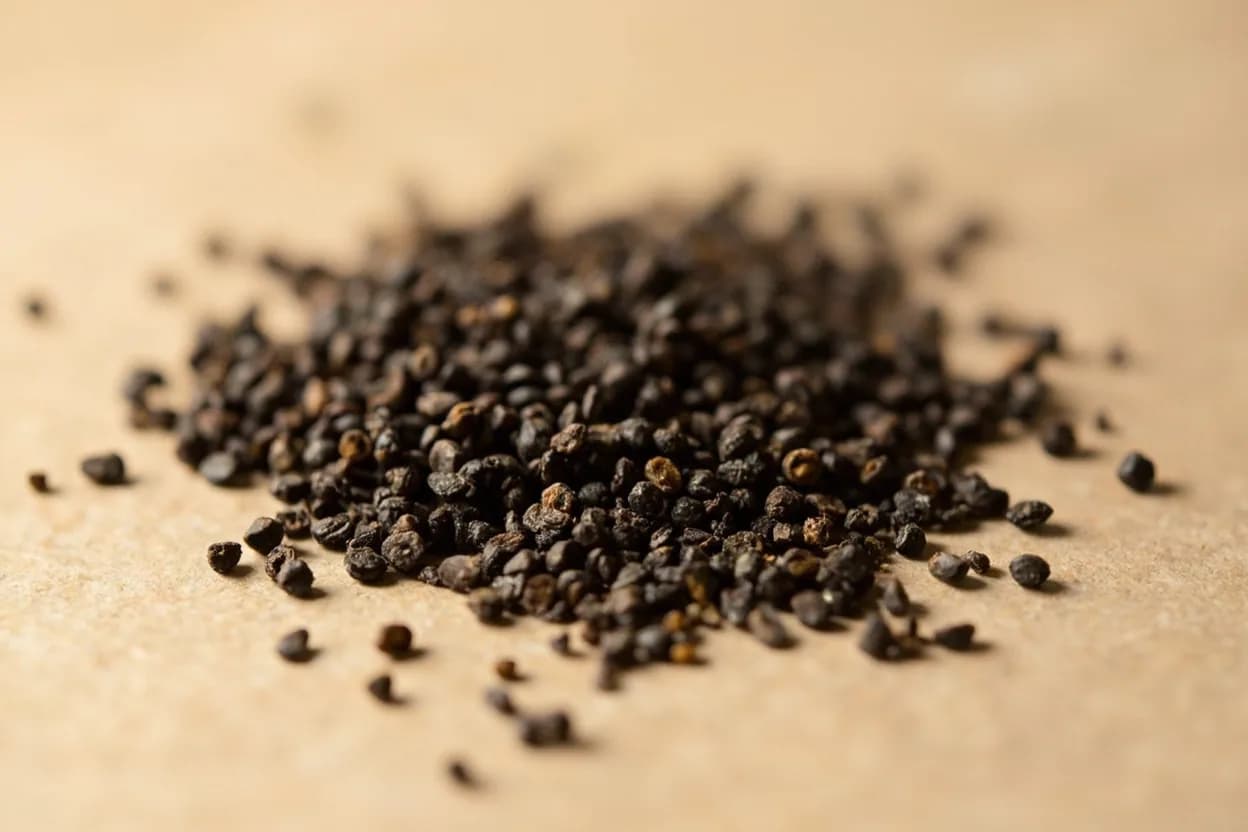
Kalonji (Nigella sativa) produces tiny matte-black teardrop seeds with a flavor that sits at the intersection of onion, black pepper, oregano, and a trace of bitterness. They are botanically unrelated to black cumin or cumin, despite common mislabeling. The seeds contain thymoquinone as their primary aromatic compound, which delivers that characteristic slightly resinous, almost smoky sharpness. Used raw they are moderately pungent; toasted briefly they mellow into a nutty, almost poppy-seed warmth. They are a member of the Bengali panch phoron blend and appear in Turkish çörek otu bread, Egyptian aish baladi flatbread, and Yemeni lahoh.
In photos
Flavour profile
Classic pairings
- Naan and flatbreadsSouth Asian / Middle Eastern
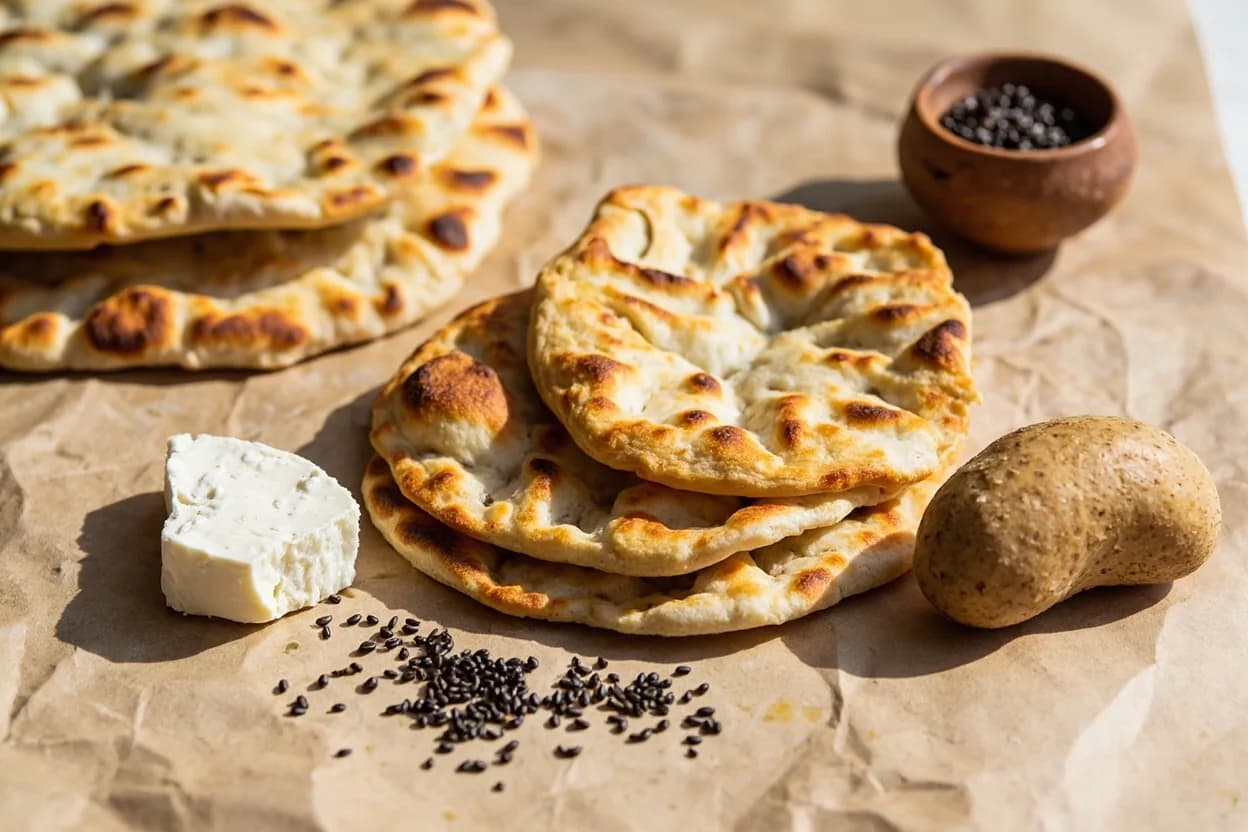
Scattered on the surface before baking, kalonji seeds add textural crunch and a savory, onion-adjacent depth that balances the yeasty bread beneath.
- Feta cheeseTurkish / Greek
In Turkish and Greek traditions, kalonji sprinkled over creamy feta cuts the salt-fat richness with bitter, resinous punctuation; the contrast is cleaner than black pepper.
- PotatoBengali
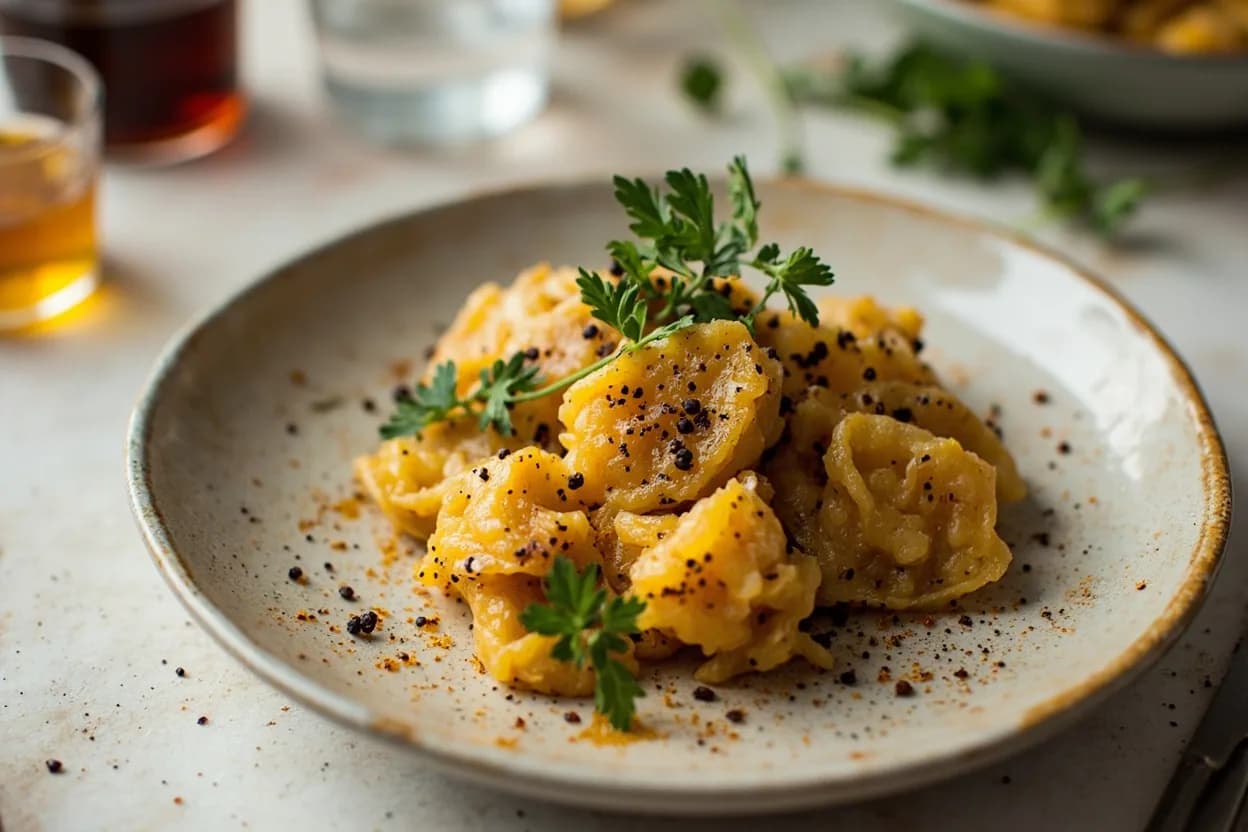
In Bengali aloo bhaja and panch phoron-spiced vegetable dishes, nigella seeds bloom in mustard oil and coat potatoes with an aromatic, slightly bitter crust.
- Yogurt-based dips and raitaTurkish / Indian
The coolness of yogurt softens kalonji's bitterness and amplifies its onion note; Turkish haydari and Indian raita both benefit from a scattering of seeds.
- Pickled vegetablesIndian / Middle Eastern
Kalonji is a standard pickling spice across South Asia and the Middle East; its bitterness and antimicrobial properties both preserve and flavor cucumbers, carrots, and cauliflower.
- Lentil and split-pea dishesBengali
As part of panch phoron, kalonji enters Bengali dhal at the tadka stage, contributing bitter onion complexity that distinguishes the cuisine's legume preparations from those of other Indian regions.
- Egg dishesTurkish / South Asian
Eggs fried in ghee with kalonji is a classic Turkish and South Asian breakfast treatment; the seeds cluster in the whites and deliver bursts of savory, onion-herb flavor against the mild yolk.
Adventurous pairings
- Honey
Kalonji in honey — a combination with deep Prophetic medicine roots across the Islamic world — produces a bittersweet condiment where the resinous thymoquinone meets floral sweetness; stunning drizzled over labneh or ricotta.
- Dark rye sourdough
Northern and Eastern European rye breads (pumpernickel, borodinsky) already contain caraway; substituting or augmenting with kalonji adds a more peppery, onion-forward dimension that complements the sour crumb.
A crack of kalonji in a 70% chocolate truffle adds a savory, slightly bitter contrast that reads as complexity rather than confusion — the onion note disappears, leaving herbal warmth.
The funky, ammoniac edge of Roquefort or Gorgonzola finds a counterpart in kalonji's resinous bitterness; together on a cracker they create an unexpected but harmonious bitter-savory-salty platform.
- Caramelized onion tart
Cooking kalonji into the caramelized onion base intensifies the onion-on-onion effect, creating a concentrated, almost umami-rich sweetness; works in both tart Tatin and Turkish börek formats.
Tread carefully
- Delicate white fish (sole, flounder)avoid
The resinous bitterness of kalonji overwhelms the subtle sweetness of delicate white fish; use only with robust-fleshed varieties that can hold their own against the seeds' intensity.
- Vanilla-based dessertsavoid
Kalonji's onion and pepper notes clash irreconcilably with vanilla's sweet floral warmth in custards, ice creams, or pastry creams.
- Mild butter sauces (beurre blanc)avoid
The bitterness and resin of kalonji will destabilize the delicate emulsion and overpower the clean acidity that makes butter sauces work.
How to use it
- Bloom whole in hot ghee or mustard oil for 45–60 seconds until seeds begin to pop — the first step in Bengali cooking
- Toast dry in a skillet over medium-low heat for 2–3 minutes to mellow bitterness and develop nutty depth before using as a garnish
- Scatter raw over flatbreads just before baking so oven heat does all the toasting while the seeds adhere to the surface
- Grind lightly to a coarse powder and blend into spice crusts for lamb or beef
- Use whole in brine solutions for quick pickles — seeds will infuse the liquid over 24–48 hours
Appears in
Related flavours
- Cumin seed
Shares earthy warmth and is one of the five seeds in Bengali panch phoron alongside kalonji
- Fenugreek seed
Both carry bitterness; paired in panch phoron where kalonji's onion note and fenugreek's maple-like bitterness complement each other
- Mustard seed
Mustard oil is the classic fat for blooming kalonji in Bengali cooking; the two share pungency and heat
- Sesame seed
Toasted sesame and kalonji appear together on Turkish breads and pastries; sesame's sweetness balances kalonji's bitter edge
References
- 1.The Flavour Thesaurus — Niki Segnit
- 2.Ottolenghi Simple — Yotam Ottolenghi
- 3.Madhur Jaffrey's Indian Cooking — Madhur Jaffrey
- 4.The Art of Turkish Cooking — Neset Eren
- 5.Encyclopedia of Spices — Tony Hill
Confidence: high
Notes
The naming tangle
Kalonji is among the most mislabeled spices in global commerce. It is sold as 'black cumin', 'black onion seed', 'onion seed', and even 'black sesame' in various markets — none of these is accurate. True black cumin (Bunium persicum or Nigella carvi) is a different plant with a different profile. The mislabeling matters because recipes that call for 'black cumin' may mean kalonji, Bunium persicum, or even dark-colored caraway seeds, all of which produce different results.
Sacred and medicinal heritage
Nigella sativa seeds have been found in Tutankhamun's tomb and are referenced in the Hebrew Bible as 'ketzah.' In Islamic tradition, they are cited in the Hadith as a remedy for every disease except death, leading to widespread use in Unani and traditional Arabic medicine. Thymoquinone, the principal active compound, has attracted significant pharmacological research interest for its antioxidant and anti-inflammatory properties.