Spices & Dried Aromatics
Juniper Berry
Also: common juniper, Juniperus communis
Resinous, piney, and tartly citric — the wild-forest spice that defines gin and elevates game.
Juniper berries are the seed cones of Juniperus communis, harvested when dark blue-purple and dried to concentrate their oils. They are not true berries but fleshy cones. Their flavour is boldly resinous and piney from alpha-pinene, undercut by bright, almost floral citrus notes from limonene, with a dry, slightly bitter tartness. Used whole (cracked) or ground, they cut richness in fatty meats and lift fermented foods.
In photos
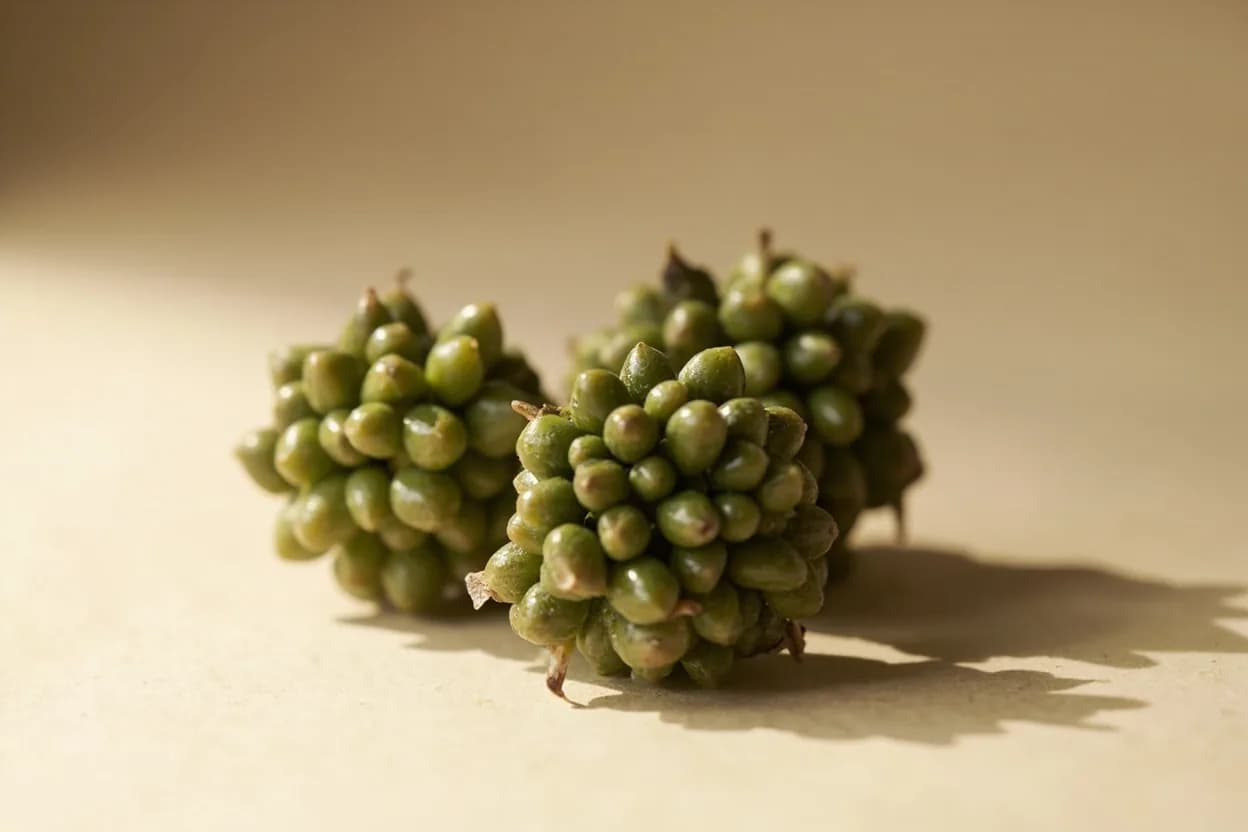
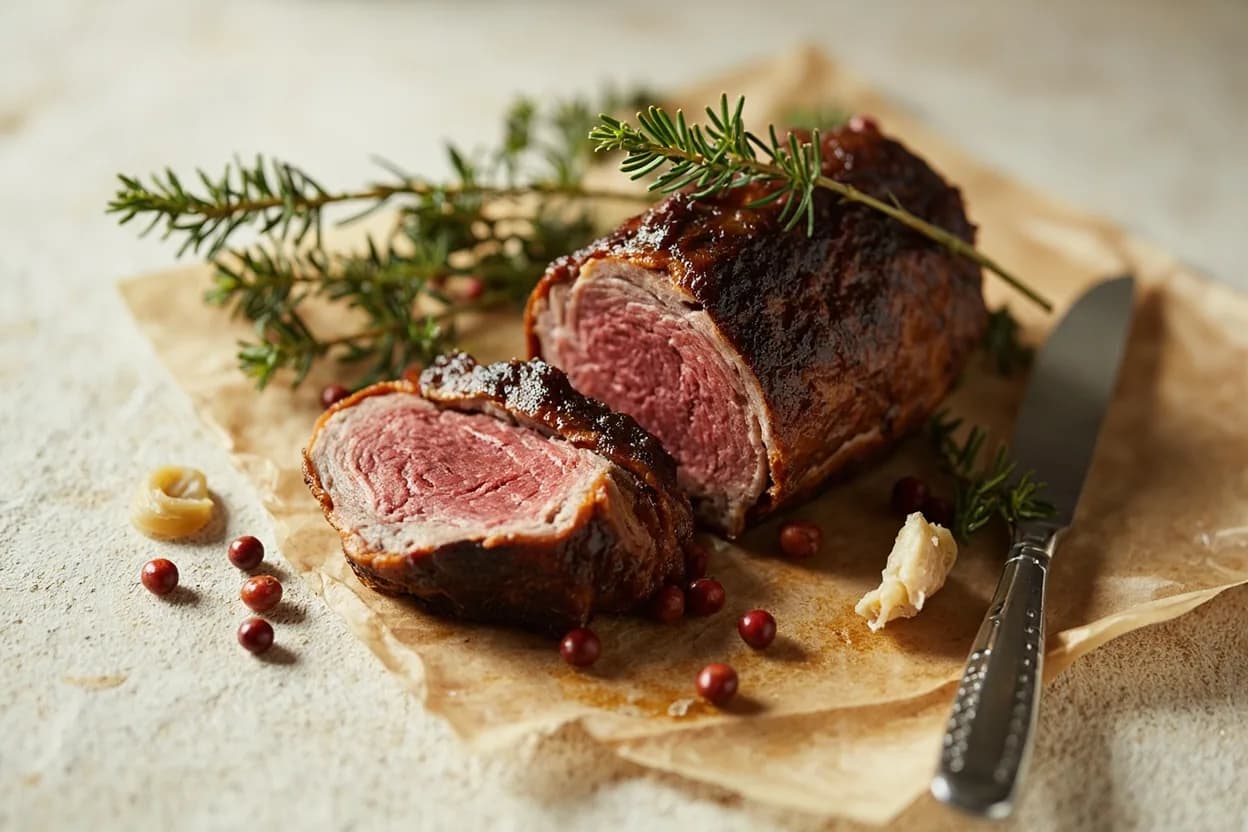
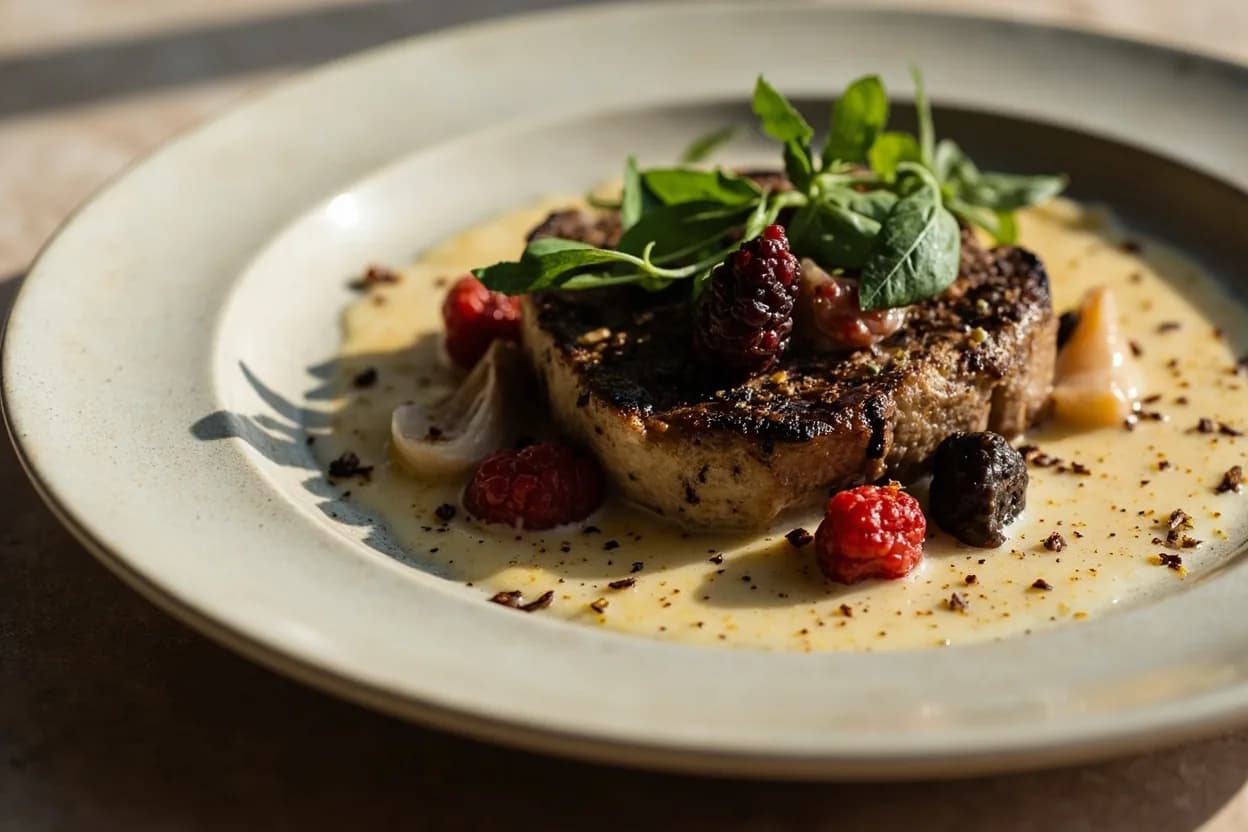
Flavour profile
Classic pairings
- VenisonScandinavian / German
Juniper's tartness cuts the iron-rich gaminess of venison; a traditional Scandinavian and German pairing in braises and marinades.
- Wild boarCentral European
The resinous oils penetrate dense boar flesh during slow braises, balancing fat and funk equally.
- SauerkrautAlsatian / German
Classic Alsatian choucroute garnie adds juniper to fermenting cabbage; the piney bitterness tempers lactic acidity.
- Pork bellyFrench / Northern European
Juniper cuts pork's richness and brightens cured preparations — essential in charcuterie brines and rubs.
- GinBritish / Dutch
The legally required botanical in gin production; juniper is the backbone around which other botanicals are built.
- DuckFrench
The berry's citrus-resin lift balances duck fat; common in confit brines and pan sauces with red wine.
- Black pepperNorthern European
Pepper's heat and juniper's resin form the aromatic foundation of Northern European spice blends for cured meats.
- Bay leaf
Bay's herbal eucalyptol harmonises with juniper's pinene — a pairing found in virtually every European game marinade.
Adventurous pairings
Juniper's citrus-resin volatiles lift bitter cacao, creating an unexpected forest-and-chocolate harmony in truffles or ganache.
- Beet
Earthy geosmin sweetness in roasted beet is amplified and made complex by juniper's pine bitterness — a modern Nordic pairing.
- Smoked salmon
Juniper-cured gravlax (instead of dill-only) adds a gin-like resinous note that cuts the fat beautifully.
- Blueberry
Botanical cousins — both members of the same forest ecosystem. Juniper intensifies blueberry's woodsy depth in sauces and reductions.
- Aged goat cheese
The piney tartness of juniper mirrors the chalky, capric-acid tang of aged chèvre, creating layered bitterness.
Tread carefully
- Delicate white fish (sole, flounder)avoid
Juniper's aggressive resin overwhelms mild, sweet fish flesh — reserve for oily or cured fish only.
- Lamb (excessive quantity)avoid
Small amounts work, but juniper in quantity clashes with lanolin-heavy lamb fat, producing a medicinal, turpentine note.
- Dairy cream saucesavoid
Juniper's tartness causes dairy to taste slightly sour and unbalanced; use with wine-reduced or stock-based sauces instead.
How to use it
- Crack berries with the flat of a knife or mortar before adding — uncracked berries release little flavour
- Dry-toast lightly in a hot pan for 30 seconds to volatilise pinene oils before adding to braises
- Use in brine for game birds: 1 tbsp cracked berries per litre of brine alongside salt, sugar, and bay
- Grind with black pepper and salt for a dry rub on venison or boar
- Infuse in warm gin or brandy to amplify botanical notes in cocktail syrups
- Add whole to sauerkraut during fermentation — 5–6 berries per kilo of cabbage
Appears in
Related flavours
Fellow Northern European spice with earthy, anise undertones — often paired alongside juniper in charcuterie and sauerkraut.
- Black Pepper
Classic co-spice in game marinades; piperine heat complements juniper's resinous tartness.
- Thyme
Thymol's herbal warmth harmonises with juniper's pinene without competing — a standard game herb pairing.
References
- 1.On Food and Cooking — Harold McGee (Scribner, 2004)
- 2.Charcuterie: The Craft of Salting, Smoking and Curing — Michael Ruhlman & Brian Polcyn (Norton, 2005)
- 3.The Flavor Bible — Karen Page & Andrew Dornenburg (Little, Brown, 2008)
- 4.Larousse Gastronomique (Clarkson Potter, 2009)
Confidence: high
Notes
On quantity
Juniper is potent: 4–6 cracked berries is sufficient for a 2 kg braise. Exceeding this tips the dish from piney-aromatic to medicinal. It is a spice to whisper, not shout.
Gin connection
The word 'gin' derives from the Dutch 'jenever,' itself from the Latin 'juniperus.' Every style of gin — London Dry, Old Tom, genever — is legally required to express juniper as its dominant botanical flavour. Understanding gin is, in part, understanding juniper's range.