Spices & Dried Aromatics
Caraway Seed
Also: Carum carvi, meridian fennel, Persian cumin
Earthy, anise-warm, and slightly peppery — the defining spice of Northern and Eastern European cooking.
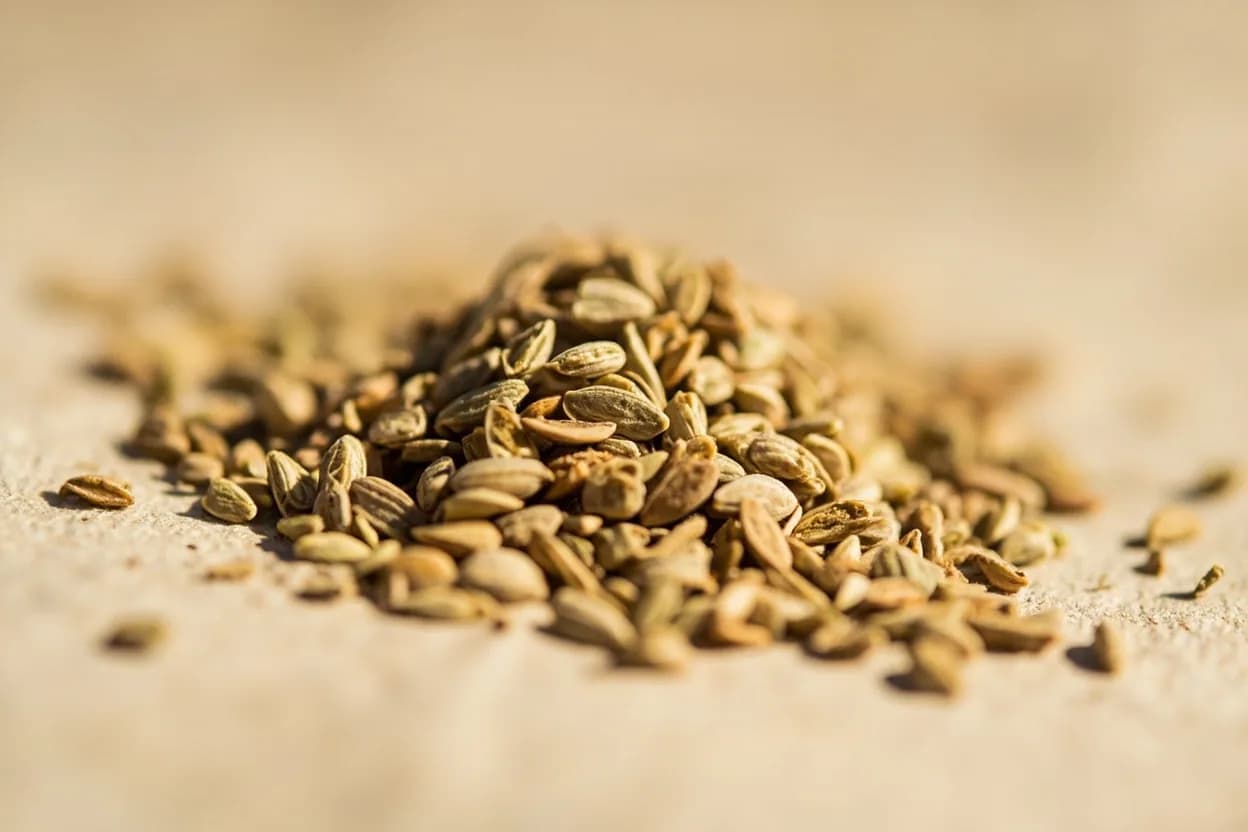
Caraway is the dried fruit (commonly called seed) of Carum carvi, a biennial herb native to Europe and western Asia. Its dominant compound, carvone, delivers a warm, anise-like character distinct from true anise: earthier, less sweet, with a faintly bitter, peppery finish. Limonene adds citrus brightness. Caraway is fundamental to rye bread, sauerkraut, Hungarian goulash, and German sausages — any cuisine shaped by cold climates and preserved foods.
In photos
Flavour profile
Classic pairings
- Rye breadGerman / Scandinavian / Jewish deli
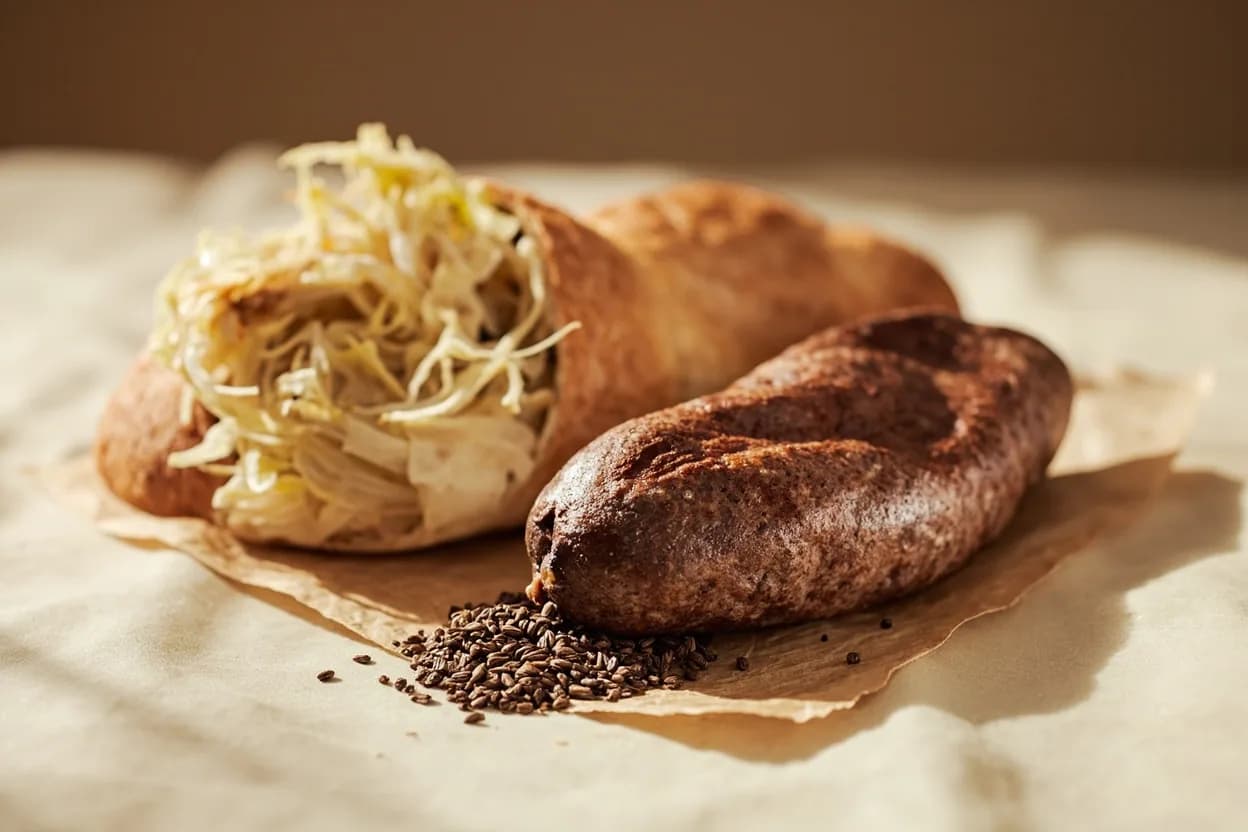
Caraway is inseparable from rye's malty sourness — the earthy-citrus seed counterbalances lactic tang and enriches the crust.
- SauerkrautGerman / Eastern European
Seeds added during fermentation or cooking mellow lactic sharpness and add aromatic depth to the cabbage.
- Pork sausageCentral European
Caraway's earthy warmth balances pork fat and salt; a fixture in German Bratwurst, Polish kielbasa, and Austrian Debreziner.
- Beef (goulash)Hungarian
Caraway alongside paprika is the aromatic core of Hungarian gulyás — the two spices together give the stew its characteristic warm depth.
- CabbageGerman / Austrian
Braised cabbage with caraway is a Central European staple; the seed's anise note sweetens and lifts sulphurous brassica compounds.
- Gouda / Leyden cheeseDutch
Komijnekaas (cumin cheese) is actually caraway-studded — the seed cuts the buttery fat of aged Dutch cheese.
- DuckCzech / Austrian
Caraway appears in Czech svíčková and roast duck preparations; earthy-anise brightens fatty dark meat.
- Onion
Slow-cooked onions and caraway are the flavour base for Hungarian goulash and countless Central European stews.
Adventurous pairings
- Apple
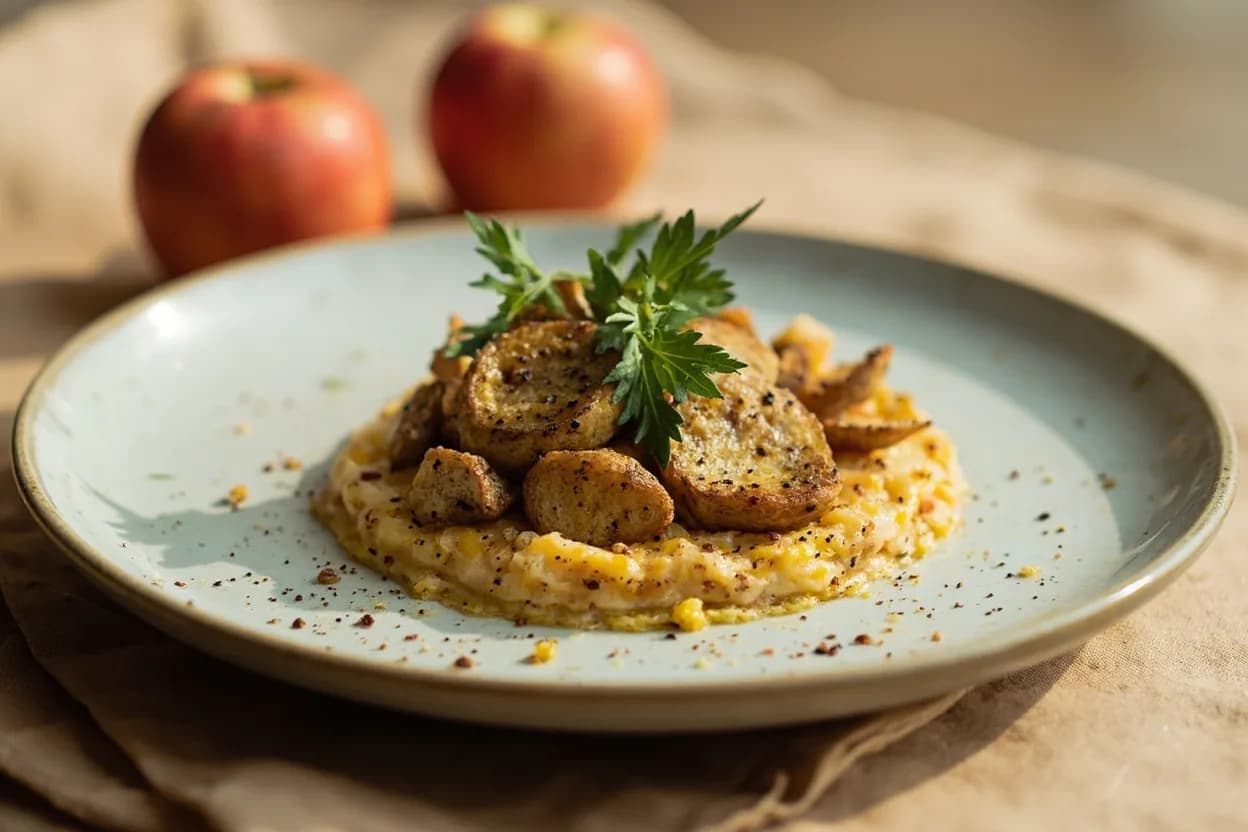
Caraway's anise-earthiness complements apple's fruity acidity — an Eastern European tradition in pickled apples and apple cake.
- Roasted beet
Beet's geosmin earthiness and caraway's carvone are both 'soil-sweet'; together they create a deeply grounded, umami-adjacent flavour.
Assertive, fatty blue cheese needs the aromatic bitterness of caraway to keep it from becoming cloying — works in crackers or baked dishes.
- Orange zest
Caraway's limonene and orange's terpenes are kindred — used together in Scandinavian aquavit and certain Northern European pastries.
- Dark beer (stout / dunkel)
Roasted malt bitterness and caraway's earthy warmth echo each other; a natural pairing in bread-and-beer braises.
Tread carefully
- Delicate seafood (scallops, sole)avoid
Caraway's assertive earthiness overwhelms mild, sweet seafood — better suited to cured fish (gravlax) if at all.
- Tropical fruitsavoid
Mango, pineapple, and similar fruits clash tonally with caraway's cold-climate earthiness — no logical bridge between the flavour profiles.
- Vanilla-heavy dessertsavoid
Caraway's savoury-anise bitterness fights sweet vanilla custards and buttercreams; it belongs in spiced bread, not delicate pastry.
How to use it
- Toast dry in a skillet over medium heat for 60–90 seconds until fragrant, then use whole or lightly crush
- Bloom in butter or lard at the start of a braise to open carvone oils before adding onions or meat
- Add whole seeds to bread dough during mixing — they soften and become chewable during baking
- Grind with salt and black pepper for a dry rub on pork shoulder or duck
- Infuse in warm apple cider vinegar to make a quick spiced pickling brine for cabbage
- Muddle lightly and add to cocktails using aquavit or rye whiskey for a savoury, botanical note
Appears in
Related flavours
Sweeter, more anise-forward cousin — shares carvone chemistry but tilts toward Mediterranean warmth rather than Northern earthiness.
Common co-spice in sauerkraut and Northern European charcuterie — resinous juniper and earthy caraway balance one another.
- Paprika
The canonical Hungarian pairing: sweet or hot paprika provides colour and fruity heat while caraway supplies aromatic earthiness.
References
- 1.On Food and Cooking — Harold McGee (Scribner, 2004)
- 2.The Flavor Bible — Karen Page & Andrew Dornenburg (Little, Brown, 2008)
- 3.Spices, Salt and Aromatics in the English Kitchen — Elizabeth David (Penguin, 1970)
- 4.The Oxford Companion to Food — Alan Davidson (Oxford University Press, 3rd ed., 2014)
Confidence: high
Notes
Caraway vs. cumin
The two are frequently confused outside their home cuisines. Cumin (Cuminum cyminum) is hotter, more bitter, and overtly pungent — the spice of the Middle East, South Asia, and Mexico. Caraway is subtler, more anise-citrus, and thoroughly Northern European. They are different plants and should never be substituted for each other.
Aquavit
Scandinavian aquavit legally requires caraway or dill as its defining botanical. This makes caraway the spice not only of rye bread and sauerkraut but also of the Nordic spirits tradition — underlining its deep cultural resonance throughout the cold-climate cooking world.