Cured Meats & Umami Proteins
Jamón Ibérico
Also: pata negra, jamón ibérico de bellota, ibérico ham, jamon iberico
Spain's supreme cured ham — acorn-fed, intricately marbled, and built to be eaten as close to naked as possible.
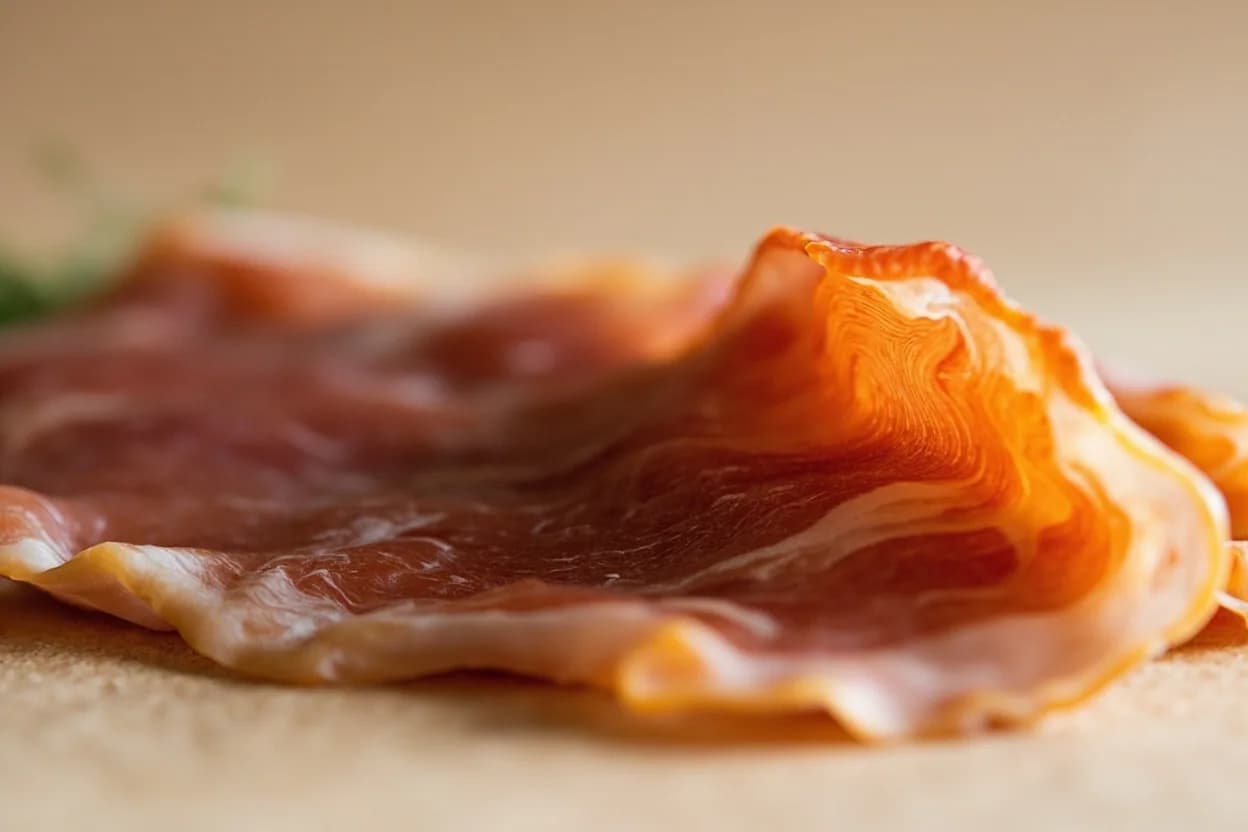
Jamón Ibérico is dry-cured ham from the Iberian pig (cerdo ibérico), a semi-wild breed with dark hooves (hence pata negra) raised in the dehesa — the oak savannah of western Spain and Portugal. The highest grade, de bellota (acorns), comes from free-range pigs that spend their final months fattening exclusively on acorns during the montanera season, producing intramuscular fat rich in oleic acid. The hams are salted and air-dried for 24–48 months or longer. The flavour is extraordinarily complex: nutty from the acorns, sweet from the oleic-acid-rich fat that melts at body temperature, with a deep fermented umami undertow and a long, mineral finish.
In photos
Flavour profile
Classic pairings
- Pan con tomate (pa amb tomàquet)Spanish / Catalan
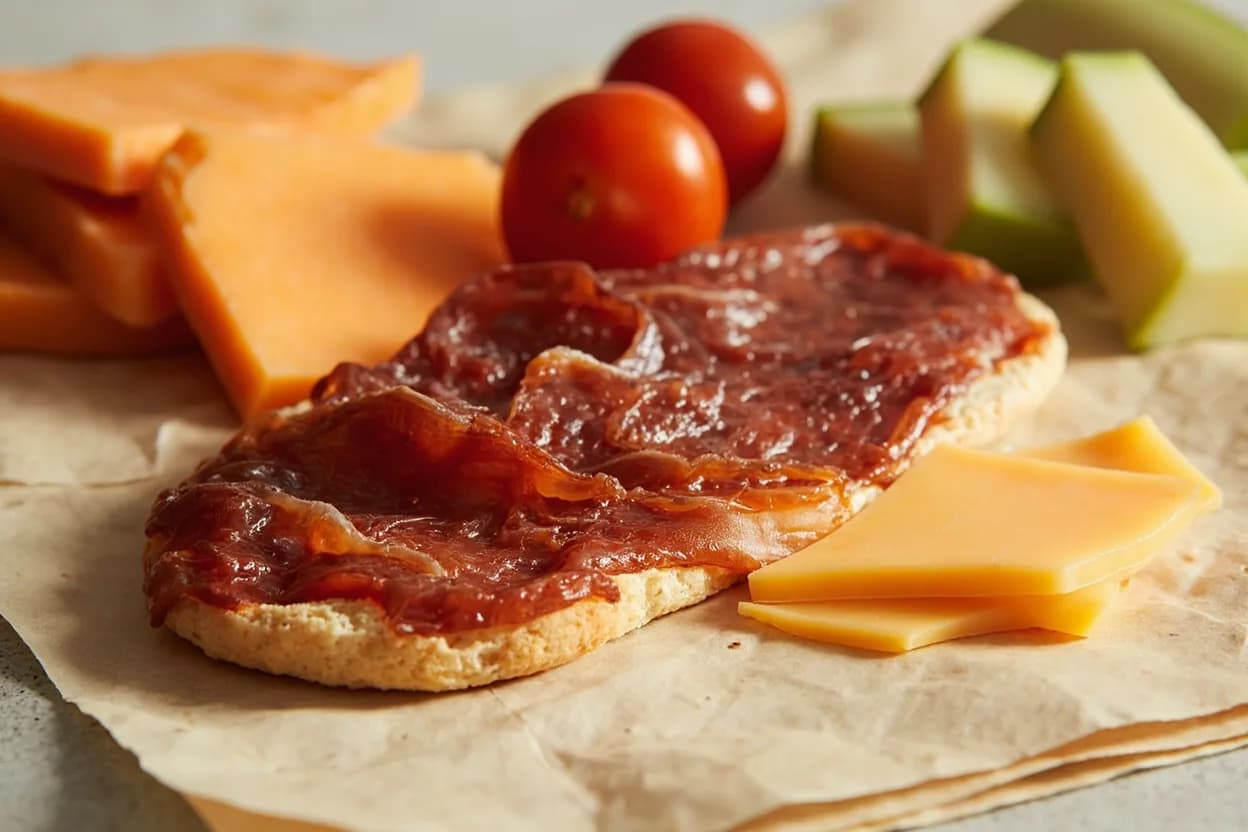
Catalonia's canonical vehicle: tomato rubbed on grilled bread, drizzled with olive oil, draped with paper-thin jamón. The tomato's acidity lifts the fat; the olive oil bridges both.
- Manchego (aged, DOP)Spanish
Spain's most famous pairing — two sheep-milk DOP products from the same landscape. Aged Manchego's lanolin and buttery notes complement the ham's nuttiness; a plate of both with bread is a complete tapa.
- Cantaloupe or honeydew melonSpanish
The classic Spanish antipasto: the melon's floral sweetness and high water content cut through the jamón's fat while the salt intensifies the fruit's sugar. Textbook salt-sweet contrast.
- Fino or Manzanilla sherryAndalusian
Fino's yeasty, saline, almond character is the canonical drink pairing — it mirrors the jamón's nuttiness, cuts the fat, and keeps both from going sweet. One of the world's great wine-food harmonies.
- Picos de Europa (crusty breadsticks)Spanish
The crunchy, neutral picos cleanse between slices and provide textural contrast to the meltingly soft fat; never upstage the ham.
- Marcona almondsSpanish
Both jamón and Marcona almonds are defined by the same oleic-acid nuttiness from the Spanish dehesa ecosystem; plated together they create a coherent, landscape-specific flavour story.
- Cava or dry ChampagneSpanish
The autolysis (yeast-contact) notes in aged sparkling wine echo the jamón's cured complexity; the high acidity and fine bubbles scrub fat from the palate between bites.
Adventurous pairings
- Truffle (black Périgord or white Alba)
Luxury on luxury: the earthiness and aromatic depth of truffle meets jamón's fermented umami. Shaved truffle over jamón-draped toast, with nothing else, is one of the most potent flavour combinations in European gastronomy.
- Oysters
A thin slice of jamón on a fresh oyster: the ocean brine and mineral iodine contrast with the cured ham's sweet, nutty fat; the salt of the ham and the sea salt of the oyster resonate rather than clash.
- Dark bitter chocolate (85%+)
A very small sliver of jamón with a piece of high-percentage chocolate: the theobromine bitterness amplifies the ham's umami while the cocoa butter and jamón fat merge on the palate in an extended finish.
- White Alba truffle oil (authentic)
A drizzle of real truffle oil — not synthetic — over jamón on warm toast creates a mushroom-earth-pork layering that goes dramatically deeper than either ingredient alone.
Crisp, cold, acidic gazpacho against ribbons of room-temperature jamón is a temperature-and-contrast play — the tomato base lifts the fat, the cucumber and pepper acidity brightens the mineral finish.
Tread carefully
- Heat (above body temperature)avoid
Cooking jamón ibérico de bellota destroys its distinguishing character — the intramuscular fat oxidises, the acorn notes vanish, and it tastes merely like very expensive ham. Reserve it for room-temperature service.
- Heavy sauces or dressingsavoid
Any sauce thick enough to coat the palate before the jamón arrives buries the nuanced flavour profile that four years of curing built. Olive oil, a squeeze of lemon, and good bread are the correct vehicles.
- Strong blue cheeses (Cabrales, Gorgonzola piccante)avoid
The ammonia and aggressive mould notes of very strong blue cheese overwhelm the jamón's delicate floral-acorn finish; use mildly aged cheeses instead.
How to use it
- Slice paper-thin by hand (cuchillo jamonero) along the grain just before serving — pre-sliced vacuum packs oxidise the fat quickly
- Serve at room temperature, never cold — the intramuscular fat must reach body temperature to release its full aroma
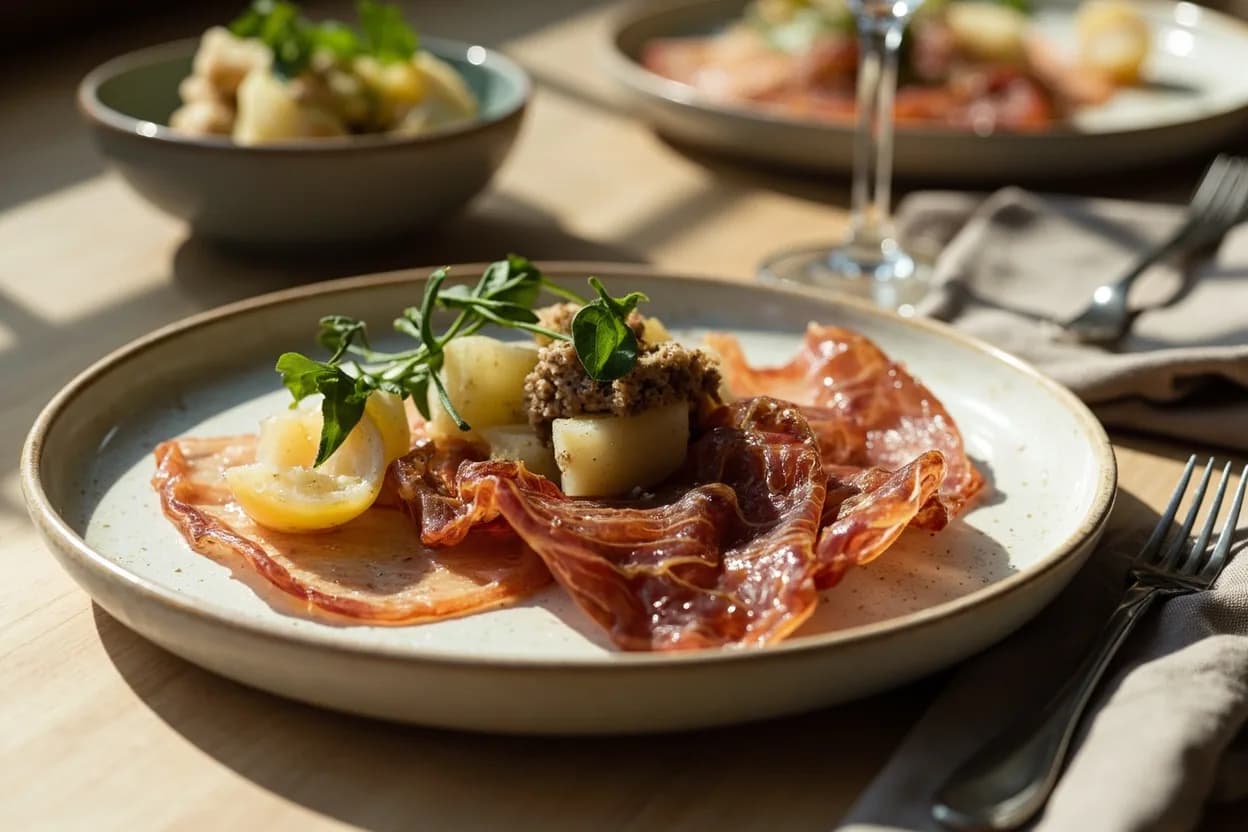
- Lay slices flat on warm (not hot) plates to start the fat melting before eating
- Do not plate more than 10–15 minutes before eating — the fat's surface bloom is its best state
- Pair with room-temperature fino sherry in a copita glass; serve the wine also not-too-cold to let its almond notes emerge
- Use trimmings and the bone to make caldo (ham stock) for cooking — not a waste of quality but a natural extended use
Appears in
Related flavours
- Prosciutto di Parma
The Italian equivalent — sweeter, milder, less complex; shares the thin-sliced, fat-forward no-cook service tradition
Its most canonical Spanish companion — same landscape, complementary but contrasting flavours
- Chorizo ibérico
Same Iberian pig breed but cured with paprika and garlic into a firm, spiced salami — more assertive and rustic compared to jamón's refinement
References
- 1.Claudia Roden — The Food of Spain
- 2.José Andrés — Made in Spain
- 3.Ministerio de Agricultura, Pesca y Alimentación — Norma de Calidad para la carne, el jamón, la paleta y la caña de lomo ibérico (Real Decreto 4/2014)
- 4.Harold McGee — On Food and Cooking
Confidence: high
Notes
The four grades
Spanish law (RD 4/2014) mandates four grade labels: jamón ibérico de bellota 100% ibérico (black label — pure breed, free-range, acorn-fed montanera), de bellota ibérico (red label — crossbred, acorn-fed), de cebo de campo ibérico (green label — crossbred, pasture and grain), and de cebo ibérico (white label — grain-fed, intensive). The gap in flavour between black and white label is dramatic. Only black and red label warrant the premium service protocols above.
The dehesa ecosystem
The holm oak and cork oak dehesa savannah of Extremadura and Andalucía is a managed ecosystem unique in Europe. The pigs (up to 1.5 per hectare) roam vast territories during montanera (October to February), eating 6–10 kg of acorns per day and walking constantly. This exercise, diet, and genetics produce a fat composition — roughly 55% oleic acid, similar to olive oil — that is central to jamón ibérico's unique flavour and texture. The ham is inseparable from the landscape that produces it.