Cheeses
Manchego
Also: Manchego DOP, Queso Manchego, Manchego viejo
La Mancha's pride: a pressed sheep's milk wheel with a buttery, lanolin-rich nuttiness that anchors the Spanish table.
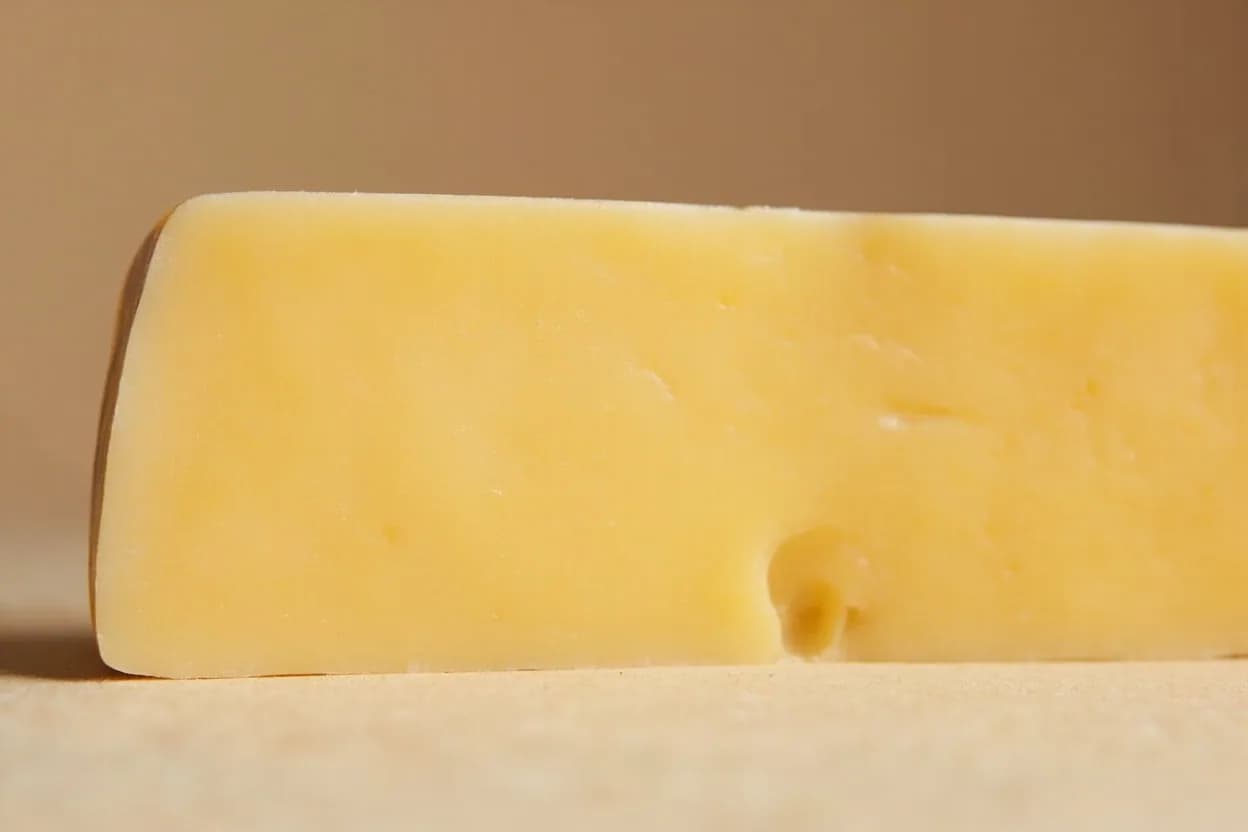
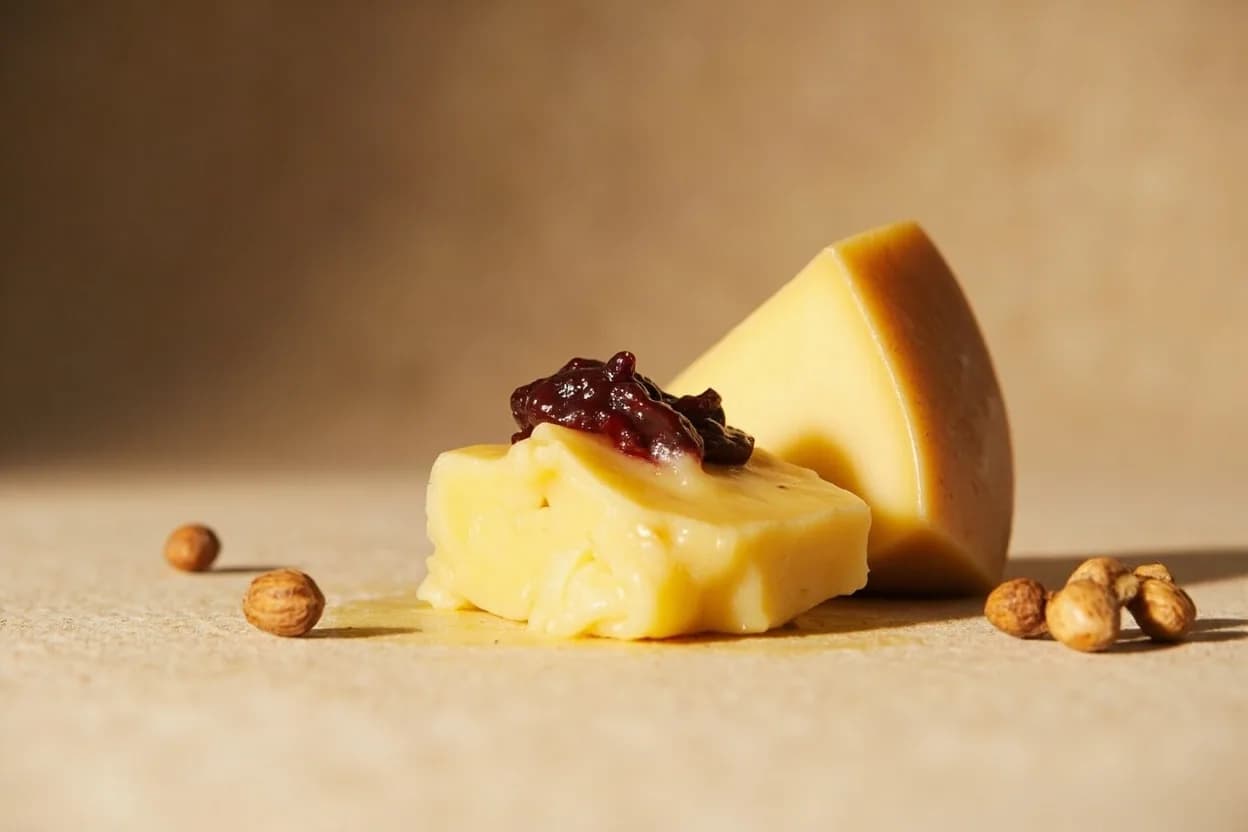
Manchego DOP is made from the milk of the Manchega breed of sheep on the high plateau of Castilla-La Mancha. It is pressed and salted in brine, aged for a minimum of 30 days (semicurado) up to two years (viejo/extra curado). The herringbone basket-weave rind is iconic; the paste is ivory to pale yellow, firm and slightly flaky at age, with a fat content of around 57% dry matter. Flavor begins with milky, slightly grassy notes and develops into pronounced lanolin, roasted nuts (almond-like), and a dry, lingering savory finish with mild sharpness.
In photos
Flavour profile
Classic pairings
- Quince paste (membrillo)Spanish
The definitive Spanish combination: tannic, floral-sweet quince is the opposite of Manchego's savory fat, yet they align on an autumnal fruit-and-nut register.
- Marcona almondsSpanish
Fried or roasted Marconas echo the cheese's own almond-toasty note while their fat amplifies the mouthfeel — an all-nuts textural harmony.
- Rioja (Tempranillo, Crianza or Reserva)Spanish
The wine's dried cherry, vanilla, and leather notes complement Manchego's nutty depth; medium tannins don't overwhelm the fat.
- Cured meats (jamón ibérico, chorizo)Spanish
Salt, paprika, and pork fat from Spanish charcuterie are natural companions; together they form the core of any tapas board.
- Sherry (Fino or Manzanilla)Spanish
Bone-dry Fino's saline, almond-flor character rhymes directly with Manchego's own nut and salt notes — terroir harmony.
- Fig (fresh or jam)Spanish/Mediterranean
Figs provide the concentrated sweetness and mild tannin to offset saltiness, with a Mediterranean fruit quality that complements the cheese's pastoral origin.
- Roasted peppers (piquillo, bell)Spanish
Sweet, smoky roasted pepper alongside Manchego is a classic tapa — the vegetable's acidity and sweetness contrast the cheese's richness.
Adventurous pairings
- Saffron honey
Manchego is from the same La Mancha region that produces the world's best saffron; infusing honey with a few threads and drizzling it over aged slices creates a deeply regional flavor bridge.
- Medjool date and Serrano pepper
Date's molasses-caramel sweetness and a sliver of fresh Serrano heat create a three-way contrast (sweet, heat, savory fat) that works especially well with viejo.
Grated into a croqueta béchamel or dusted over sliced Manchego, pimentón's smoky sweet-bitter note amplifies the cheese's savory register without competing.
- Apple (Granny Smith, thin-sliced)
Malic-acid sharpness of a tart apple provides cleansing acidity that quince delivers without the tannic heaviness — a lighter alternative on a board.
- Lavender honey
Herbal floral sweetness finds an echo in Manchego's own faint grassy notes; elegant with semicurado on crackers.
Tread carefully
- Peated Scotch whiskyavoid
Heavy iodine and peat smoke overwhelm the cheese's delicate lanolin and nut notes; the alcohol also sharpens the cheese's existing tang unpleasantly.
- Very astringent red wine (Barolo, Côtes du Rhône heavy blends)avoid
Sheep's milk fat is less tolerant of high tannin than cow's milk; the result is a chalky, bitter mouthfeel.
- Strongly herbed olivesavoid
Olive brine and competing herbal aromatics (rosemary, thyme-heavy brines) fight with Manchego's own grassy notes rather than complementing them.
How to use it
- Slice into thin triangular wedges at room temperature for maximum aroma expression
- Shave with a vegetable peeler over warm salads or pasta for controlled coverage
- Grate (when viejo) into croquetas or tortilla española batter
- Cube and thread onto pintxos with quince or Serrano
- Melt briefly (semicurado) on a plancha for a queso fundido-style appetizer
Appears in
Related flavours
- Pecorino Toscano
Italian pressed sheep's milk equivalent — similar lanolin-nutty character, with subtler seasoning; same pairing logic (nuts, honey, fig).
- Idiazábal
Basque smoked sheep's milk cheese — more intense and smoky but occupying the same Spanish artisan-ewe's-milk category.
- Roncal
Navarrese DOP ewe's milk wheel; harder, saltier, and more pungent — the older cousin that reveals where aged Manchego is heading.
References
- 1.The Cheese Plate — Max McCalman & David Gibbons (Clarkson Potter, 2002)
- 2.Spain: The Cookbook — Simone Ortega (Phaidon, 2014)
- 3.The Oxford Companion to Cheese — ed. Catherine Donnelly (Oxford University Press, 2016)
- 4.Queso Manchego DOP Specification — Consejo Regulador DOP Queso Manchego
Confidence: high
Notes
Age as a pairing variable
Fresco (under 60 days) is mild and almost ricotta-adjacent — it pairs with lighter whites and fresh fruit. Semicurado (3–6 months) is the versatile workhorse of tapas boards. Curado (6–12 months) has developed nuttiness and mild crystalline texture. Viejo (12–24 months) is the most complex, with strong lanolin and a dry flakiness best matched to aged Sherry or bold Rioja.
The membrillo origin story
Quince paste and sheep's milk cheese is a pre-Columbian Spanish tradition dating to Roman occupation. The Romans used fruit preserves to cut the saltiness of preserved cheeses during transport; membrillo has remained the canonical pairing ever since.