Vegetables & Fruits
Mamey Sapote
Also: mamey colorado, sapote mamey, Pouteria sapota
A richly sweet tropical fruit that tastes like almond-scented sweet potato married to pumpkin pie.
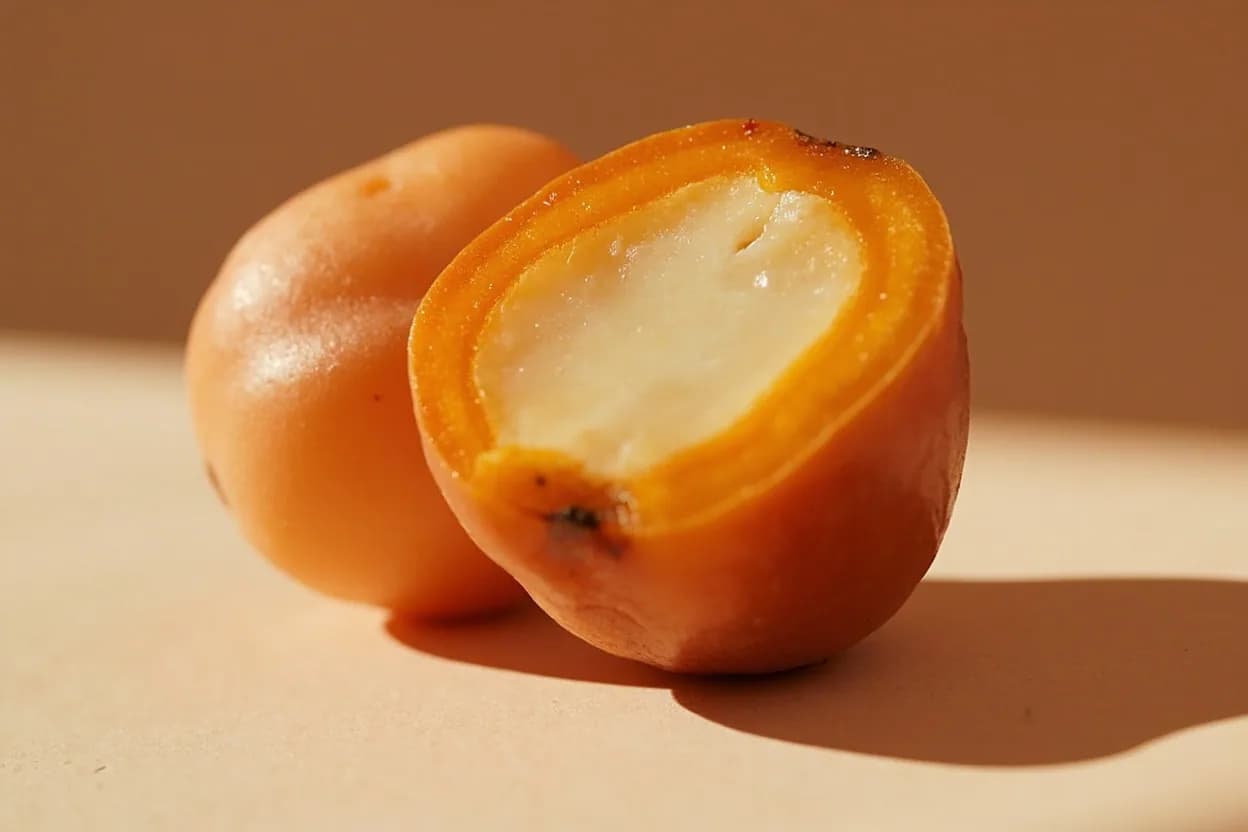
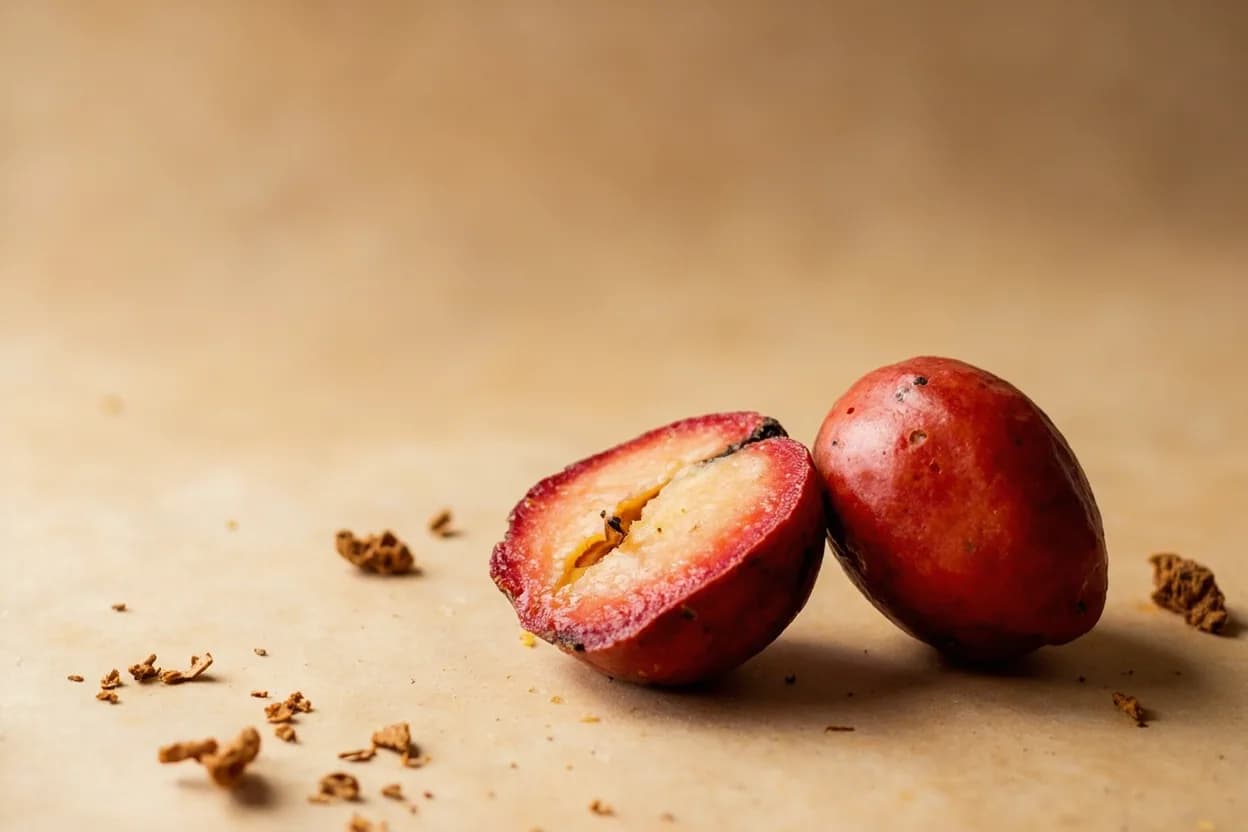
Mamey sapote (Pouteria sapota) is a large, oval fruit native to southern Mexico and Central America, with a rough reddish-brown skin concealing salmon-to-brick-red flesh of extraordinary richness. Its flavor is unmistakably complex: dense sweetness reminiscent of sweet potato and pumpkin, layered with almond and vanilla undertones from benzaldehyde compounds, and a faint caramel depth. The texture is smooth and starchy — almost custardy — which makes it ideal for blended preparations. It is one of the defining flavors of Mexican paleterías and juguerías.
In photos
Flavour profile
Classic pairings
- Whole milk or evaporated milkMexican
The fat softens mamey's starchy density and amplifies its caramel sweetness; the backbone of every licuado de mamey.
- CinnamonMexican
A dusting of Ceylon cinnamon echoes the spice notes already present in the fruit, a classic combination in Mexican smoothies and ice creams.
- VanillaMexican
Shared aldehydic notes make vanilla a near-invisible amplifier rather than a counterpart — it deepens without competing.
- Sweetened condensed milkMexican
The concentrated dairy fat and sugar intensify mamey's custardy character; the classic pairing in paleta de mamey.
- Fresh lime juiceMexican
The only native acid that can cut mamey's density without stripping its character — a squeeze brightens and frames the richness.
- Piloncillo (raw cane sugar)Mexican
Deepens sweetness with molasses complexity; used in mamey-based atoles and traditional beverages.
- Toasted pepitas (pumpkin seeds)Mexican
Nutty crunch and subtle greenness contrast mamey's monolithic sweetness; appears in contemporary Mexican desserts.
Adventurous pairings
- Mezcal
Smoky agave spirit cuts through mamey's richness dramatically; the combination appears in craft cocktails at Mexico City bars as a riff on the classic smoothie.
- Dark chocolate (70%+)
Bittersweet chocolate's roasted bitterness is the foil mamey rarely meets — together they mirror the profile of a mole without any actual cooking.
- Miso (white or shiro)
Fermented umami rounds out mamey's almond sweetness with savory depth; an unexpected bridge in modern fusion ice cream and mousse.
Smoky, camphor-edged cardamom amplifies mamey's spice layer and lends a Southeast Asian dimension to sorbets and granitas.
Sesame paste's bitterness and nuttiness echo mamey's almond benzaldehyde note; blended smoothies with tahini and mamey are gaining traction in health-forward cafés.
Tread carefully
- Strong blue cheesesavoid
Pungent ammonia and funk overwhelm mamey's delicate almond sweetness; neither component benefits.
- Highly acidic citrus (grapefruit, sour orange)avoid
Excess acid strips the custardy richness and exposes bitter tannins in the fruit's flesh; lime is the approved acid, used sparingly.
- Assertive fresh herbs (cilantro, tarragon)avoid
Green herbaceousness clashes with mamey's dessert-register sweetness; the combination reads as unbalanced rather than contrasting.
How to use it
- Blend raw with cold milk and ice for licuados and smoothies
- Churn with cream and sweetened condensed milk into paletas or helado
- Press through a tamis for ultra-smooth mousse bases
- Puree and swirl into cheesecake or custard fillings
- Freeze chunks and blend straight for a quick dairy-free soft-serve analog
- Reduce puree gently with piloncillo to a thick ate (fruit paste) for plating
Appears in
Related flavours
- Soursop
Another tropical fruit with custardy flesh; pairs differently (brighter acid, less almond) but occupies the same blended-drink niche.
- Sweet potato
Shares mamey's starchy sweetness and caramel depth; substitutable in some preparations and a useful flavor bridge.
- Cherimoya
Similar custardy richness and tropical sweetness; both benefit from the same dairy and spice partners.
References
- 1.Diana Kennedy, The Art of Mexican Cooking (1989)
- 2.Roberto Santibañez, Truly Mexican (2011)
- 3.Morton, J.F., Fruits of Warm Climates (1987), 'Mamey Sapote' pp. 304–307
Confidence: high
Notes
Selecting and ripening
A ripe mamey sapote yields slightly to thumb pressure and smells faintly of almonds at the stem end. Unlike most tropical fruits, it does not ripen uniformly — scratch the skin near the tip with a fingernail; if the flesh beneath is salmon-pink, it is ready. Green-scratched flesh needs several days at room temperature.
Cuban vs. Mexican culinary traditions
In Cuba, mamey is most often eaten fresh with a drizzle of lime, or blended into batidos with sugar and water — simpler preparations that let the fruit speak. Mexican tradition leans into dairy enrichment and spice layering (cinnamon, vanilla), producing the richer, ice-cream-adjacent results the fruit is globally famous for.