Pickled Condiments
Manzanilla Olive
Also: Spanish queen olive, Manzanilla Sevillana, cocktail olive
Andalusia's gold-green brine bomb — buttery flesh, firm snap, and a clean saline finish that anchors tapas bars and martini glasses alike.
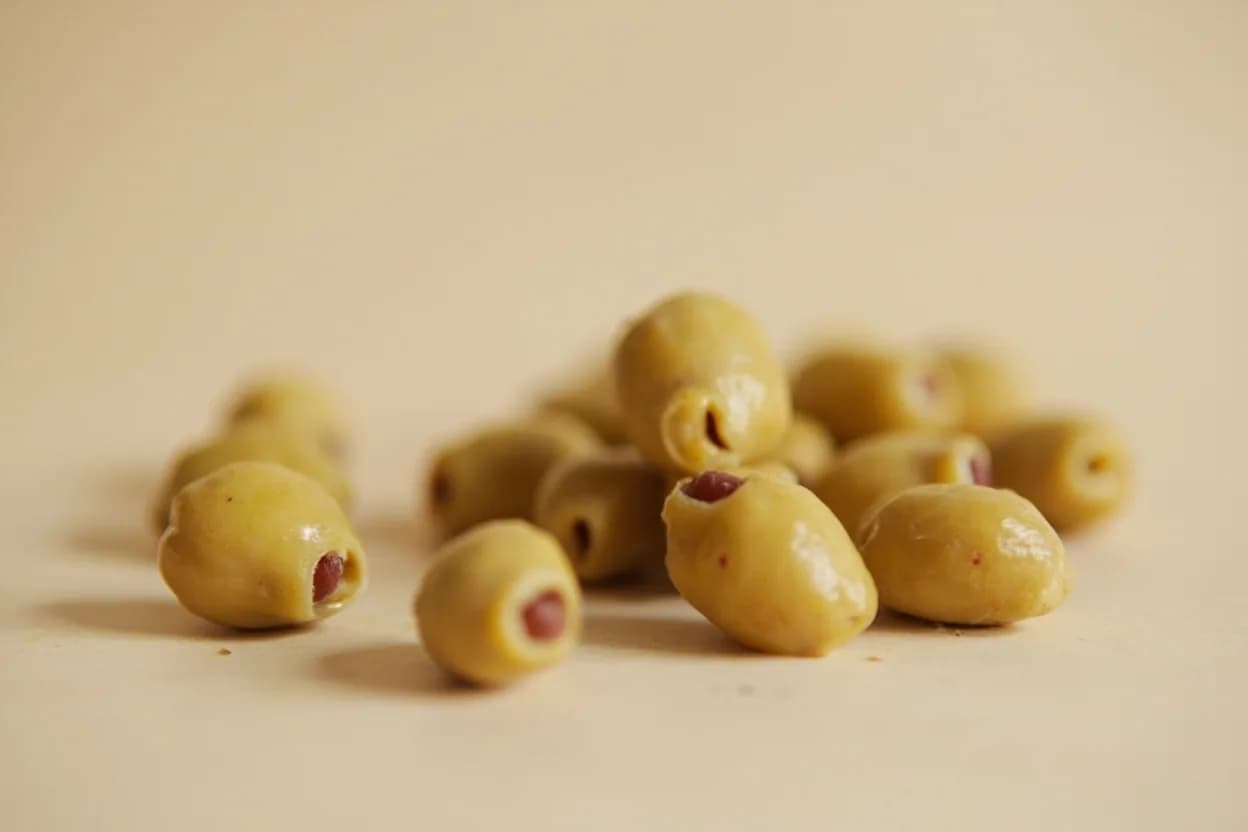
Manzanilla olives are harvested green (unripe) from the Manzanilla Sevillana cultivar grown in the Sevillian lowlands of Andalusia. They are lye-cured to remove bitterness, then fermented in brine with lactic-acid bacteria, yielding a crisp, meaty texture and a flavor profile that is simultaneously buttery, mildly bitter, and cleanly saline — far less pungent than black-ripe varieties. Their thin skin and neutral oil content make them ideal for stuffing and marinating.
In photos
Flavour profile
Classic pairings
- Dry vermouthSpanish / American cocktail
The martini pairing that made the Manzanilla famous: vermouth's herbal bitterness mirrors the olive's residual oleuropein while its alcohol cuts the brine.
- Jamón ibéricoSpanish
Salt calls to salt: the cured ham's fat-sweetness and the olive's acid-brine create a balance that is the backbone of a proper Spanish tapa.
- Manchego cheeseSpanish
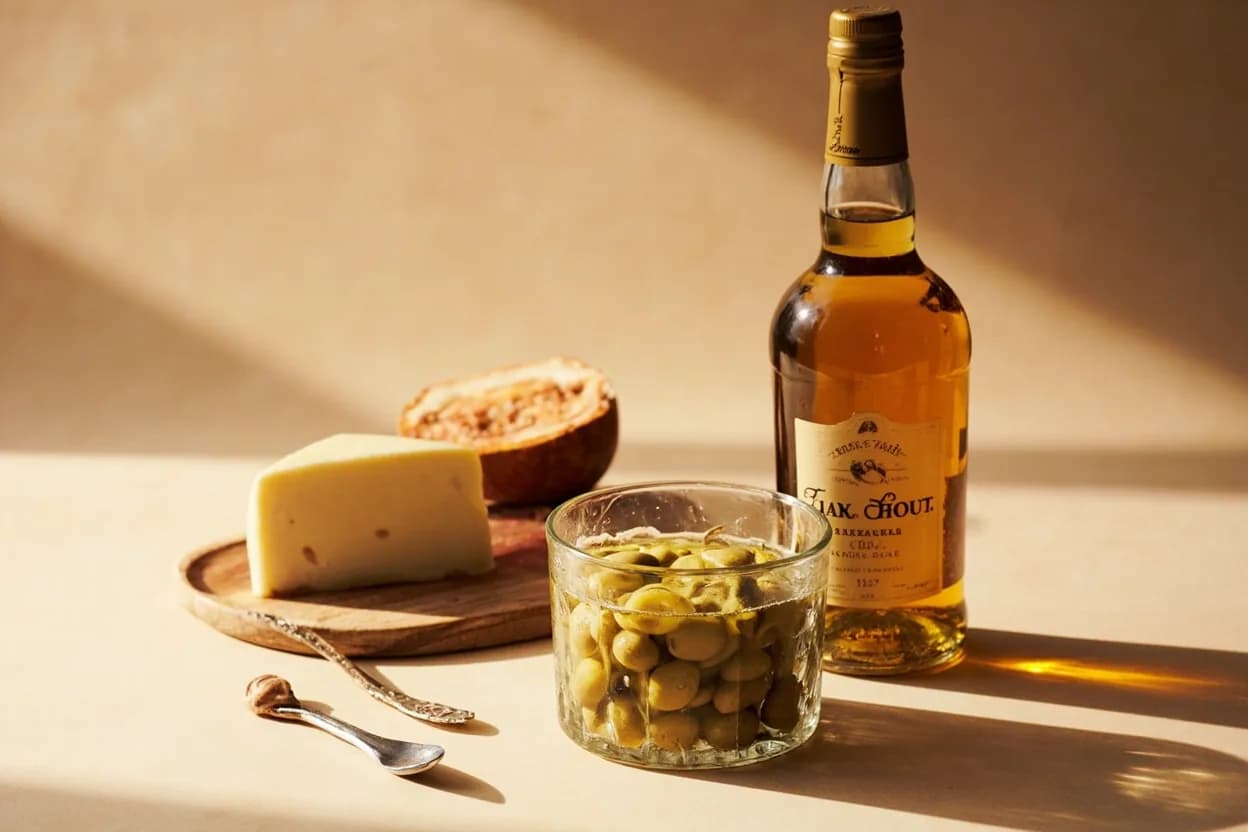
The sheep-milk tang of young Manchego and the olive's salinity are a classic Castilian pairing; the fat in the cheese tempers the brine.
- Piquillo pepperSpanish
Manzanillas are classically stuffed with piquillo paste; the pepper's sweet smokiness fills the hollow of the pit-free fruit perfectly.
- Boquerones (white anchovies)Spanish
A double hit of salt and umami; the olive's butteriness softens the anchovy's sharp acid cure in every classic tapas montadito.
- GinAmerican / British cocktail
Juniper's piney aromatics amplify the olive's herbal-green edge; a gin martini with a Manzanilla garnish is texturally crisp and aromatically complete.
- GazpachoSpanish
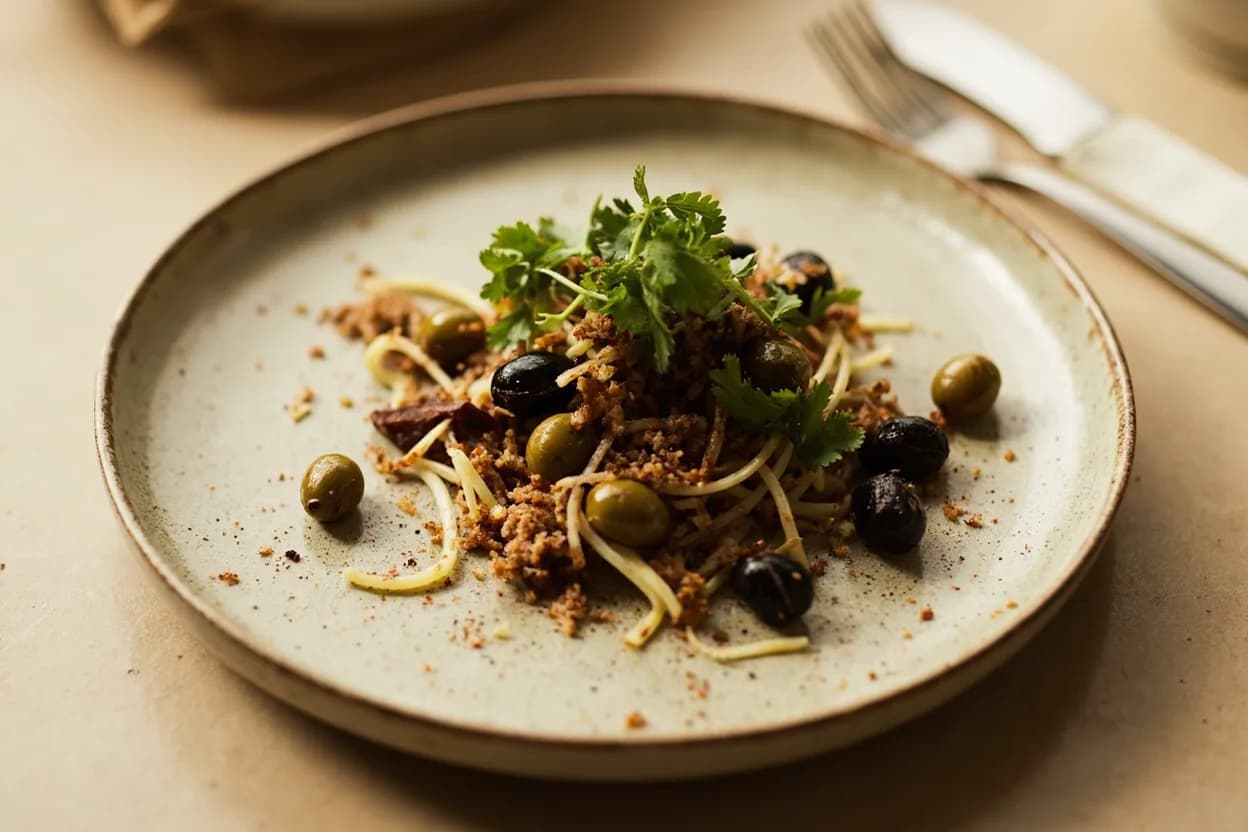
Sliced Manzanillas floated on cold gazpacho add textural contrast and underscore the dish's Andalusian identity.
Adventurous pairings
- Dark chocolate (70%+)
An aperitivo-bar discovery: the olive's brine sharpens cocoa bitterness just as salt does in a salted caramel, creating a savory-sweet tension.
- Citrus curd (yuzu or lemon)
The olive's fat and brine cut through bright citrus acid, making a sophisticated canapé when spooned into a pitted Manzanilla or served alongside.
- Fino sherry ice cream
Manzanilla olives (the olive variety shares its name with the sherry town for good reason) churned or crumbled into fino-laced ice cream create a coastal Andalusian dessert-cheese moment.
- Smoked paprika butter
Marinating Manzanillas in pimentón-infused brown butter deepens their already smoky-saline character; exceptional melted over roast chicken.
- Melon (cantaloupe)
Salt-sweet pairing logic: the olive's brine amplifies melon's fragrance the same way prosciutto e melone does, with a more aggressive briny punch.
Tread carefully
- Heavily peated Scotch whiskyavoid
Peat smoke overwhelms the olive's delicate buttery note, collapsing both flavors into a one-dimensional salty-smoke wall.
- Very sweet white wines (late harvest, Sauternes)avoid
Residual sugar fights the brine; neither component wins, and the result tastes like olive brine dropped into fruit juice.
- Strong blue cheese (Roquefort, Gorgonzola piccante)avoid
Competing pungency with no moderating element; the lactic ferment of the olive clashes with the mold character without fat or starch to mediate.
How to use it
- Stuff pitted olives with anchovies, piquillo paste, or almonds before serving or marinating
- Marinate in extra-virgin olive oil with orange peel, thyme, and fennel seed for 48 hours at room temperature
- Warm gently in dry vermouth and good olive oil as a quick tapa
- Chop fine and fold into aioli or compound butter for sauces and grilled fish
- Thread on cocktail picks alternating with pearl onion and lemon twist for Gibson-style martini garnishes
- Press into focaccia dough before baking for an Andalusian-Italian crossover bread
Appears in
Related flavours
- Castelvetrano Olive
A sweeter, butterier Sicilian counterpart; the two can substitute for each other in cocktails and antipasto
Frequent stuffing partner and co-flavor on tapas boards; shares the saline-umami spectrum
- Caperberry
Cousin condiment in the brine-pickle family; replaces Manzanilla in martini garnishes and antipasto for a more acidic, floral note
- Dry Vermouth
The liquid co-star of the classic martini pairing; shares herbal bitterness with the olive's residual oleuropein
References
- 1.The Oxford Companion to Food — Alan Davidson (3rd ed., 2014)
- 2.Tapas: The Little Dishes of Spain — Penelope Casas (1985)
- 3.Catalan Food — Daniel Olivella & Caroline Wright (2018)
- 4.The Bar Book: Elements of Cocktail Technique — Jeffrey Morgenthaler (2014)
Confidence: high
Notes
Name confusion: the olive and the sherry
Manzanilla is also the name of a bone-dry sherry produced around Sanlúcar de Barrameda — a different product from a different town, though both are distinctly Andalusian. The olive's name derives from 'manzana' (apple), describing the fruit's round shape, while the sherry borrows it from local lore about chamomile ('manzanilla') growing near the sea. In a tapas bar, context clarifies which you're ordering.