Vegetables & Fruits
Piquillo Pepper
Also: pimiento del piquillo, piquillo, Lodosa pepper
Spain's most prized roasted pepper: small, triangular, and fire-roasted to a silky sweetness with just enough smokiness and a mild, lingering warmth.
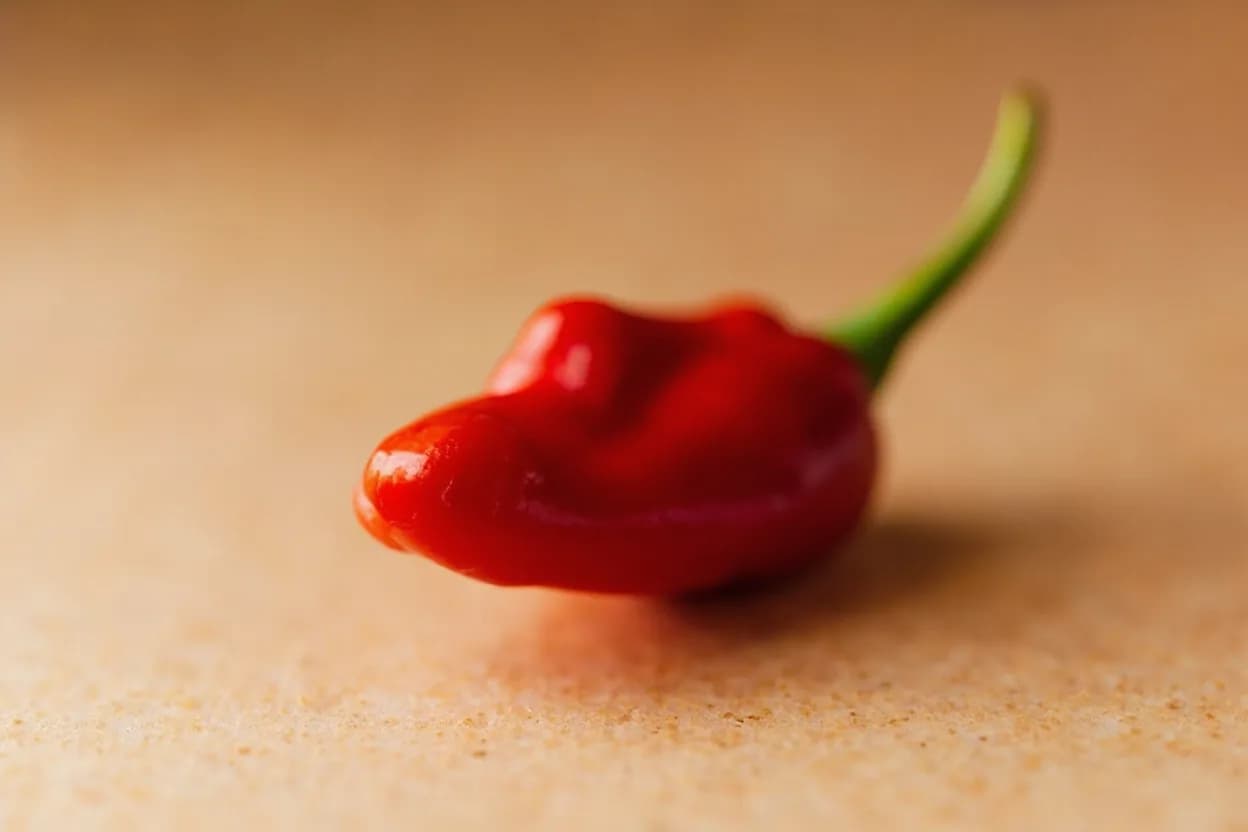
Piquillo peppers (pimiento del piquillo de Lodosa) are a protected-designation-of-origin (PDO) pepper grown exclusively around Lodosa in Navarra, Spain. Harvested in autumn and always roasted over wood fire before peeling, the piquillo is distinguished by its thin, smooth flesh, vibrant red color, and a flavor profile that is more complex than any other sweet pepper: sweet and mildly smoky from the roasting, with a faint heat that builds at the very end (piquillo means 'little beak,' referring to their pointed tip), and a subtle vegetal richness. They are sold in jars in their own roasting juices — those juices are as valuable as the peppers themselves. Canned piquillo has a remarkably authentic flavor because the roasting process happens before preservation.
In photos
Flavour profile
Classic pairings
- Salt cod (bacalao)Spanish / Basque
The canonical Spanish stuffed preparation — bacalao al pil-pil or creamed salt cod inside piquillo peppers is one of the Basque Country's signature dishes; the cod's brininess and the pepper's sweetness are perfectly calibrated counterparts.
- Manchego cheeseSpanish
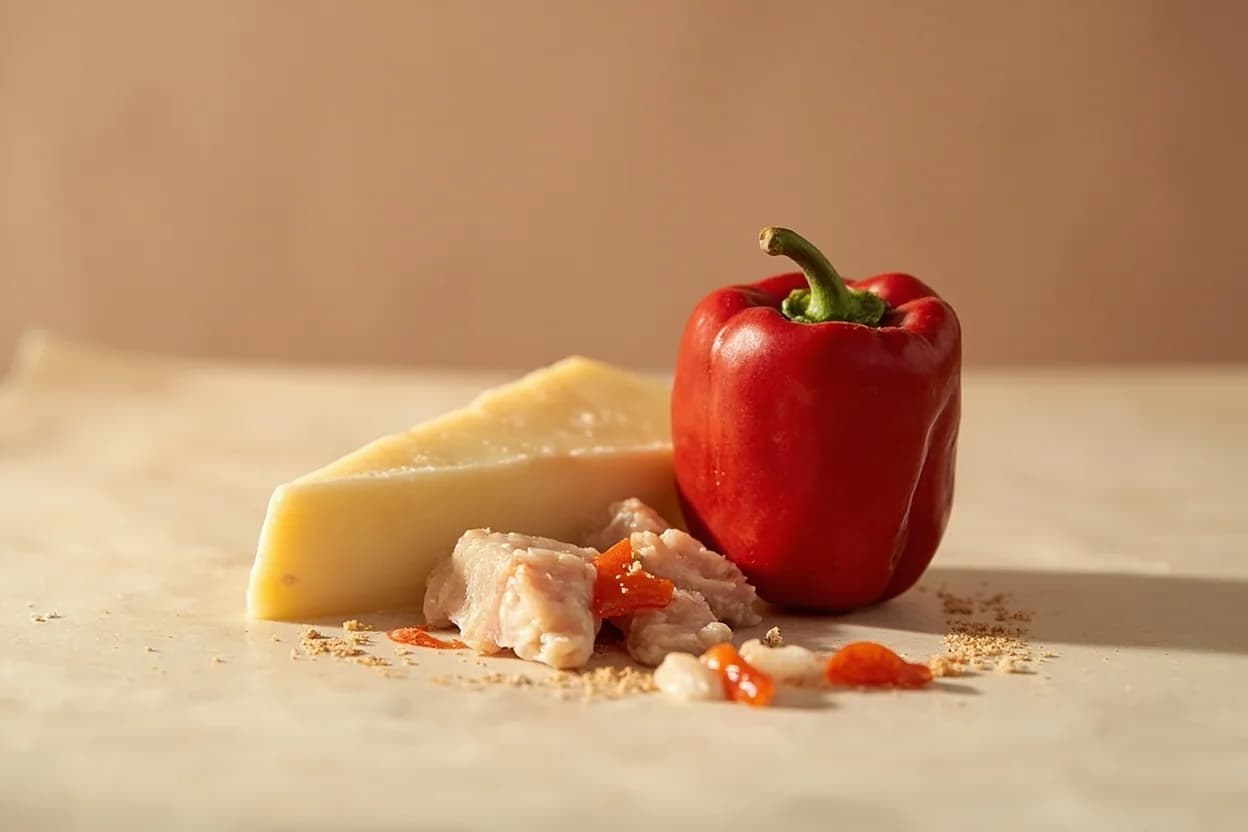
Sliced Manchego alongside jarred piquillos is the simplest and most reliable pintxo building block — the nutty, sheepy richness of the cheese absorbs the pepper's smokiness beautifully.
- Canned tuna in olive oil (bonito del norte)Basque / Spanish
Piquillos stuffed with quality Spanish tuna is the most-ordered tapa in Spain's pintxos bars — the fish's richness is cut by the pepper's sweet acid and the combination needs nothing else.
- Garlic (slowly cooked in olive oil)Spanish / Navarran
Piquillos warmed in abundant olive oil with softened garlic become a sauce and a dish simultaneously — this preparation (roasted piquillos with ajo) is the base for countless Navarran recipes.
- Jamón ibéricoSpanish
The pig fat and cured nuttiness of jamón ibérico with a strip of roasted piquillo is a two-ingredient combination that demonstrates why Spanish cuisine requires no elaboration to be extraordinary.
- Eggs (fried or scrambled)Spanish
Piquillos with eggs appears across Spanish breakfast culture — the sweetness softens fried egg's sulfuric edge, and the color against a golden yolk is visually stunning.
- Sherry (fino or manzanilla)Spanish
The saline, nutty dry sherry is the ideal wine pairing — its umami-forward, oxidative character mirrors the roasted caramelization in the pepper without competing.
Adventurous pairings
- Goat cheese (fresh chèvre)
Stuffed piquillos with warm, softened chèvre is a French-Spanish bridge that works because the lactic tang of the cheese contrasts and complements the pepper's smokiness — elegant as a first course with dressed greens.
- Morcilla (blood sausage)
Piquillo with morcilla — Spain's own blood sausage with its iron-rich, spiced, deeply savory profile — creates an intensely Iberian combination; common in Castilian cooking but underrepresented outside Spain.
- Anchovies in olive oil
Layering piquillo with salt-packed anchovies rinsed in oil produces a pintxo of remarkable umami concentration — the sweetness of the pepper makes the anchovy's brininess accessible rather than overwhelming.
- Dark honey (buckwheat or chestnut)
A Spanish technique for reducing piquillo — roasting whole peppers further until caramelized, finished with a small amount of dark honey — produces an extraordinary jammy condiment for cheese boards and grilled meats.
Contemporary Italian-Spanish fusion: the cool, milky cream of burrata against warm piquillo is a textural and temperature contrast that feels inevitable once encountered.
Doubling down on the smoke — piquillo in a sauce enriched with pimentón de la Vera creates extraordinary depth; this is the base of the romesco sauce family.
Tread carefully
- Strongly spiced curriesavoid
The pepper's subtle smokiness and delicate sweetness are completely overwhelmed by complex spice blends; piquillo belongs in preparations where it can be a protagonist, not a supporting vegetable.
- Heavy cream (in large quantities)avoid
Excess cream mutes the roasted complexity and turns piquillo into a generic 'red pepper cream sauce'; small amounts to bind are fine, but cream-dominated preparations waste the pepper's character.
- Very tannic red wine (young Barolo, Ribera del Duero reserva)avoid
The tannins strip the pepper's sweetness and make the mild heat seem more aggressive; lighter, fruit-forward reds (Garnacha, Pinot Noir) or dry whites or sherries are better companions.
How to use it
- Serve at room temperature from jar, drizzled with extra-virgin olive oil — no cooking needed
- Stuff with fillings (bacalao, tuna, cheese, morcilla) and warm briefly in a pan or oven
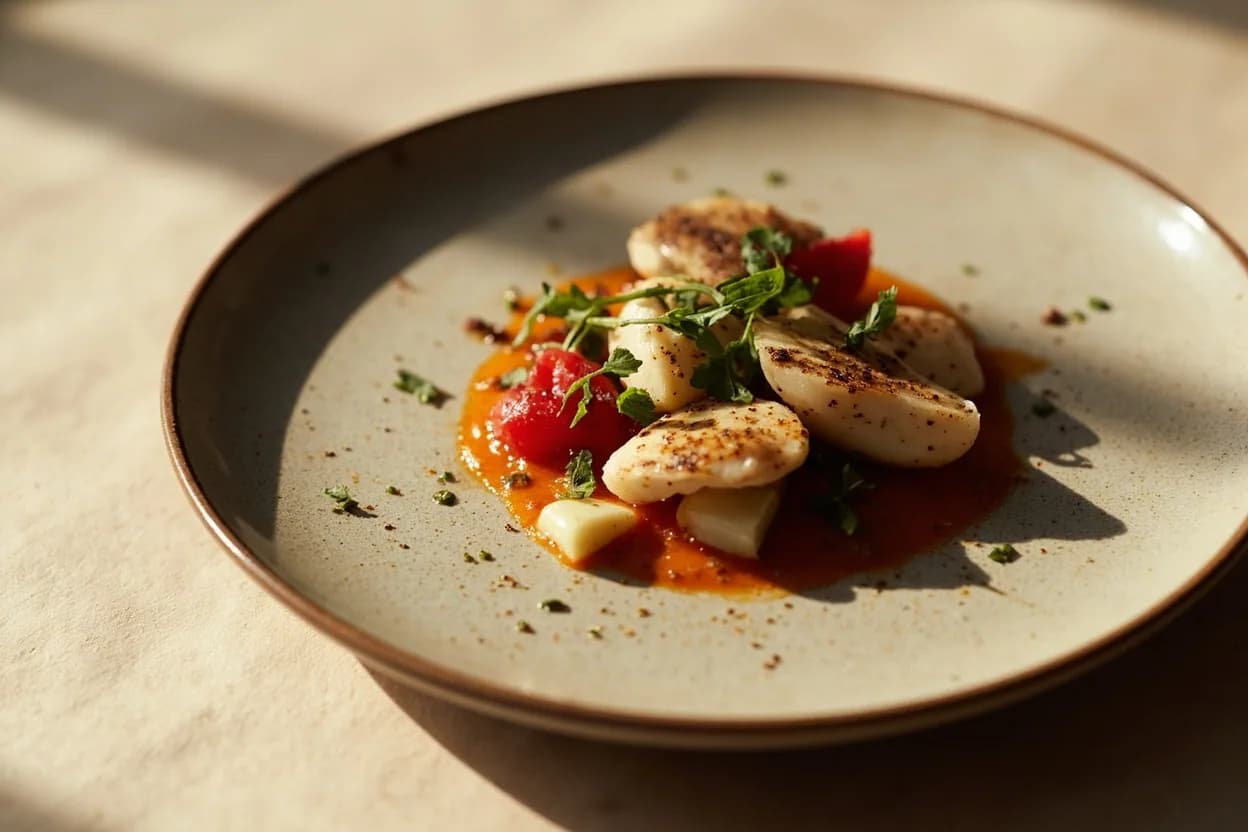
- Blend to a smooth sauce with olive oil and garlic as a base for fish or chicken
- Reduce piquillo along with their jar liquid to a thick compote for cheese boards
- Grill briefly to add additional char to already-roasted peppers
- Dress finely sliced piquillos with sherry vinegar and capers as a cold salad
- Fold diced into romesco sauce or calçotada sauces for additional pepper body
Appears in
Related flavours
- Roasted red bell pepper
The accessible substitute — similar sweetness and roasted character but without piquillo's mild heat, PDO complexity, or concentrated flavor from thinner flesh.
- Pimentón de la Vera (smoked paprika)
Made from similar Navarran and Extremaduran peppers; shares the smoke-and-sweet-pepper DNA but in dried, ground form — the two work in tandem rather than as substitutes.
- Nora pepper
A dried Spanish pepper with similar sweetness and a more intense, concentrated flavor; often used together with piquillo in sauces and stews.
References
- 1.Claudia Roden, The Food of Spain (2011)
- 2.José Andrés, Tapas: A Taste of Spain in America (2005)
- 3.Spanish Ministry of Agriculture, PDO Pimiento del Piquillo de Lodosa specification (1987, updated 2010)
- 4.Colman Andrews, Catalan Cuisine (1988)
Confidence: high
Notes
PDO and the Lodosa designation
True piquillos carry the 'Pimiento del Piquillo de Lodosa' PDO, guaranteeing they were grown in the Lodosa area of Navarra, hand-picked, and roasted over wood fire before packing. Non-PDO 'piquillo-style' peppers from Peru, Morocco, or other growing regions are wider, thicker-fleshed, less sweet, and generally inferior. The PDO jar's label and the roasting liquid's depth of color are the best quick quality indicators.
Using the jar liquid
The deep red liquid that packs piquillo peppers is concentrated pepper essence, olive oil, and roasting juices — it is far too valuable to discard. Stir it into vinaigrettes, whisk it into mayonnaise for a rouille-like aioli, or reduce it further for a glaze. Professional Spanish cooks treat it as a ready-made condiment that took no effort to produce.