Sweet Aromatics
Piloncillo
Also: panela, panocha, raspadura, chancaca, raw cane sugar cone
Mexico's ancestral sweetener — unrefined cane sugar with deep caramel, mineral, and faint rum complexity.
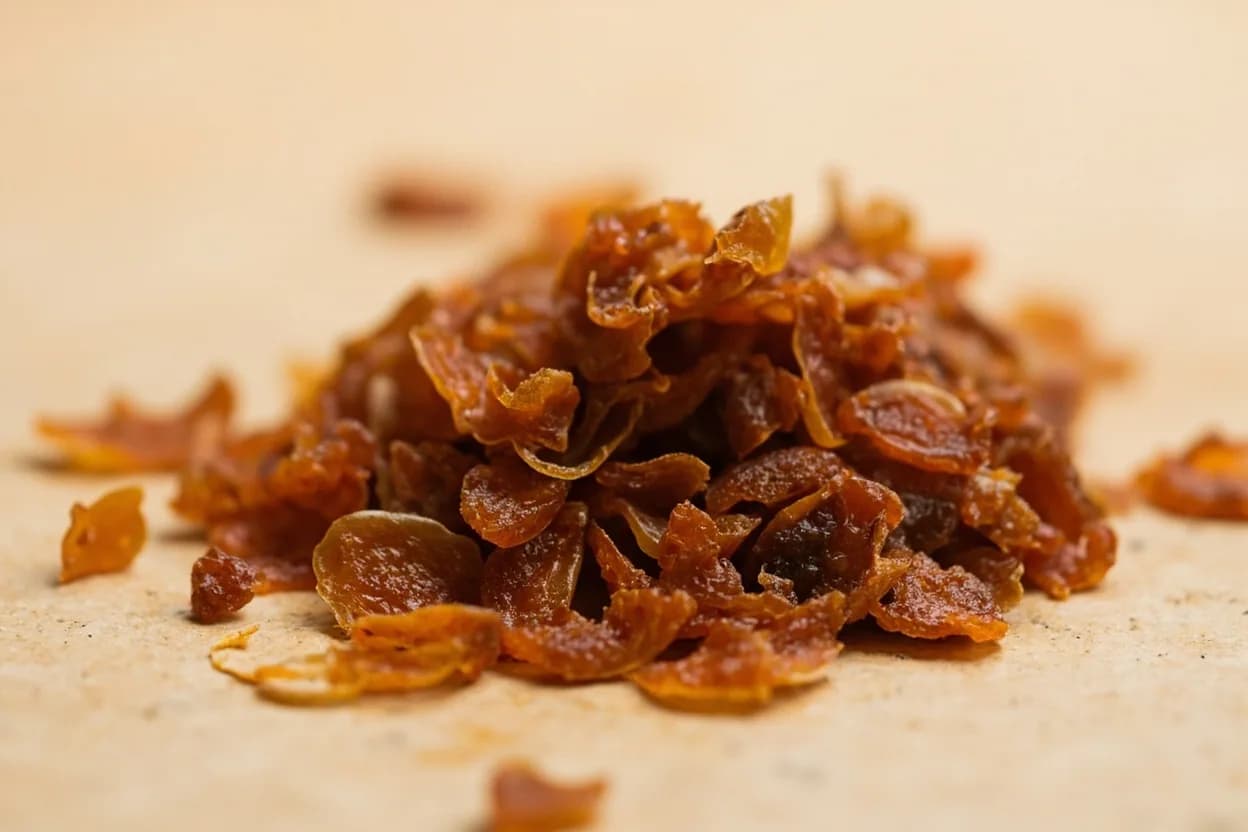
Piloncillo is unrefined whole cane sugar produced by boiling and reducing freshly pressed sugarcane juice until it sets into truncated cones (piloncillos) or discs. Unlike brown sugar, piloncillo has never had its molasses extracted — it retains the full mineral matrix of cane juice, giving it a more complex, earthy, and slightly funky sweetness compared to reconstituted brown sugar. Color and intensity range from light gold (blanco) to deep amber-brown (oscuro). It must be grated, chopped, or dissolved before use. Known as panela in Colombia and throughout South America, chancaca in Peru and Chile.
In photos
Flavour profile
Classic pairings
- Mexican cinnamon (canela)Mexican
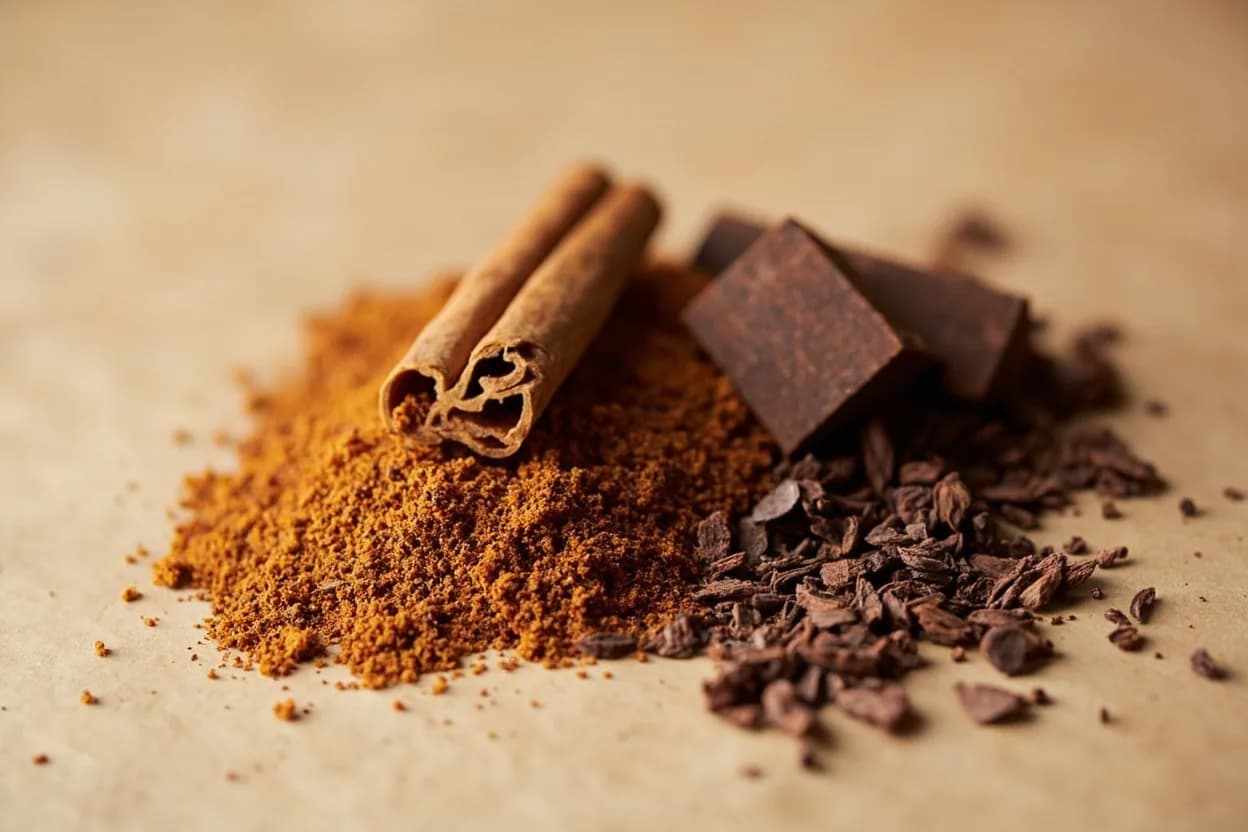
The most foundational pairing in Mexican sweet cooking — canela's soft, floral cassia notes amplify piloncillo's caramel without competing with its mineral complexity.
- Dried chiles (ancho, mulato, pasilla)Mexican (Oaxacan / Pueblan)
In mole negro and mole poblano, piloncillo bridges the bitterness of darkly toasted chiles; its unrefined sweetness binds the sauce without flattening the smoky-earthy depths.
- Chocolate (Mexican unsweetened cacao)Mexican
Piloncillo and cacao are the ancestral pair — pre-Columbian atole and modern champurrado rely on their complementary bitterness and sweetness.
- Tejocotes (Mexican hawthorn)Mexican
The tartness of tejocotes is the defining counterpoint in ponche navideño, Mexico's Christmas fruit punch, where piloncillo provides body and sweetness.
- Orange peelMexican
Bitter citrus oil and piloncillo's molasses create a bittersweet combination used in tamales de dulce, café de olla, and ponche.
- Pumpkin / winter squashMexican
Calabaza en tacha — candied pumpkin simmered in piloncillo and cinnamon syrup — is one of Mexico's oldest preparations; the starch of the squash absorbs the syrup deeply.
- CoffeeMexican
Café de olla brews strong coffee with piloncillo and canela; the mineral complexity of piloncillo gives the brew a fuller body than granulated sugar without dominating.
Adventurous pairings
- Chipotle in adobo
The smoky-spiced adobo vinegar tames piloncillo into a complex glaze for chicken, duck, or pork — caramel, smoke, and acid in one sweep.
Tamarind's piercing sour-fruity acidity is the ideal foil for piloncillo's caramel depth; the pairing drives agua fresca de tamarindo and many street-candy coatings.
- Mezcal
Shared agave-adjacent earthiness and smoke; piloncillo syrups in mezcal cocktails reinforce the spirit's mineral character rather than sweetening it into oblivion.
Piloncillo's mineral notes find a bridge in aged blue cheese on a cheese board — similar to the affinity between Roquefort and fig jam, but with a smokier register.
- Sesame
Toasted sesame and piloncillo combine in palanquetas (Mexican sesame brittle) — an ancient Mesoamerican technique that the sesame seed brought new form to.
Tread carefully
- Very delicate pastry creams or Italian meringueavoid
Piloncillo's unrefined minerals and variable moisture content make it unreliable for temperature-critical sugar work; it can seize confectionery instead of flowing cleanly.
- Light, clean syrups (simple syrup for cocktails)avoid
Its earthiness muddies bright, citrus-forward cocktails where a neutral simple syrup is wanted; use only where molasses depth is an asset.
- White cakes and pale-crumbed baked goodsavoid
The amber color and molasses character will stain and overpower delicate vanilla or lemon flavors; substitute white sugar in those applications.
How to use it
- Dissolve by simmering in water to make an agua de piloncillo (syrup base) for drinks, glazes, and desserts
- Grate on a box grater or chop with a heavy knife before incorporating into doughs or dry rubs
- Simmer whole with spices and fruit for ponche — infusion releases its complexity slowly
- Caramelize in a dry heavy pan for a deeply bitter, almost burnt-toffee base for mole negro
- Candy fruit or pumpkin by long simmering in piloncillo syrup — the mineral content helps set the cell walls
- Use in place of brown sugar in any BBQ rub where complexity matters more than sweetness
Appears in
Related flavours
The closest substitute — reconstituted with added molasses, it lacks piloncillo's mineral matrix but works in a pinch at 3/4 the volume.
The dark, syrupy byproduct of refining; piloncillo can often be thought of as crystallized molasses still in the cane matrix.
South Asian unrefined cane or palm sugar — same principle, different terroir; a cultural analogue used interchangeably in some fusion recipes.
Tamarind's tartness is piloncillo's natural foil across Mexican and Latin American cooking.
References
- 1.Diana Kennedy: The Art of Mexican Cooking — Diana Kennedy
- 2.Mexico: The Cookbook — Margarita Carrillo Arronte
- 3.Nopalito: A Mexican Kitchen — Gonzalo Guzmán & Stacy Adimando
- 4.On Food and Cooking — Harold McGee
Confidence: high
Notes
Blanco vs. oscuro
Piloncillo blanco (lighter gold) has a milder sweetness suited to drinks and lighter desserts. Piloncillo oscuro (dark amber-brown) has an intense molasses-rum depth appropriate for moles, ponche, and strongly flavored candy. Where a recipe only says 'piloncillo,' oscuro is typically intended.
Storage and prep
Piloncillo cones are rock-hard by design — they keep indefinitely at room temperature if dry. To use: score with a serrated knife and break, or microwave the cone for 20–30 seconds until slightly soft, then grate or chop. Never store opened near moisture.