Sweet Aromatics
Jaggery
Also: gur, gud, bellam, vellam, sharkara, panela (Colombian cognate), raw cane sugar
India's ancient unrefined sugar — molasses-dark, caramel-complex, and mineral-rich — the irreplaceable sweetener of tamarind chutneys, mithai, and Punjabi dal.
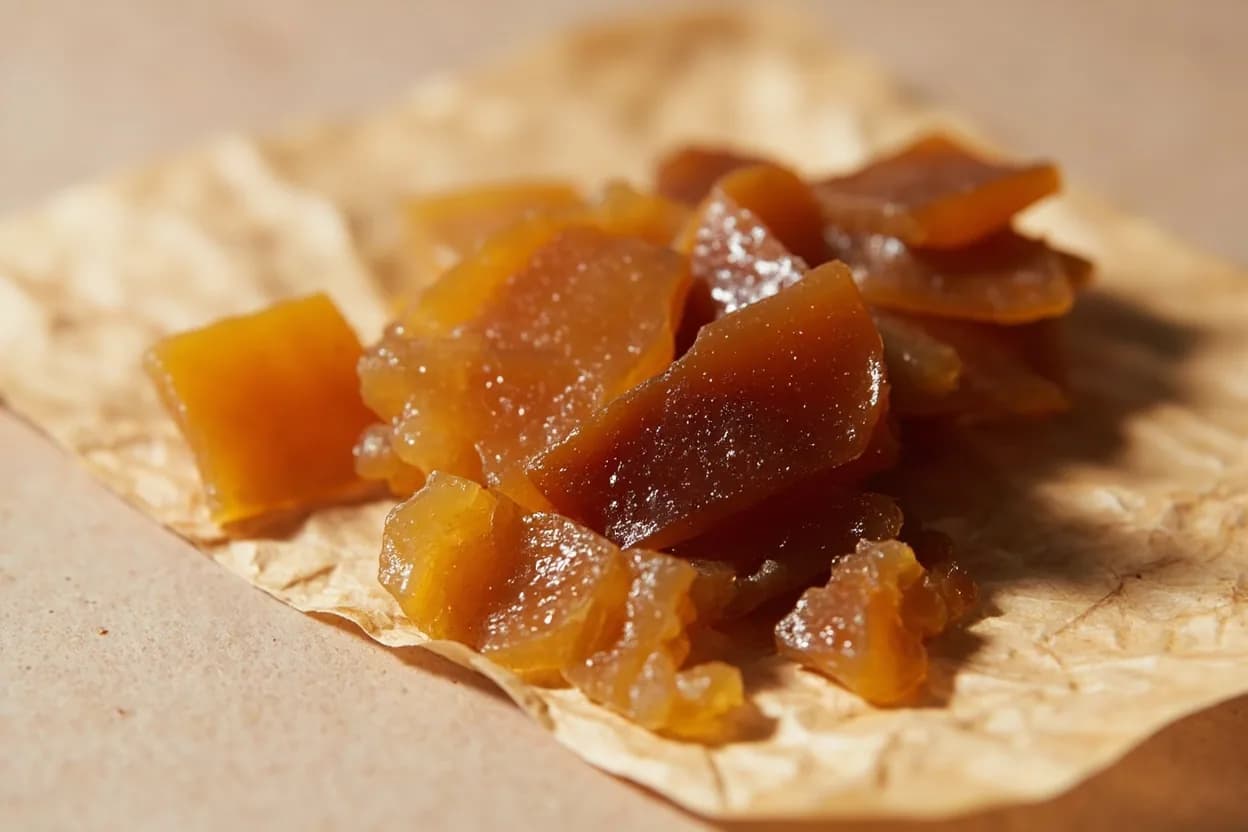
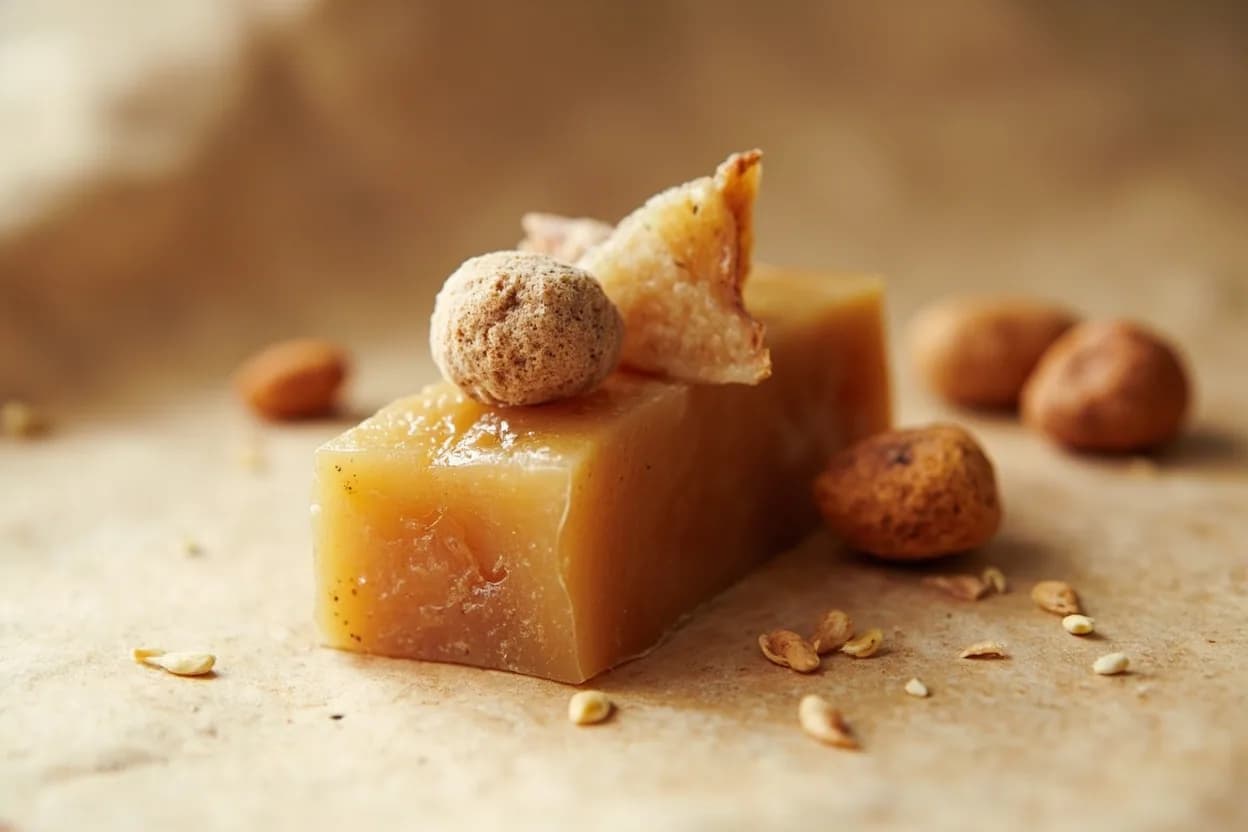
Jaggery is an unrefined, non-centrifugal cane sugar (and sometimes palm sugar) produced throughout South Asia, Southeast Asia, and Africa by boiling sugarcane juice or palm sap to a thick mass and casting it into blocks, cones, or balls. Unlike refined white or brown sugar, jaggery retains iron, potassium, calcium, and a spectrum of flavor-producing compounds — including furfural, 5-hydroxymethylfurfural, and volatile esters — developed during the cooking reduction. The result is a sweetener with deep molasses, caramel, and earthy notes, a faint smokiness, and an underlying richness that refined sugars cannot replicate. Cane jaggery (gur) is the most common South Asian form; date palm jaggery (nolen gur, Bengal) is a seasonal, prized variant with a distinct honeyed complexity.
In photos
Flavour profile
Classic pairings
- TamarindSouth Indian, North Indian
The definitive South Indian and North Indian sweet-sour axis: jaggery's deep molasses sweetness and tamarind's fruity tartness create the iconic imli-gur combination found in chaat chutneys, date-tamarind sauce, and sambar.
- SesameIndian (Maharashtra, Rajasthan)
Jaggery and sesame (til) bond in melted form to produce tilgul (Makar Sankranti sweet), chikki, and sesame brittle — the fat and nuttiness of sesame grounding the treacle sweetness.
- CoconutSouth Indian, Kerala
Freshly grated coconut softens jaggery's intensity in South Indian sweets like payasam, pongal, and modak fillings; the fat rounds the molasses bitterness.
- GingerIndian
Fresh and dry ginger's pungent warmth amplifies jaggery's caramel depth; foundational in gur-adrak chai, jaggery-ginger laddus, and Ayurvedic preparations.
- CuminNorth Indian
Roasted cumin's smoky, earthy character pairs with jaggery in savory chutneys and chaats where sweet-savory balance is the goal — the earthiness of each reinforces the other.
- Mustard SeedsSouth Indian
Tempered black mustard seeds' nutty, slightly bitter pop contrasts with jaggery's sweetness in South Indian rasam sweetened with gur and in rice preparations.
- GheePunjabi, North Indian
Melted ghee carries jaggery's aromatic compounds and enriches it with a milky, nutty depth — the central partnership of Punjabi gur-ghee on roti and countless festival sweets.
Adventurous pairings
- Dark Rum
Jaggery's molasses and caramel notes have an obvious affinity with rum (both derived from sugarcane); a jaggery syrup in rum cocktails adds earthy depth absent in simple syrup.
White miso's umami and salinity contrast jaggery's sweetness in a glaze for roasted root vegetables or fish; the fermented earthiness of both creates unexpected harmony.
Dried figs have a honeyed, seed-studded complexity and natural sweetness that harmonizes with jaggery's molasses notes; together they make a compelling filling for Indian-inspired pastry.
Unlike green cardamom's floral lift, black cardamom's smoky, camphoraceous depth amplifies jaggery's own smokiness; the combination in winter spiced sweets or slow braises is striking.
Jaggery dissolved in espresso adds a round, caramel-molasses sweetness that softens the coffee's bitterness while adding tropical complexity absent in white sugar.
Tread carefully
- Delicate dairy desserts (panna cotta, crème brûlée)avoid
Jaggery's assertive molasses notes and mineral residue muddy the clean, creamy neutrality these desserts depend on; refined sugar is correct here.
- Light fruit jams (strawberry, apricot)avoid
Jaggery overpowers the delicate floral-acidic character of light fruit preserves; cane sugar allows the fruit to speak.
- Neutral cream saucesavoid
Jaggery's dark color and strong flavor stain and dominate cream-based European sauces rather than sweetening them gently; a pinch of white sugar serves better.
How to use it
- Grate or crumble jaggery before adding to hot liquids — solid blocks dissolve unevenly
- Make jaggery syrup (jaggery dissolved in a small amount of hot water, strained) to remove impurities before using in fine sweets
- Melt jaggery with ghee on low heat for a quick gur-ghee sauce — do not rush or it will seize
- Use in marinades and braises (particularly with tamarind) where long cooking deepens its molasses character
- Combine with roasted cumin, chili, and tamarind for an instant chaat chutney
Appears in
Related flavours
Southeast Asian parallel — similar caramel-molasses profile, used in analogous culinary roles across the Bay of Bengal
Shares the bittersweet, mineral-rich character; molasses is a byproduct of cane refining, jaggery a traditional whole-juice reduction
The essential counterpoint to jaggery's sweetness in South Indian and chaat traditions
Nolen gur (date palm jaggery) and date syrup share a honeyed, dried-fruit sweetness; distinct origins, convergent flavor
References
- 1.Indian Food: A Historical Companion — K.T. Achaya
- 2.The Complete Indian Regional Cookbook — Mridula Baljekar
- 3.Madhur Jaffrey's Indian Cooking — Madhur Jaffrey
- 4.The Flavor Bible — Karen Page & Andrew Dornenburg
Confidence: high
Notes
Nolen gur: the seasonal prize
Date palm jaggery — nolen gur or patali gur — is harvested only in winter in West Bengal and Bangladesh, when date palm sap runs sweet and clear. It has a lighter color and a honeyed, almost butterscotch complexity quite distinct from dark cane jaggery. It melts at lower temperatures and is used to sweeten nolen gur payesh (rice pudding), sandesh, and mishti doi. Bengali pastry chefs prize it so highly that a fresh nolen gur sandesh from Kolkata in December is considered one of the world's great confections. Outside winter, the sap ferments too quickly for sugar production.
Ayurvedic context
In Ayurvedic medicine, jaggery (gur) is classified as warming (ushna virya) and is recommended as a digestive, often eaten with ghee after meals. This is the context for the widespread South Asian tradition of finishing a meal with a small piece of gur-ghee — a tradition that has deep roots in both culinary culture and traditional medicine.