Sweet Aromatics
Coconut
Also: coconut milk, coconut cream, desiccated coconut, coconut water, nariyal, kelapa
Tropical sweetness with rich fat and a lactonic, floral musk that bridges spice and fruit across half the world's cuisines.
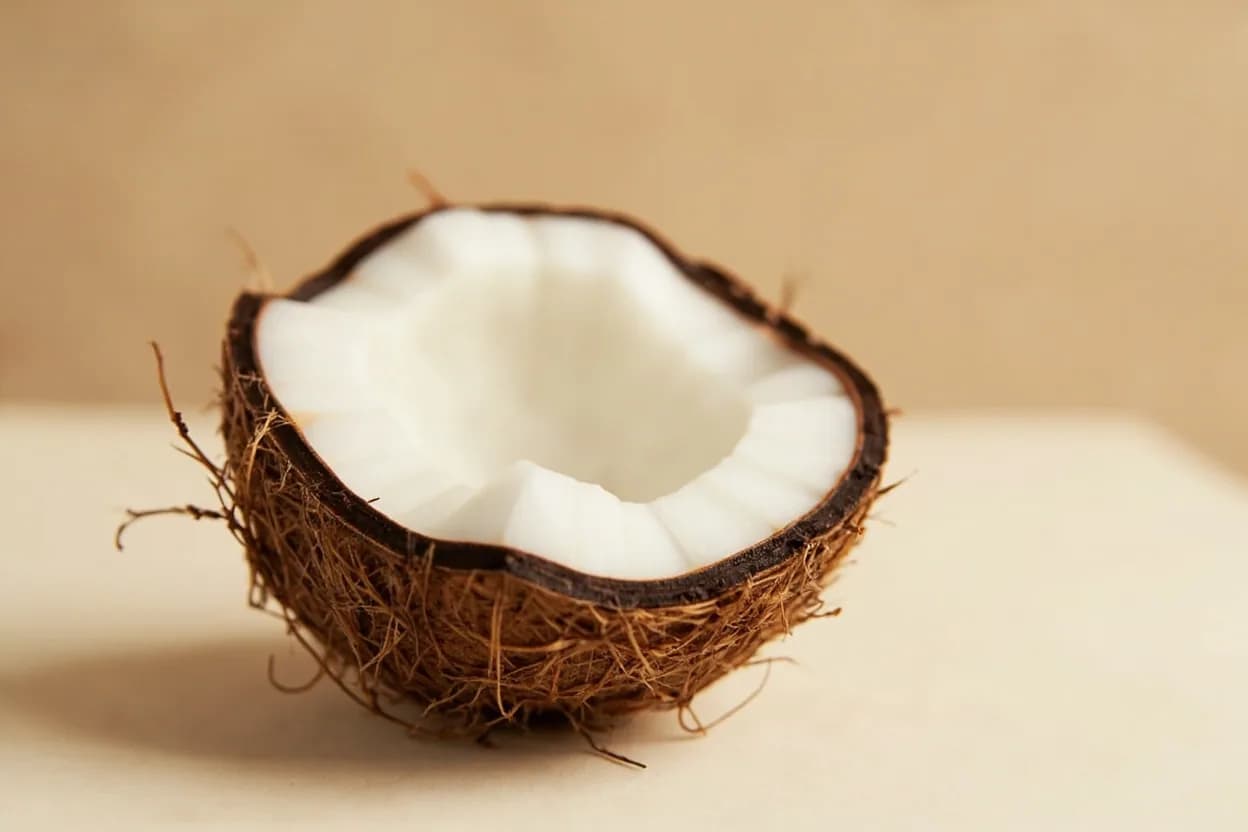
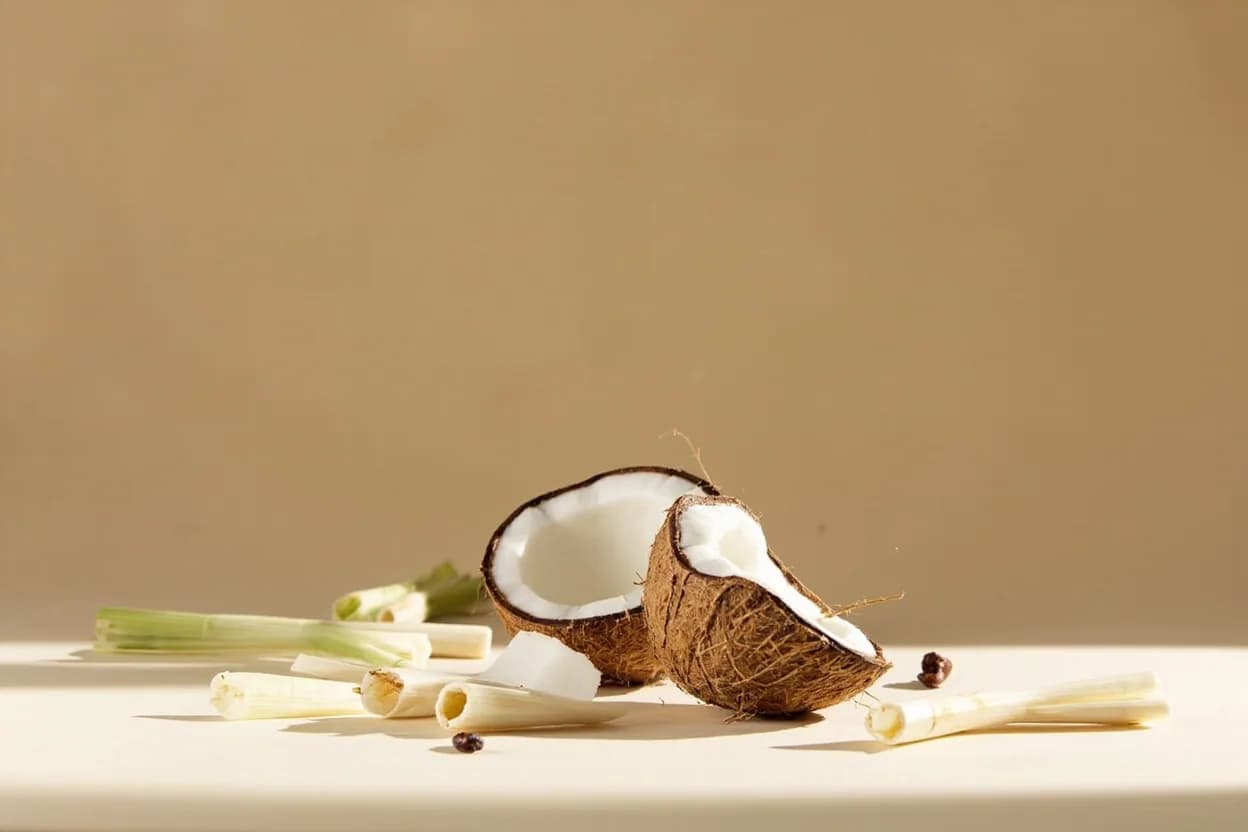
Coconut is the fruit of Cocos nucifera, a palm native to maritime Southeast Asia and the Pacific. Its culinary forms range from fresh grated flesh and coconut water to coconut milk, cream, oil, and desiccated shreds. The flavor character is defined by a pronounced sweetness, a mild vegetal nuttiness, and a rich fat content (lauric acid dominant) that carries aromatic compounds deep into dishes. Fresh coconut has a delicate floral-lactonic note; toasted coconut develops hazelnut and caramel registers. Coconut milk and cream round out heat, tame acids, and emulsify spice pastes into silky sauces.
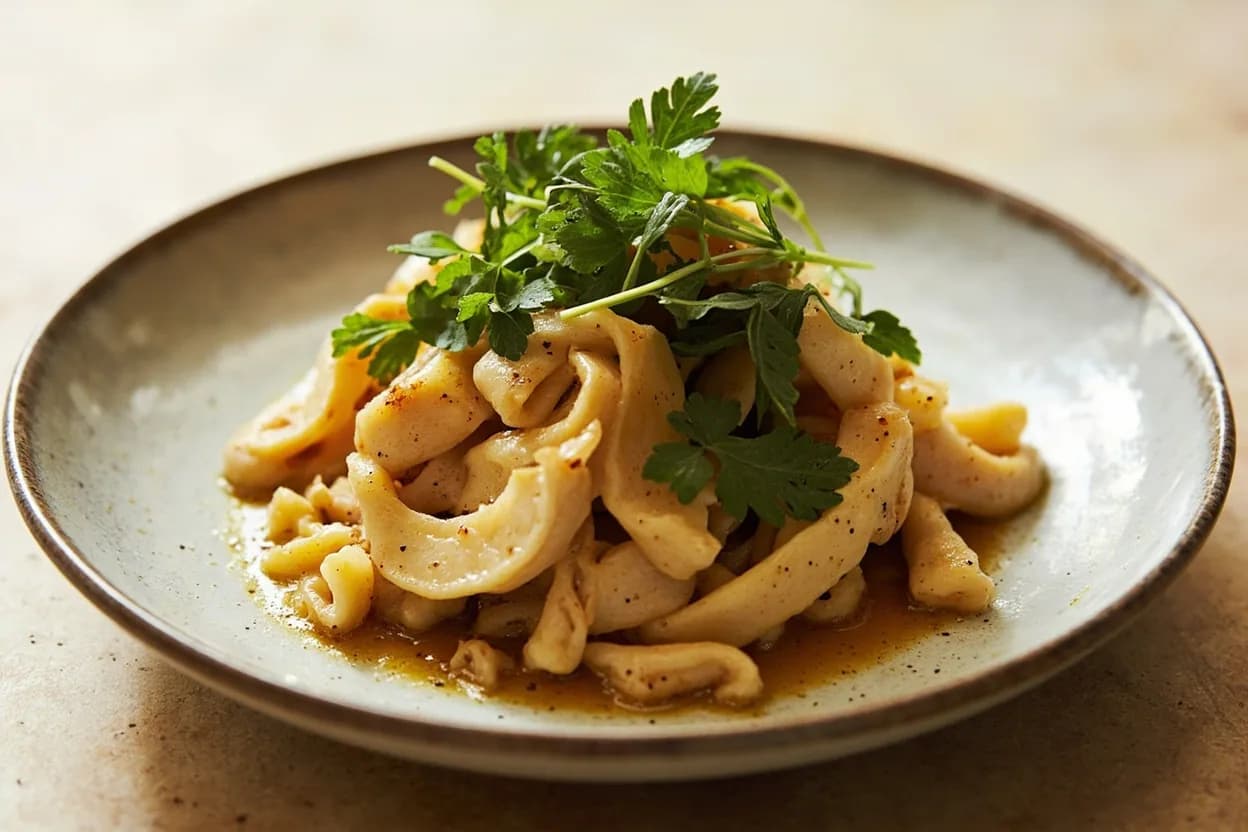
In photos
Flavour profile
Classic pairings
- LemongrassThai, Malay
Lemongrass's citral brightness cuts straight through coconut's fat, creating the aromatic spine of Thai curries and laksa.
- LimeThai, Southeast Asian
Lime juice provides acidity that lifts and defines coconut's sweetness; lime zest adds terpene complexity. The pairing anchors ceviche, Thai salads, and tropical desserts.
- ChiliSouth Indian, Sri Lankan
Capsaicin heat is mellowed by coconut fat, while coconut's sweetness accentuates the fruity top notes of fresh and dried chilies. Central to Kerala curries and Sri Lankan kari.
- TurmericSouth Indian, Malay
Turmeric's earthy, slightly bitter spice blends seamlessly with coconut milk, producing the golden-yellow sauces of Malay rendang and South Indian fish curry.
- TamarindSouth Indian, Tamil
Tamarind's sour, fruity tartness creates a sweet-sour counterpoint to coconut richness; together they define the flavor of South Indian sambar enrichments and Tamil chutneys.
- PandanMalaysian, Indonesian, Filipino
Pandan's grassy, vanilla-adjacent fragrance is the natural aromatics partner to coconut in Southeast Asian sweets — ondeh-ondeh, kaya jam, nasi lemak.
- CardamomSouth Indian, Gulf
Green cardamom's eucalyptol and terpene lift mesh beautifully with coconut's lactonic sweetness in Indian mithai and Emirati desserts.
- GingerThai, Indonesian
Fresh ginger's pungent spice and citrus-pepper bite contrast with coconut's creaminess; a foundational pairing in Thai green curry and Indonesian rendang.
Adventurous pairings
White or shiro miso's umami salinity amplifies coconut's sweetness and rounds its fat, producing a surprisingly complex base for soups and glazes.
The bitter, roasted depth of espresso locks into coconut's sweetness in a way dairy cannot — coconut flat whites and mocha lattes gain tropical complexity.
Salty, fermented soy sauce creates an umami-sweet tension with coconut milk that drives the balance in Filipino ginataang dishes and modern noodle broths.
- Black Pepper
Coarsely cracked black pepper — its piperine heat and woody floral notes — cuts through coconut cream in ways that feel less predictable than chili and equally effective.
The sharp, funky ammoniacal notes of a strong blue cheese find an unexpected foil in coconut's sweetness; effective in savory dips and emulsified dressings.
Tread carefully
- Very tannic red wineavoid
High tannins clash with coconut's fat, producing a chalky, astringent sensation; light wines or off-dry whites are a far better match.
- Heavy cream (in excess)avoid
Layering coconut cream with heavy dairy cream produces an overwhelmingly rich, flat sauce; the fats compete rather than complement.
- Delicate white fish with coconut oil at high heatavoid
Coconut oil's saturated fat burns at lower temperatures than expected and its flavor overwhelms mild fish; a neutral oil preserves the fish's character better.
How to use it
- Toast desiccated coconut dry in a pan until golden-brown to unlock hazelnut and caramel notes
- Reduce coconut milk until the oil separates ('cracking') before adding curry paste — this fries the paste in coconut fat for deeper flavor
- Blend fresh coconut with warm water and strain for richer, more aromatic coconut milk than canned
- Add coconut cream at the end of cooking to preserve its fresh sweetness; long simmering dulls it
- Grate fresh coconut finely and toast for South Indian chutney and dry-curry applications
Appears in
Related flavours
The canonical aromatics partner for coconut in Southeast Asian curries and soups
- Pandan
Shares Southeast Asian dessert territory; pandan adds green, grassy vanilla that coconut lacks
Counterbalances coconut fat with sour-fruity acidity in South Indian and Sri Lankan cooking
Often used together to sweeten coconut-based sauces and desserts across Southeast Asia
References
- 1.The Flavor Bible — Karen Page & Andrew Dornenburg
- 2.On Food and Cooking — Harold McGee
- 3.The Complete Asian Cookbook — Charmaine Solomon
- 4.Cradle of Flavor — James Oseland
Confidence: high
Notes
Fat content and cooking behavior
Coconut milk separates into a fat-rich cream layer and a watery layer on standing. In Thai cooking this separation is deliberately induced ('cracking the coconut milk') by boiling without stirring until the fat renders out, then the paste is fried in it — a technique that concentrates flavor and produces a richer curry. Full-fat (unshaken) canned coconut milk gives more authentic results than low-fat versions, which contain stabilizers that prevent proper splitting.
Regional variation in use
In South Indian cooking, freshly grated coconut is the norm — coconut milk is secondary to the fresh-scraped flesh ground into chutneys and wet masalas. Thai and Malay cooking pivots to coconut milk and cream as the primary vehicle. In the Pacific Islands (Fiji, Samoa, Hawaii), coconut cream serves as a dressing for raw proteins (kokoda, poisson cru). Each tradition reflects different processing constraints and cultural aesthetics.