Sweet Aromatics
Palm Sugar
Also: coconut sugar, gula melaka, gula jawa, nam taan peep, kaong sugar, arenga sugar
Deep caramel-molasses sweetness with a faintly smoky, floral complexity that no white sugar can replicate in Southeast Asian cooking.
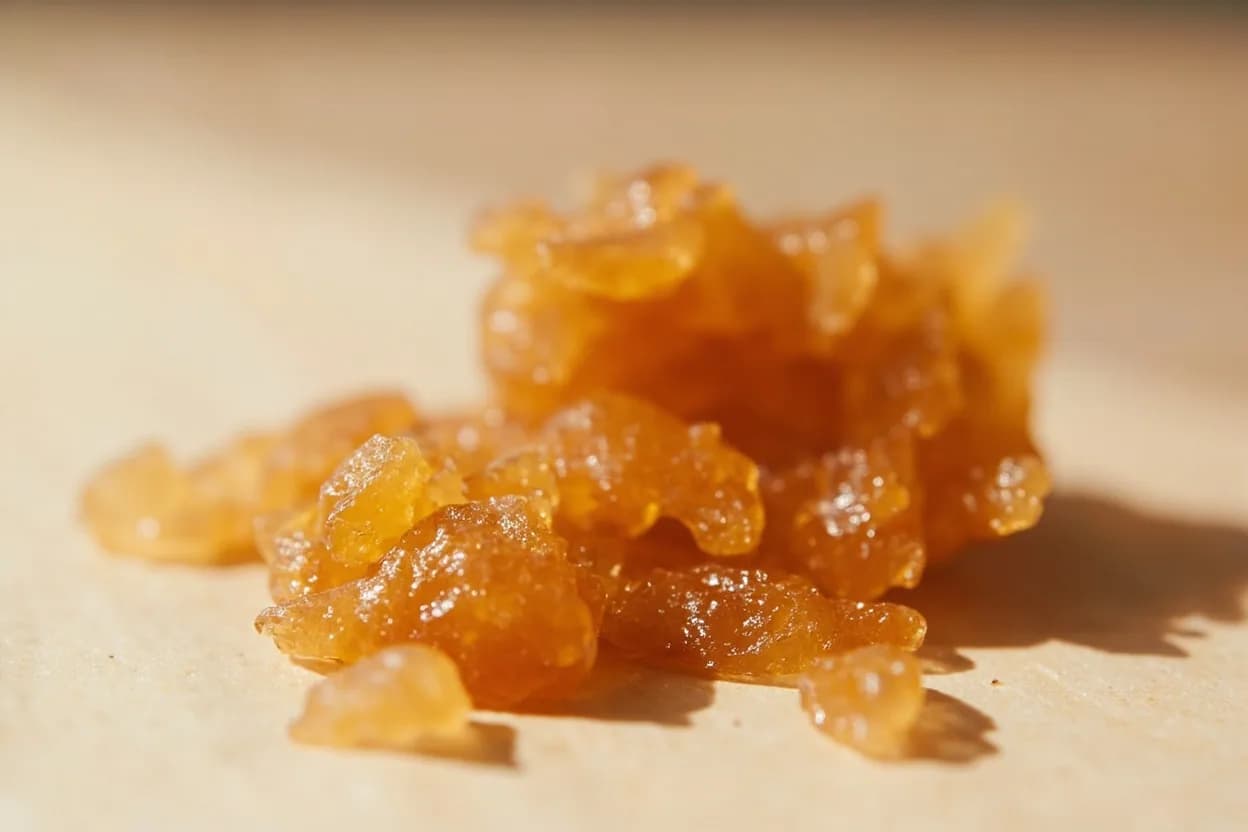
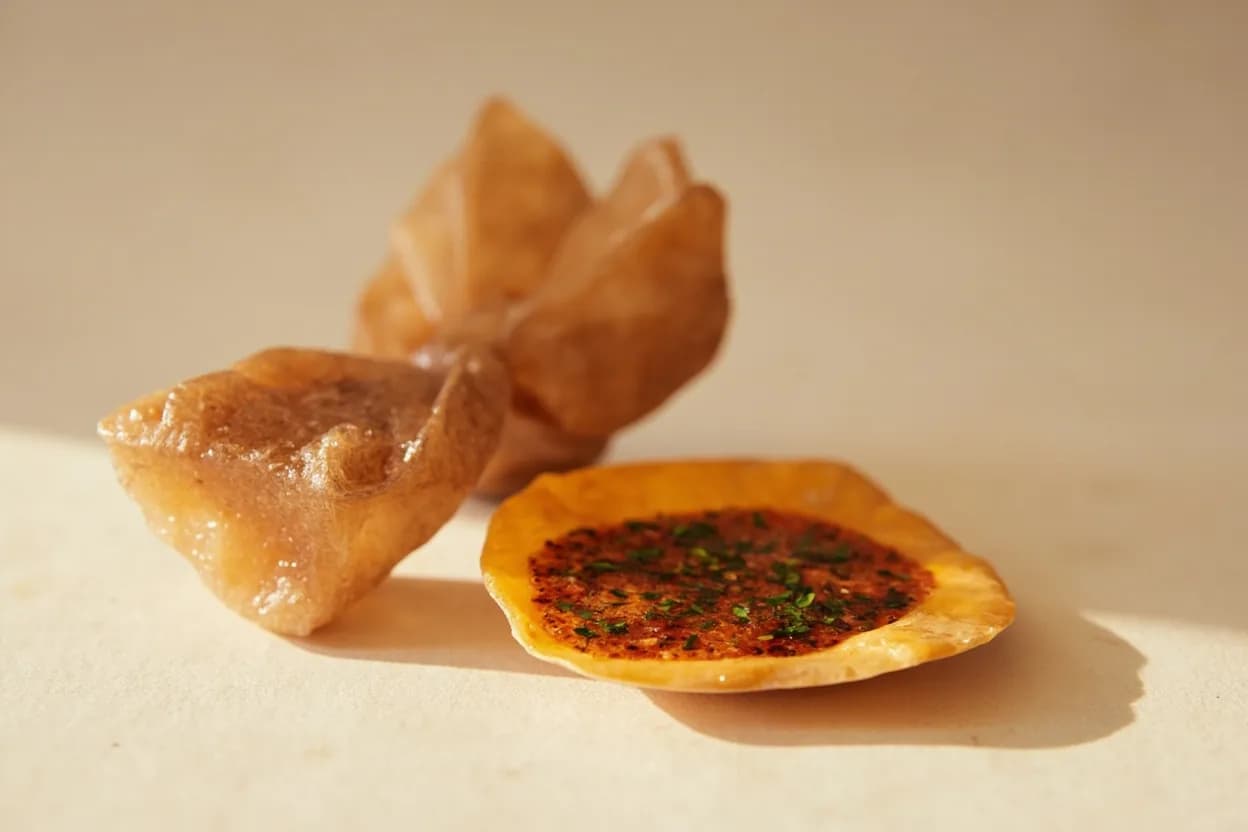
Palm sugar is an unrefined sugar produced by boiling and reducing the sap tapped from the flower buds of various palms — principally the coconut palm (Cocos nucifera) and the Arenga pinnata (sugar palm) in Southeast Asia. Unlike refined cane sugar, palm sugar retains mineral content, trace volatile compounds, and a distinctive caramel-molasses character from the Maillard and caramelization reactions during reduction. Its flavor is complex: a primary sweetness underlaid by notes of butterscotch, toffee, and a faint smokiness from open-fire reduction. It is sold as solid cylinders or discs (gula melaka in Malaysia and Singapore), soft paste (Thailand), or granulated (marketed as 'coconut sugar'). The palate response is mellower and less cloying than refined sugar, with a longer, warmer finish.
In photos
Flavour profile
Classic pairings
- Fish SauceThai, Vietnamese
The foundational sweet-salty axis of Thai and Vietnamese cooking. Palm sugar's caramel rounds fish sauce's pungent brine; together they form the base of pad Thai, papaya salad, and countless dipping sauces.
- TamarindThai, South Indian
Tamarind's sour fruitiness and palm sugar's mellow sweetness create the iconic sweet-sour-salty triangle of Southeast Asian cuisine — the basis of Pad Thai sauce, Worcestershire-type condiments, and Indian imli chutney.
- Coconut MilkThai, Malaysian, Indonesian
Palm sugar dissolves into coconut milk with complementary tropical sweetness, yielding richer, more complex dessert sauces than cane sugar would. Foundational in Thai sticky rice with mango, bubur sumsum, and Malaysian cendol.
- LimeThai
Lime's citric sharpness cuts through palm sugar's richness and brightens the caramel notes; a pairing that drives Thai larb, green papaya salad, and most Southeast Asian salad dressings.
- GalangalThai
Galangal's piney, medicinal sharpness and palm sugar's warm caramel are a classical Thai curry partnership, creating the base depth of tom kha and massaman curry.
- ChiliThai, Indonesian
Fresh and dried chilies' heat is offset and given sweetness by palm sugar; the interaction brings out fruity top notes in the chili and prevents bitterness — essential in Thai nam prik dipping sauces.
- Soy SauceIndonesian, Malay
In Indonesian and Malay cooking (kecap manis is literally a palm/cane sugar-sweetened soy), palm sugar and soy create a glossy, sweet-umami glaze used on satay, nasi goreng, and braises.
Adventurous pairings
- Bourbon
Palm sugar's butterscotch and toffee notes align naturally with the vanilla-oak-caramel spectrum of American bourbon; a palm sugar simple syrup transforms cocktails with Southeast Asian flair.
- Blue Ginger (Galangal)
Beyond its classic role in Thai curries, galangal paired with palm sugar in a caramel sauce for duck or pork brings medicinal-floral depth that ordinary caramel cannot replicate.
Palm sugar's molasses-caramel notes harmonize with dark chocolate's bitter roasted tones; used in place of cane sugar in ganaches and brownies it adds tropical earthiness.
- Aged Balsamic
Both are concentrated, complex, naturally sweet products with acidity undertones; combining them in a reduction for duck or cheese boards produces a multi-layered sweet-sour glaze.
Palm sugar's faint smokiness is amplified and dramatized by smoked salt; the combination makes a striking rub for grilled meats or a caramel for salted desserts.
Tread carefully
- Delicate floral teas (Jasmine, Chamomile)avoid
Palm sugar's assertive caramel and molasses notes overwhelm delicate floral infusions; white sugar or honey serve these teas far better.
- Very acidic raw vinegar dressingsavoid
In high-acid, thinly built dressings, palm sugar can read as heavy and earthy rather than sweet; lighter sweeteners keep balance.
- Highly refined pastry (French macarons, mille-feuille)avoid
Palm sugar's hygroscopic nature and residual moisture can destabilize French pastry techniques that depend on precise sugar behavior; stick to caster or isomalt.
How to use it
- Shave or grate solid gula melaka before using — it dissolves far more evenly than hacking chunks
- Make a palm sugar simple syrup (1:1 with water, low heat) for cocktails and dressings where uniform sweetness is needed
- Brown palm sugar in a dry pan briefly before adding liquid to deepen its caramel notes for braises
- Dissolve in fish sauce and lime juice over gentle heat to create an instant Thai dressing base
- Use as a finishing sweetener, not a base — its complex notes read best when not fully cooked out
Appears in
Related flavours
South Asian unrefined sugar with a similar caramel-molasses character, used in parallel applications across India and Sri Lanka
Shares the dark, bittersweet, mineral-rich flavor profile; both are byproducts of sugar refining (molasses) or reduction (palm sugar)
The essential counterpart to palm sugar's sweetness in the Southeast Asian sweet-sour axis
Coconut palms produce gula melaka; the two flavors share a tropical aromatic family and often appear together
References
- 1.Hot Sour Salty Sweet — Jeffrey Alford & Naomi Duguid
- 2.Thai Food — David Thompson
- 3.The Flavor Bible — Karen Page & Andrew Dornenburg
- 4.Cradle of Flavor — James Oseland
Confidence: high
Notes
Gula melaka vs. coconut sugar
The terms are often conflated commercially, but there are differences. Gula melaka is tapped from the Arenga pinnata (aren palm) or coconut palm in Malaysia and Indonesia, reduced over wood fire, and poured into bamboo tubes — it has a distinctive smokiness and a darker, more complex character. Coconut sugar marketed in Western health-food stores is typically made from coconut palm sap and sold granulated or in soft paste form; it has a cleaner, more caramel-forward flavor with less earthiness. Both are preferable to white sugar in Southeast Asian cooking, but they are not identical.