Salts
Smoked Salt
Also: wood-smoked salt, hickory salt, alder salt, applewood salt
Salt that carries the campfire into your kitchen — seasoning and smoke in a single pinch.
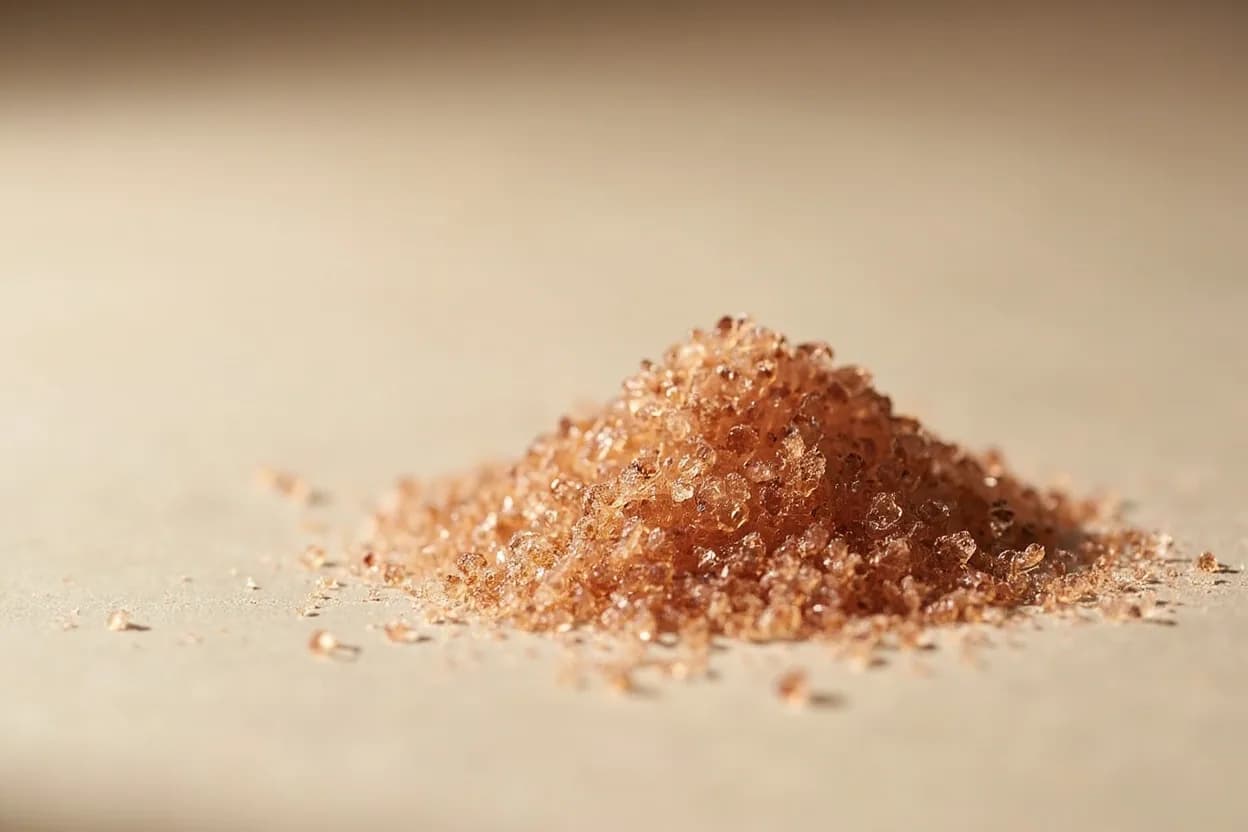
Smoked salt is coarse or flaky sea salt cold-smoked over hardwood (alder, hickory, mesquite, applewood, cherry) for hours or days until the crystals absorb phenolic smoke compounds. The result is a finishing salt that delivers salinity plus a layered wood-smoke aroma — creosol, guaiacol, syringol — without any actual heat or combustion at the plate. Different woods yield distinct characters: alder is delicate and Scandinavian; hickory is bold and American-BBQ; applewood is fruity and gentle.
In photos
Flavour profile
Classic pairings
- grilled ribeye steakAmerican barbecue
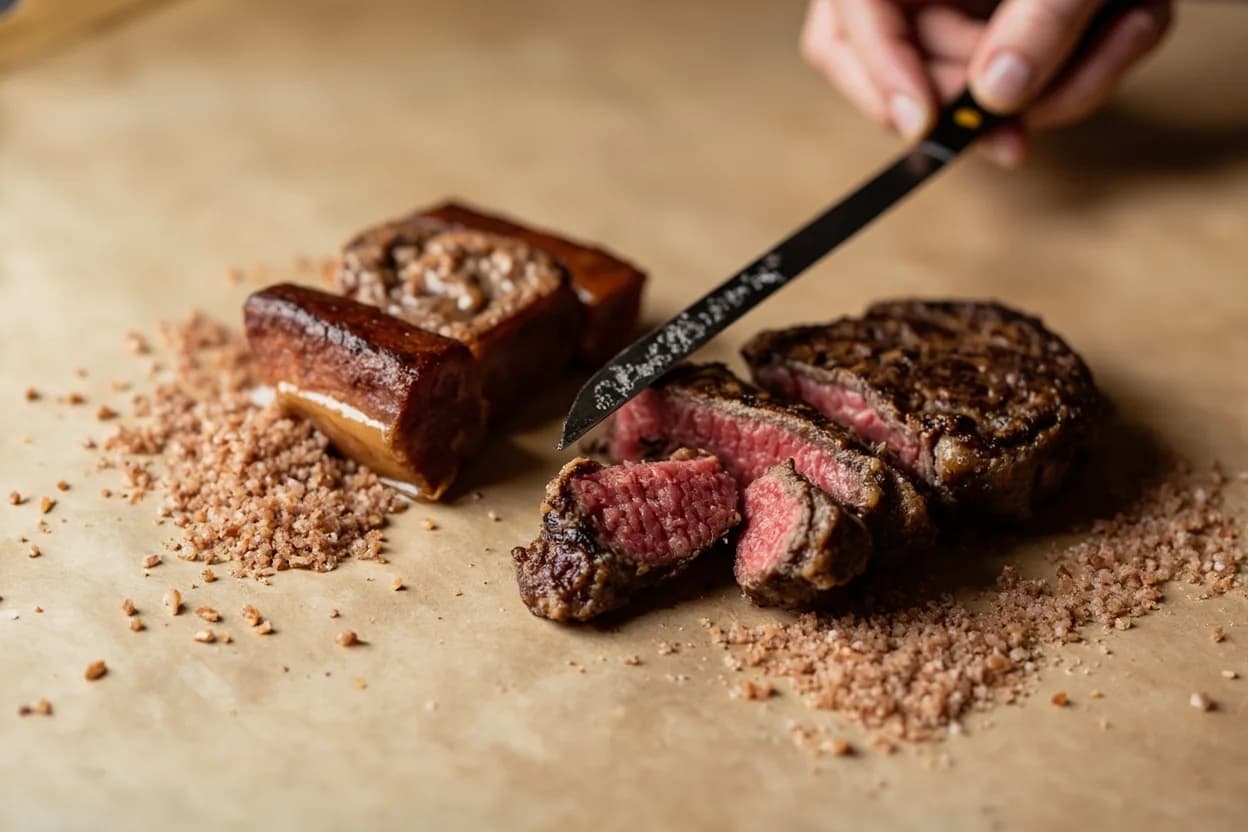
A finish of smoked salt on a seared crust doubles the Maillard-meets-smoke effect without oversmoking the meat; flaky crystals add textural contrast.
- dark chocolateConfectionery
Phenolic smoke compounds share aromatic relatives with cocoa's pyrazines — the pairing is chemically coherent, enhancing bitter depth while cutting sweetness.
Smoked salt replaces plain fleur de sel in salted caramel, adding a bonfire undercurrent that deepens butterscotch notes and makes the salt itself the flavour event.
A tiny pinch on espresso grounds before brewing suppresses bitterness and introduces a subtle roasty complexity that reads as barrel or smoke; popular in specialty coffee bars.
- roasted root vegetablesNordic
Beets, parsnips, and carrots develop natural sugars in the oven; smoked salt amplifies their earthy sweetness and ties them to a ghost of open fire.
- poached or soft-cooked egg
The neutral richness of a runny yolk is the ideal canvas — smoke aroma blooms in the fat while salinity seasons the white.
- avocado toast
A finishing pinch on avocado lifts the grassy creaminess with savory smoke that compensates for avocado's lack of inherent savoriness.
Adventurous pairings
- cocktails (mezcal, whisky, Bloody Mary rim)
Smoked-salt rim on a Margarita or Bloody Mary reinforces agave smoke; on a whisky sour it bridges citrus and barrel notes; a bar spoon dissolved into a mezcal cocktail adds a saline-smoke finish.
- vanilla ice cream
Scattering hickory smoked salt on vanilla creates a smoke-and-cream contrast — similar to butter-pecan but with a wild, woodsy edge that makes dessert feel savory-forward.
- watermelon
West African and Mexican traditions already salt fresh watermelon; smoked salt adds a fire-pit dimension that amplifies the fruit's high-summer sweetness through contrast.
A tiny finish of alder-smoked salt on white miso deepens umami and adds a subtle smoky thread that suggests dashi made from bonito flakes — even in a vegan broth.
Tread carefully
- delicate raw seafood (sashimi, crudo)avoid
Smoke overpowers the clean oceanic flavors of fresh raw fish; use a neutral flaky sea salt like Maldon instead.
- light floral desserts (panna cotta, lavender shortbread)avoid
Smoke competes with and crushes delicate floral aromatics, turning an elegant dessert muddy.
- fresh mild cheese (burrata, ricotta)avoid
The same logic applies — smoke colonizes the subtle milky freshness and leaves nothing of the original character.
How to use it
- Use only as a finishing salt — heat drives off volatile smoke compounds, wasting the ingredient
- Store in an airtight jar away from moisture; crystals are hygroscopic and can clump or lose smoke potency
- Pair wood type to food: alder for fish and poultry, hickory for red meat, applewood for sweets and cocktails
- Dissolve a small amount in butter or oil to distribute smoke flavor across a whole dish
- Make compound smoked-salt blends with herbs (smoked salt + thyme + lemon zest) as an all-purpose rub
Appears in
Related flavours
Same smoke chemistry, liquid form — use when you need smoke distributed through a brine or marinade rather than on the surface
The unsmoked counterpart — use fleur de sel when you want crystalline finishing salt without the wood-smoke dimension
- Smoked Paprika
Another dry smoke vehicle; smoked salt plus smoked paprika creates an intensified layered smoke profile in rubs
References
- 1.The Flavor Bible — Karen Page & Andrew Dornenburg
- 2.On Food and Cooking — Harold McGee
- 3.Salt Fat Acid Heat — Samin Nosrat
- 4.The Art of Flavor — Daniel Patterson & Mandy Aftel
Confidence: high
Notes
Wood matters
The wood used to smoke the salt isn't cosmetic. Alder (used in Pacific Northwest salmon smoking) imparts a lighter, slightly sweet smoke; hickory is assertive with creosol-forward notes; mesquite is the most pungent and should be used sparingly; applewood and cherrywood are fruity and mild enough for chocolate and cocktail applications. Matching wood character to the food is the difference between a harmonious finish and an overpowering one.
DIY smoking
Flaky sea salt can be cold-smoked at home using a handheld smoke gun or a kettle grill set up for indirect cold smoke (keep the salt temperature below 35 °C / 95 °F to prevent crystalline structure breakdown). Spread salt in a thin layer in a shallow baking dish. Two to four hours over a smoldering wood chip bundle produces a noticeably smoky result.