Salts
Fleur de Sel
Also: flower of salt, fleur de sel de Guérande, sel gris (related), fiore di sale
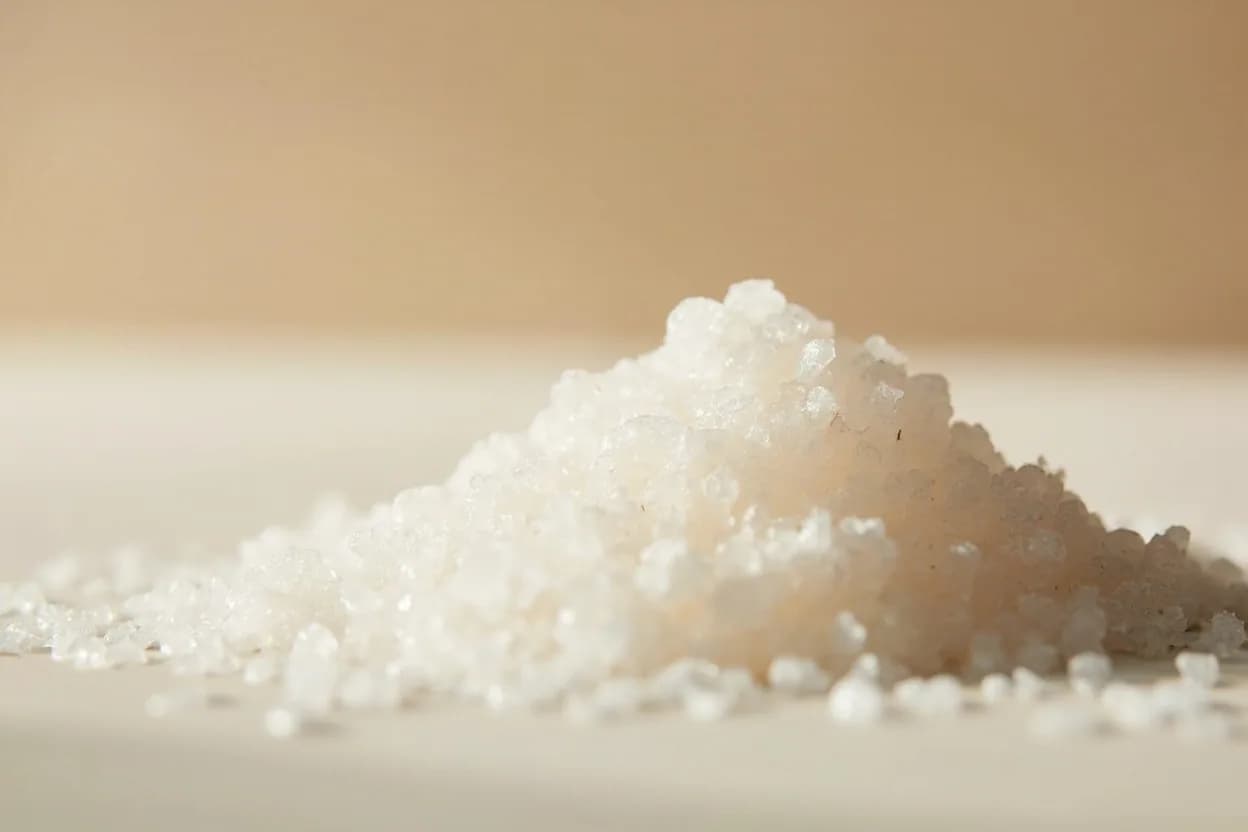
The hand-harvested salt flower of Brittany's salt marshes — moist, mineral, and impossibly light — used purely as a finishing element to add clean salinity and crystalline crunch at the last moment.
Fleur de sel forms when conditions in shallow salt marshes (marais salants) align perfectly: hot sun, low humidity, and a light wind cause sodium chloride crystals to nucleate at the surface of brine pools rather than sinking to the bottom. Workers skim these fragile, interlocked crystal clusters by hand with a lousse, a flat wooden rake, before they can sink and merge with the coarser sel gris below. The result is a moist, naturally white salt with a delicate, briny-mineral flavor, a faint oceanic character from magnesium and calcium chloride impurities, and a lacy, irregular crystal structure that dissolves softly on the tongue rather than all at once. Its hallmark is its finishing role: added moments before serving, it contributes clean salinity, a light mineral lift, and textural crunch that would be lost entirely if cooked in.
In photos
Flavour profile
Classic pairings
- Dark chocolate (ganache, truffles, tarts)French pâtisserie, global
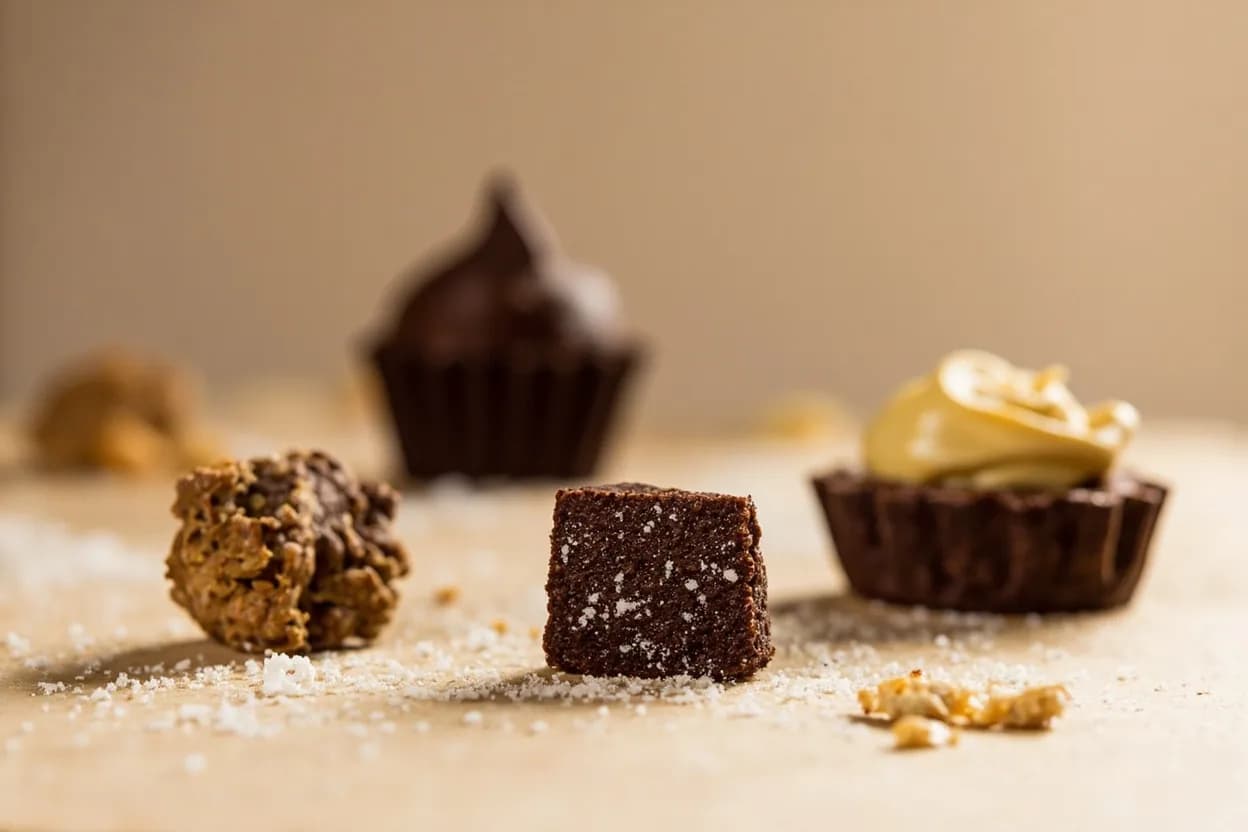
The single most iconic application: a pinch of fleur de sel on dark chocolate amplifies bitterness, heightens perceived sweetness, and introduces a mineral tension that makes the pairing taste more complex than either element alone.
- Butter (beurre salé, artisanal butter)Breton, French
Breton salted butter — the regional tradition — uses fleur de sel to season rich cultured cream butter; the moist crystals partially dissolve into the fat while leaving irregular pockets of salinity across the bread.
- Foie gras and pâté de campagneFrench
Finished over a slice of torchon or terrine, fleur de sel sharpens the unctuous fat and lifts its richness without harsh iodine; its delicacy suits the product's luxury register.
- Grilled fish (whole sea bass, loup de mer)Mediterranean, French
Sprinkled over hot, just-off-the-grill fish, fleur de sel melts partly into the skin and season with mineral salinity that mirrors the fish's oceanic character — a natural affinity between salt and sea.
- Steak (prime beef, côte de bœuf)French, global steakhouse
The classic steakhouse finish — fleur de sel added tableside or at resting keeps crystal crunch intact; the salt draws out the jus and seasons each bite independently, unlike pre-salted meat.
- Caramel (beurre salé, salted caramel sauce)French pâtisserie, Breton
The global salted-caramel craze elevated fleur de sel from specialty salt to pantry staple; the moist crystals dissolve unevenly into caramel, creating waves of intensely salt-sweet contrast throughout the sauce.
- Ripe tomatoes and heirloom saladsProvençal, Mediterranean
A thin slice of ripe heirloom tomato needs nothing but high-quality olive oil and fleur de sel — the mineral salt amplifies the tomato's glutamate-rich umami and the crystals provide structure against soft flesh.
Adventurous pairings
- Ripe stone fruit (peach, nectarine, apricot)
A tiny pinch of fleur de sel over sliced ripe peaches — a technique common in Spanish and Italian fruit preparations — suppresses the bitterness of the skin, amplifies natural sweetness through contrast, and adds an unexpected mineral lift that makes the fruit taste more intensely like itself.
- Vanilla ice cream
Fleur de sel scattered over plain vanilla ice cream is a textural and flavor transformation: the crystals crunch against the cream, the mineral salinity throws the vanilla's sweetness into sharp relief, and the contrast is far more sophisticated than any topping sauce.
- Watermelon and feta
The Greek-summer salad formula elevated with fleur de sel instead of table salt: the mineral quality echoes the feta's own brined character and the contrast with sweet melon is maximized by the salt's crispness.
- Raw oysters
A pinch instead of the more common mignonette: the mineral and moisture character of fleur de sel are native to the same tidal environment as the oyster, creating a resonance rather than a contrast.
- Extra-virgin olive oil on bread
Bread dipped in cold-pressed olive oil and finished with a few crystals of fleur de sel is among the oldest and purest applications — the mineral salinity anchors the grassy bitterness of the oil and makes the combination a complete appetizer.
Tread carefully
- Long-simmered soups and braisesavoid
The crystals dissolve completely during cooking, losing all textural benefit and contributing only sodium at a cost premium over table salt. Season with kosher or sea salt during cooking; use fleur de sel only to finish cold or just-plated dishes.
- Pasta wateravoid
Dissolving large quantities of fleur de sel in boiling pasta water is extravagant and pointless — the crystal structure that defines its value is destroyed. Use inexpensive kosher salt by the handful for boiling.
- Highly processed or aggressively seasoned dishesavoid
Fleur de sel's delicacy is overridden by loud flavors — deeply spiced curries, pungent fish sauces, or highly seasoned rubs provide no surface for its mineral subtlety to register.
How to use it
- Add at the very last moment — on a hot plate, at resting, or tableside — to preserve crystal structure
- Pinch and crumble gently between fingers for even distribution over a surface
- Store in an open ceramic dish or salt pig, not a sealed shaker, to maintain its natural moisture and prevent clumping into a hard block
- Use in dry-rub finishing (not early in the rub) for crust formation at service rather than during cooking
- Bloom into room-temperature butter to make compound finishing butter without losing crystal texture entirely
Appears in
Related flavours
- Sel gris
The coarser grey salt harvested below fleur de sel in the same marshes — earthier and more mineral, used during cooking where fleur de sel is reserved for finishing
- Maldon sea salt
The English flat-crystal sea salt with a similarly delicate finishing role — slightly less mineral than fleur de sel, slightly crisper in texture; the most common substitute outside France
- High-quality extra-virgin olive oil
The natural companion in Mediterranean finishing — together they are one of the oldest and most reliable two-ingredient pairings in Western cooking
The pairing that made fleur de sel globally famous beyond France — the two have an almost chemical affinity, with salt amplifying bitter, sweet, and umami simultaneously
References
- 1.On Food and Cooking: The Science and Lore of the Kitchen — Harold McGee
- 2.Salt: A World History — Mark Kurlansky
- 3.Larousse Gastronomique — various editions, Larousse
- 4.The French Laundry Cookbook — Thomas Keller
Confidence: high
Notes
Guérande vs. other regions
The most prized fleur de sel comes from the Guérande peninsula in southern Brittany, a protected designation. Camargue fleur de sel (from the Rhône delta) and Portuguese flor de sal (particularly from Algarve) are genuine alternatives with slightly different mineral profiles — the Algarve version is often described as having a cleaner, less oceanic flavor. All are hand-harvested; any fleur de sel sold cheaply or in bulk should be treated with skepticism.
Why it must stay moist
Fleur de sel's moisture content — typically around 3–6% — is not a defect but part of its character. The hygroscopic impurities (magnesium chloride, calcium chloride) are what give it the slight oceanic flavor and slow-dissolving crystal structure. Drying it fully in a hot oven to 'improve' it destroys both the texture and the mineral complexity that justifies its cost.