Citrus & Floral
Lemongrass
Also: takrai, serai, citronella grass, Cymbopogon citratus
Bright, grassy, and powerfully citrusy — lemongrass is the aromatic backbone of Southeast Asian cooking.
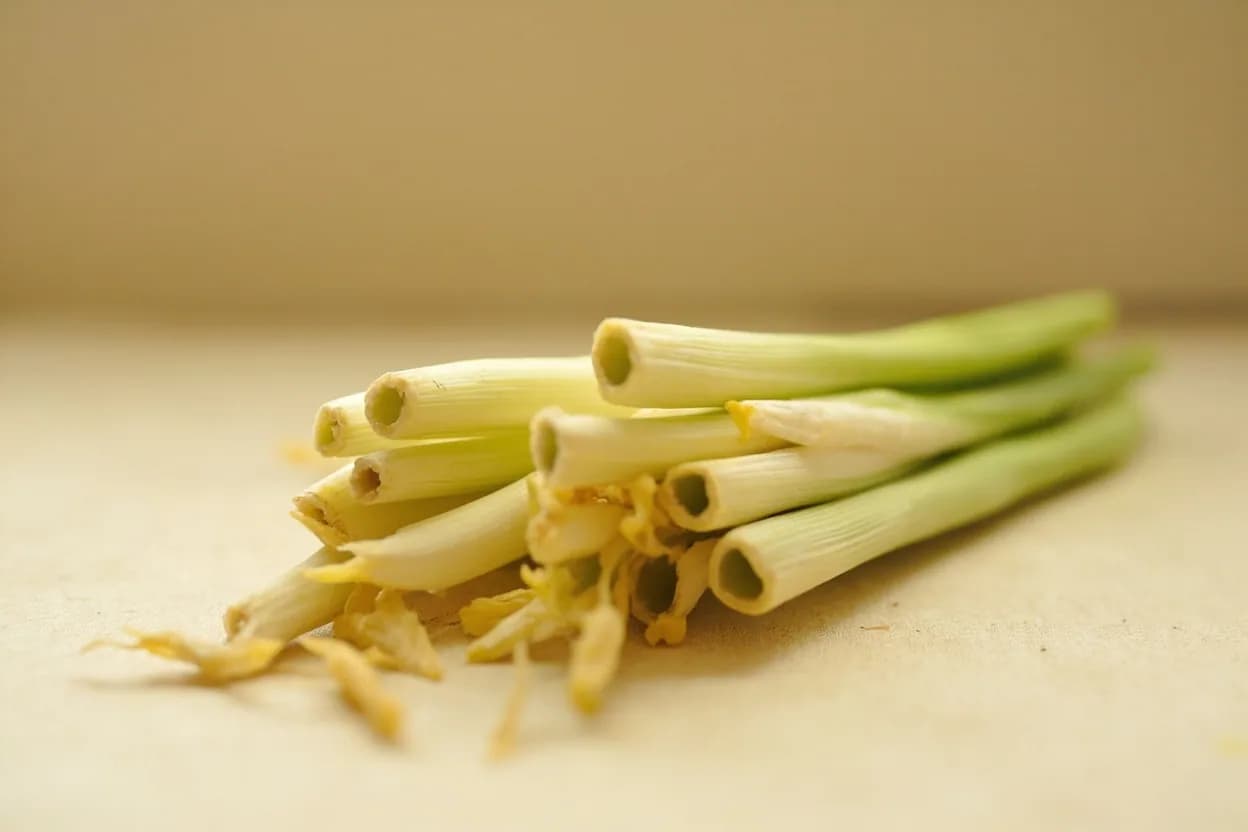
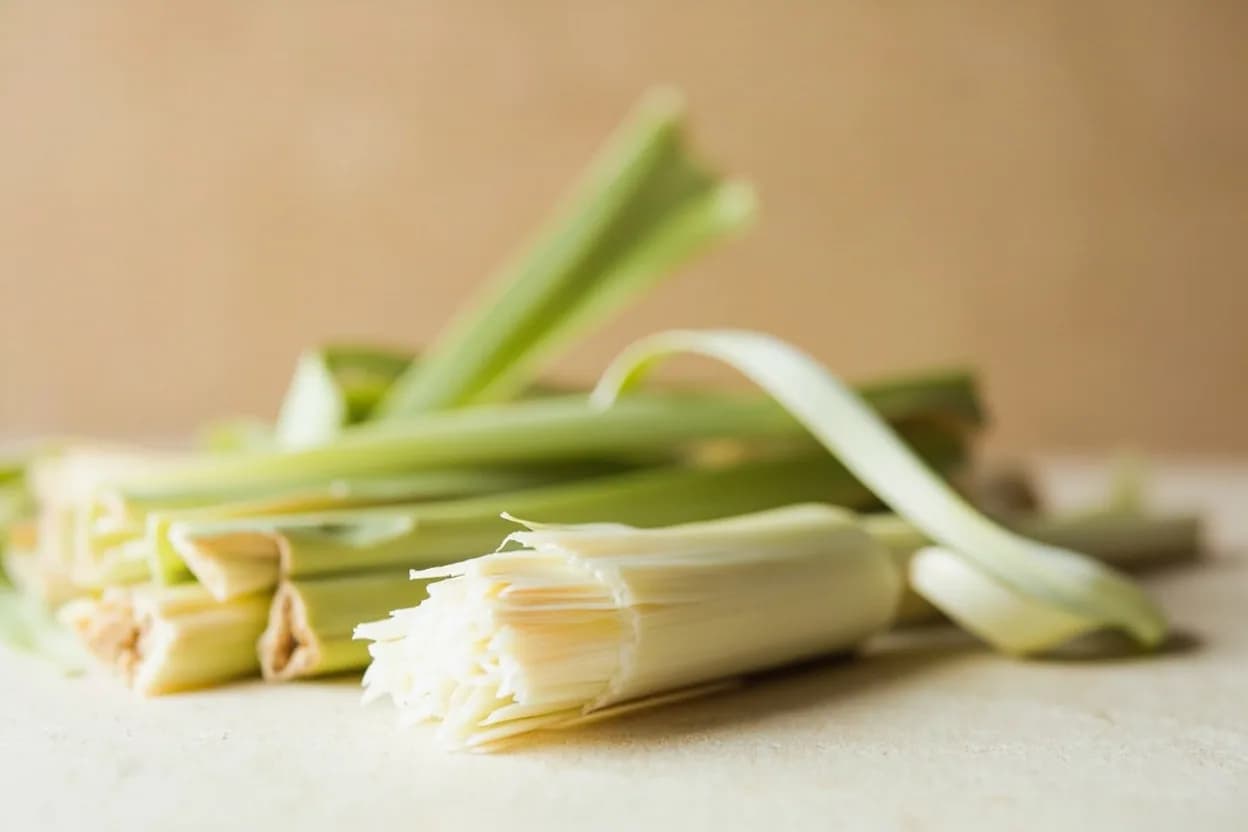
Lemongrass (Cymbopogon citratus) is a tall tropical grass whose fibrous inner stalks release an intensely lemony fragrance dominated by citral, the same aroma compound found in lemon zest but here earthier and more herbaceous. Native to South and Southeast Asia, it is used across Thai, Vietnamese, Indonesian, Malaysian, and Sri Lankan cuisines in curries, soups, marinades, teas, and grilled meats. The tough outer leaves and upper stalks are typically bruised and steeped whole (removed before eating) while the tender lower third is finely sliced or blended into pastes.
In photos
Flavour profile
Classic pairings
- Coconut milkThai
The fat in coconut milk carries lemongrass's citral compounds perfectly, rounding the sharpness into something creamy and floral. The pairing defines Thai green and yellow curries.
- GalangalThai
The piney, peppery character of galangal sets up contrast with lemongrass's bright citrus, creating the aromatic base of tom kha gai. The two are almost inseparable in Thai cuisine.
- Kaffir lime leavesThai / Malaysian
Another powerfully citrusy aromatic that doubles down on lemongrass's brightness while adding a distinct floral-bitter dimension. Essential in curry pastes and laksa.
- GingerSouth Asian / Southeast Asian
Both are rhizome-adjacent aromatics; ginger's pungent warmth bridges lemongrass's citrus note toward spice, making the combination ideal in Southeast Asian marinades and spice pastes.
- ChiliThai / Indonesian
Capsaicin heat in Thai bird's-eye chilies is tempered by lemongrass's citrus freshness, while the chili's fruitiness amplifies the lemongrass aroma. Classic in nam prik and sambal.
- Shrimp and seafoodVietnamese / Thai
Lemongrass's citrus acidity cuts fishy odors while its floral note complements the natural sweetness of shrimp and white fish. Vietnamese chao tôm (grilled shrimp on sugarcane) uses whole stalks as skewers.
- ChickenThai / Vietnamese
Poultry's mild fat absorbs lemongrass beautifully. Used whole in poaching stocks, minced in Thai larb, and as a marinade base for Vietnamese gà nướng sả.
Adventurous pairings
- Dark rum
Lemongrass simple syrup in rum-based cocktails bridges molasses depth with citrus brightness — a popular application in modern Southeast Asian cocktail bars.
- Strawberries
Both citral (lemongrass) and strawberry furanone are fruit-forward aromatics that reinforce each other. Lemongrass-infused strawberry granita or sorbet is vivid and unexpected.
- White chocolate
The intense sweetness and dairy fat of white chocolate provides a lush backdrop for lemongrass's citrus bite — popular in modern Asian pâtisserie as a ganache infusion.
- Lamb
Lemongrass's bright cut through lamb's fatty richness makes it a compelling substitute for rosemary in a Southeast Asian-inflected lamb marinade or braise.
- Mango
Both are tropical and intensely aromatic; lemongrass's green citrus note sharpens ripe mango's honeyed sweetness. Excellent in mango lemongrass sorbet or a salad dressing.
Tread carefully
- Aged hard cheesesavoid
The pungent lactic and salt character of aged cheeses overwhelms lemongrass's delicate citrus fragrance, and the combination has no culinary tradition supporting it.
- Heavy red wine saucesavoid
Tannin-rich reductions distort lemongrass's bright aromatic profile, making it taste flat and slightly medicinal.
- Bitter greens (e.g., radicchio, endive)avoid
The bitterness of Belgian endive or radicchio compounds an already sharp citrus note to an unpleasant, astringent result.
How to use it
- Bruise the lower stalk with the flat of a knife to release volatile oils before adding whole to soups or curries
- Peel back the tough outer layers, then finely mince the pale inner stalk for curry pastes and marinades
- Steep in hot water, coconut milk, or cream to make an infused liquid — strain before using
- Use whole stalks as natural skewers for grilled meats (classic in Vietnamese cooking)
- Blend trimmed stalks into wet curry paste with chili, garlic, and galangal
- Dry and grind for spice rubs, though the aroma is far weaker than fresh
Appears in
Related flavours
The natural partner — where lemongrass is bright and citrusy, galangal is piney and peppery; together they form the aromatic backbone of Thai soup bases
- Kaffir lime leaves
Doubles down on citrus florality; the two are used together in almost every Thai and Malay curry paste
Adds earthy warmth and color; lemongrass's brightness lifts turmeric's slightly musty note in Malaysian and Indonesian pastes
References
- 1.David Thompson — Thai Food (2002)
- 2.Andrea Nguyen — Into the Vietnamese Kitchen (2006)
- 3.Lara Lee — Coconut & Sambal (2020)
- 4.Ian Hemphill — The Spice & Herb Bible, 3rd ed. (2014)
Confidence: high
Notes
Fresh vs. frozen vs. dried
Fresh lemongrass is far superior — frozen stalks retain about 70% of the aromatic intensity but work well in pastes. Dried lemongrass (sereh powder) loses most of its citrus brightness and is best avoided unless no alternative exists.
Don't eat the stalk whole
The fibrous lower stalk, if added whole and unchopped, is always removed before serving — it is indigestible and can be a choking hazard. Only the finely minced inner pale sections are eaten directly.