Sweet Aromatics
Date Syrup
Also: dibs al-tamr, silan, date molasses, date nectar, rub al-tamr
Ancient Levantine sweetener — velvety, caramel-honey depth with dried fruit and fig notes — now finding new life in coffee, braises, and contemporary pastry.
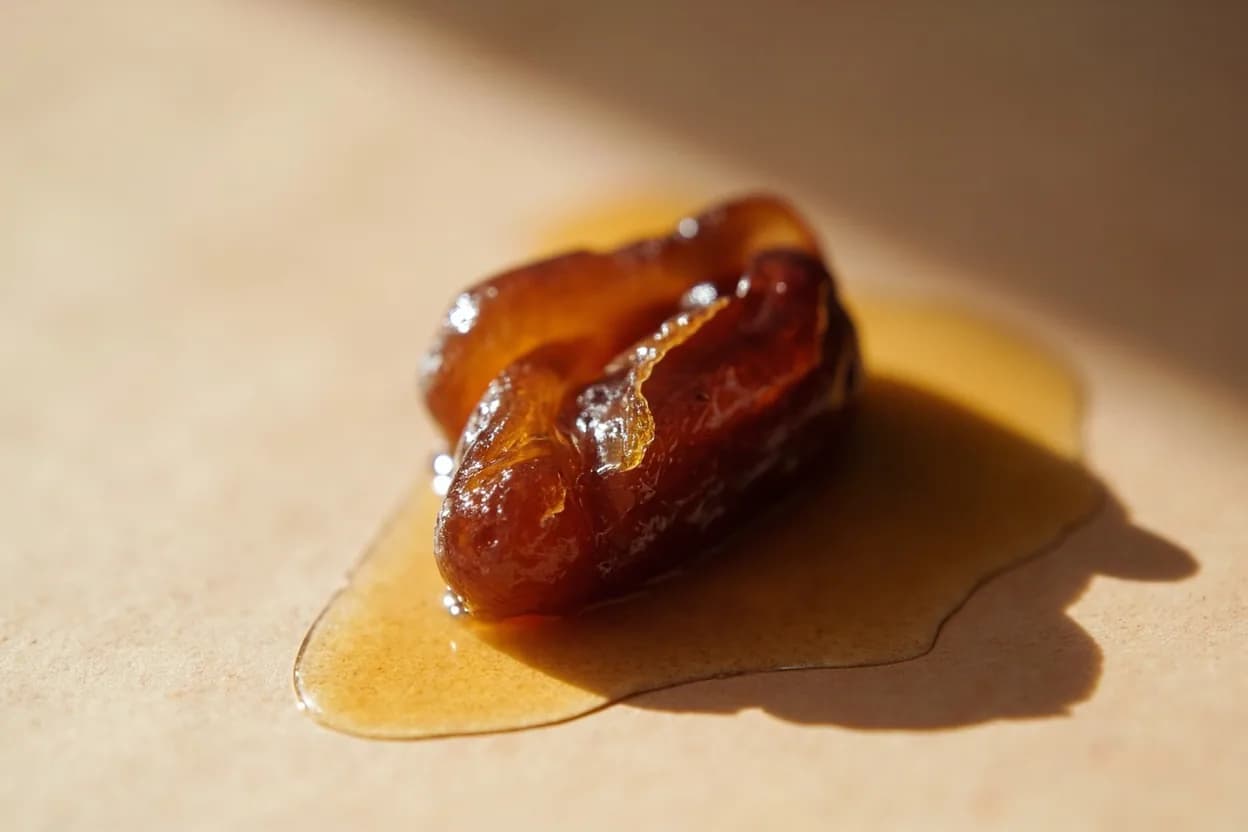
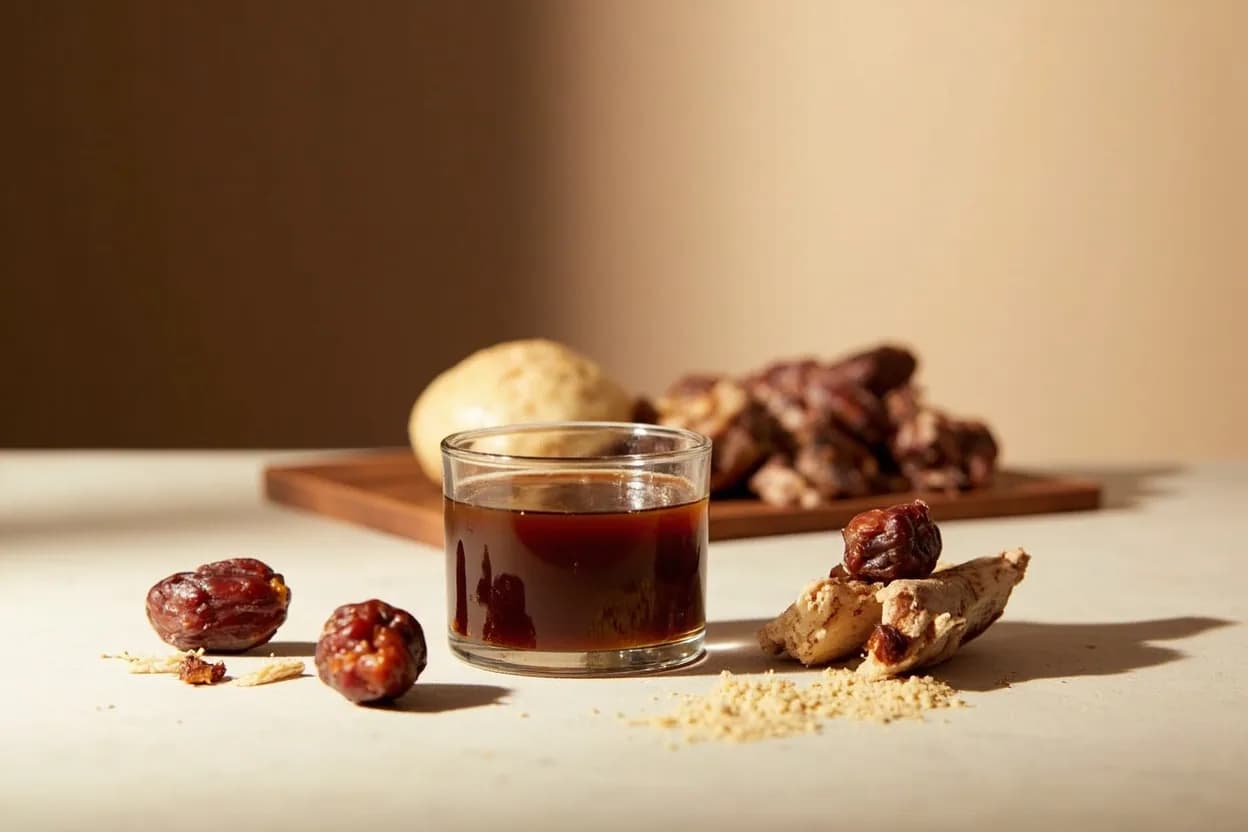
Date syrup (dibs al-tamr in Arabic; silan in Hebrew) is produced by simmering whole dates in water, pressing the pulp, and reducing the strained liquid to a thick, dark syrup. One of the oldest sweeteners in the Middle East — mentioned in ancient Mesopotamian texts — it tastes nothing like refined sugar. The character is richly caramel-sweet with distinct dried-fruit notes (fig, prune, raisin), a floral honey undertone, and a mild, pleasant bitterness in the finish from phenolic compounds. It is less sweet by volume than honey or sugar but far more complex. Date syrup is used across Iraq, Iran, the Gulf States, the Levant, and North Africa as a table syrup, baking sweetener, marinade ingredient, and coffee addition.
In photos
Flavour profile
Classic pairings
- TahiniLevantine
The most iconic pairing in Levantine cuisine: date syrup poured over thick tahini (dibs wa tahini) is eaten with flatbread for breakfast across Jordan, Palestine, Lebanon, and Syria. The nutty, bitter sesame paste and the fruity-caramel syrup are perfectly balanced.
- Arabic Coffee (Qahwa)Gulf, Saudi
Bitter, cardamom-spiced Arabic coffee and date syrup are consumed together in Gulf culture — the syrup sweetens the coffee without obscuring the cardamom or saffron aromatics.
- LambMoroccan, Persian
Date syrup as a glaze or marinade component for lamb exploits the classic date-lamb affinity of Persian and Moroccan cooking; the syrup's caramelizing sugars create a lacquered crust over long-braised or slow-roasted cuts.
- WalnutsPersian, Levantine
Walnuts' bitter tannins and rich oil are softened and complemented by date syrup's sweetness in Persian and Levantine pastry — a common filling or topping for ma'amoul and similar cookies.
- YogurtLevantine, Gulf
Thick, tangy labneh or strained yogurt drizzled with date syrup creates an instant breakfast or mezze component; the acidity cuts through the syrup's richness.
- CardamomGulf, Persian
Cardamom's eucalyptol and floral spice harmonize with date syrup's dried-fruit sweetness throughout Gulf and Persian desserts and coffee culture.
- Pomegranate MolassesPersian, Levantine
In Levantine and Persian cooking, combining date syrup's sweetness with pomegranate molasses's sharp tartness creates a complex sweet-sour glaze for duck, quail, or eggplant.
Adventurous pairings
- Aged Cheddar
Strong aged cheddar's crystalline, lactic sharpness makes a striking foil for date syrup; the combination echoes the British tradition of cheese with chutney but with Levantine complexity.
Date syrup in a double espresso (stirred in, not as a syrup pump) adds a honey-caramel sweetness that softens bitterness while contributing dried-fruit complexity absent in simple sugar.
- Miso Glaze
White miso's umami salt paired with date syrup's sweetness creates a compelling lacquer for roasted salmon or cauliflower — the pairing has an uncanny umami-sweet resonance.
- Smoked Meats
Date syrup's caramel and dried-fruit notes amplify the smokiness of slow-smoked brisket or pork; it makes a distinctive BBQ glaze, closer to North African influence than Kansas City.
- Dark Chocolate (70%+)
Date syrup's fruity depth and mild bitterness complement high-percentage dark chocolate; it can replace or supplement sugar in ganaches, adding a Middle Eastern dimension.
Tread carefully
- Very light, floral honey (acacia, lavender)avoid
Combining date syrup with delicate floral honey overwhelms the honey's subtle fragrance; they compete rather than layer.
- Fresh tropical fruit (papaya, pineapple)avoid
Date syrup's heavy, dried-fruit sweetness clashes with the bright fresh fruitiness of tropical fruit; lighter sweeteners (honey, agave) serve these better.
- Pale European sauces (beurre blanc, velouté)avoid
Date syrup's color, strong flavor, and sugars are incompatible with the delicate balance of classic French white sauces.
How to use it
- Use as a 1:1 substitute for maple syrup or honey where more dried-fruit depth is welcome
- Whisk into vinaigrettes with pomegranate molasses and olive oil for a Levantine sweet-sour dressing
- Brush over lamb or chicken in the last 20 minutes of roasting to develop a caramelized lacquer
- Swirl into plain yogurt or labneh without fully mixing — the ribbons read more elegantly than a uniform blend
- Combine with tahini and warm water to loosen for a pourable sauce over roasted vegetables or falafel
Appears in
Related flavours
Shares the deep caramel-molasses sweetness and use as an artisanal sweetener; jaggery has earthier mineral notes, date syrup more dried-fruit character
Both are thick, dark, bittersweet liquid sweeteners; molasses is sharper and more sulfurous, date syrup fruitier and more honeyed
The Levantine pairing counterpart — where date syrup brings sweetness, pomegranate molasses brings tartness
Both are ancient fruit-derived sweetener-acids used in complex sweet-sour applications; tamarind is sourer, date syrup sweeter and richer
References
- 1.Jerusalem — Yotam Ottolenghi & Sami Tamimi
- 2.Zaitoun: Recipes from the Palestinian Kitchen — Yasmin Khan
- 3.The Cooking of the Eastern Mediterranean — Paula Wolfert
- 4.Plenty More — Yotam Ottolenghi
Confidence: high
Notes
Silan vs. dibs al-tamr
In Israeli cuisine, silan (the Hebrew term for date syrup) has experienced a dramatic culinary revival; chefs like Yotam Ottolenghi have brought it to international prominence as a drizzle over hummus and a glaze for roasted vegetables. The Arab dibs al-tamr tradition is older and wider — it is a pantry staple from Iraq to Morocco. The basic product is the same; the culinary context and contemporary framing differ. Iraqi dibs is often darker and more intensely reduced than commercially produced Israeli silan.
Nutritional profile and substitution
Date syrup retains the fiber-derived solids, potassium, magnesium, and natural fructose of dates, making it more slowly absorbed than refined sugar. It is often marketed as a 'healthier' sweetener, though it remains high in total sugars. It can substitute honey at a 1:1 ratio in most applications; its flavor impact is stronger, so some reduction in quantity is appropriate when used in delicately flavored recipes.