Fermented Pastes & Sauces
Dawadawa
Also: iru pete, sumbala, netetu, nère, kinda, locust bean seasoning
The Hausa name for West Africa's essential dry-fermented locust bean seasoning — compressed into pungent discs or balls that dissolve into umami-rich depth in soups and sauces.
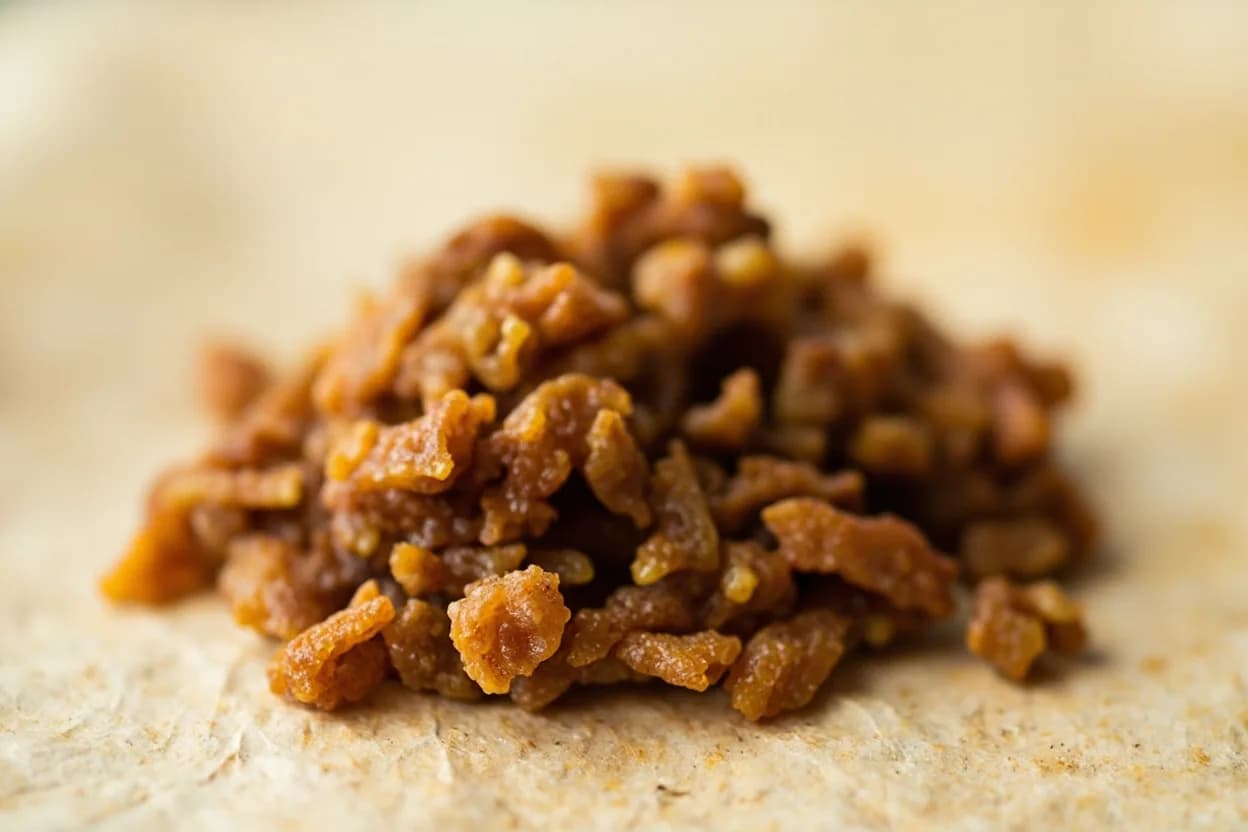
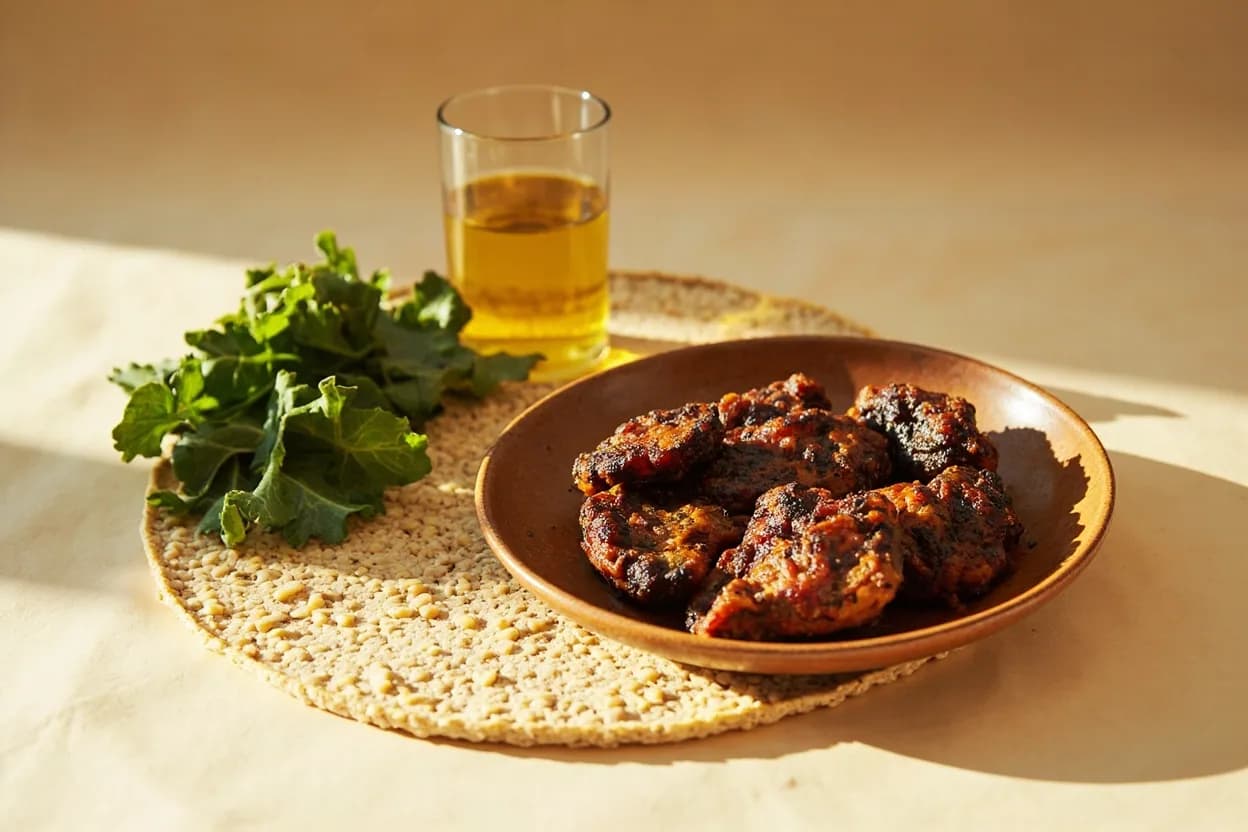
Dawadawa is the Hausa word for the dried, compressed form of fermented African locust bean (Parkia biglobosa) seeds, most common across the Sahelian belt — northern Nigeria, Mali, Burkina Faso, Senegal, and Ghana — and extending into the central African countries. Unlike fresh iru (which is soft and sticky), dawadawa is shaped into dry balls, discs, or wrapped in leaves and dried or smoked, giving it a concentrated, shelf-stable intensity and a flavor that is simultaneously earthier and less ammoniacal than fresh iru. The fermentation is driven primarily by Bacillus subtilis acting on the protein-rich seeds, producing free glutamates and complex aromatic compounds. The result is used across northern and western West African cooking as the primary seasoning agent — a fermented flavor anchor that functions with the universality of soy sauce in East Asia.
In photos
Flavour profile
Classic pairings
- Millet (tô, ugali)Sahelian (Mali, Burkina Faso, Northern Nigeria)
Across the Sahel, dawadawa-seasoned sauces are the primary accompaniment to millet porridge — the fermented depth is the soul of sauces poured over the starchy, neutral grain.
- Palm oilWest African (across regions)
Dawadawa bloomed in hot palm oil (niter kibbeh style) releases its earthy, savory aromatics into the fat — the oil carries and distributes the flavor throughout a sauce or soup.
- Leafy greens (bitterleaf, amaranth, baobab leaves)Sahelian / West African
Dawadawa transforms simple cooked greens into deeply seasoned dishes — it is used wherever iru is used for greens, but its drier form makes it particularly effective in Sahelian soups where less liquid is used.
- Peanuts / groundnutsWest African (Ghana, Senegal, Nigeria)
West African groundnut soup (groundnut stew) reaches its umami peak when dawadawa is added to the tomato-peanut base — the two legume products create a synergistic depth.
- Tomatoes and onions (stew base)West African
The fried tomato-onion base used across West African cooking is fundamentally improved by the addition of crumbled dawadawa — it dissolves into the sauce and elevates the whole.
- Chili peppers (Scotch bonnet, berbere-style blends)Hausa / Malian / West African
Dawadawa's earthiness moderates chili heat and gives it a savory foundation — in Hausa cooking and Malian sauces the two are essential partners, building spicy depth rather than flat heat.
- OkraNorthern Nigerian / Sahelian
Okra's mucilaginous body absorbs dawadawa's flavor distribution more evenly than most vegetables — in northern Nigerian okra soups, dawadawa is the essential seasoning that defines the soup's character.
Adventurous pairings
- Lentils
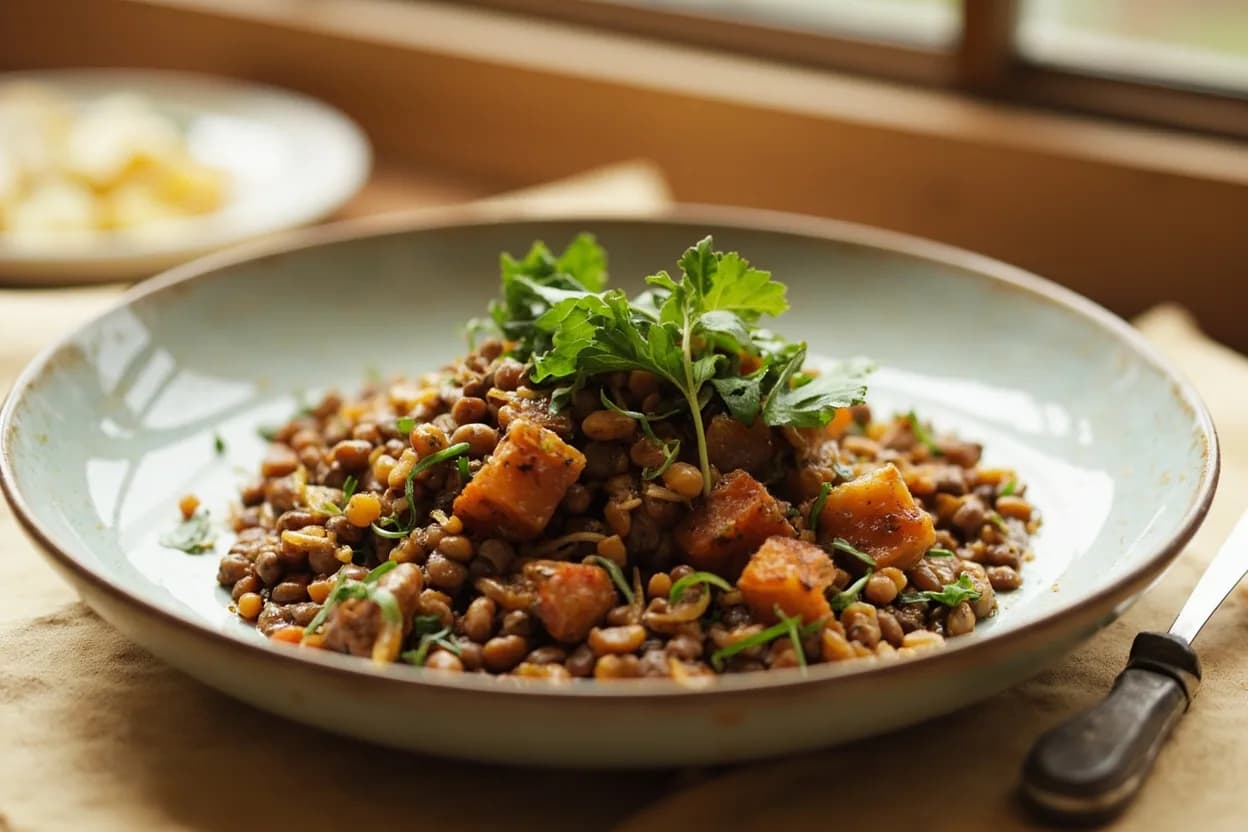
Adding a disc of dawadawa to a dal or lentil braise converts it from a simple legume stew into something approximating West African groundnut depth — the fermented locust bean umami amplifies the lentil's own earthy qualities.
- Dark miso
Dawadawa and hatcho miso are distant cousins — both are fermented legume umami concentrates. Blending small amounts of each into a braise or sauce stacks layered savory depth that neither achieves alone.
- Smoked mackerel
Smoked fish and dawadawa stack umami from two entirely different sources (marine and terrestrial) — when used together in a vegetable stew their combined depth creates extraordinary savoriness.
- Butternut squash
Squash's natural sweetness and starchy texture are a useful counterweight to dawadawa's pungency — a West African-inspired squash soup seasoned with dawadawa instead of stock cubes achieves remarkable depth.
- Fonio (ancient West African grain)
Fonio's nutty, light grain character is elevated by a dawadawa-based sauce in the same way millet is — this is a historically authentic West African pairing that is regaining attention through the food sovereignty movement.
Tread carefully
- Subtle vinaigrettes and cold acid dressingsavoid
Dawadawa's pungency is designed to transform under heat — used raw or in cold applications it can be aggressively funky without the cooked-umami resolution that makes it valuable.
- Dairy-based saucesavoid
The organic acids from fermentation can curdle dairy-based sauces and the flavor contrast between dawadawa's earthiness and clean dairy is unresolved without the mediation of a cooked base.
- Delicate steamed fishavoid
Dawadawa's intensity is calibrated for robust stews and soups — applied directly to delicate steamed fish it overpowers the protein rather than complementing it.
How to use it
- Crumble dried dawadawa directly into simmering soup or stew liquid — it dissolves over cooking time and disperses its flavor throughout
- Pound with mortar and pestle to a powder before adding for faster flavor release and more even distribution in a sauce
- Fry briefly in hot oil or palm oil with onions as part of the base before adding liquid — heat converts pungent raw notes into deep cooked umami
- Store whole dried discs in a sealed container — dawadawa is shelf-stable for months when kept dry
- Combine with dried crayfish powder for the canonical West African umami double-hit in soups and stews
Appears in
Related flavours
- Iru
The fresh, wet Yoruba form of the same fermented locust bean — dawadawa is the dried, Hausa/Sahelian equivalent; they are broadly interchangeable with dawadawa being more concentrated and shelf-stable
- Dried crayfish
The most frequent co-ingredient in West African soups — marine umami from crayfish stacks with legume umami from dawadawa for maximum savory depth
- Ogiri
Related Igbo fermented condiment made from sesame or castor oil seeds rather than locust beans — similar pungent-umami function but different botanical base
- Shrimp paste (belacan)
Southeast Asian functional analog — both serve as the backbone fermented protein umami in complex spiced stew bases; they are not flavoristically identical but play the same structural role
References
- 1.Ozoz Sokoh (Kitchen Butterfly) — 'Afro-Culinary Umami: West African Fermented Condiments' (various documented research, 2018–2024)
- 2.Jessica B. Harris — 'High on the Hog: A Culinary Journey from Africa to America' (Bloomsbury, 2011)
- 3.FAO — 'Traditional food plants: A resource book for promoting the exploitation and consumption of food plants in arid, semi-arid and sub-humid lands of Eastern Africa' (FAO, 1988)
- 4.Sandor Katz — 'The Art of Fermentation' (Chelsea Green, 2012)
- 5.Oumar Niamé Coulibaly — 'Parkia biglobosa in West Africa: A Review' (African Crop Science Journal, 2002)
Confidence: high
Notes
Dawadawa vs. iru: same ingredient, different forms and traditions
Dawadawa and iru refer to the same underlying ingredient — fermented African locust bean (Parkia biglobosa) seeds — but differ in form, preparation, and regional culinary tradition. Iru is the fresh or semi-wet Yoruba form, common in southern and western Nigeria. Dawadawa is the dried, compressed Hausa form, dominant across northern Nigeria and the Sahelian belt. The drying concentrates flavors differently: dawadawa is earthier and less ammoniacal, with a smokiness in versions that are dried over wood. Culinarily, they can substitute for each other, but dawadawa's greater dryness means it needs longer cooking to fully hydrate and dissolve.
A food sovereignty ingredient
The African locust bean (Parkia biglobosa) is an indigenous tree that grows wild across the Sahel and does not require cultivation, irrigation, or synthetic inputs. Communities have relied on dawadawa as their primary flavoring agent for centuries — far predating the introduction of imported Maggi or Jumbo stock cubes. A current movement among West African chefs and food writers is advocating for replacing industrial flavor enhancers with dawadawa and iru in home cooking as an act of both food sovereignty and flavor authenticity.