Stocks & Umami Liquids
Demi-Glace
Also: demi glace, half-glaze, sauce espagnole reduction
The soul of classical French cooking: a mahogany reduction of roasted bones and wine that turns any sauce into a statement.
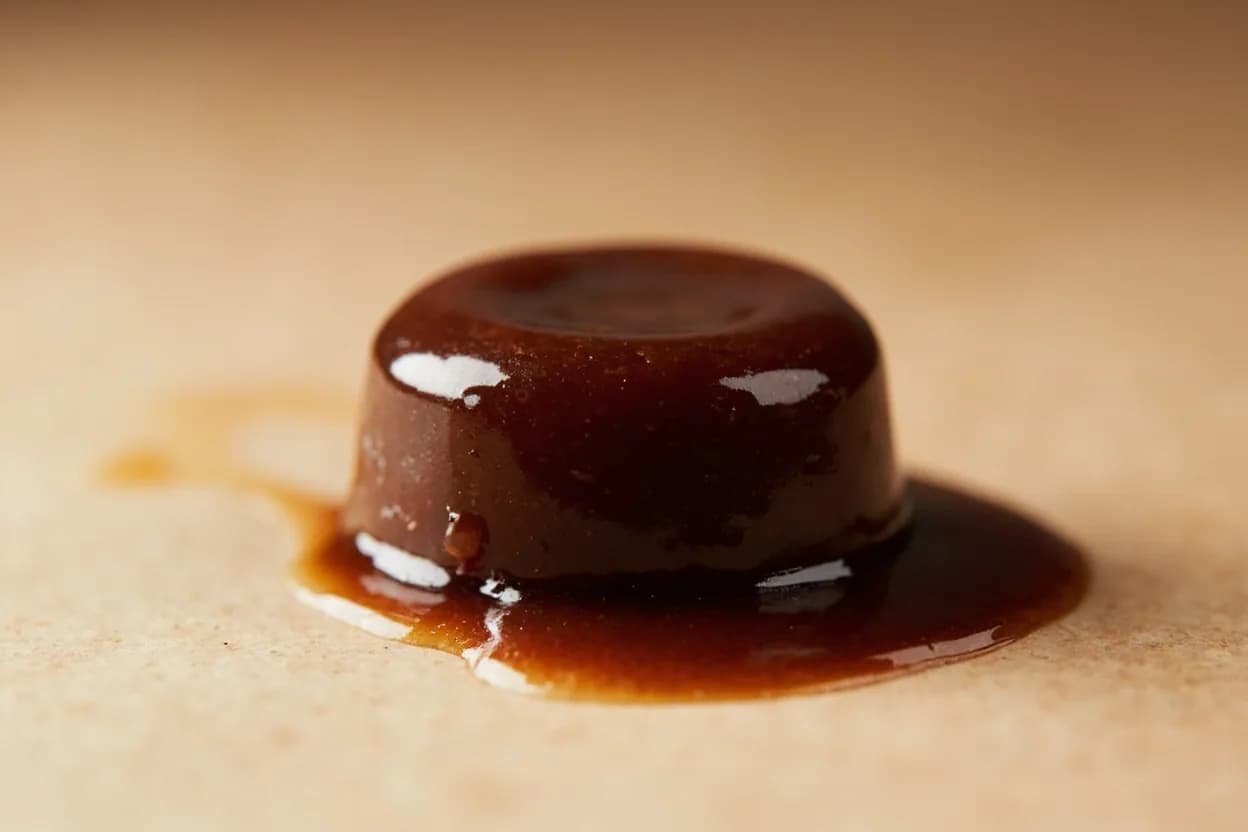
Demi-glace is a concentrated sauce made by reducing equal parts sauce espagnole and brown veal stock by at least half, until the liquid coats a spoon with a rich, glossy, almost syrupy consistency. Classic French cooking produces it from roasted veal bones, mirepoix, tomato purée, and red wine simmered for hours, yielding a flavor simultaneously savory, slightly sweet, faintly bitter from roasted collagen, and profoundly meaty. Its defining trait is gelatin: when chilled it sets firm, producing an intense backdrop of body and mouthfeel unachievable by any other means.
In photos
Flavour profile
Classic pairings
- Beef tenderloin / tournedosFrench classical
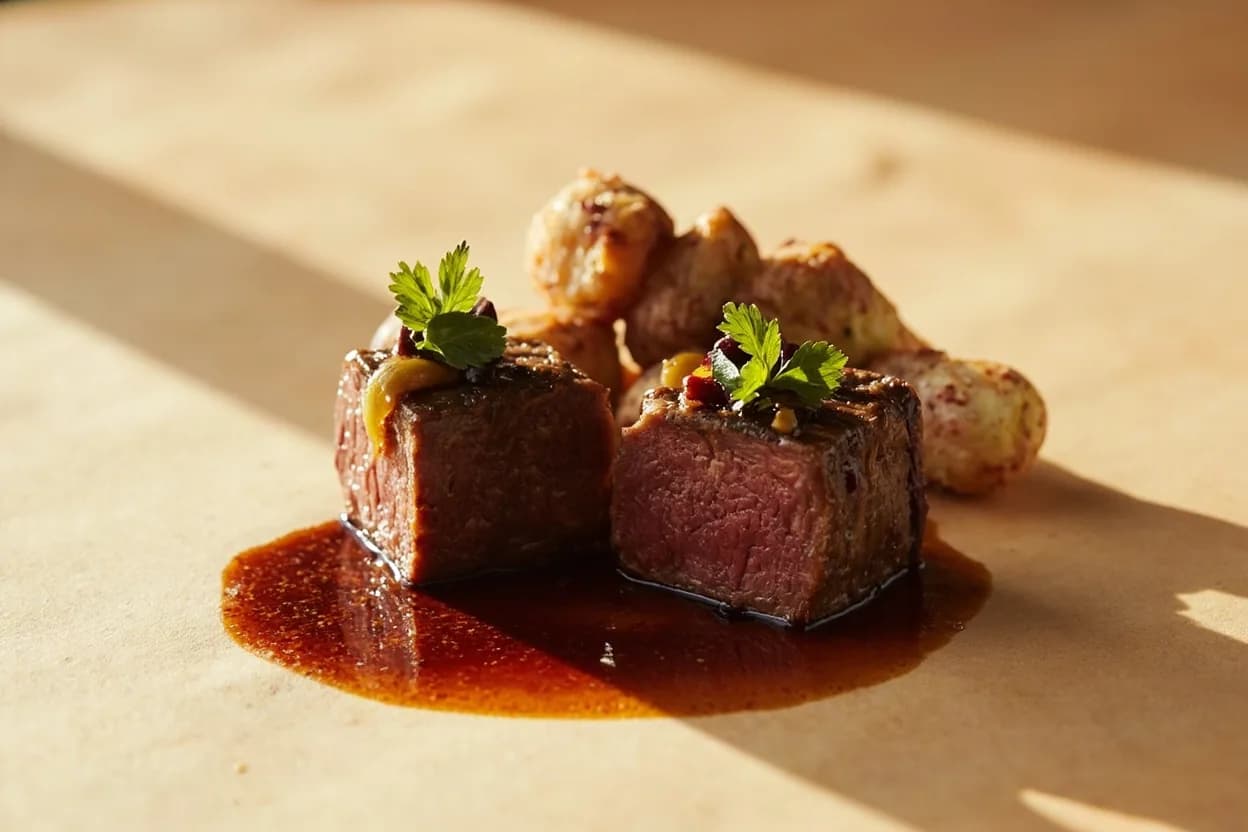
The canonical pairing: pan juices deglazed with Cognac and mounted with demi-glace produce sauce Périgueux or sauce Bordelaise; gelatinous body clings to the steak without masking its iron-rich depth.
- ShallotsFrench classical
Slowly softened shallots melt into demi-glace, their allium sweetness balancing the sauce's bitter roasted edge; the combination is the backbone of sauce Bercy and marchand de vin.
- Cognac / ArmagnacFrench classical
Flambéed brandy contributes volatile esters and dried-fruit notes that integrate seamlessly with demi-glace's wine-dark base; pan sauces gain complexity and a lifted aroma.
- Mushrooms (especially porcini and morel)French, Italian
Earthy, glutamate-rich fungi amplify demi-glace's own umami; the pairing doubles savoriness without adding weight. Dried porcini soaking liquid added to the reduction intensifies the effect.
- Butter (cold-mounted)French classical
Whisked in off the heat, butter emulsifies into demi-glace to create a glossy, voluptuous finish sauce. The fat tempers saltiness and adds a creamy dairy note absent from the reduction alone.
- Lamb leg and shoulderFrench, British
Lamb's lanolin-forward fat and gamey depth need a rich, acidic foil; demi-glace with rosemary and red-wine vinegar delivers both body and acid counterpoint in braises and pan sauces.
- Truffle (black, Périgord)French classical
Demi-glace's concentrated savoriness is the classic medium for transmitting truffle aroma; sauce Périgueux uses sliced or paste truffle stirred into hot demi just before service.
- Bone marrowFrench classical
Marrow poached and sliced over demi-glace-dressed beef creates a self-referential richness; marrow's fat melds with gelatinous sauce into an unctuously cohesive whole.
Adventurous pairings
- Miso (red / hatcho)
A tablespoon of hatcho miso whisked into demi-glace adds a fermented, salty complexity that doubles umami depth without tipping toward Asian pastiche; ideal in braises or compound butters for wagyu.
A shot of strong espresso stirred into demi-glace leans into its roasted bitter notes, yielding a coffee-meat glaze that coats short ribs and venison with surprising elegance.
The thick, tart-sweet reduction of pomegranate juice cuts demi-glace's richness with bright acidity and fruity depth, producing a Middle Eastern-inflected pan sauce for duck breast or lamb chops.
- Preserved lemon rind
Finely minced preserved lemon stirred into warm demi-glace at finish brings a salted, fermented citrus note that lifts heavy meat sauces and works especially well with lamb or pork.
- Dark chocolate (70%+)
A small amount of bitter chocolate melted into venison or wild boar braising liquid echoes demi-glace's roasted bitterness and adds tannins that echo the wine in the reduction.
Tread carefully
- Delicate white fish (sole, turbot)avoid
Demi-glace's weight and meaty depth overwhelm the subtle sweet brininess of fine white fish; a fish fumet velouté or beurre blanc is the correct medium.
- Raw acidic citrus juice (added early)avoid
High acid added before the sauce is finished breaks the gelatin network and creates a grainy, separated texture; acid should be introduced only at the very end.
- Cream (large quantities)avoid
While a splash of cream can add roundness, large amounts dilute demi-glace's concentrated character and produce a pale, confused hybrid rather than a distinctive sauce.
How to use it
- Mount cold butter off heat for a glossy finish (monter au beurre)
- Deglaze the fond with Cognac or dry red wine, reduce by half, then add demi-glace
- Use as a braising-liquid enricher in the final hour of long-cooked meats
- Stir into compound butter (demi-glace butter) for steaks — chill, slice, rest on hot meat
- Reduce further to a glace de viande (full gel) for restaurant-style portioning and plating
- Freeze in ice-cube trays for single-sauce-portion use
Appears in
Related flavours
- Red Wine
The liquid demi-glace is built from; Burgundy or Bordeaux varieties carry most of its fruit-and-tannin character.
The base of demi-glace; shares its gelatinous, neutral meatiness.
- Mushroom (Porcini)
Complementary umami amplifier used in the same sauce traditions.
Standard deglazing spirit when building demi-glace pan sauces.
References
- 1.Escoffier, Auguste. Le Guide Culinaire (1903; English edition Wiley, 2011)
- 2.McGee, Harold. On Food and Cooking: The Science and Lore of the Kitchen. Scribner, 2004
- 3.Ruhlman, Michael & Polcyn, Brian. The Elements of Cooking. Scribner, 2007
- 4.Pépin, Jacques. La Technique. Pocket Books, 1978
Confidence: high
Notes
Commercial demi-glace
Restaurant-grade demi-glace bases (e.g., More Than Gourmet Demi-Glace Gold) are acceptable in professional kitchens for speed, but they typically contain higher sodium and less gelatin than house-made product; adjust salt accordingly and expect a thinner set.
Veal vs. beef
Veal bones produce a paler, more neutral demi-glace with greater gelatin due to higher collagen content in young animals. Beef-only demi-glace is darker and more aggressively flavored — better for red-meat sauces where subtlety is not the goal.