Stocks & Umami Liquids
Veal Stock
Also: fond de veau, veal bone stock, veal jus, fond blanc de veau, fond brun de veau
The neutral-rich foundation of classical French sauce-making — gelatinous, delicate, and so technically balanced that it amplifies everything it touches without revealing itself.
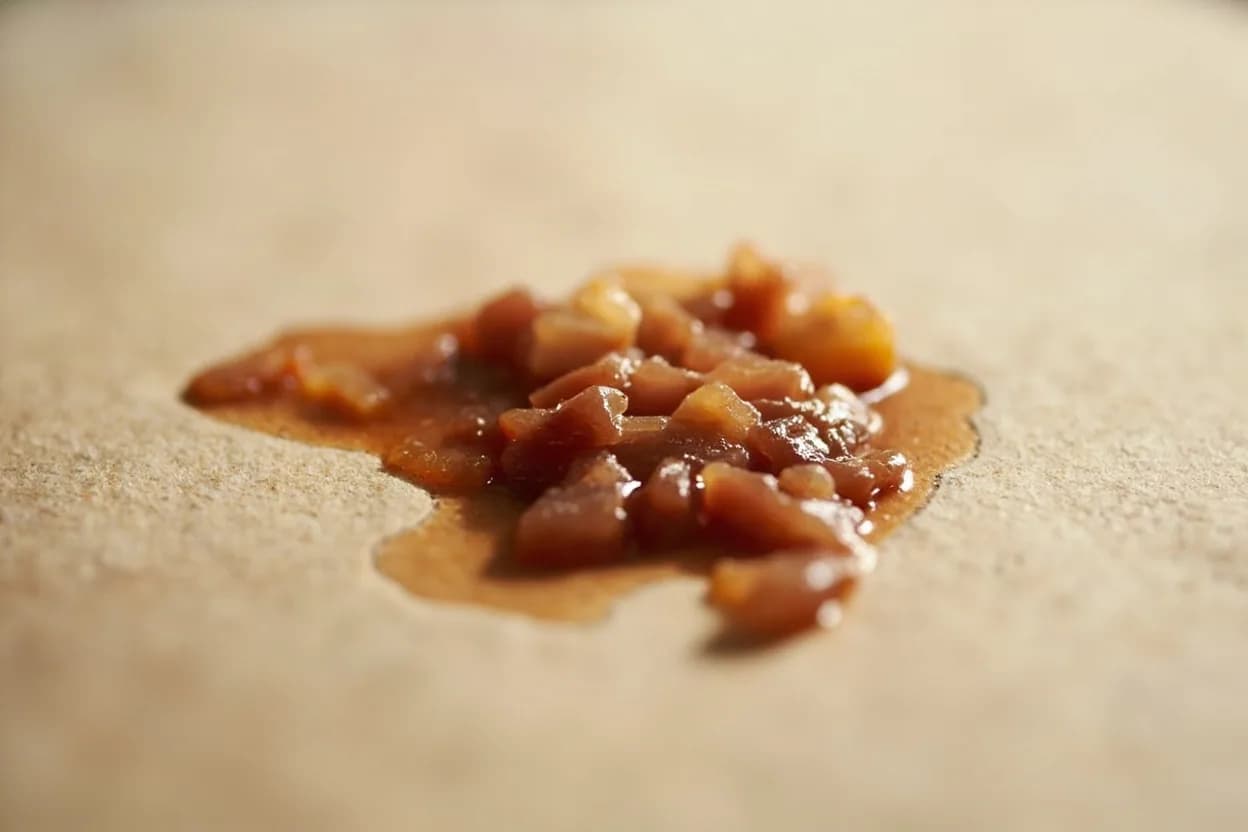
Veal stock (fond de veau) is produced by long-simmering veal bones — especially knuckles, shin, and feet — with aromatics in cold water. Its defining characteristic is its high gelatin content, extracted from the cartilage and collagen of young bones, which gives the finished stock and any sauce derived from it a silky, coating texture unique among classical stocks. Flavor is deliberately neutral: veal has less myoglobin and fat than beef, producing a clean, pale richness that serves as an amplifying backdrop rather than a flavoring agent in its own right. The roasted version (fond brun de veau) achieves a deeper caramel color and Maillard-driven richness; the pale version (fond blanc) is more delicate. Reduced to a syrup, veal stock becomes glace de veau — the ultimate sauce enricher.
In photos
Flavour profile
Classic pairings
- ShallotsFrench
Reduced shallots dissolved into a veal stock sauce (as in sauce bordelaise or vin blanc) is a cornerstone of French cooking; shallot's sweetness and acidity are the ideal counterpoint to veal's neutrality.
- Red Wine (Bordeaux, Pinot Noir)French
Veal demi-glace reduced with red wine is the basis of the great brown sauces — bordelaise, périgueux, grand veneur; the wine's tannin and acid are absorbed and softened by the gelatin.
- Dried Porcini MushroomsFrench, Italian
The glutamates in porcini interact with veal stock's gelatin-bound body to create sauces of extraordinary savory depth, used in Italian and French mushroom-based reductions.
- Butter (cold-mounted, monter au beurre)French
Cold butter whisked into reduced veal stock at the finish creates the velvet texture essential to French sauces — the gelatin holds the emulsion stable.
- Thyme, Bay Leaf, Parsley StemsFrench
The French bouquet garni is the standard aromatics package for veal stock and every sauce derived from it; these herbs frame without dominating.
- Cream (crème fraîche or heavy cream)French
Cream-reduced veal stock is the base of voluptuous white sauces — sauce suprême, sauce allemande — where the gelatin prevents the cream from breaking.
- TruffleFrench
Sauce périgueux (veal demi-glace + Madeira + black truffle) is the height of classical French gastronomy; veal's neutrality defers entirely to the truffle.
- TarragonFrench
Sauce béarnaise builds on a veal-enriched base; tarragon's anise-licorice gives the sauce its identity while veal stock provides the structural gelatin.
Adventurous pairings
- White Soy Sauce (Shiro Shoyu)
Light soy's clean salt and subtle fermented grain note seasons a veal jus without the color impact of regular soy — a Franco-Japanese approach that preserves the sauce's pale clarity and adds a resonant umami layer.
Veal's neutral richness is the ideal carrier for saffron's honey-hay-metallic aroma; a saffron-veal jus for seafood or chicken strikes an unusual and precise balance between luxury and restraint.
The fermented, bitter-floral citrus of preserved lemon brightens and lifts veal-based pan sauces for lamb or chicken in a way that fresh lemon cannot, its acid having been mellowed by preservation.
- Dried Morel Mushrooms
Morel's honeycomb texture and haunting, nutty-smoke flavor with veal stock (particularly in cream reduction) is considered one of the great classical French combinations — morilles à la crème.
- Aged Sherry (Amontillado or Oloroso)
Sherry's oxidative, nutty, caramel notes pair seamlessly with the gelatin richness of veal stock in pan sauces for game birds and pork — more complex than Madeira with a Spanish inflection.
Tread carefully
- Aggressive spices (cumin, turmeric, coriander)avoid
Veal stock is built for neutrality — its purpose is to amplify and carry other flavors. Dominant spices overwhelm the gelatin structure and the careful balance of the stock, making the sauce taste confused.
- Vinegar (in quantity, directly to stock)avoid
Strong acid breaks the emulsion stability that gelatin provides and produces a grainy, split sauce; use wine or very small amounts of vinegar, always reducing fully before adding stock.
- Oily fish or shellfishavoid
Veal stock's bovine origin creates an incompatible flavor contrast with marine ingredients; fish fumet or shellfish bisque exist for precisely this reason.
How to use it
- Start bones in cold water, bring slowly to a simmer, and skim constantly for the first 30 minutes — this produces clear, clean stock
- Never boil vigorously; maintain a bare, lazy bubble for 6-8 hours to extract gelatin without clouding
- For fond brun: roast bones at 220°C (425°F) until deep mahogany, then roast mirepoix in the same pan and add tomato paste before deglazing
- Reduce to demi-glace (half volume) for sauces; reduce further to glace de veau (1/8 volume) for the most concentrated form
- Mount finished sauce with cold butter off heat, swirling rather than stirring, to form a stable, glossy emulsion
Appears in
Related flavours
The most classic flavoring agent added to veal-based reductions in both French and Italian cooking — glutamate + gelatin richness.
Veal's neutral richness is the canonical vehicle for truffle in French haute cuisine sauce-making.
- Butter
Inseparable from veal stock at the sauce-finishing stage; the gelatin holds the butter emulsion stable.
The Japanese counterpart to veal's role — a clean, amplifying, neutral umami liquid that serves as the base for an entire cuisine's sauce vocabulary.
References
- 1.Mastering the Art of French Cooking — Julia Child, Louisette Bertholle & Simone Beck
- 2.The French Laundry Cookbook — Thomas Keller
- 3.Larousse Gastronomique — Prosper Montagné
- 4.Sauces: Classical and Contemporary Sauce Making — James Peterson
- 5.On Food and Cooking — Harold McGee
Confidence: high
Notes
Why veal and not beef
Younger animals have a higher proportion of collagen-to-muscle compared to mature beef. This collagen, concentrated in veal knuckles, shins, and feet, converts to gelatin during long simmering and gives veal stock its characteristic body and coating texture. Beef stock can be equally flavorful but lacks the same gelatin yield and has a more assertive, iron-rich flavor that competes with the aromatics it is meant to carry.
The hierarchy: stock → demi-glace → glace
Veal stock is rarely used as-is. Classical French cuisine reduces it progressively: a fresh stock becomes a demi-glace (≈50% reduction, with the addition of espagnole sauce in traditional method), and further to glace de veau — a syrupy, deeply burnished concentrate used by the teaspoon to enrich finished sauces. Modern kitchens often skip espagnole and simply reduce clean veal stock, achieving similar depth through reduction alone.