Souring Agents
Verjuice
Also: verjus, verjuice, unfermented grape juice, sour grape juice, agresto
The pressed juice of unfermented unripe grapes — mild, fruity, and wine-like in acidity without the pungency of vinegar.
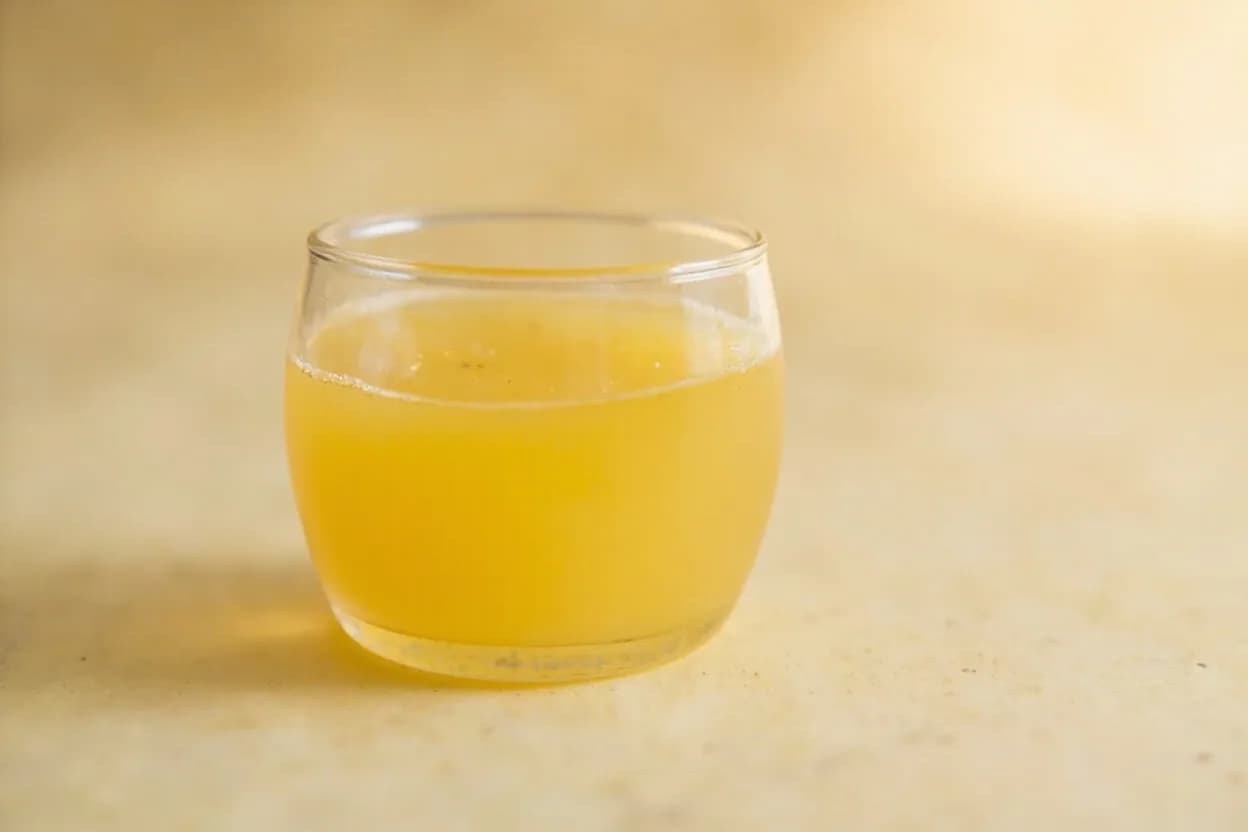
Verjuice (French: verjus) is the cold-pressed juice of unripe grapes, harvested before sugars develop, typically from the thinning of wine-grape clusters. The result is a liquid that is sour and acidic — tartaric and malic acids dominate — but considerably gentler and more complex than vinegar, with no fermentation-derived sharpness. It has a distinctly fruity, faintly floral character that suggests the grape variety it came from. Colour ranges from pale gold to light green. Medieval European cooks used it as the primary souring agent in savory and sweet preparations alike; it fell out of use with the rise of wine vinegar, but was famously revived by Australian chef Maggie Beer in the 1980s–90s and is now used in fine-dining across Europe and Australia. It does not contain alcohol (or contains only traces) and does not reduce to sharpness as wine can.
In photos
Flavour profile
Classic pairings
- Poached fish (trout, sole, salmon)French / Australian
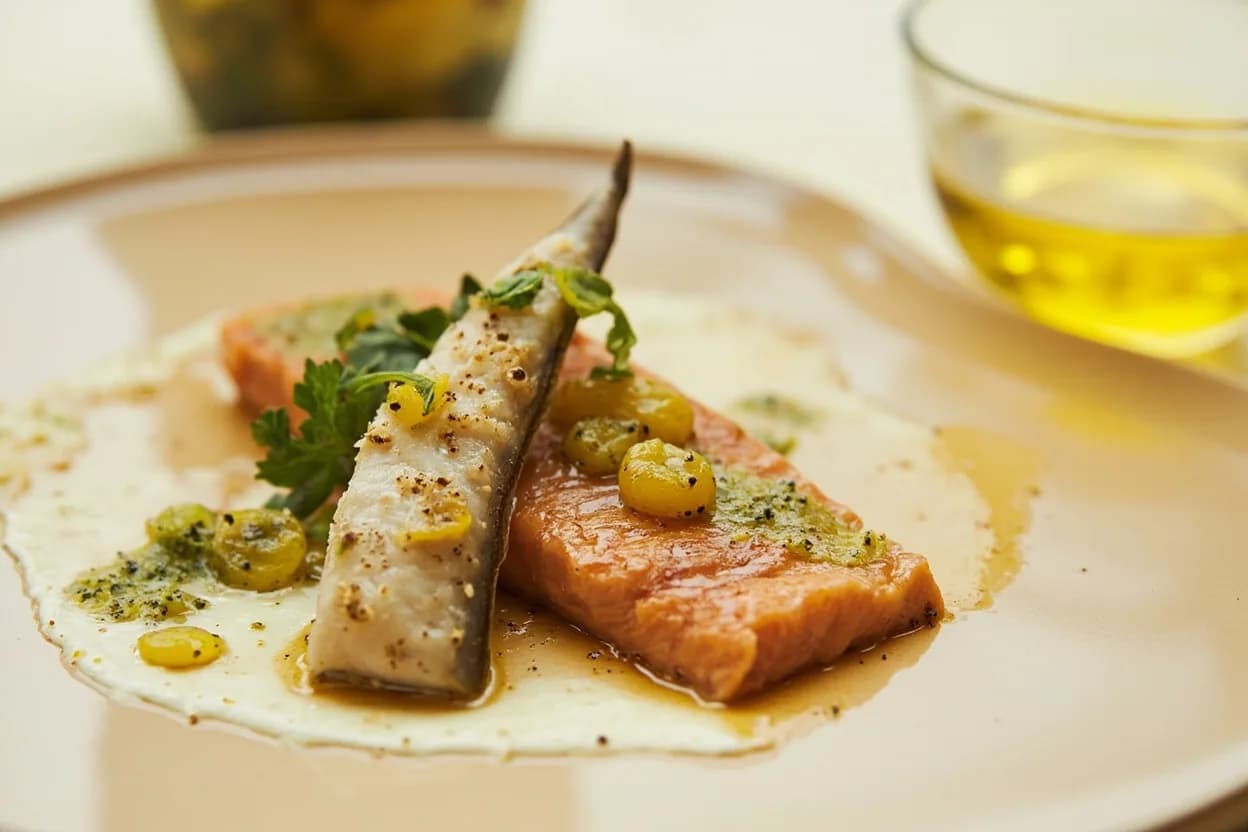
Verjuice is the classic poaching liquid or sauce base for delicate fish — its mildness doesn't overwhelm the flesh and reduces to a silky sauce without sharpening
- Chicken (pan-roasted or braised)French / Australian
Deglazes a chicken pan beautifully; the acidity lifts fond without the assertiveness of wine vinegar, creating a light pan sauce that doesn't require cream to round it
- Salad dressingsFrench / Australian
Replaces white wine vinegar in a vinaigrette for a markedly gentler dressing — ideal for bitter greens (radicchio, endive) where vinegar can be too aggressive
- Terrines and foie grasFrench
Medieval French tradition; verjuice's tartness cuts the richness of fatty charcuterie without the abrupt shock of vinegar
- Goat cheese and fresh chèvreFrench
The mild fruitiness of verjuice complements lactic sourness in fresh cheeses; classic in dressings for cheese salads
- Veal and porkFrench
Lighter than wine in a braise — doesn't colour the sauce or introduce tannin; classic pairing for veau à la normande-adjacent preparations
- ScallopsContemporary Australian / French
Quick sear with a verjuice deglaze: the acid balances the natural sweetness of scallop without masking it, a classic fine-dining technique
- Hazelnuts and walnutsFrench / Provençal
Verjuice in a nut dressing or as part of a warm nut-butter sauce bridges the gap between fat richness and required acidity — a natural pairing in medieval sweet-savory cookery
Adventurous pairings
- Oysters
A splash of verjuice instead of classic mignonette — the grape fruitiness resonates with oyster's briny mineral character in a way wine vinegar rarely achieves
- Strawberries and stone fruit
Macerate summer fruit in verjuice rather than sugar syrup for a complex, wine-adjacent fruit salad or dessert base without any alcohol
- White asparagus
Simmered briefly in verjuice-seasoned water, then served with a verjuice beurre blanc: the acid affinity with asparagus's metallic note is remarkably clean
- Saffron risotto
Replace white wine with verjuice in a risotto base — milder acidity allows saffron's fragrance to emerge clearly without competition from fermentation notes
- Lamb sweetbreads
The gentle acid of verjuice in a pan sauce resolves the richness of offal without the assertiveness of lemon — a classical offal technique barely known outside France
- Watermelon and feta salad
A verjuice-based dressing on the standard summer salad replaces balsamic's sweetness with a drier, more complex fruitiness that doesn't overpower the melon
Tread carefully
- Robust braises requiring bold acidity (short rib, oxtail)avoid
Verjuice's gentle acidity is lost over long cooking times and in the presence of heavy meat flavours — red wine vinegar or wine delivers the structural acidic backbone these dishes need
- Hot and sour Asian preparationsavoid
In Thai or Sichuan dishes requiring strong, clear acidity, verjuice's subtlety reads as flavourless — rice vinegar or citrus are purpose-made for those contexts
- Cheese dressings with blue cheeseavoid
The pungency of Roquefort or Gorgonzola overpowers verjuice's delicate fruitiness entirely; a stronger acid (sherry vinegar) is better calibrated for bold blues
How to use it
- Use as a 1:1 substitution for white wine in pan sauces when you want acidity without alcohol or fermentation notes
- Reduce verjuice by half over medium heat before adding butter for a quick sauce base — it concentrates without turning sharp
- Add directly to a vinaigrette (ratio roughly 3:1 oil to verjuice vs. the typical 2:1 for white wine vinegar) — the lower volatility means you can use more without sharpening the dressing
- Use to poach fruit without adding alcohol — particularly pears, peaches, and figs
- Deglaze a foie gras or seared duck liver pan with verjuice immediately off the heat to capture the fond without extracting bitter compounds at high temp
Appears in
Related flavours
Aged and more assertively acidic — the powerful counterpart to verjuice's gentleness; verjuice is the right tool when subtlety matters, sherry vinegar when depth and complexity of acid is the goal
- White Wine (Dry)
Verjuice mimics much of white wine's role in savory cooking while remaining non-alcoholic and non-fermented; it's gentler on heat and won't introduce alcohol off-notes in quick sauces
Both are mild, clean-finishing acids but rice vinegar has a distinct fermented character; verjuice is the fruitier, more vinous option
References
- 1.Maggie Beer — Maggie's Verjuice Cookbook
- 2.Patience Gray — Honey from a Weed
- 3.Anne Willan — The Country Cooking of France
- 4.Terence Scully (trans.) — The Viandier of Taillevent (14th-century French culinary manuscript)
Confidence: high
Notes
Open bottle shelf life
Unlike vinegar, verjuice has no acetic acid to preserve it. Once opened, refrigerate and use within 3–4 weeks; it will lose its bright fruitiness and eventually ferment. Some producers pasteurise to extend shelf life — check the label.
Making at home
Press unripe wine or table grapes (those thinned from clusters before véraison) through a fine sieve or food mill; strain, add a pinch of salt per cup to inhibit fermentation, and refrigerate immediately. Use within 1 week. The result is incomparably fresh.