Fats, Pastes & Condiments
Walnut Oil
Also: huile de noix, cold-pressed walnut oil, toasted walnut oil
Nutty, earthy, and faintly bitter — a finishing oil that turns a simple green salad into a composed statement.
Walnut oil is cold-pressed or expeller-pressed from dried English walnuts (Juglans regia), yielding a golden-amber oil rich in polyunsaturated fatty acids (particularly alpha-linolenic acid, an omega-3) and phenolic compounds. Its flavour is distinctly nutty with a pleasant, mild bitterness from tannins and a long, slightly astringent finish. French walnut oils from the Périgord and Dauphine regions — often made from toasted kernels — are considered benchmark quality. Because walnut oil oxidises rapidly and its delicate volatiles are destroyed by heat, it is almost exclusively a finishing and dressing oil, never used for sautéing.
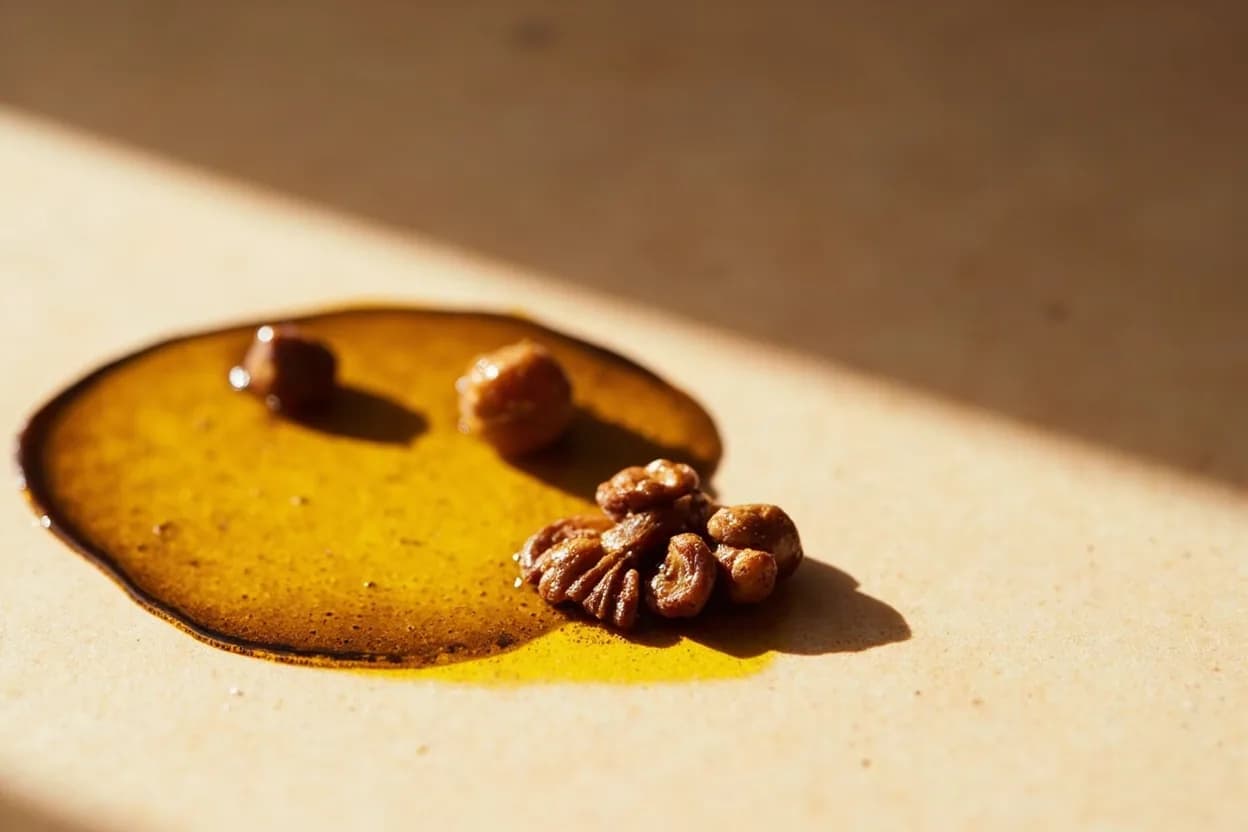
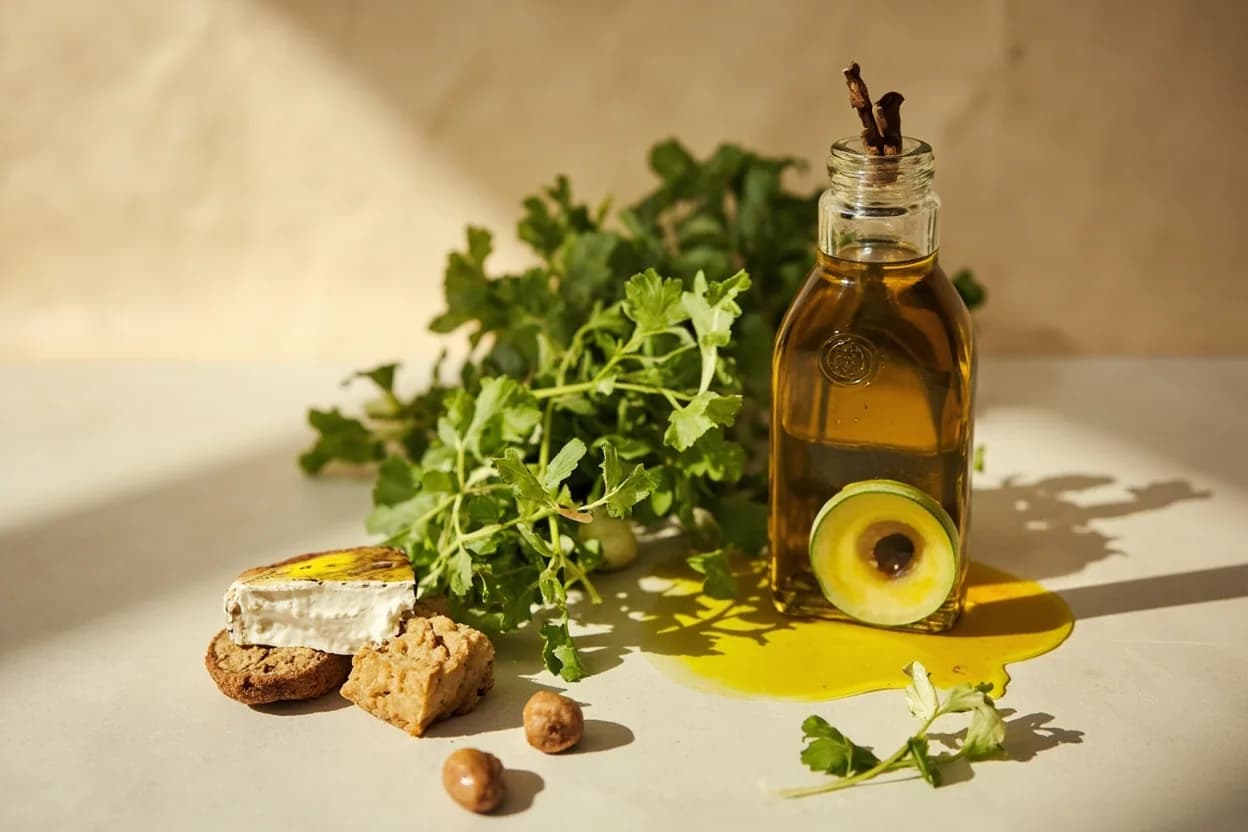
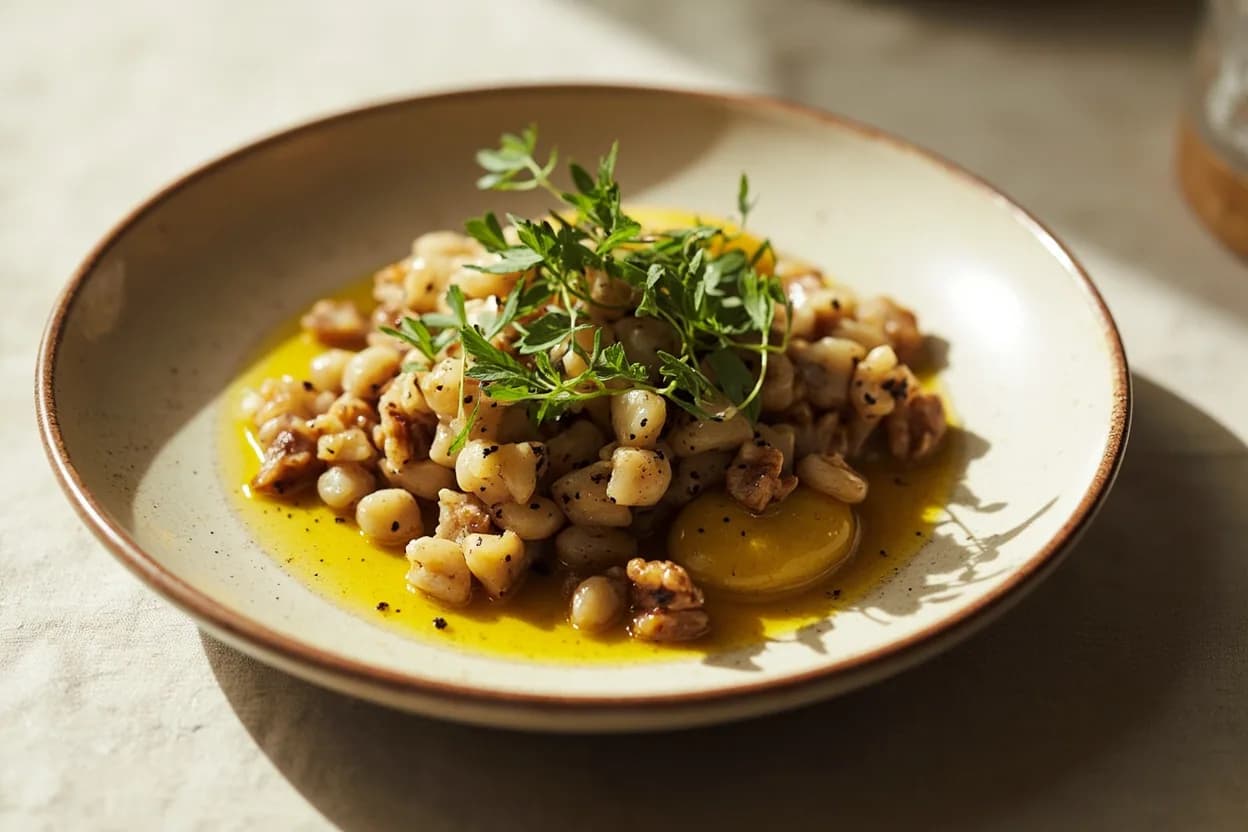
In photos
Flavour profile
Classic pairings
- Frisée or endive (bitter greens)French
Bitterness amplifies bitterness in a complementary way: the oil's tannins soften the greens' harshness while both reinforce each other's depth. Add lardons and a poached egg for a Lyonnaise salade.
- Aged goat cheese (Crottin de Chavignol)French
The oil's fat-soluble tannins bind with the cheese's lactic acids, creating a round, mellow finish; walnuts and chèvre are a textbook Périgord pairing.
- Sherry vinegarFrench/Spanish
Oxidative, nutty sherry vinegar harmonises with walnut oil's roasted notes to make a vinaigrette greater than the sum of its parts.
- Roasted beetsFrench
Earthy sweetness of beet meets earthy nuttiness of walnut oil; the oil's bitterness balances the beet's high sugar content.
- Blue cheese (Roquefort, Gorgonzola)French/Italian
Classic affinity: walnut's tannins temper the blue's sharp brine, while the oil's fat carries and mellows the pungency.
- Pasta dressed coldItalian
Tossed with warm pasta just off the heat (not in the pan), walnut oil soaks into the starch and perfumes the dish without burning off.
- Lentils (especially Puy)French
Lentils' mineral earthiness and walnut oil's toasted nuttiness are a natural pair; a drizzle over warm lentil soup elevates the bowl instantly.
Adventurous pairings
- White truffle
Both carry musty, earthy, forest-floor aromatic compounds (including dimethyl sulphide in truffle and oxidised aldehydes in walnut); together they amplify each other's luxury earthiness.
Sesame paste and walnut oil share a toasted-nut bitterness axis; blended in a dressing with lemon, the combination is more complex than either alone.
- Dark chocolate (70%+)
Walnut oil's bitterness bridges bittersweet chocolate and nut; drizzle over chocolate mousse or use in a chocolate-walnut cake in place of vegetable oil.
- Miso-glazed aubergine
Umami-rich, caramelised miso and walnut oil's nuttiness share Maillard-reaction aromatic compounds; the oil finishes the dish in place of sesame oil for a European pivot.
The molasses' sharp, jammy acidity cuts through the oil's bitterness; together as a dressing they span sweet, sour, bitter, and fat in a single pour.
- Soba noodles
Buckwheat's earthy, slightly bitter character echoes walnut oil's profile; a cold soba salad finished with walnut oil instead of sesame is quietly revelatory.
Tread carefully
- High-heat cooking (sautéing, frying)avoid
Walnut oil's low smoke point (~160 °C / 320 °F) and high polyunsaturate content mean it burns and turns rancid quickly; heat destroys its flavour entirely.
- Delicately flavoured white fish (sole, flounder)avoid
The oil's assertive nuttiness overwhelms mild, sweet white fish; a lighter oil (grapeseed, light olive) or butter is preferable.
- Milk chocolate or white chocolate dessertsavoid
The oil's tannins clash with the sweetness, creating a flat, slightly metallic impression.
How to use it
- Use as a finishing oil — drizzle over a dish just before serving, never in the pan
- Whisk into vinaigrettes at a 3:1 oil-to-acid ratio with sherry or red wine vinegar
- Blend half-and-half with a neutral oil (grapeseed) to mellow bitterness for more delicate applications
- Store refrigerated, tightly sealed, and use within 3–4 months of opening to prevent rancidity
- Dress warm (not hot) grains and pulses immediately off heat so the starch absorbs the oil's aroma
- Use sparingly as a bread dip alongside aged balsamic
Appears in
Related flavours
- Hazelnut oil
Sibling nut oil with a sweeter, less bitter profile; more forgiving in dressings where walnut's tannins would dominate
Different botanical origin but shares the roasted-nut finishing-oil role in Asian cuisines; more pungent and smoke-forward
- Extra-virgin olive oil
More broadly versatile finishing oil; less bitter, more fruity — choose olive when the dish needs a Mediterranean register
- Walnuts (whole)
Direct flavour source; toast them separately and combine with the oil in a dressing for layered walnut intensity
References
- 1.On Food and Cooking — Harold McGee (Scribner, 2004)
- 2.The Flavor Bible — Karen Page & Andrew Dornenburg (Little, Brown, 2008)
- 3.Fat: An Appreciation of a Misunderstood Ingredient — Jennifer McLagan (Ten Speed Press, 2008)
- 4.Larousse Gastronomique (Hamlyn, 2009 edition)
Confidence: high
Notes
Toasted vs. cold-pressed
Toasted walnut oil (made from roasted kernels) has a deeper, more intense flavour and is the French standard. Cold-pressed (raw kernel) oil is lighter, greener, and more nutritionally intact but subtler in cooking. For dressings and finishing, toasted is usually preferred; for nutritional supplementation, cold-pressed.
Rancidity alert
Walnut oil's high polyunsaturate content makes it one of the fastest culinary oils to go rancid. Smell before using — rancid walnut oil smells like old paint and will ruin anything it touches. Buy small bottles and keep refrigerated.