Stocks & Umami Liquids
Dashi
Also: ichiban dashi, niban dashi, awase dashi, kombu dashi, niboshi dashi
Japan's foundational broth — a clean, precise extraction of umami from sea and smoke that underlies nearly every savory dish in the Japanese kitchen.
Dashi is the family of clear, lightly flavored stocks that form the umami backbone of Japanese cuisine. The most common form, awase dashi, combines kombu (dried kelp, rich in glutamic acid) with katsuobushi (dried fermented skipjack tuna, rich in inosinic acid/IMP); their interaction produces a synergistic umami effect far greater than either alone. Secondary varieties include shojin dashi (kombu + dried shiitake, entirely plant-based), niboshi dashi (small dried sardines, stronger and more assertive), and single-ingredient kombu dashi. Dashi is characterized by a clean, transparent savory quality — often described as 'umami without noise' — that heightens the flavor of what it accompanies rather than announcing itself. It is typically made quickly (kombu cold-steeped or warmed, katsuobushi steeped and strained) and used fresh.
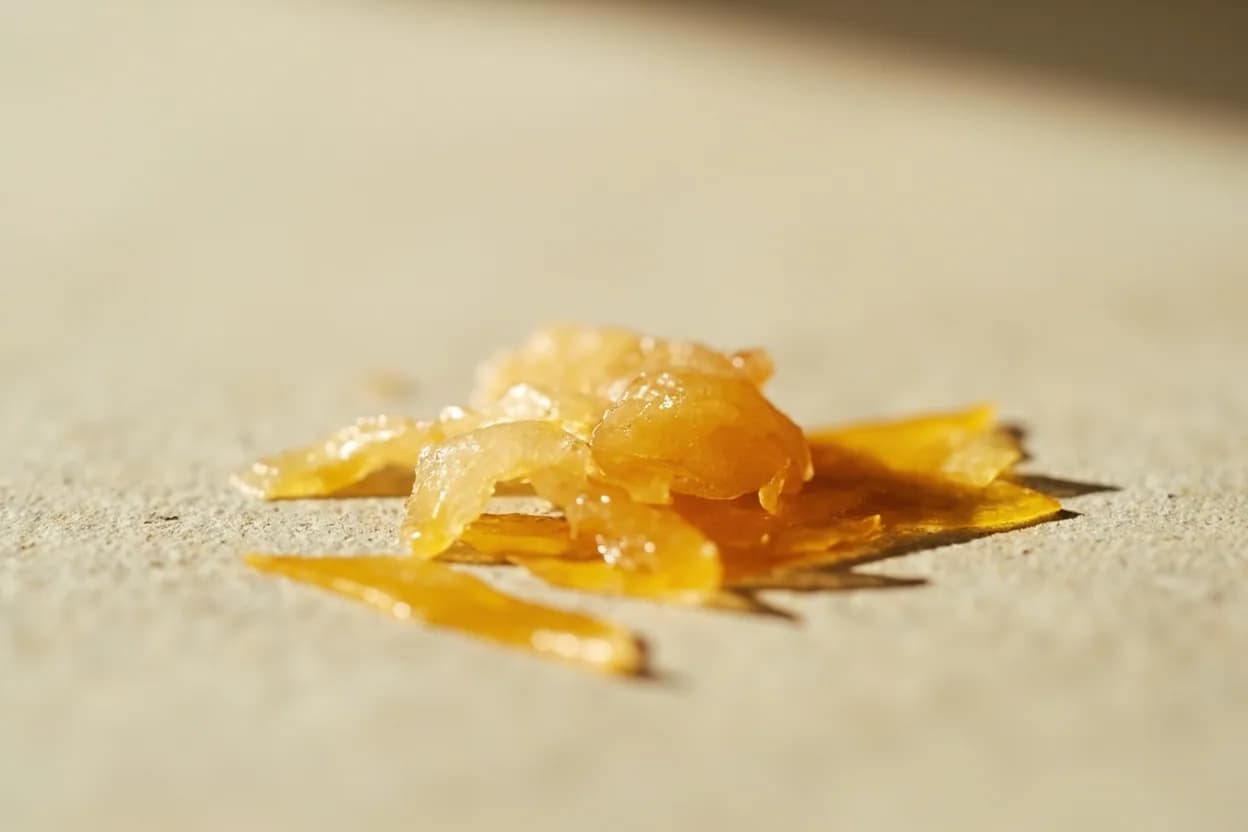
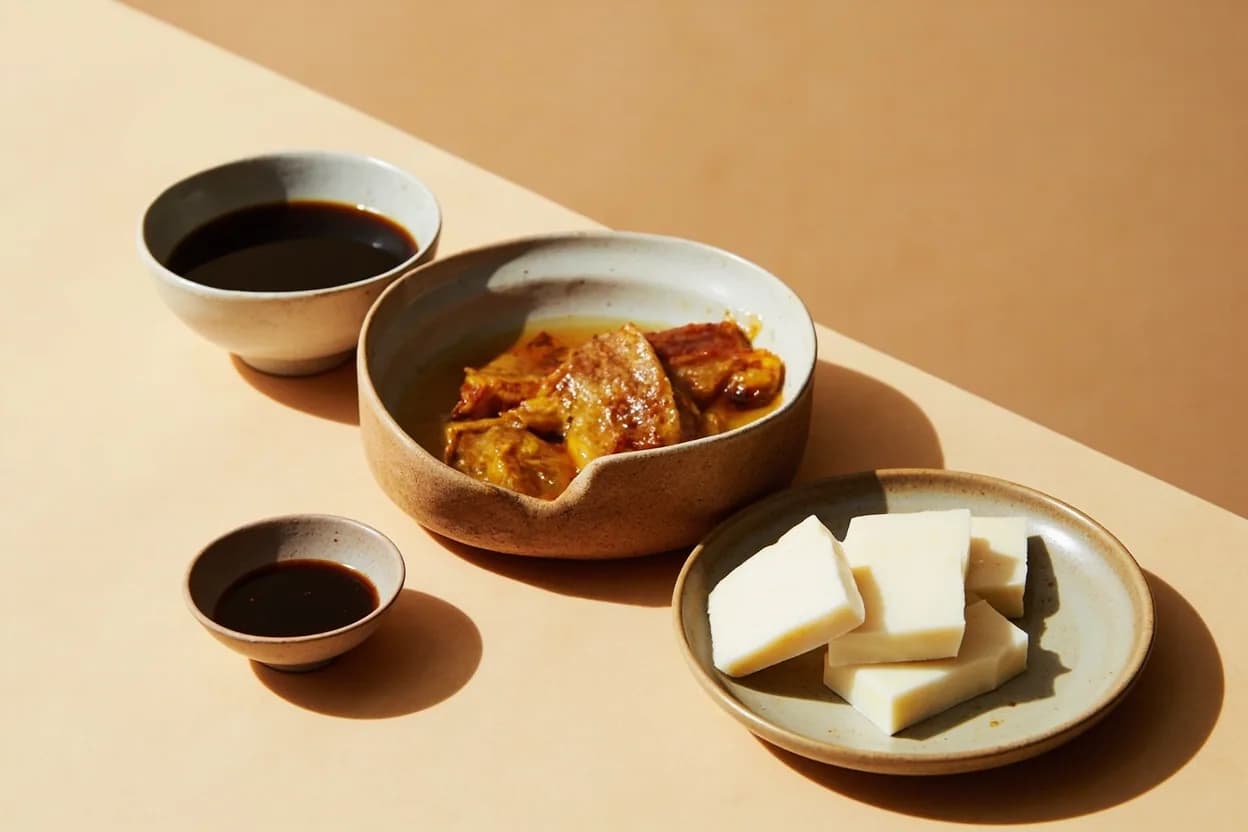
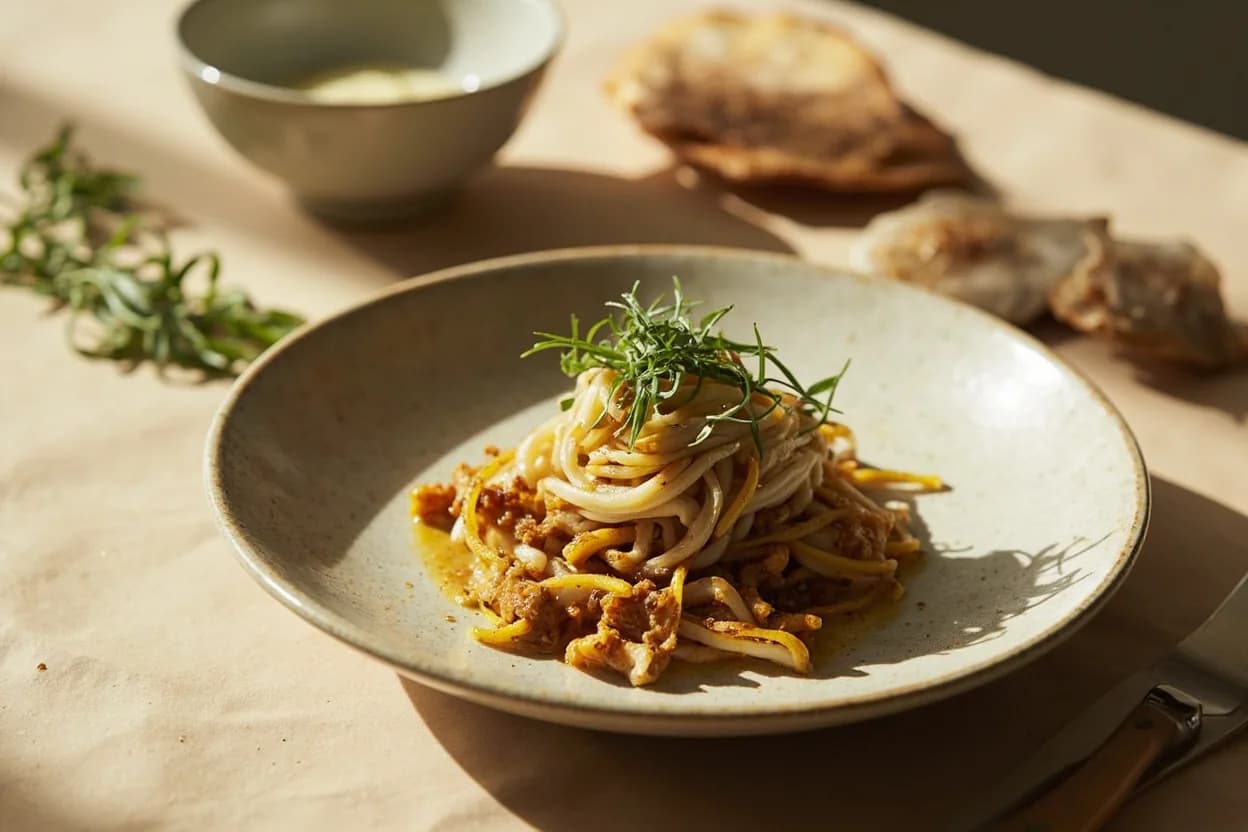
In photos
Flavour profile
Classic pairings
- MisoJapanese
Miso dissolved in dashi is the most ubiquitous pairing in Japanese cooking; the fermented richness of miso floats on the clean umami broth, each amplifying the other.
- Soy Sauce and MirinJapanese
The canonical seasoning trio for Japanese soups, sauces, and braises: dashi provides umami depth, soy adds salt and fermented complexity, mirin contributes sweetness and shine.
- Silken TofuJapanese
Tofu absorbs dashi effortlessly; in agedashi tofu, the delicate curd soaks up the seasoned dashi beneath a crisp exterior in one of Japan's most beloved snacks.
- Egg (chawanmushi)Japanese
The savory egg custard chawanmushi is made by setting egg with dashi — the result is a silky, quivering block of concentrated umami that defines the technique.
- Daikon RadishJapanese
Simmered daikon soaks up dashi-based seasoning to become oden's signature ingredient — sweet, almost gelatinous, and suffused with savory marine depth.
- Udon and Soba NoodlesJapanese
Hot noodle soups in Japan are almost entirely dashi-based; the broth's clarity allows the noodle texture to shine while providing a complete savory backdrop.
- Spinach and Leafy Greens (ohitashi)Japanese
Blanched greens dressed in seasoned dashi (ohitashi) is the most minimal demonstration of dashi's power: the vegetables taste of themselves, only more so.
Adventurous pairings
- Butter
The Japanese technique of finishing dashi-based sauces with cold butter (beurre monté) creates a silky, deeply savory sauce with echoes of both French and Japanese tradition — a natural bridge.
- Parmesan (shaved or grated)
Both Parmesan and dashi are extreme glutamate sources; together in a Western-Japanese fusion risotto or pasta they create layered umami of startling depth.
- Clams or Cockles
Clam broth is itself umami-rich; combining it with dashi in a soup produces an amplified, perfectly marine umami that chefs in Japan and Portugal have explored with excellent results.
The clean neutrality of dashi provides a delicate base that allows truffle's complex aromatics room to express themselves — a marriage explored in kaiseki crossovers with French haute cuisine.
- Roasted Corn
The natural glutamates in corn resonate with dashi's foundational umami; a dashi-based corn soup, finished with butter and mirin, is a quietly brilliant modern Japanese preparation.
- Yuzu Juice
A few drops of yuzu's floral, highly aromatic citrus brightens the marine depth of dashi in sauces and ponzu — the acid lifts without masking, and the citrus oil complements the sea note.
Tread carefully
- Strongly spiced preparations (cumin, chili, curry)avoid
Dashi's clean, transparent character is immediately overwhelmed by powerful spice aromatics — it ceases to function and the umami synergy is lost.
- Heavily acidic ingredients in quantity (vinegar-dominant dressings)avoid
Significant acid degrades the glutamate-IMP synergy that makes dashi umami work; in small doses (ponzu) it enhances, but in excess it undermines.
- Heavy cream reductionsavoid
Dashi's clean, water-clear savory quality is muddied by rich cream; the combination loses the translucent, precise character that makes dashi special.
How to use it
- Cold-steep kombu in water overnight for the cleanest, sweetest dashi (ideal for chawanmushi and delicate soups)
- Make ichiban dashi (first draw) by warming cold-steeped kombu to 60°C, removing kombu, adding katsuobushi, steeping 5 min off heat, and straining — never boil, which makes it bitter
- Niban dashi (second draw) uses the spent kombu and katsuobushi; suitable for heartier dishes like miso soup and oden
- For instant dashi, use high-quality dashi powder (hondashi) or dashi packets as a backup; not equivalent but acceptable
- Use dashi as a seasoning medium (substitute for water in any Japanese sauce or braise)
Appears in
Related flavours
Primary structural ingredient of dashi — the glutamate source that creates the stock's umami backbone.
Used in place of katsuobushi for shojin (vegan) dashi; the GMP-kombu glutamate synergy mirrors the IMP-kombu pairing.
Dashi's most important partner — dissolved together they form the most consumed soup in Japan.
The seasoning layer applied to dashi in nearly every context: soups, sauces, marinades, and dressings.
References
- 1.Japanese Farm Food — Nancy Singleton Hachisu
- 2.The Japanese Kitchen — Hiroko Shimbo
- 3.Japanese Cooking: A Simple Art — Shizuo Tsuji
- 4.The Umami Cookbook — Ole G. Mouritsen & Klavs Styrbaek
- 5.Dashi and Umami: The Heart of Japanese Cuisine — Heston Blumenthal & Yoshihiro Murata
Confidence: high
Notes
The umami synergy explained
Dashi's extraordinary power comes from a documented flavor synergy. Kombu is rich in free glutamic acid (the same compound as MSG). Katsuobushi is rich in inosine monophosphate (IMP). When glutamate and IMP are combined, the perceived umami intensity is not additive but multiplicative — a ratio of 1:1 glutamate:IMP can produce up to eight times the perceived umami of either compound alone. This is why awase dashi (kombu + katsuobushi) tastes so much more profound than a single-ingredient broth.
Shojin dashi for vegan cooking
Shojin dashi, made from kombu and dried shiitake, works on the same principle: kombu contributes glutamate, dried shiitake contributes guanosine monophosphate (GMP), and GMP-glutamate interaction is also synergistic. It is slightly less clean than awase dashi but has a deeper, earthier quality well-suited to robust vegetable dishes. It is the standard stock in Japanese Buddhist temple cooking.