Fermented Pastes & Sauces
Iru (Fermented Locust Beans)
Also: dawadawa, locust bean condiment, African néré seeds, sumbala, netetu, ogiri (in some Igbo contexts)
West Africa's most powerful umami bomb — pungent, earthy fermented locust beans that anchor soups and stews the way fish sauce anchors Southeast Asian cooking.
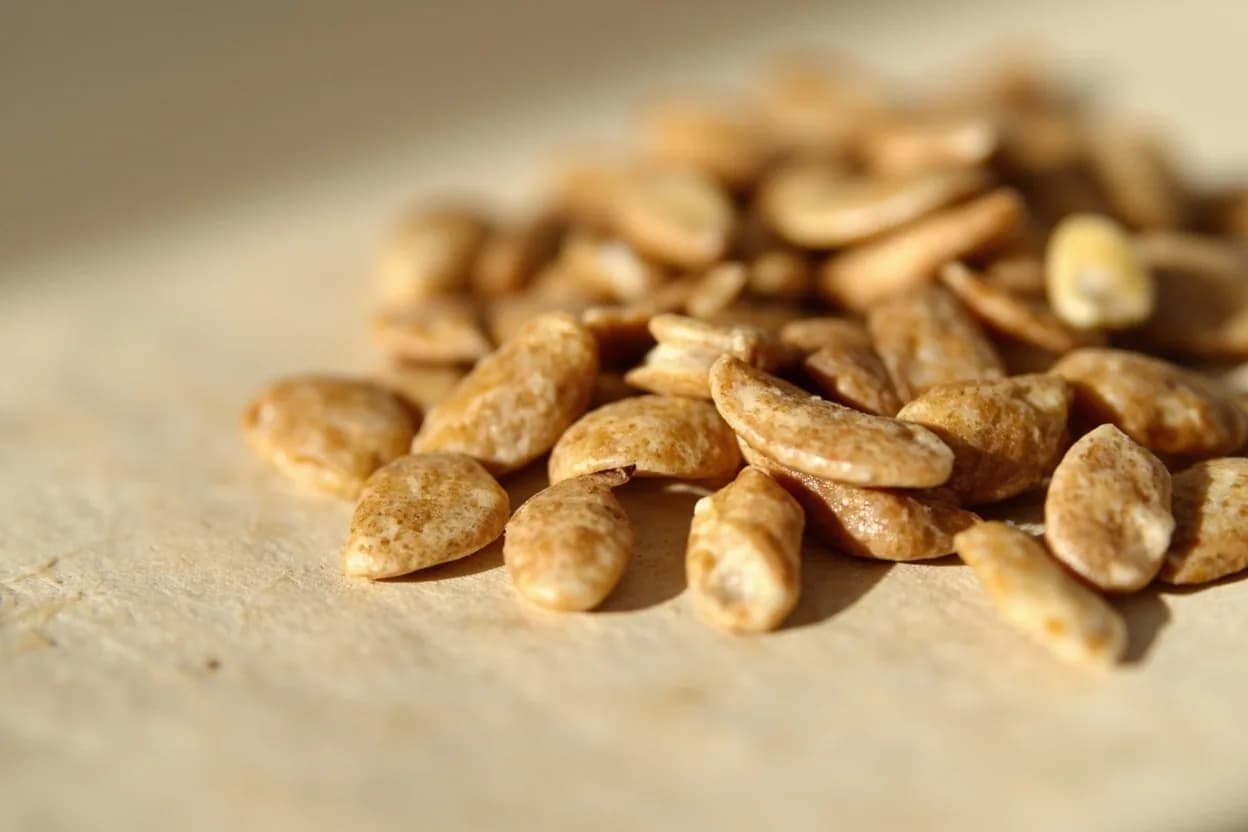
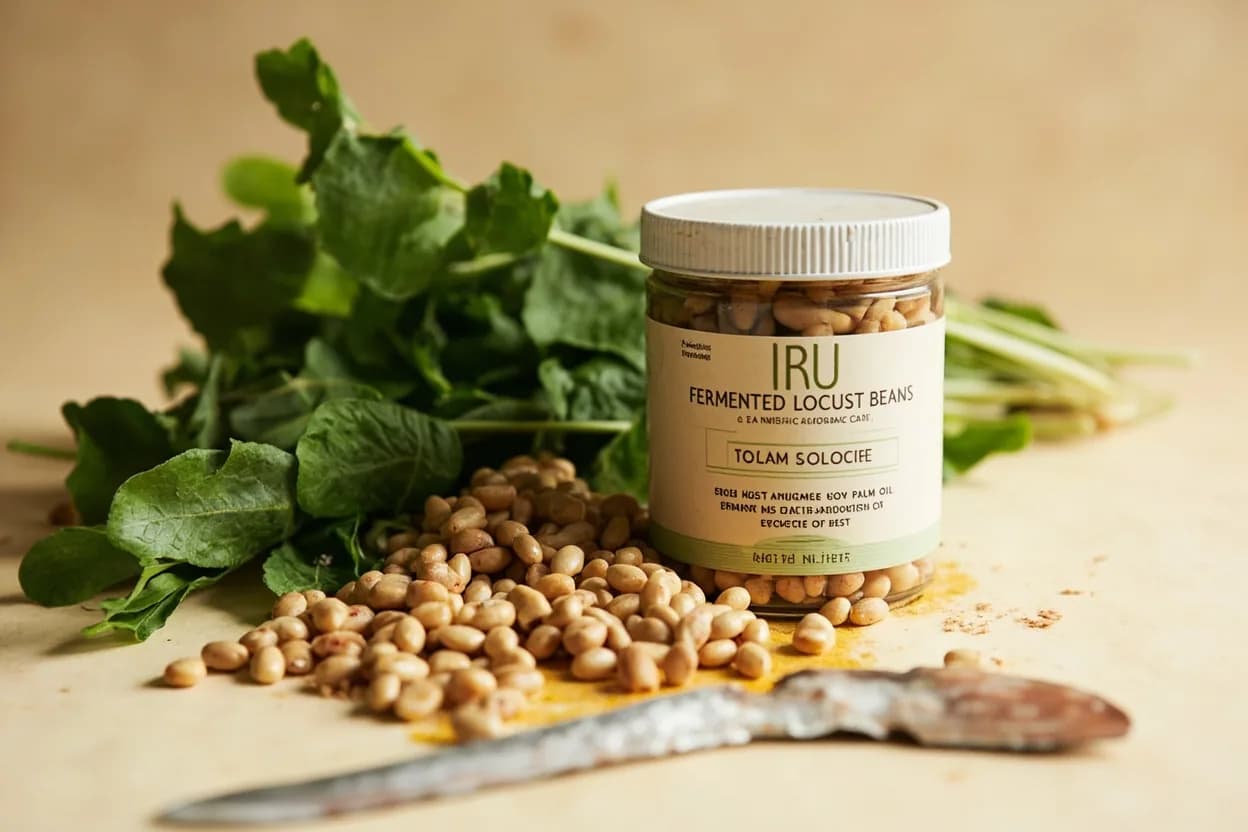
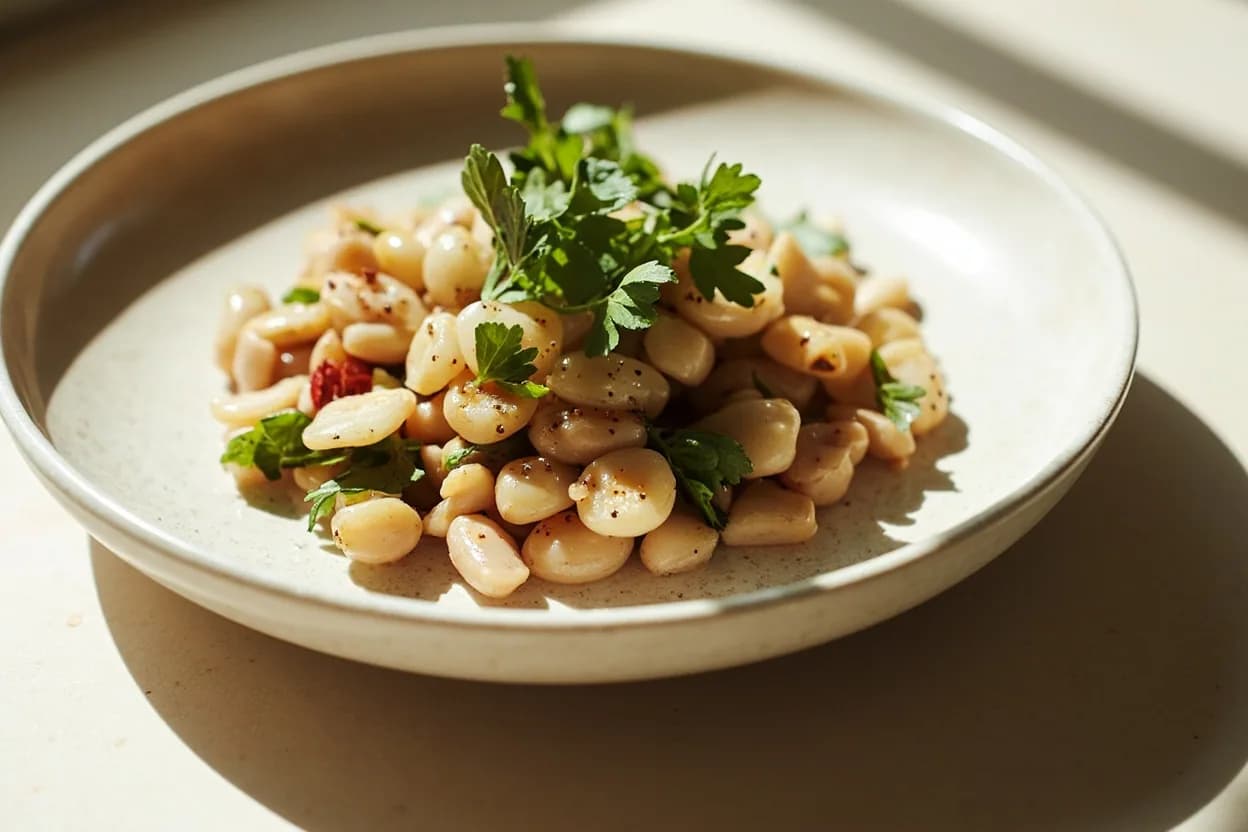
Iru is a fermented condiment made from the seeds of the African locust bean tree (Parkia biglobosa), widely used across West and Central Africa, particularly among Yoruba, Hausa, Igbo, Fula, and Mande cooks. The seeds are boiled for many hours, dehulled, and then fermented for 2–4 days in covered containers, where Bacillus subtilis and related bacteria break down the proteins into pungent, ammonia-rich compounds similar in function to natto or shrimp paste. The result ranges from soft and darkly pungent (fresh iru) to dry, compressed, and shelf-stable (iru pete). The smell is boldly funky — sulfurous and ammoniacal — but in cooked dishes this pungency resolves into a deep, satisfying umami that enriches soups and stews invisibly.
In photos
Flavour profile
Classic pairings
- Palm oilYoruba / Igbo / West African
The dual fat-and-umami base of West African soups — iru blooms in hot palm oil, releasing its aromatics and melding with the oil's earthy, carotene-rich bitterness into a cohesive base.
- Leafy vegetables (efo riro greens, bitterleaf, spinach)Yoruba / Nigerian
Iru is the essential seasoning in efo riro (Yoruba braised greens) — its concentrated umami compensates for the blandness of cooked leafy greens without any meat required.
- Stockfish (dried Norwegian cod)Nigerian / Ghanaian
Iru and stockfish are a canonical West African umami-stacking technique — both are intensely preserved proteins; their combined depth in soups like egusi or ogbono creates a flavor base with extraordinary savoriness.
- Dried crayfish / shrimpNigerian
Dried crayfish powder is iru's constant partner in Nigerian cooking — the marine umami of crayfish and the terrestrial umami of iru layer into a savory chord more complex than either achieves solo.
- Tomato and red pepper (base stew)West African
Iru added to the fried tomato-pepper-onion base (the 'Nigerian stew' foundation) deepens the sauce's flavor well beyond what sugar, salt, and fresh aromatics can achieve.
- Egusi (melon seed)Nigerian / Ghanaian
Egusi soup's oily, earthy ground melon seed base is transformed by iru — the fermented bean adds the umami backbone that makes egusi soup far greater than a simple ground seed porridge.
- Yam (pounded yam, boiled yam)Yoruba / Igbo
Iru-based soups are classic accompaniments to pounded yam — the starchy, neutral yam absorbs the pungent soup and the contrast is central to Yoruba and Igbo cuisine.
Adventurous pairings
- Miso (white or red)
Both are fermented legume condiments with high glutamate content but radically different flavor profiles; combining small amounts produces a global umami base for stews or braises with unexpected depth.
- Anchovies
Stacking iru with anchovy paste in a tomato braise creates an extreme umami convergence — used sparingly, the result is a sauce that tastes like it has been slow-cooked for days.
- Plantains (ripe)
The sweetness of ripe caramelized plantains provides a counterpoint to iru's pungency in West African fusion contexts — the fat from frying softens the funkiness while the sugar contrasts it.
- Black beans
Iru added to a black bean stew or braise brings the same fermented legume logic as Chinese black bean sauce — earthy meeting earthy, with the iru providing a more aggressive umami punch.
- Roasted peppers
Charred peppers' smoky sweetness tames iru's ammonia edge; together they create a base with both smoke and umami dimensions — effective in a West African-inflected romesco or relish.
Tread carefully
- Delicate broths and consommésavoid
Iru's intense funk will dominate and muddy a refined clear stock — it belongs in robust, textured stews and soups where its pungency can be absorbed and integrated.
- Sweetened dessert contextsavoid
The ammonia-like aromatic compounds in iru are highly persistent and create a jarring off-note in sweet preparations; unlike some pungent cheeses there is no established culinary tradition of iru in sweets.
- Fresh dairy (milk, fresh cream)avoid
The volatile organic acids from fermentation can cause curdling and the sharp contrast between the fermented pungency and clean dairy flavor resolves uncomfortably.
How to use it
- Bloom in hot palm oil or neutral oil before adding other aromatics — heat transforms the raw ammonia notes into cooked umami depth
- Add early in a braise or soup (alongside the onion-tomato-pepper base) so the long cook time integrates its pungency
- Pound with a mortar if using whole iru seeds to release more surface area and maximize flavor distribution
- Use iru pete (dried compressed form) for longer shelf life; crumble directly into simmering liquid — it dissolves slowly and seasons throughout
- Rinse fresh iru briefly to reduce extreme ammoniacal notes before using, while retaining the fermented flavor base
Appears in
Related flavours
Often used interchangeably; dawadawa is the Hausa name and the dry, disc-shaped form of the same fermented locust bean, with a slightly stronger and drier flavor profile
- Dried crayfish
The most frequent partner ingredient — marine and terrestrial umami stack together into the foundation flavor of Nigerian soups
- Ogiri
A related Igbo fermented condiment made from sesame seeds or castor oil seeds — a regional substitute for iru in southeastern Nigerian cooking with a similarly pungent profile
- Shrimp paste (belacan, trassi)
Functional analog from Southeast Asia — both are pungent, cooked-transform fermented proteins used as invisible umami depth-builders in complex stew bases
References
- 1.Yewande Komolafe — 'My Everyday Lagos' (Ten Speed Press, 2023)
- 2.Zoe Adjonyoh — 'Zoe's Ghana Kitchen' (Mitchell Beazley, 2017)
- 3.Tunde Wey — 'Chasing Umami: West African Fermented Condiments' (various food journalism, 2018–2022)
- 4.Sandor Katz — 'The Art of Fermentation' (Chelsea Green, 2012) — chapter on African fermented legumes
- 5.FAO — 'Fermented Cereals: A Global Perspective' (FAO Agricultural Services Bulletin 138, 1999)
Confidence: high
Notes
The West African equivalent of fish sauce
Iru functions in West African cooking exactly as fish sauce functions in Southeast Asian cooking or as garum functioned in ancient Rome — an invisible backbone of fermented protein umami that makes everything taste deeper and more satisfying without tasting 'of' the condiment itself. Like fish sauce added to a pasta sauce, iru in a pot of egusi soup is undetectable as iru but critical to the soup's depth. Removing it from recipes produces a noticeably thinner, less complex dish.
Bacillus subtilis: the bacterial key
Unlike many Asian fermented bean products that use mold (Aspergillus), iru fermentation is driven primarily by Bacillus subtilis — the same bacterium behind Japanese natto. This produces the characteristic ammonia notes (from protein breakdown) and the characteristic stickiness in fresh iru. The similarity to natto is not coincidental: it reflects parallel human discovery that Bacillus fermentation of legumes produces deeply satisfying food.