Fermented Grains & Cereals
Injera
Also: Ethiopian flatbread, teff bread, Ethiopian sourdough
Ethiopia's living plate — a vast, spongy teff sourdough whose assertive tang and porous crumb are built to scoop and soak.
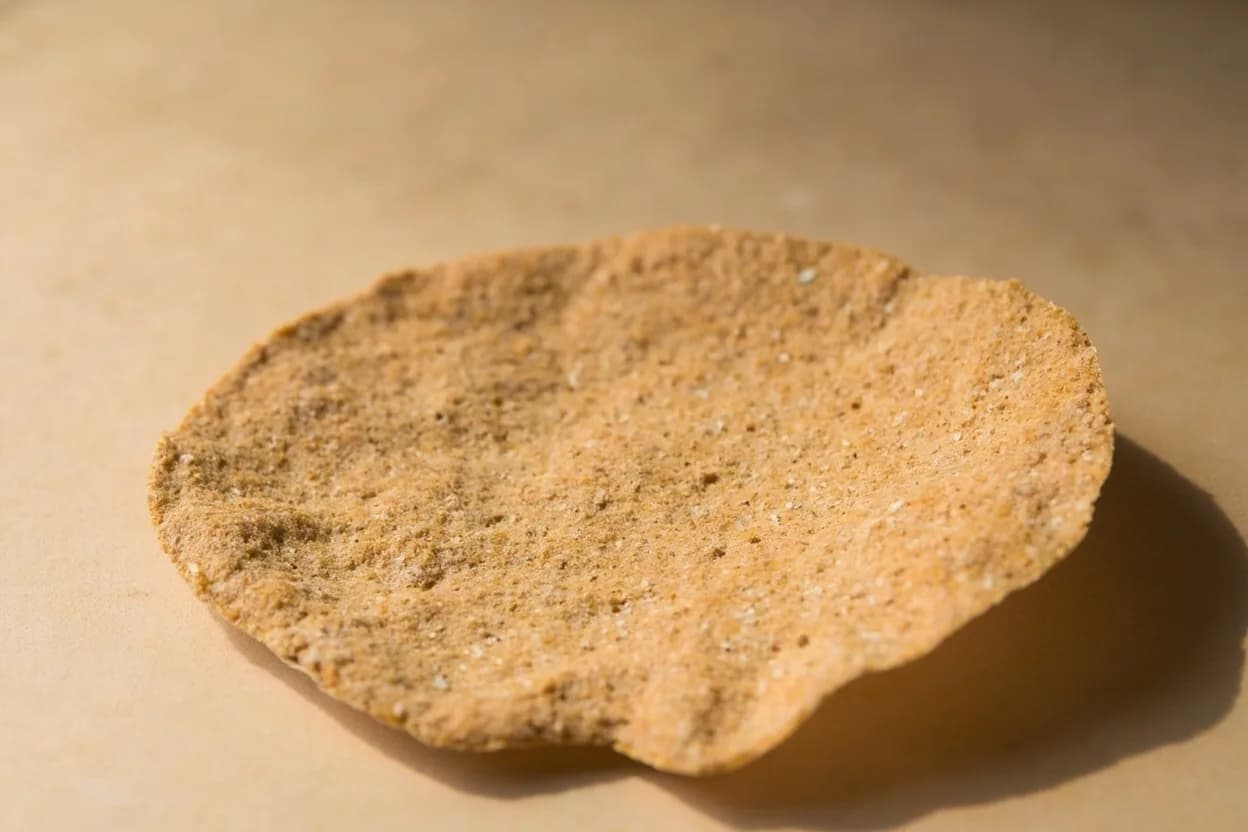
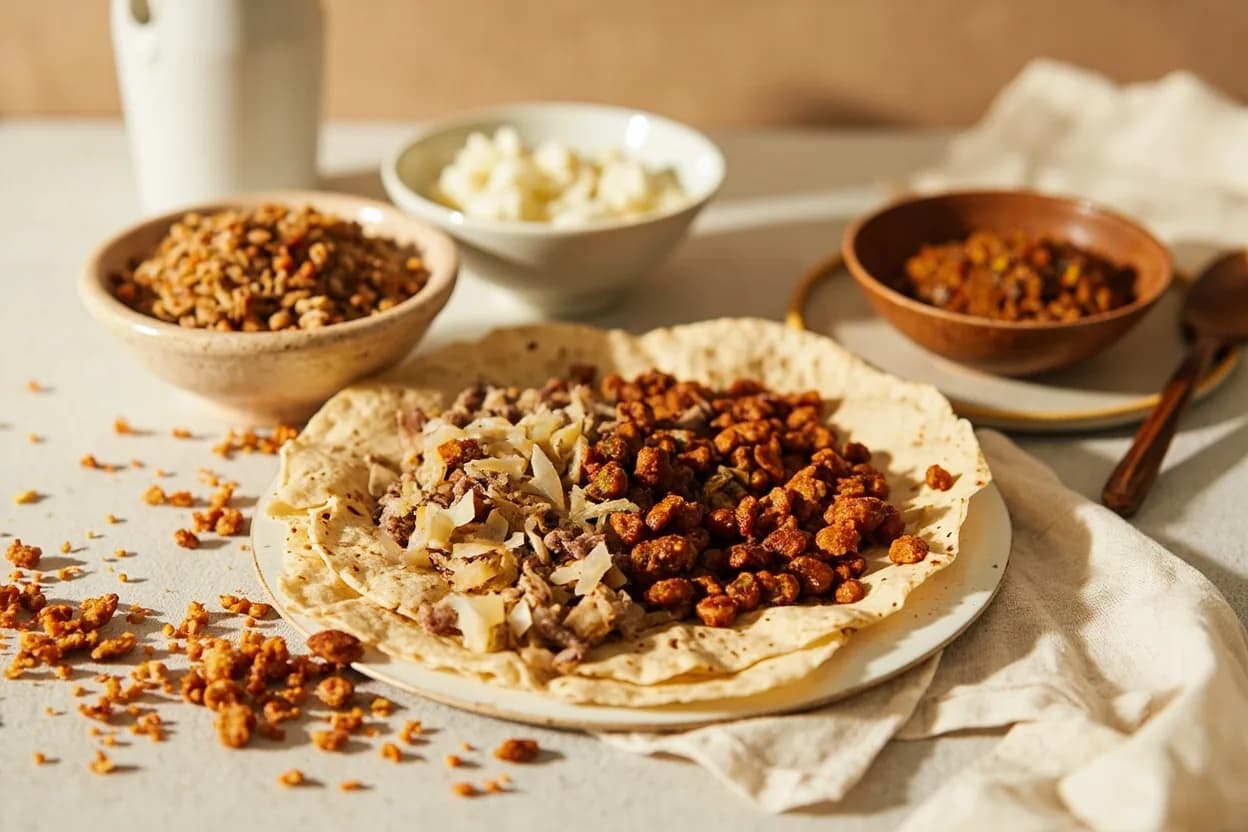
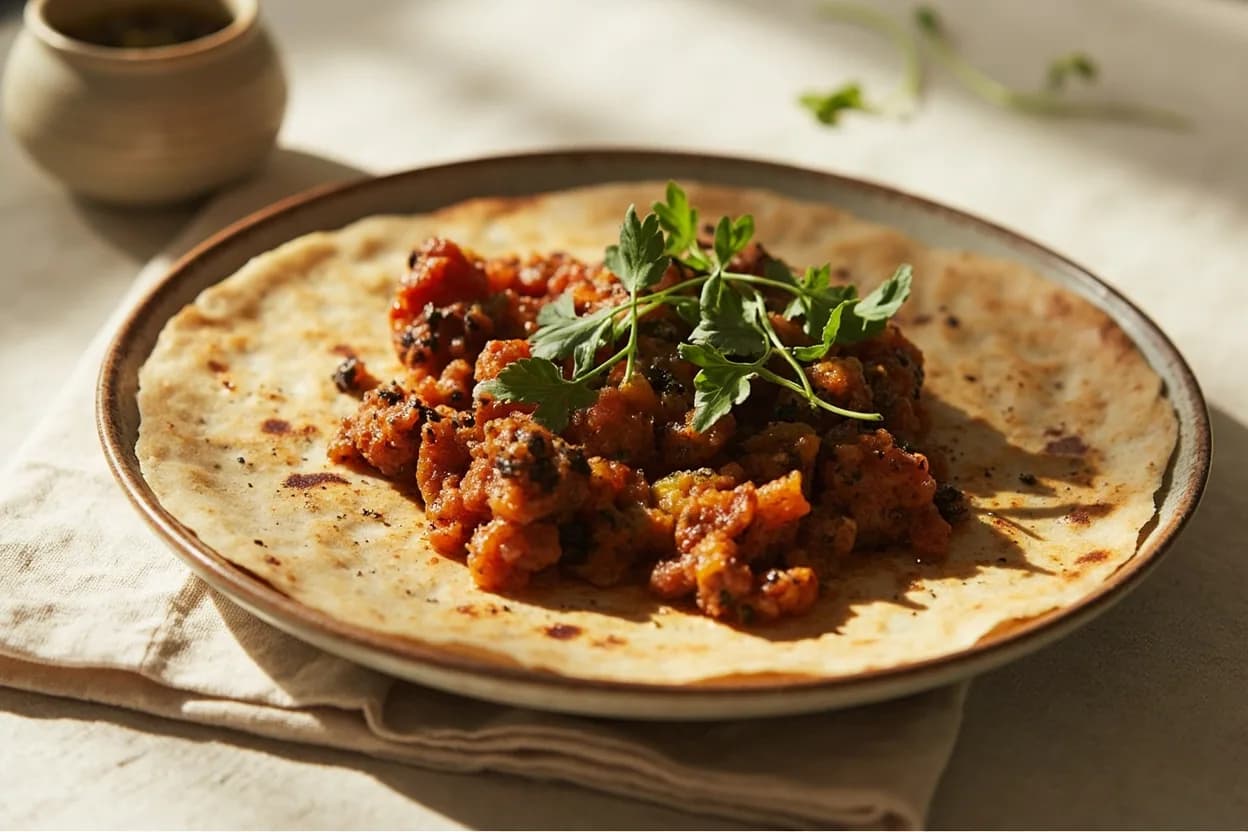
Injera is a large, fermented flatbread made from teff flour batter that is left to ferment for two to three days, then poured onto a hot clay griddle (mitad) in a single pour. The result is a wide, foam-textured disk with a sour, lactic bite, an earthy molasses undertone from the teff, and a soft, slightly elastic crumb riddled with eyes that capture sauce. It functions simultaneously as plate, utensil, and bread in Ethiopian and Eritrean cuisine.
In photos
Flavour profile
Classic pairings
- Doro WatEthiopian
The injera's sourness cuts through the rich berbere butter, and its sponge absorbs the dark, chile-spiced chicken stew without going soggy.
- Misir Wat (spiced red lentils)Ethiopian
The earthiness of red lentils and the heat of berbere harmonise with teff's mineral character; the bread soaks up every drop.
- Ayib (Ethiopian fresh cheese)Ethiopian
Cool, crumbly ayib tempers injera's sourness and mirrors its lactic quality, creating a clean, refreshing contrast.
- Tikel Gomen (turmeric-spiced cabbage)Ethiopian
The muted sweetness of braised cabbage provides counterpoint to injera's tang; turmeric's earthy warmth echoes teff's soil notes.
- Berbere spice blendEthiopian
The complex heat of chiles, fenugreek, and warm spices in berbere is exactly the flavour load injera was designed to carry.
- Niter kibbeh (spiced clarified butter)Ethiopian
Rich, aromatic clarified butter with onion, garlic, and black cardamom soaks into injera's sponge and balances its acidity with fat.
- Gomen (collard greens)Ethiopian
Bitter, garlic-braised collards echo injera's mild bitterness while the bread softens their rough texture when scooped together.
Adventurous pairings
North African poached eggs in tomato-pepper sauce sit beautifully on injera — the tang mimics the levain flatbreads of the Maghreb and the sponge catches every drop of sauce.
- Hummus with za'atar
Injera's sourdough character bridges Ethiopian and Levantine fermented-grain traditions; the sumac-herbal notes in za'atar amplify its tartness.
- Aged goat cheese
Goat cheese's caprylic tang doubles down on injera's lactic sourness to create an intensely complex, agreeable bite reminiscent of a cheese board with rye crispbread.
- Roasted beets with walnuts
The earthy sweetness of beets and bitter walnut fat give injera's molasses-mineral base notes room to shine without competing heat.
- Dark chocolate ganache
An unexpected dessert use: injera's teff earthiness and lactic bite pair with 70% dark chocolate the way sourdough pairs with praline — contrasting and complementary.
Tread carefully
- Delicate white fish (steamed or poached)avoid
Injera's aggressive sourness overwhelms mild, subtle fish like sole or tilapia; the ferment masks any nuance.
- Very sweet dessert saucesavoid
High-sugar coulis clash jarringly with injera's sour, mineral base — the result tastes discordant rather than balanced.
- Creamy dairy-heavy gratinsavoid
The bread's sponge absorbs béchamel rapidly, turning sodden and gummy; its tang turns the cream sour-tasting.
How to use it
- Tear and scoop: use thumb and two fingers to tear a piece and wrap around a mouthful of wat or salad
- Layer underneath: lay injera flat as a base for stews poured on top, allowing it to absorb sauce as the meal progresses
- Toast lightly on a dry griddle to refresh day-old injera and add slight crispness at the edges
- Use as a vessel for fermented and acidic components — its own acidity makes it resilient where wheat bread would turn unpleasant
Appears in
Related flavours
Injera is made primarily from teff; understanding teff's flavour unlocks why the bread pairs as it does.
Ethiopia's master spice blend is injera's principal flavour partner across most traditional wats.
- Sourdough bread
Shares the lactic-acid sour character and many of the same pairing principles as injera, particularly with rich braises.
References
- 1.Exotic Ethiopian Cooking — Daniel J. Mesfin
- 2.The Africa Cookbook — Jessica B. Harris
- 3.On Food and Cooking — Harold McGee
Confidence: high
Notes
The living plate
In Ethiopian tradition, the injera beneath the wats is not a starter or a side — it is the plate. As a meal progresses, the bread at the bottom soaks up all the juices of every dish placed on it, and eating that bottom layer last is considered the most prized bite. This functional role as absorber means injera's pairings must above all survive saturation without turning unpleasant.