Preserved & Cured Fish
Ikura (Salmon Roe)
Also: salmon roe, salmon caviar, ikura, sujiko (whole skein), red caviar
Brilliant orange salmon eggs that burst with briny, oceanic richness — a Japanese pantry icon equally at home on sushi rice and blinis.
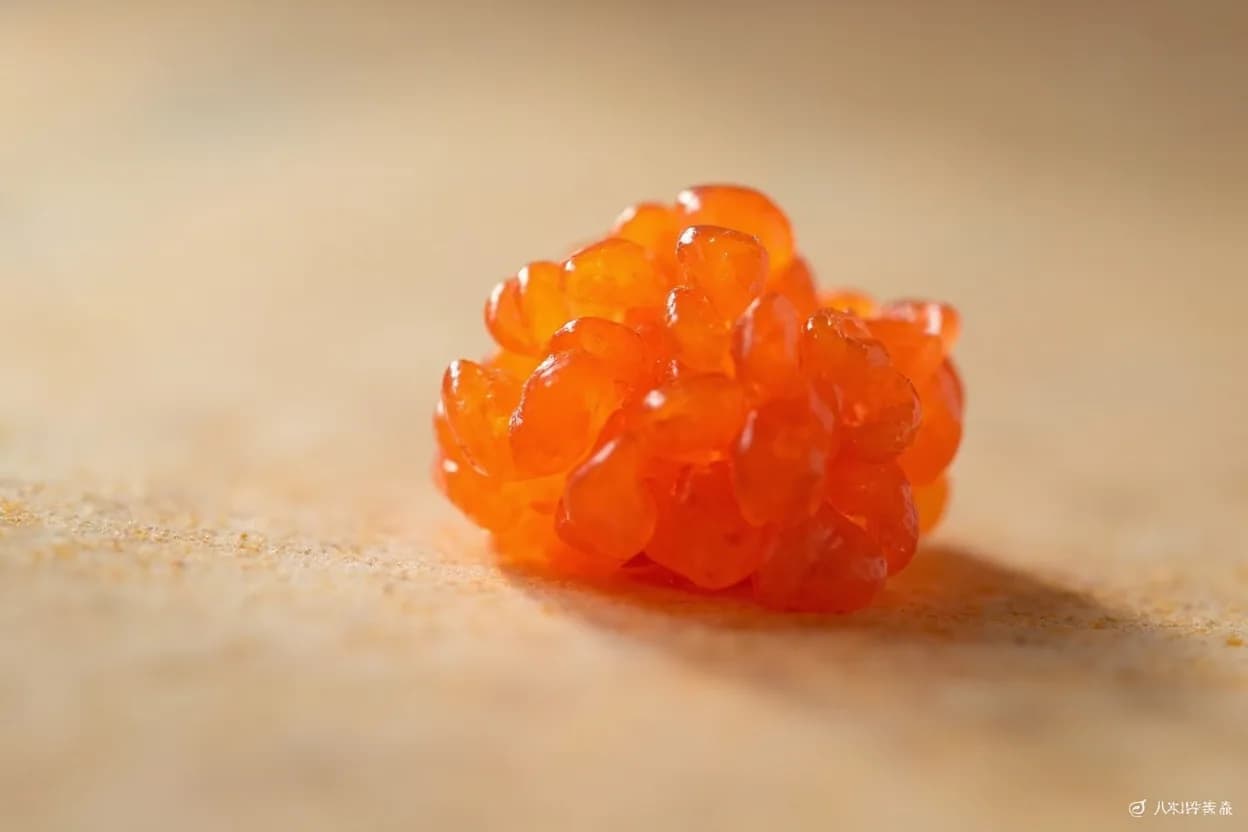
Ikura are the individually separated eggs of Pacific salmon (primarily chum, sockeye, or king), cured in salt and often soy sauce and mirin in the Japanese tradition. Each translucent orange sphere holds a small pocket of rich, fatty liquid that ruptures with a satisfying pop. The flavour is distinctly oceanic and saline with a clean, fatty finish from the high omega-3 content. Soy-marinated ikura adds umami depth and a lacquered mahogany hue; salt-only versions are brighter and more purely marine. The eggs range from 4–7 mm in diameter and are prized as much for their tactile drama as their taste.
In photos
Flavour profile
Classic pairings
- Sushi rice (sumeshi)Japanese
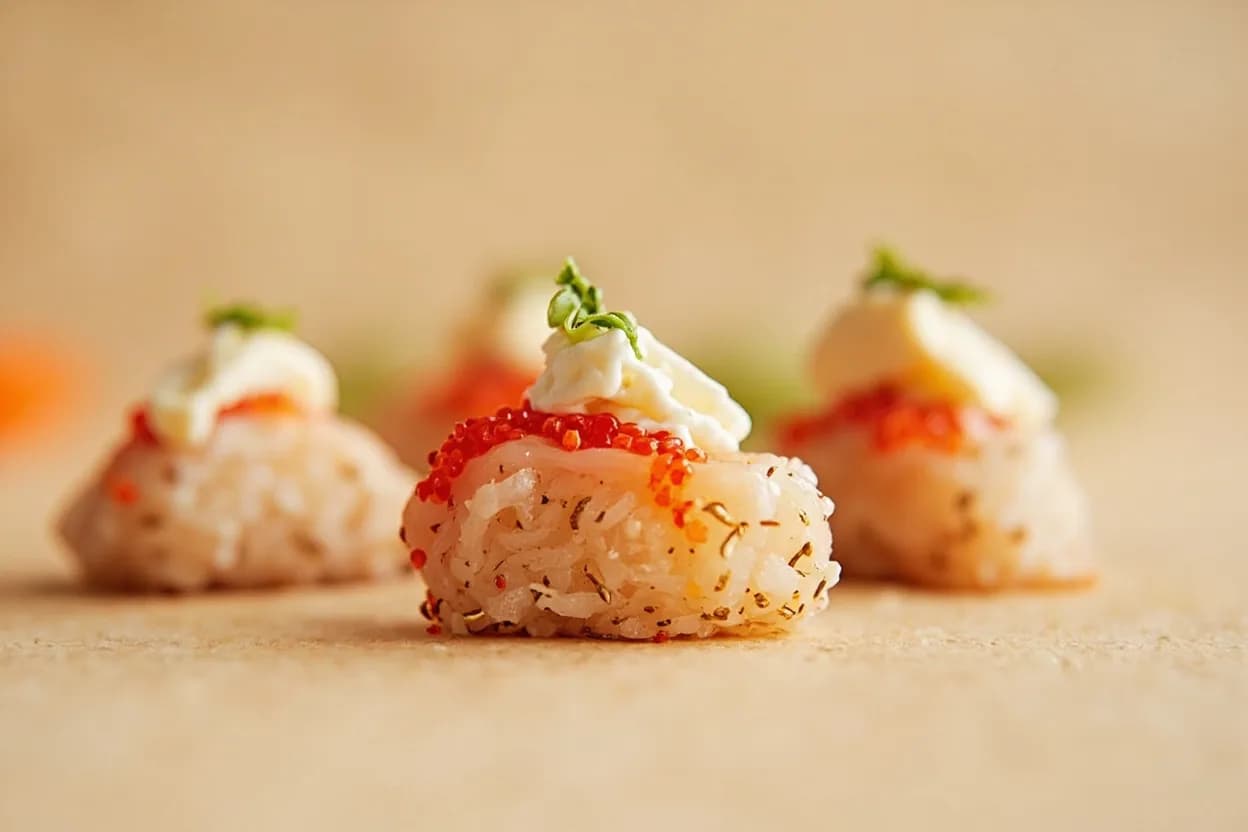
Seasoned vinegar rice is the canonical base — its acidity and stickiness frame the roe's salt and fat without competing.
- Blini with crème fraîcheRussian / French
Buckwheat's nuttiness, cream's tang, and roe's brine form the classic Russian-French combination.
- Cream cheese or fromage blancJapanese, Nordic
Dairy fat cushions the salinity while the slight tang amplifies the roe's oceanic character.
- Dashi (kombu-based)Japanese
Glutamates in dashi lock onto the roe's own IMP, creating an umami synergy that magnifies sea flavour.
- CucumberJapanese
Cool water content and vegetal freshness provide textural contrast and neutralise excess brine on the palate.
- Shiso (perilla leaf)Japanese
Anise-mint brightness and slight astringency cut through fat and define the roe's delicacy.
- Yuzu zestJapanese
Floral citrus aromatics lift the marine note without the acidity of lemon, a refined Japanese seasoning approach.
Adventurous pairings
- Cultured butter on warm brioche
The yeasty, pillowy crumb and rich butter perform like an elevated blini — the roe becomes a luxury condiment rather than a garnish.
- Avocado
Smooth, fatty avocado shares a lipid richness that harmonises with ikura's omega-3 oils; California roll logic elevated.
- Cauliflower crème
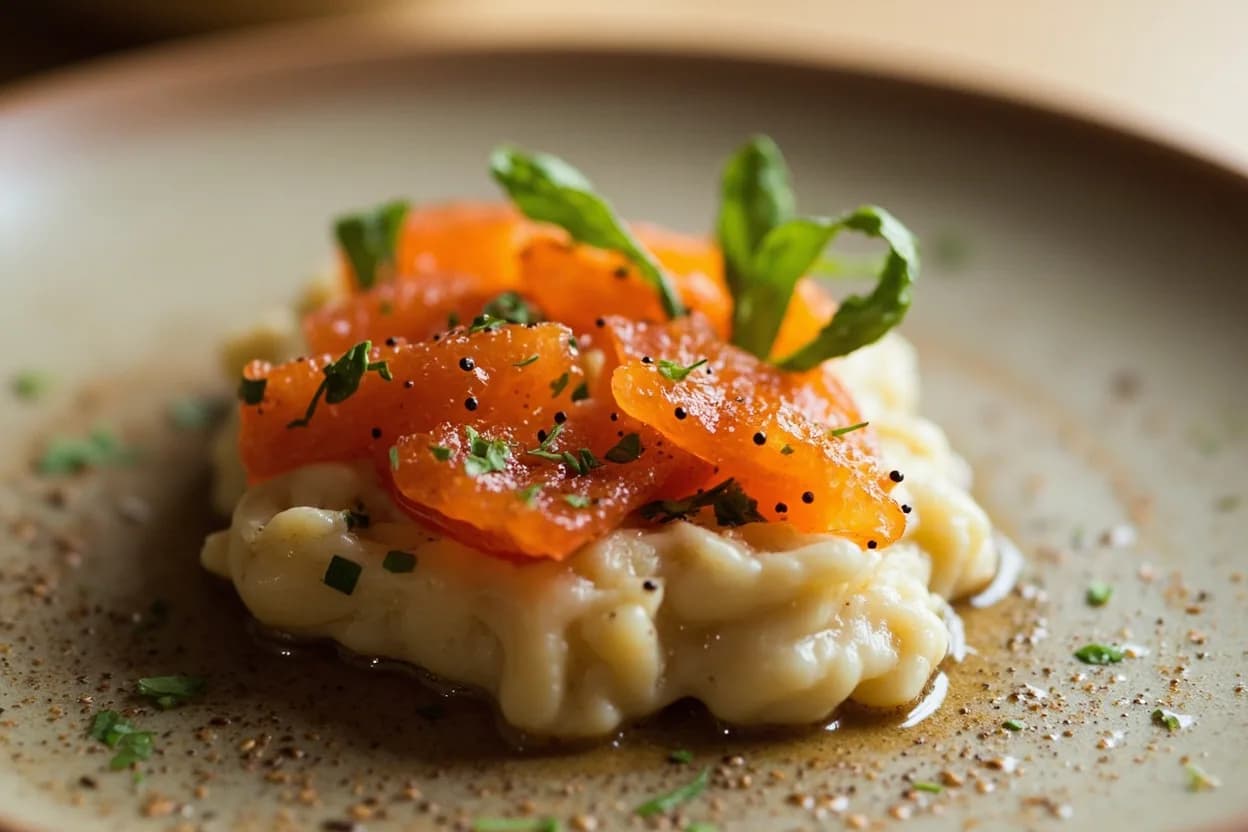
Roasted cauliflower purée's nutty sweetness plays against brine; a modern fine-dining plating where roe stands in for caviar.
- Tapioca pearls
Identical spherical geometry creates a visual-textural play; the starchiness of tapioca provides a neutral scaffold for the roe's pop.
- White soy (shiro dashi) vinaigrette
Delicate umami acid dressing on barely-cooked scallop carpaccio, with ikura finishing; all the flavours share an oceanic register.
Tread carefully
- Heavy red meat jusavoid
Bold iron-forward meat sauces overwhelm the delicate marine character and create a metallic clash.
- Strong aged cheeses (aged cheddar, blue)avoid
Ammonia and dominant lactic acids battle the brine and produce a discordant fishiness rather than synergy.
- Tomato-based saucesavoid
Acidic tomato with salt-cured roe creates a doubled salt-acid sharpness with no fat or starch to bind them.
How to use it
- Spoon directly from the jar at fridge temperature — never heat, which toughens the membrane and cooks out the pop
- Use as a last-second garnish on warm (not hot) dishes to preserve the burst texture
- Marinate briefly in soy, mirin, and dashi (shoyu-zuke) for 30 minutes to deepen colour and umami
- Serve in chilled ceramic or mother-of-pearl spoons to avoid metallic taints from silver
- Fold gently into rice dishes rather than stirring, to keep each egg intact
Appears in
Related flavours
Both are oceanic roe-adjacent luxury garnishes; together they appear in 'sea salute' pairings over pasta or sushi.
- Tobiko (flying fish roe)
Smaller, crunchier, more neutral; often used alongside ikura for textural contrast on the same plate.
- Smoked salmon
Shares the salmon's oceanic base note; the two appear together on blini boards for complementary cured-fish richness.
References
- 1.Japanese Farm Food — Nancy Singleton Hachisu (2012)
- 2.The Japanese Kitchen — Hiroko Shimbo (2000)
- 3.Nobu: The Cookbook — Nobuyuki Matsuhisa (2001)
Confidence: high
Notes
Salt-cured vs soy-marinated (shoyu-zuke)
Salt-only ikura (shio-zuke) has a purer, brighter marine flavour and is preferred in high-end sushi contexts where the chef controls seasoning. Soy-marinated ikura is sweeter, deeper in colour, and more umami-laden — it works well in donburi and blini contexts where the dish needs the roe to carry more seasoning on its own.