Preserved & Cured Fish
Uni (Sea Urchin)
Also: sea urchin roe, ricci di mare, oursin, erizo de mar, uni
The ocean's most decadent mouthful — creamy, briny, and ethereally sweet, equally at home on sushi rice, linguine, or a sourdough crouton.
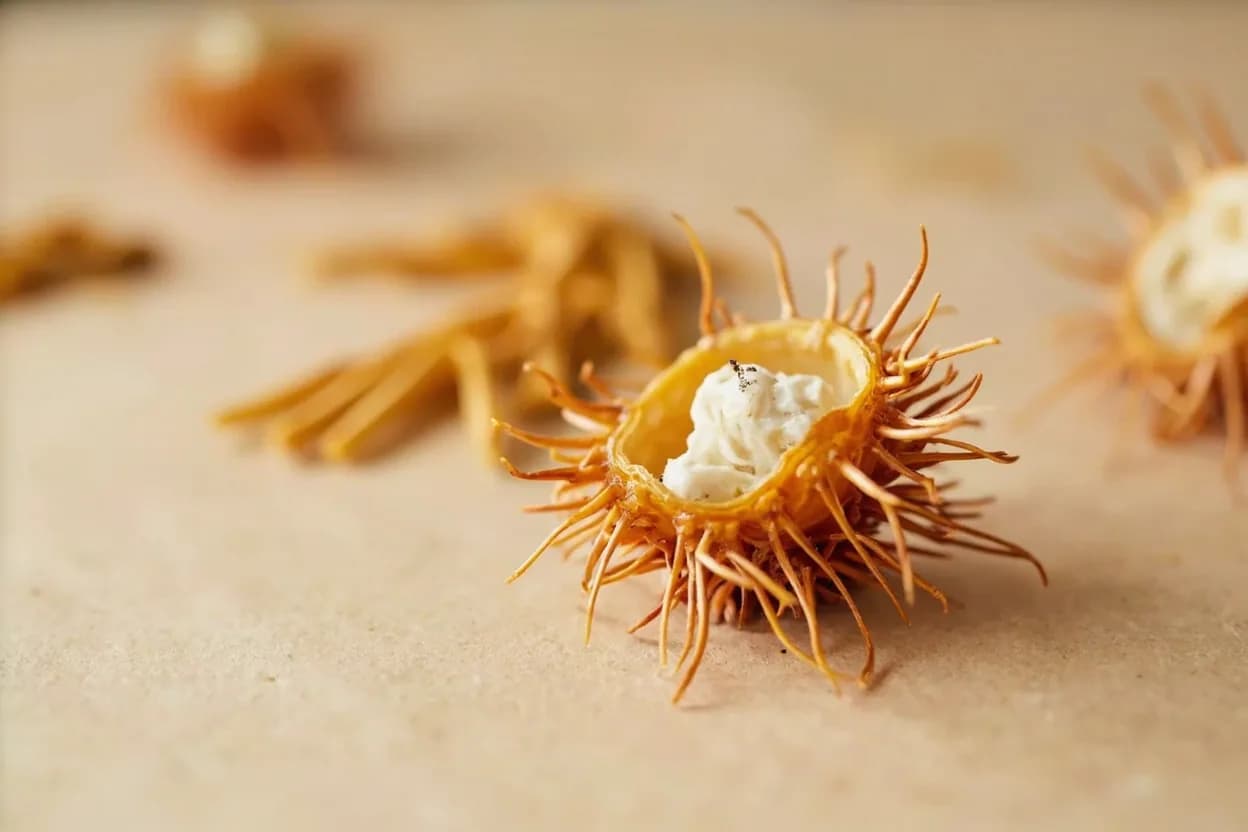
Uni refers to the edible gonads (roe) of sea urchins, most prized from Hokkaido (Japan), Santa Barbara (USA), and Sardinia (Italy). The tongues — soft, custard-yellow to deep amber — have a flavour chemistry unlike any other ingredient: high in glutamic acid (umami), glycine (sweetness), and a suite of volatile marine compounds that give the characteristic oceanic, almost iodine-tinged aroma. Premium uni (e.g. Hokkaido bafun or murasaki) should taste clean, sweet, and briny with no bitterness; bitterness signals age or poor handling. Texture is yielding and creamy — it functions almost like a flavoured butter.
In photos
Flavour profile
Classic pairings
- Sushi rice (sumeshi)Japanese
The canonical vehicle — slightly sweet vinegar rice counterbalances brine and provides neutral starch to frame the roe.
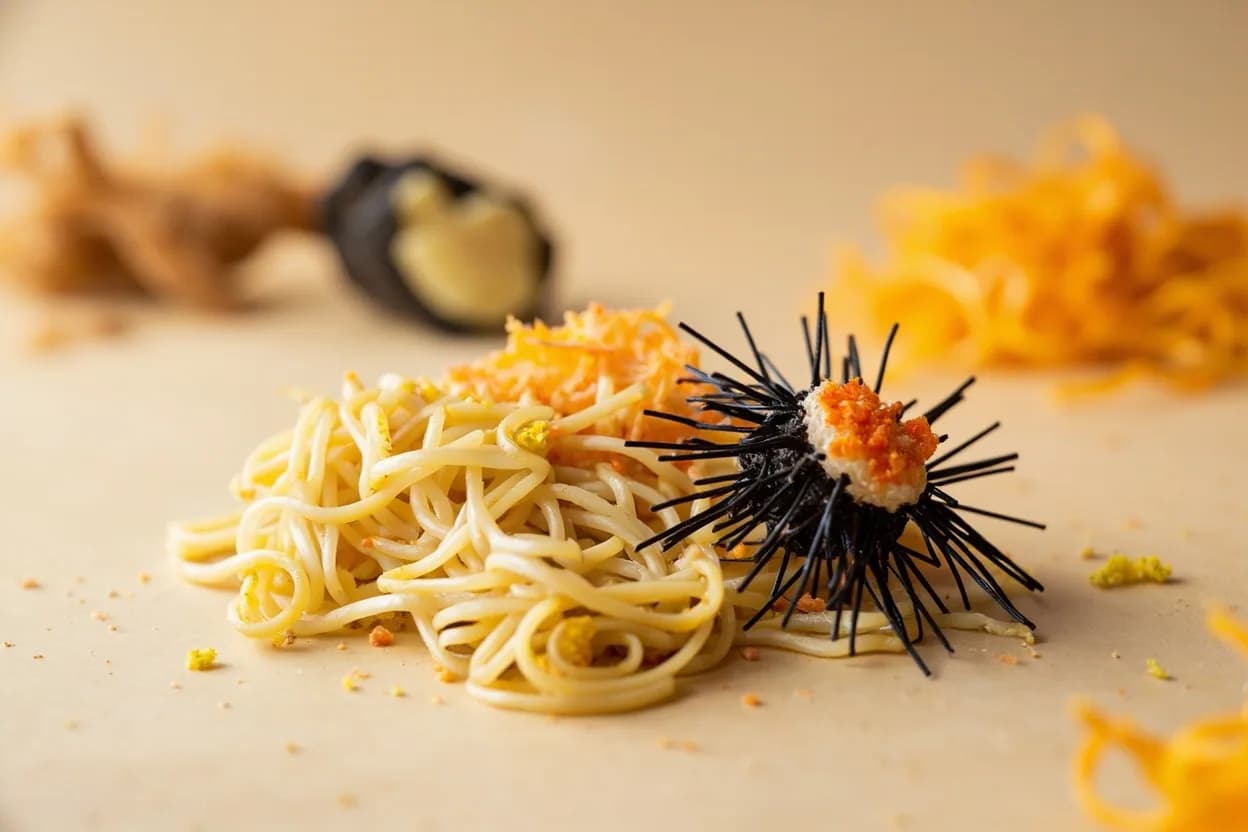
- Linguine or spaghetti with butter and bottargaItalian
Fat-emulsified pasta is one of the greatest uni canvases; the heat barely warms the roe into a sauce without cooking it.
- ButterFrench, Japanese
Brown butter especially amplifies uni's fatty richness with complementary Maillard nuttiness; the pairing is the basis of many restaurant sauces.
- Kombu dashiJapanese
Glutamate-on-glutamate synergy creates profound umami depth; the kelp base and urchin share the same marine aromatic compounds.
- Cream (in pasta sauces)Italian
Lactic fat rounds sharp brine, binds the roe into a silky sauce, and extends the portion without diluting flavour.
- Sourdough or brioche toastModern / California
Warm carbohydrate creates a crunchy contrast to the creamy roe, and the bread's mild acidity plays against the brine.
- PonzuJapanese
Citrus soy's acid-umami cuts through the fat and resets the palate between pieces in tasting menus.
Adventurous pairings
Two creamy, fatty dairy-adjacent textures with complementary saline and lactic notes; serve on crostini with a drop of extra-virgin olive oil.
- White truffle
Uni and white truffle share volatile sulfur compounds; together they create an extreme umami-aromatic synergy used in high-end omakase.
- Scrambled eggs
Gentle eggs cooked in butter, finished with a spoonful of uni off heat — the yolk fat carries the roe's flavour across the whole dish.
- Lobster bisque
Uni stirred into a finished bisque adds an oceanic depth that amplifies the crustacean base without introducing a competing protein.
- Seaweed (nori, wakame)
Reinforcing the urchin's own marine terroir, dried seaweed adds texture and a concentrated iodine note that deepens the experience.
- Champagne or sparkling wine
High acidity and fine bubbles cut through richness and amplify the roe's clean mineral finish — the classic fine-dining companion.
Tread carefully
- Strong herbs (rosemary, sage)avoid
Assertive terpenes in woody herbs dominate uni's delicate sweetness and make it taste simply briny and medicinal.
- Tomato-based saucesavoid
Tomato acid and water content thin the creamy texture and create a metallic, over-salted impression.
- Red wineavoid
Tannins in red wine bind to marine proteins, creating a pronounced metallic bitterness that ruins both ingredients.
- Wasabi in large amountsavoid
A touch complements; too much isothiocyanate heat overwhelms the delicate sweetness that makes premium uni worth the price.
How to use it
- Never heat past 55 °C — above this the proteins seize and the creamy texture turns grainy
- Stir uni into pasta off heat, using the residual warmth of noodles and emulsified butter to barely warm it into a sauce
- In sauces, blend uni into room-temperature butter first, then swirl the compound butter into hot liquid at the last moment
- Serve nigiri with a single tongue placed flat on shari — pressing destroys the custard texture
- Season minimally — uni already carries its own salt; a drop of ponzu or a grain of fleur de sel is usually all that is needed
Appears in
Related flavours
Often paired together in 'two-treasure' (futatsu-no-takara) presentations; ikura's burst provides textural contrast to uni's creaminess.
Both are umami-dense preserved marine roe products; bottarga is saltier and more aggressive, but the two combine over pasta.
- Scallop
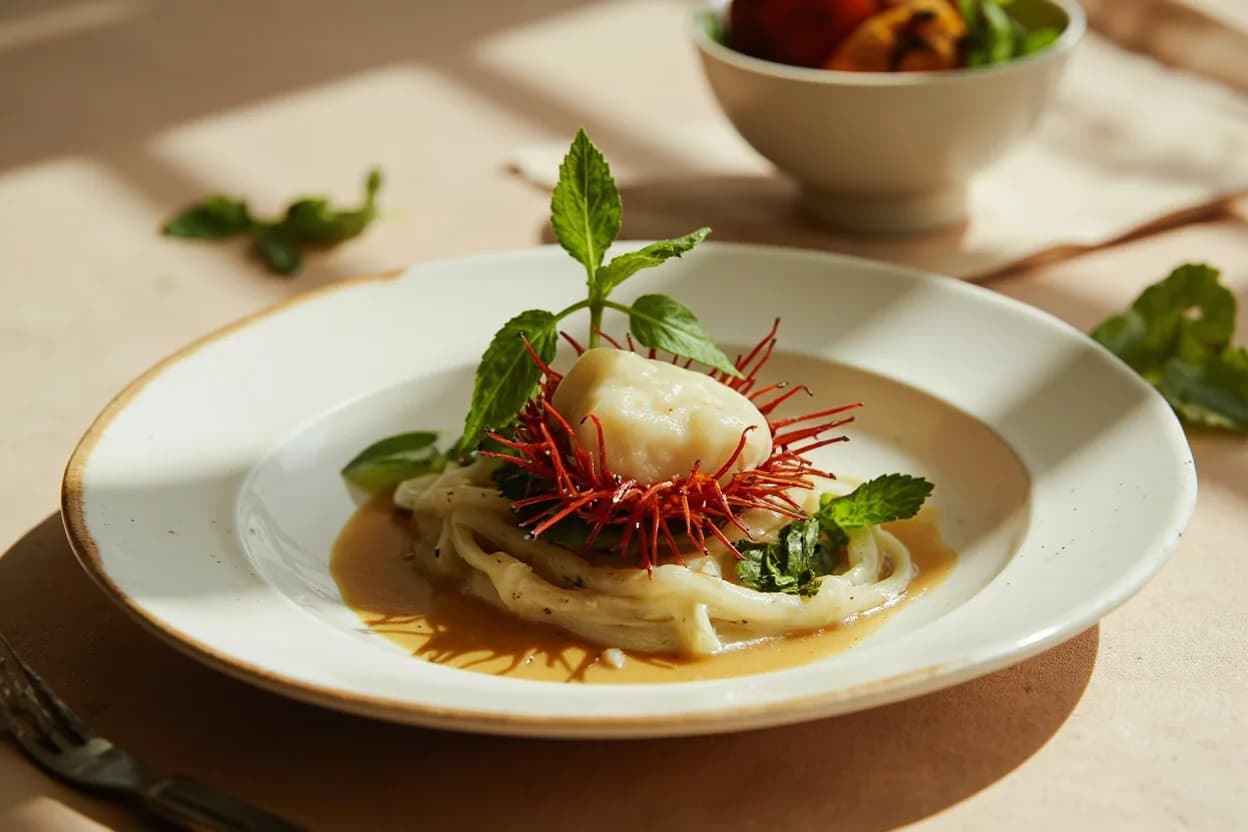
Shares glycine sweetness and a clean oceanic quality; raw scallop slices with uni is a classic Japanese combination.
References
- 1.The Flavor Bible — Karen Page & Andrew Dornenburg (2008)
- 2.Japanese Soul Cooking — Tadashi Ono & Harris Salat (2013)
- 3.Nobu West — Nobuyuki Matsuhisa (2006)
- 4.Flavor: Make It Bold, Make It Simple — Yotam Ottolenghi (2020)
Confidence: high
Notes
Grade and freshness
Japanese uni is graded A (premium, no bitterness, firm) to C. Santa Barbara red urchin (Strongylocentrotus franciscanus) is larger-tongued and milder. Sardinian ricci (Paracentrotus lividus) is more pungent and assertive — preferred for pasta where it must hold against heat and cream. All pairings here assume A- or B-grade uni. Bitterness in lower grades competes with partnering ingredients and is very hard to mask.