Fermented Vegetables & Pickles
Ume (Umeboshi)
Also: umeboshi, ume plum, pickled plum, Japanese salt plum, bainiku
Japan's most confrontational preserved food — salt-pickled ume that collapses extreme sourness and salinity into a single concentrated burst.
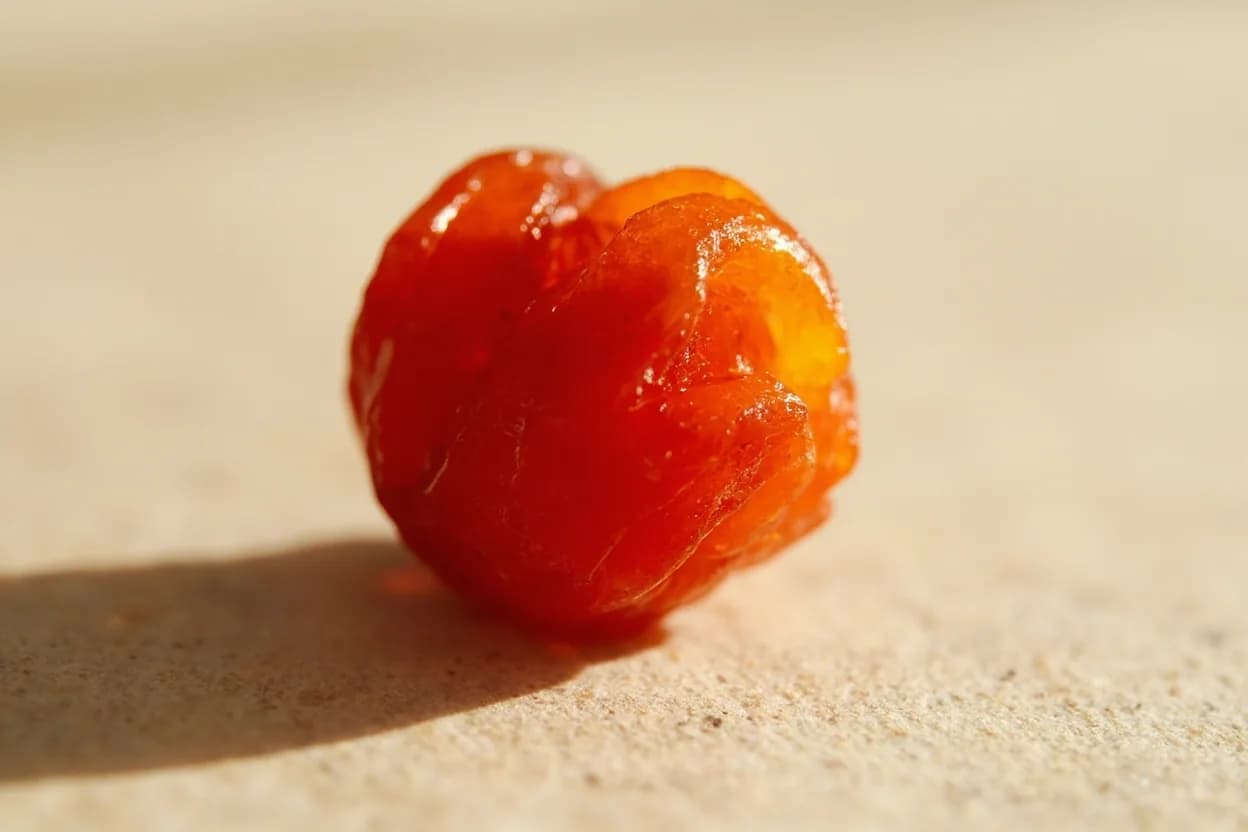
Umeboshi are whole ume fruit (Prunus mume — more apricot than plum botanically) pickled in heavy salt (18–20% traditionally) and then sun-dried, often with akashiso (red perilla) leaves that contribute the characteristic crimson colour and anise-like herbal note. The result is an intensely sour, intensely salty, deeply fragrant preserved fruit with a firm-chewy flesh and wrinkled skin. The dominant acids are citric and malic, making umeboshi one of the most acidic foods in Japanese cuisine. Bainiku is the smooth paste made from pitted, minced umeboshi. Umeshu (plum wine) uses fresh ume and sugar rather than salt. In Japanese food culture, umeboshi is placed in rice as a preservative and flavour contrast, valued for digestive properties, and used as a condiment in tiny quantities. A single fruit contains enough salty-sour punch to season a full bowl of rice.
In photos
Flavour profile
Classic pairings
- Steamed white rice (gohan)Japanese
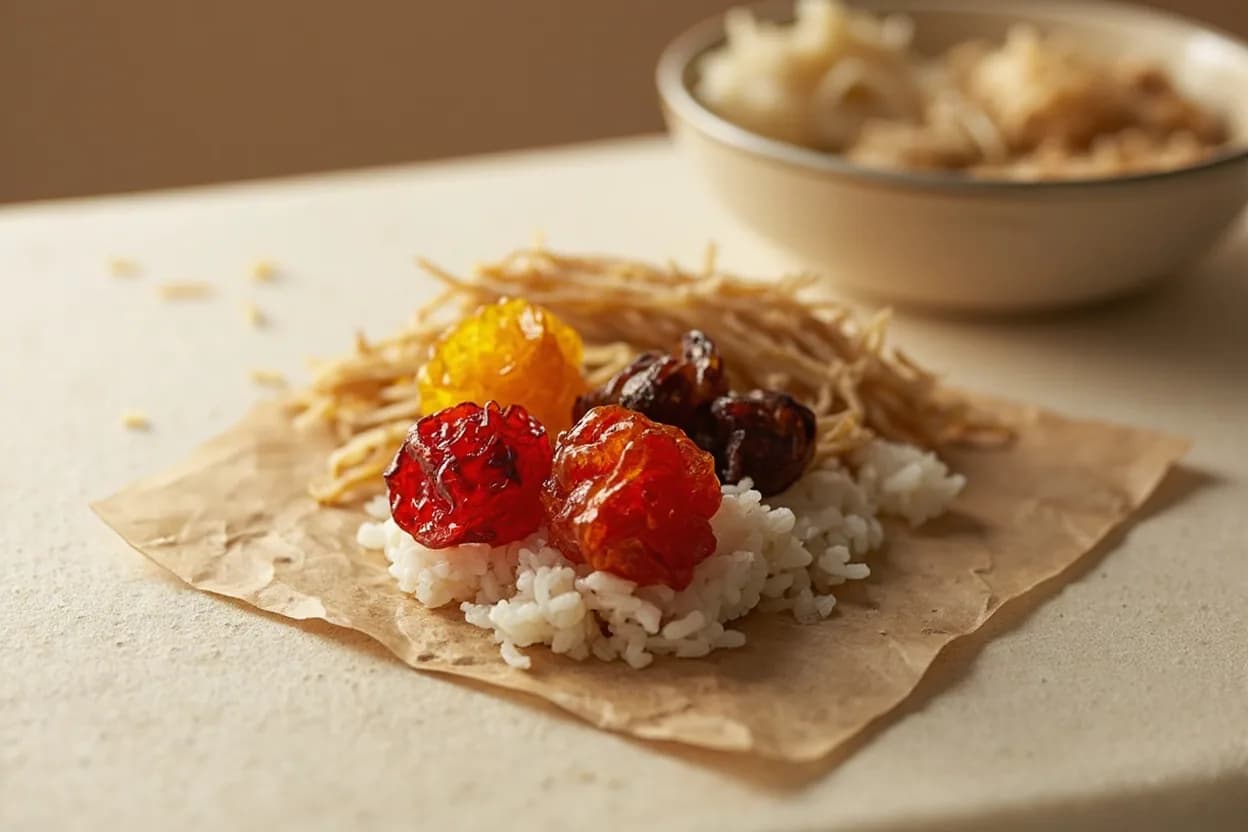
The cornerstone pairing — a single umeboshi in the centre of a bowl of plain rice (hinomaru bento) provides the only seasoning needed. The salt-acid contrast against neutral starch is the distilled logic of Japanese flavour balance.
- Onigiri (rice balls)Japanese
Umeboshi is one of the three canonical onigiri fillings — its natural preservative properties kept rice from spoiling before refrigeration, and its salty-sour punch distributes through the rice in every bite.
- Soba noodlesJapanese
Bainiku (umeboshi paste) whisked into cold soba dipping sauce or stirred directly into the broth adds a tart, herbal brightness that complements buckwheat's earthiness with precision.
- Shiso (perilla) leafJapanese
Red shiso is inseparable from umeboshi production — its anise-camphor herbal note is half the identity of a classically made umeboshi. Fresh green shiso with umeboshi as a garnish extends this partnership.
- Chicken (especially thighs, grilled)Japanese
Bainiku spread under the skin or used as a dipping sauce for yakitori and grilled chicken thigh is a classic Japanese izakaya preparation — the acid and salt penetrate fat-rich chicken skin to remarkable effect.
- Ochazuke (tea over rice)Japanese
Umeboshi placed in a bowl of rice and covered with dashi or green tea creates ochazuke — a quintessentially restorative Japanese dish where the ume gradually seasons the liquid.
Adventurous pairings
- Pasta with butter and sage
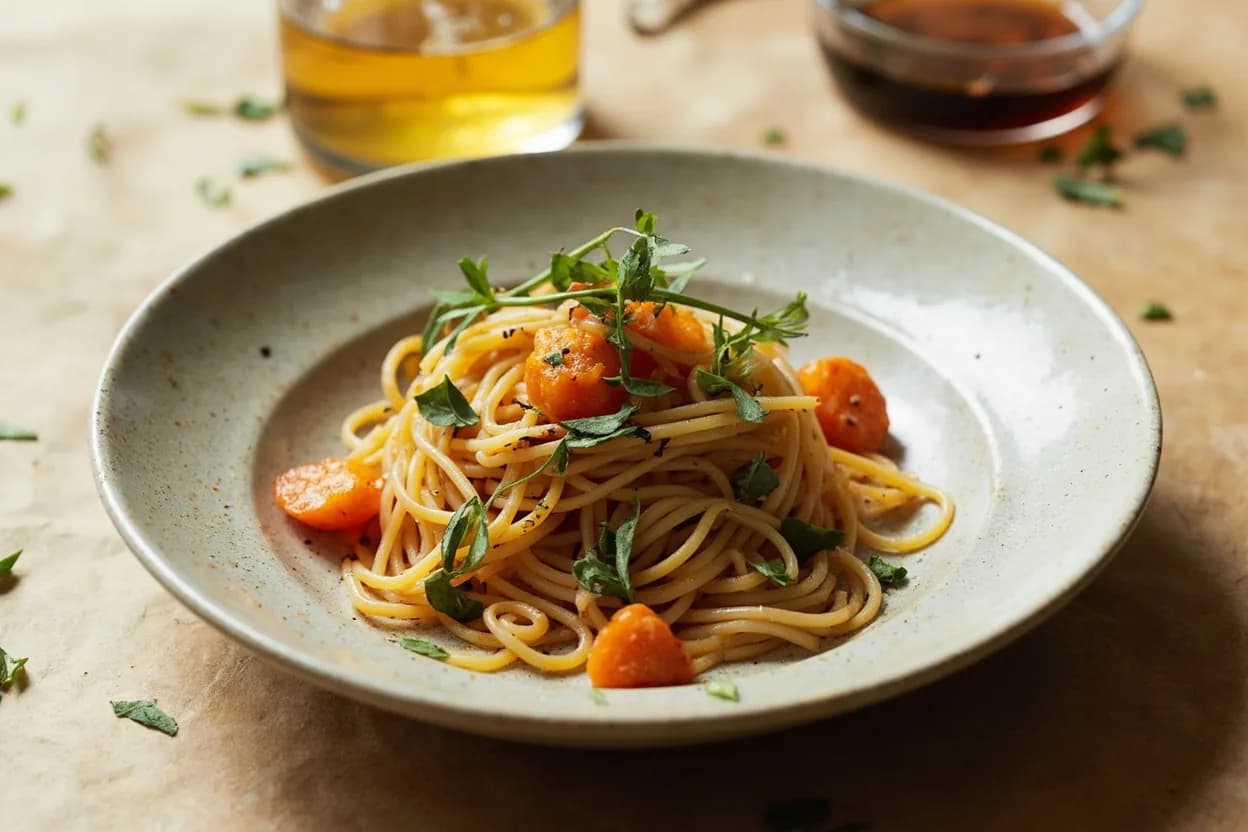
A half-teaspoon of bainiku stirred into the butter just before tossing pasta seasons and brightens simultaneously — it functions like a combination of salt, lemon, and anchovy paste. The Italian-Japanese bridge is surprisingly natural.
- Avocado (toast, sushi, salad)
Umeboshi's extreme sourness and salt cut through avocado's rich fat — a more complex, fermented take on the avocado-lemon-salt combination. Particularly effective in rice bowls and inside-out rolls.
- Sparkling water / cocktails (Umeshu sour)
Bainiku muddled into a highball or shrub with sparkling water, honey, and shochu creates a complex, deeply Japanese flavour profile — sour, saline, herbal, lightly sweet.
- Roasted cauliflower or broccoli
Bainiku and sesame oil whisked as a glaze and brushed on roasted brassicas is a technique borrowed from izakaya — the charred vegetable sweetness balances umeboshi's attack perfectly.
- Cucumber (sunomono or salad)
The gentle, watery crunch of Japanese cucumber dressed with bainiku, sesame, and rice vinegar is a textbook umami-building exercise — each element mild individually, compelling together.
Tread carefully
- Oysters or very delicate raw seafoodavoid
The extreme salt-acid concentration of umeboshi overwhelms the mineral subtlety of raw oysters — use ponzu or yuzu kosho for acid with raw shellfish instead.
- Wine (dry red or white)avoid
Umeboshi's extreme acidity clashes with wine tannins and elevates bitterness; the sour-salt combination makes most wines taste flat or metallic. Japanese sake, shochu, or mugicha are sympathetic pairings.
- Dishes with cream or milkavoid
The high citric acid content will curdle dairy — even a small amount of bainiku in a cream sauce produces an unpleasant split texture. For umeboshi-cream concepts, temper carefully off-heat.
- Strong cheesesavoid
Two fermented, very salty, strongly flavored ingredients — umeboshi and aged parmesan or blue cheese — compete rather than resolve. Neither has room to express its subtlety.
How to use it
- Remove the pit before using — either use commercial pitted umeboshi or de-pit fresh ones with a small paring knife.
- Bainiku (smooth paste) is the most versatile form: mince or mortar several pitted umeboshi into a smooth paste and refrigerate; it keeps for weeks and is far easier to incorporate than whole fruit.
- Use in tiny amounts — one medium umeboshi (about 10g) is sufficient to season a bowl of rice for one person. In sauces, start with a half-teaspoon of bainiku per serving.
- Rinse umeboshi under cold water briefly and pat dry before using if they seem excessively salty — different producers vary significantly in salt level.
- Make dressing by whisking bainiku with sesame oil, rice vinegar, and a touch of mirin — this is a versatile dressing for grain salads, noodles, and grilled vegetables.
- To make ume-shiso rice: fold minced umeboshi and julienned shiso into just-cooked rice with a few drops of sesame oil — one of Japan's most elegant simple preparations.
Appears in
Related flavours
Both are cornerstone Japanese fermented seasonings; miso and umeboshi appear together in ochazuke and rice porridge preparations — complementary rather than redundant, miso adding depth while umeboshi adds acid.
Milder Japanese cousin — where umeboshi is salt-acid concentrated, rice vinegar is a more delicate tool in the same flavour family; they often appear together in dressings.
Japan's other sour-citrus flavour anchor; yuzu provides fresh floral acidity where umeboshi provides fermented salt-acid depth — both are in the Japanese acid-brightness family.
Inseparable companion — red shiso is used in umeboshi production and fresh green shiso is the natural herb garnish for any umeboshi preparation.
References
- 1.Hosking, Richard — A Dictionary of Japanese Food (Tuttle, 1997)
- 2.Tsuji, Shizuo — Japanese Cooking: A Simple Art (Kodansha International, 1980)
- 3.Shimizu, Kay — Tsukemono: Japanese Pickled Vegetables (Shufunotomo, 1993)
- 4.Davidson, Alan — The Oxford Companion to Food (Oxford University Press, 3rd ed. 2014)
Confidence: high
Notes
Salt percentage and grades
Traditional artisan umeboshi are made with 18–20% salt — very intense and long-lasting. Modern reduced-salt versions (8–12%) are sweeter and milder but also less shelf-stable and less complex. Honey-umeboshi (hachimitsu ume) add sweetness that rounds the acidity — a gentler entry point but different in character. Specify which type you're working with, as substitutions in recipes that depend on umeboshi's saltiness may require adjustment.
Prunus mume vs. Western plum
Ume is not a plum in the Western grocery sense — Prunus mume is more closely related to the apricot. Fresh ume are rarely available outside Japan; they cannot be eaten raw as they contain hydrogen cyanide precursors (deactivated by the salting process). Do not substitute with fresh plums or apricots for any preservation application.