Fermented Vegetables & Pickles
Umeboshi (Pickled Plum)
Also: umeboshi, pickled plum, Japanese salted plum, 梅干し, ume
Japan's puckering preserved plum — a concentrated hit of sour, salt, and fruity umami that defines Japanese pantry acid.
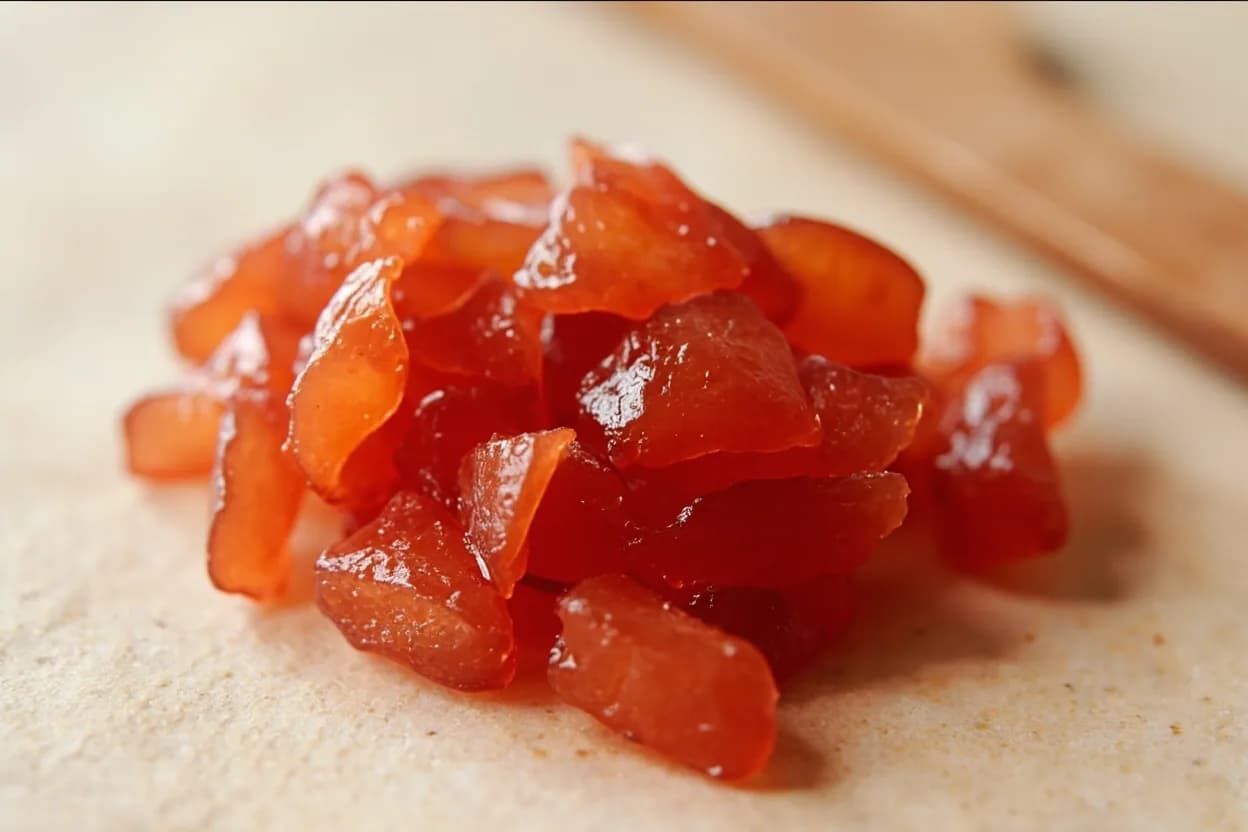
Umeboshi (梅干し, 'dried plum') are Japanese ume fruit (Prunus mume — actually closer to apricot than European plum) that are pickled with salt and dried in the sun, then often colored with red shiso leaves. The finished product is wrinkled, intensely sour from citric and malic acid, profoundly salty, and carries a distinct fruity apricot-almond undertone beneath the puckeringly tart exterior. Umeboshi paste (neri-ume) is the convenience form. A single umeboshi can season an entire rice ball; the flavor is calibrated by salt percentage (typically 10–22%) and whether red shiso is used.
In photos
Flavour profile
Classic pairings
- White rice (onigiri)Japanese
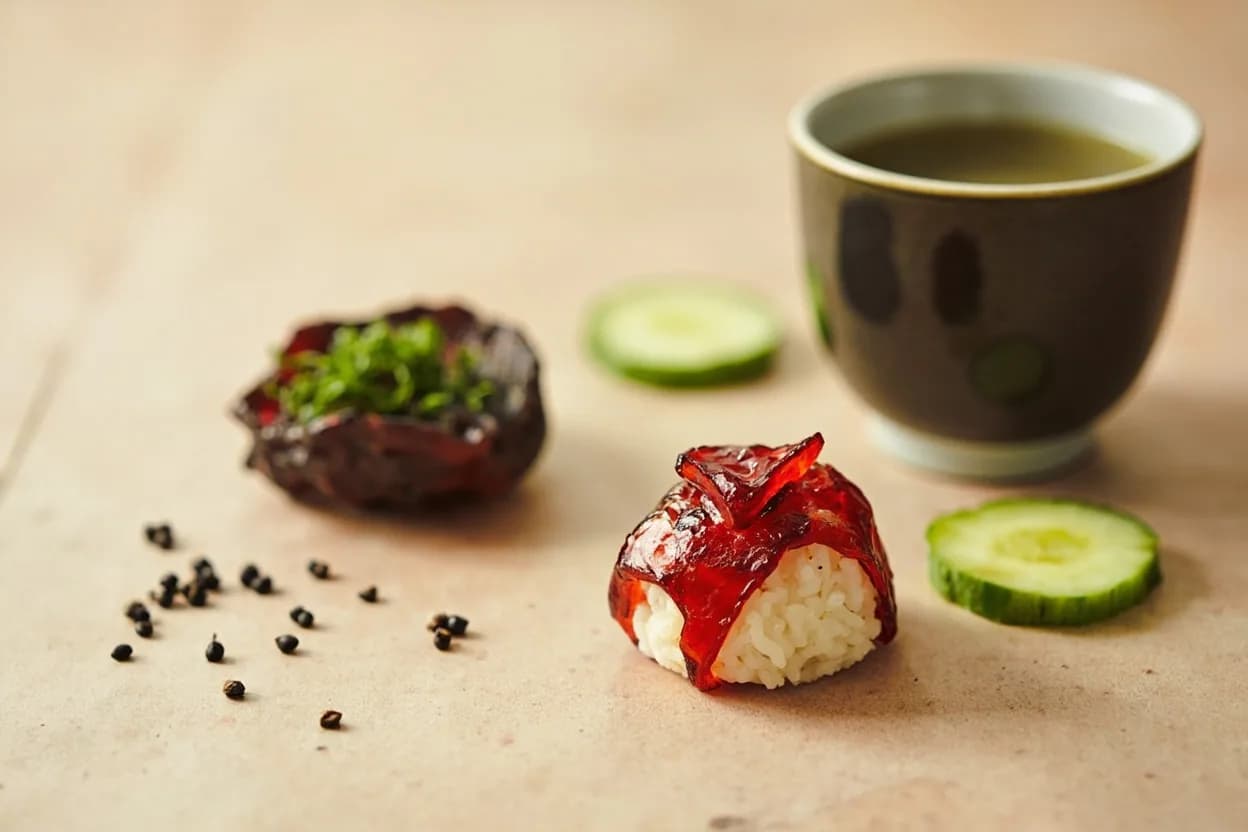
A single umeboshi nested inside a rice ball is one of Japan's most iconic pairings — the acid and salt season the neutral grain from within, preserving it too.
- Ochazuke (green tea over rice)Japanese
Umeboshi dissolved into ochazuke provides bracing acidity against the savory dashi broth and toasty green tea; a traditional light meal or hangover remedy.
- CucumberJapanese
Umeboshi paste stirred into rice vinegar makes a sharp dressing for cucumber sunomono; acidity echoes cucumber's freshness while salt draws out excess water.
- Chicken (especially fatty thighs)Japanese
Chicken sautéed with umeboshi and sake (ume-shiso chicken) is a classic home dish; the acidity cuts fat and tenderizes the meat.
- Shiso (perilla) leavesJapanese
Red shiso is traditionally fermented with umeboshi, and fresh green shiso as a garnish continues the botanical bridge — herbal and anise-minty against the fruity-sour pickle.
- Dashi (kombu and katsuobushi)Japanese
Umeboshi floated in clear dashi makes a restorative Japanese soup; the acidity brightens the umami broth without masking it.
- SakeJapanese
Umeshu (ume liqueur) is the classic beverage; for cooking, sake deglazes umeboshi preparations and integrates the acidity into silky pan sauces.
Adventurous pairings
- Avocado
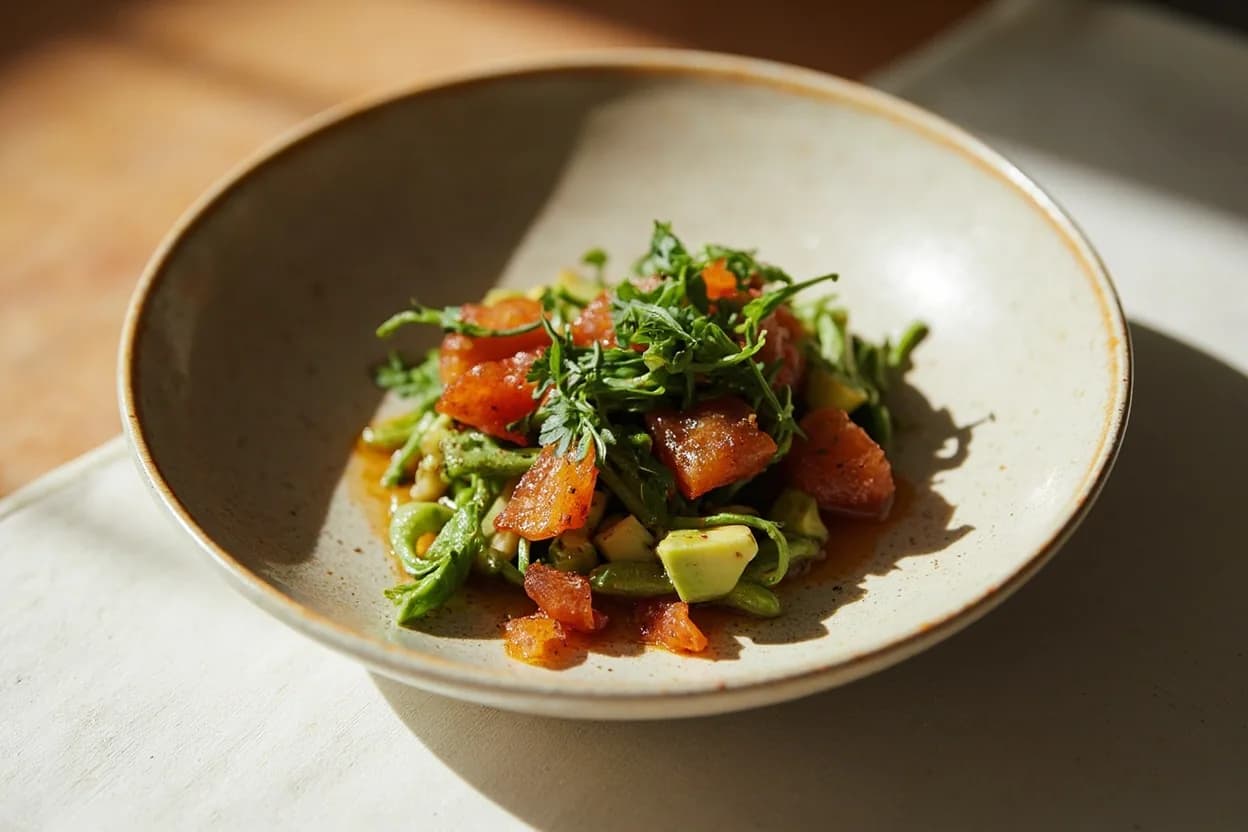
Umeboshi paste on avocado toast or sushi rolls bridges creaminess with piercing acidity — a modern Japanese-California fusion that works elegantly.
- Olive oil and burrata
Umeboshi vinaigrette over burrata replaces balsamic in a salad format; the fruity-sour punch against rich dairy is revelatory.
- Pasta with butter
Neri-ume stirred into butter pasta (a Japanese izakaya classic) creates an instant sauce — salty, sour, intensely savoury — often with shiso and seaweed.
- Lamb
Lamb's gaminess is a natural partner for umeboshi's acid; a glaze or marinade of neri-ume, mirin, and sake produces a lacquered, aromatic crust.
- Honey and aged cheese
A cheese board element: umeboshi paste alongside honey and a funky aged cheese (like aged comté or mimolette) creates a salt-sweet-acid-umami quadrant that electrifies a board.
Tread carefully
- Vinegar-based dressingsavoid
Doubling up acids — umeboshi is already intensely sour — makes dressings aggressively sharp and unbalanced; use umeboshi in place of, not alongside, vinegar.
- Delicate white fish steamed without fatavoid
Umeboshi's salt levels can overwhelm the texture and flavor of very delicate fish (flounder, sole) cooked simply; use tiny amounts or diluted neri-ume.
- Dark leafy greens sautéed with garlicavoid
The pungency of cooked garlic clashes with umeboshi's fruity acid; both want to dominate — use one or the other as the aromatic base.
How to use it
- Pit and mince umeboshi to form neri-ume paste — the versatile base for dressings and sauces
- Tuck whole inside onigiri before wrapping with nori
- Stir into hot rice or porridge for instant seasoning — the heat disperses the salt and acid evenly
- Use as a basting sauce diluted with mirin and sake on grilled chicken or fish
- Float one umeboshi in a bowl of ochazuke or clear broth soup
- Blend into salad dressings (neri-ume + rice vinegar + sesame oil + mirin)
Appears in
Related flavours
Traditional fermentation partner and classic garnish — botanically matched, functionally inseparable
Sweetens and softens umeboshi's sharp edges in glazes and sauces
- Katsuobushi (bonito flakes)
Often paired with umeboshi on rice; the smoky umami of bonito contrasts the fruity acid
References
- 1.Japanese Farm Food — Nancy Singleton Hachisu
- 2.The Japanese Larder — Luiz Hara
- 3.Japan: The Cookbook — Nancy Singleton Hachisu
- 4.On Food and Cooking — Harold McGee (organic acid chemistry in pickles)
Confidence: high
Notes
Salt percentage and sourness
Traditional umeboshi is 18–22% salt and fiercely sour — a level that also acts as a natural preservative. Modern 'reduced-sodium' umeboshi (8–10%) often adds sugar or stevia to compensate, and while milder, they lack the complex fermented depth. Seek traditional-style for cooking; reduced-sodium for garnishing.
Preservative properties
Umeboshi's citric acid creates an environment inhibits bacterial growth. This is why a single umeboshi in an onigiri or bento box extends shelf life at room temperature — a property valued long before refrigeration. The benzaldehyde from the pit is also mildly antibacterial.