Spices & Dried Aromatics
Ujiza Seed
Also: uziza seed, West African pepper, Piper guineense seed, Ashanti pepper, false cubeb
Nigeria's earthy forest pepper — peppery, pungent, and slightly musty, it is the indispensable heat and depth engine of Igbo and Cross River pepper soups.
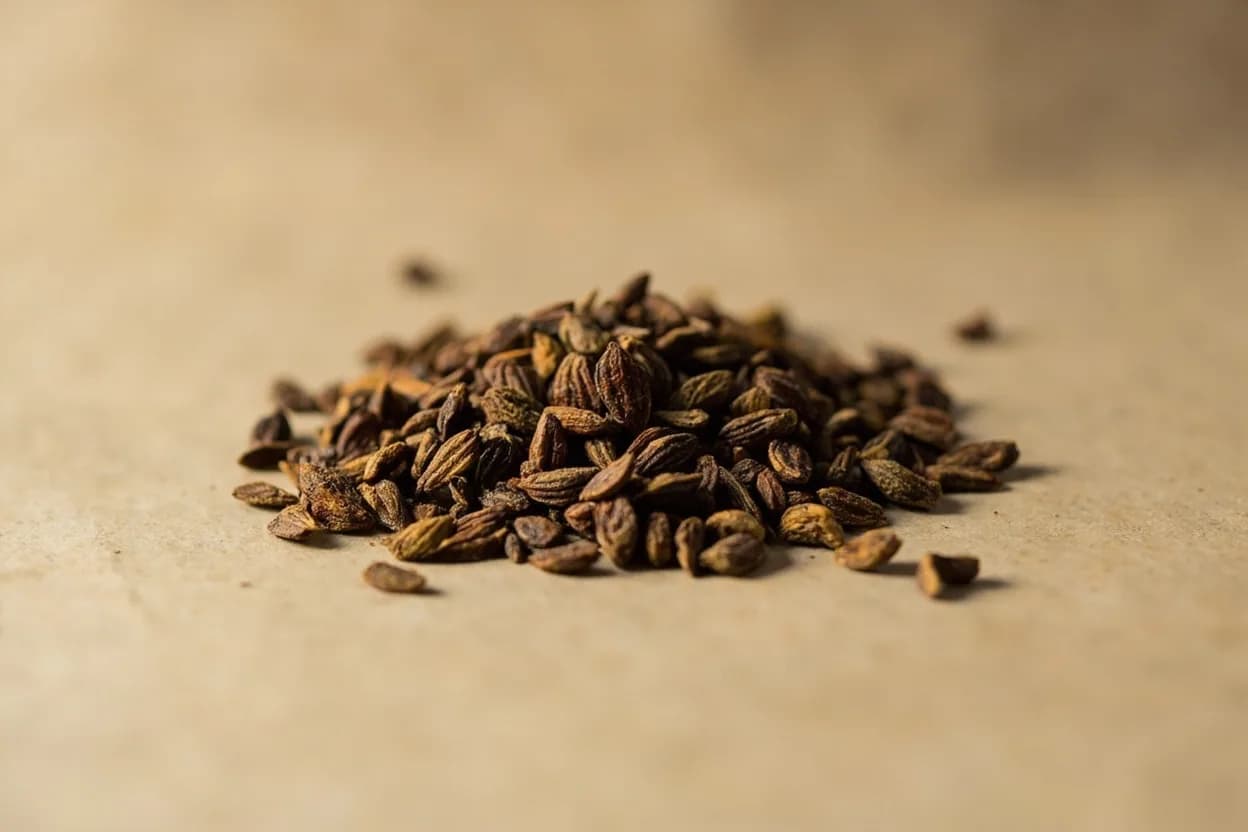
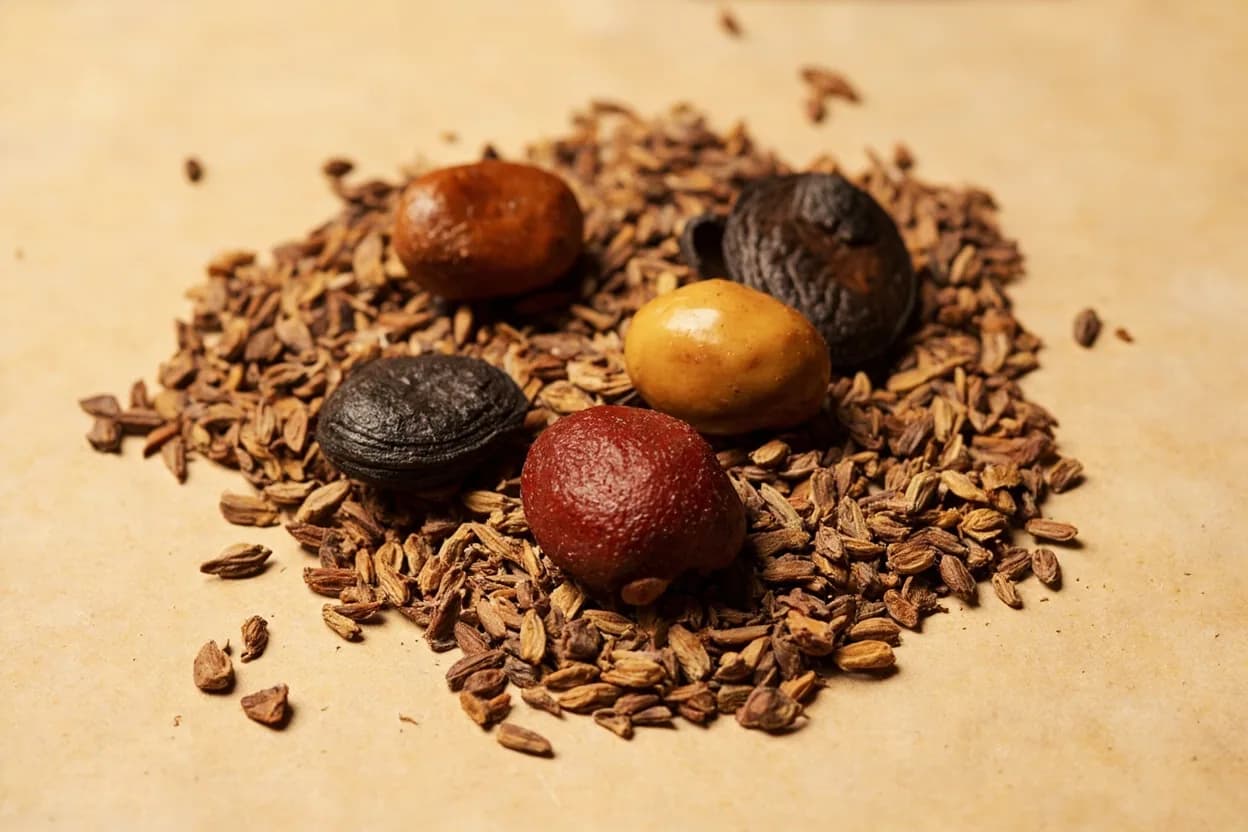
Uziza seeds (sometimes spelled ujiza in Igbo orthography) come from Piper guineense, a climbing vine indigenous to West and Central African rainforests. Related to black pepper but distinct, the seeds carry a complex flavor: bold piperine heat, a musty-earthy earthiness reminiscent of cubeb pepper, and a subtle anise-like top note. They are used primarily dried and whole or coarsely ground. The fresh leaves of the same plant (uziza leaf) are a separate but related ingredient. The seeds are a defining spice in Nigerian pepper soup, egusi soup, and ofe akwu (palm nut soup) traditions.
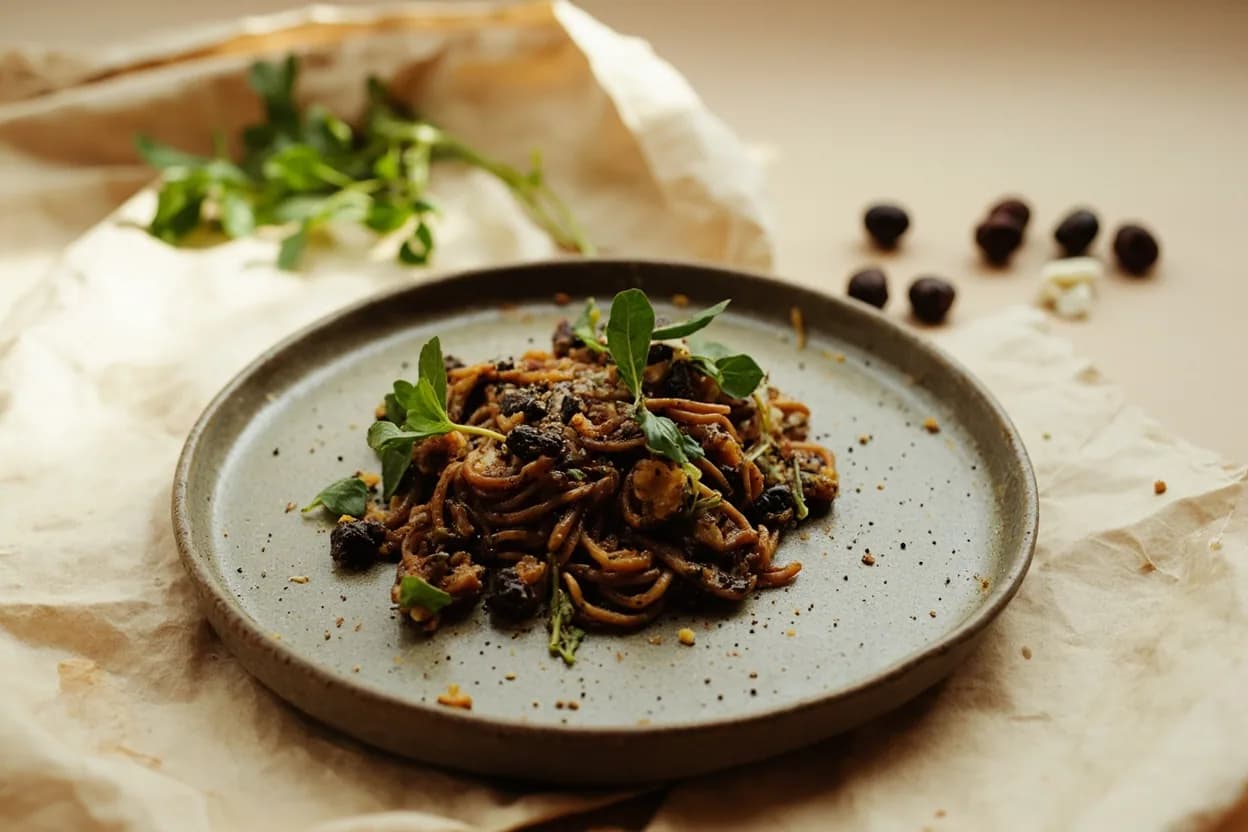
In photos
Flavour profile
Classic pairings
- Goat meat or bushmeat (pepper soup base)Nigerian (Igbo)
Uziza seed is the primary spice in nkwobi and goat pepper soup; its heat and earthiness cut through goat's gamy richness, while the astringency helps clarify the broth.
- Ehuru (calabash nutmeg)Nigerian
The classic Nigerian pepper soup spice duo: ehuru contributes sweet warmth and floral depth, while uziza supplies sharp peppery heat; neither functions as well alone.
- Uda pod (Negro pepper / Cameroon pepper)Nigerian / West African
Together with uziza and ehuru, uda forms the foundational West African pepper soup spice blend; uda's smoky, woody dimension bridges the two pepper registers.
- Catfish or stockfishNigerian (Efik / Cross River)
Uziza's pungency penetrates dense, oily catfish and neutralizes the fermented-fishy edge of stockfish; a traditional pairing in Cross River pepper soup.
- Egusi (melon seed) soupNigerian (Igbo / Yoruba)
Ground uziza seed woven into egusi soup adds background heat that elevates the melon seed's nutty richness without dominating the palm oil base.
- Palm fruit soup (ofe akwu / banga soup)Nigerian (Delta / Rivers state)
The earthiness of uziza complements the deep, thick sweetness of palm fruit extract; a small quantity seeds the entire pot with pepper complexity.
Adventurous pairings
- Dark, bitter chocolate
Uziza seed's heat and earthiness slot naturally into a West African chocolate context — think a spiced drinking chocolate or a ganache with palm sugar, where the pepper plays the role long held by chilies in Mexican mole.
- Roasted root vegetables (yam, sweet potato)
Ground uziza seed rubbed onto roasted puna yam or sweet potato before cooking gives a peppery, aromatic crust that amplifies the starchy sweetness underneath.
- Plantain (fried or roasted)
A dry rub of coarsely ground uziza, sea salt, and smoked paprika pressed onto ripe plantain before roasting produces a sweet-heat dynamic common in experimental West African cooking.
- Coconut cream broth
Uziza's resinous warmth and the sweetness of coconut are a natural bridge — borrowing from West African fusion traditions, a coconut-uziza shellfish broth works surprisingly well.
Tread carefully
- Delicate cream sauces (crème fraîche, light béchamel)avoid
Uziza's sharp piperine and musty earthiness overwhelm mild dairy; it needs fat-rich, umami-forward bases (palm oil, fermented locust beans) not neutral cream.
- Light floral teas or herbal infusionsavoid
The seed's astringency and pungency clash with chamomile, jasmine, or green tea's delicacy; uziza is built for hearty, robust liquid environments.
- Fresh citrus-dominant preparationsavoid
High acid flattens uziza's complex earthy-resinous aromatics into a simple sharp bitterness; the spice belongs in slow-cooked, oil-forward contexts, not acidic dressings.
How to use it
- Dry-toast whole seeds briefly in a pan before grinding to bloom the volatile oils
- Grind coarsely (not fine) for pepper soup — too fine and the astringency becomes harsh
- Add to soups and stews early in cooking so the heat mellows and integrates
- Combine with ehuru and uda pod in a 2:1:1 ratio as a foundational pepper soup spice blend
- Store whole dried seeds in an airtight container; they retain potency far longer than ground
Appears in
Related flavours
- Ehuru (Calabash Nutmeg)
Constant West African pepper soup co-spice; its sweet warmth complements uziza's sharp heat in nearly every Nigerian soup context
- Uda Pod (Negro Pepper)
The third leg of the classic Nigerian pepper soup spice triad alongside uziza and ehuru
- Black Pepper
Western relative with shared piperine heat but without uziza's earthy mustiness; an imperfect substitute that misses the forest-floor depth
- Cubeb Pepper
Botanical cousin (Piper cubeba) with similar musty, camphor-like notes; closer to uziza in flavor than black pepper, and an acceptable substitute in some contexts
References
- 1.The Nigerian Cookbook — H.O. Anthonio & M. Isoun (1982)
- 2.African Flavors: Exploring the World's Most Diverse Culinary Continent — Lerato Umah-Shaylor (2022)
- 3.Oxford Handbook of Food, Water and Society (section on West African spice traditions)
- 4.Encyclopedia of Herbs, Spices, and Flavorings — Elisabeth Lambert Ortiz (1992)
Confidence: medium
Notes
Leaf vs. seed — two different ingredients
Uziza the plant contributes two distinct culinary products. The seeds (the focus of this entry) deliver bold, resinous heat and belong in pepper soups and long-cooked stews. The fresh leaves (uziza leaves) have a distinct herbal character — slightly bitter, faintly anise-like — and are used as a finishing vegetable shredded into soups. They are not interchangeable. When a Nigerian recipe calls for uziza without specifying, context usually clarifies: 'uziza seed' for the spice, 'uziza leaf' for the green.