Citrus & Floral
Ponzu
Also: ponzu shoyu, citrus soy sauce, ponzu joyu
Japan's citrus-soy condiment — bright, umami-laden, and indefinitely versatile as both a dipping sauce and a finishing acid.
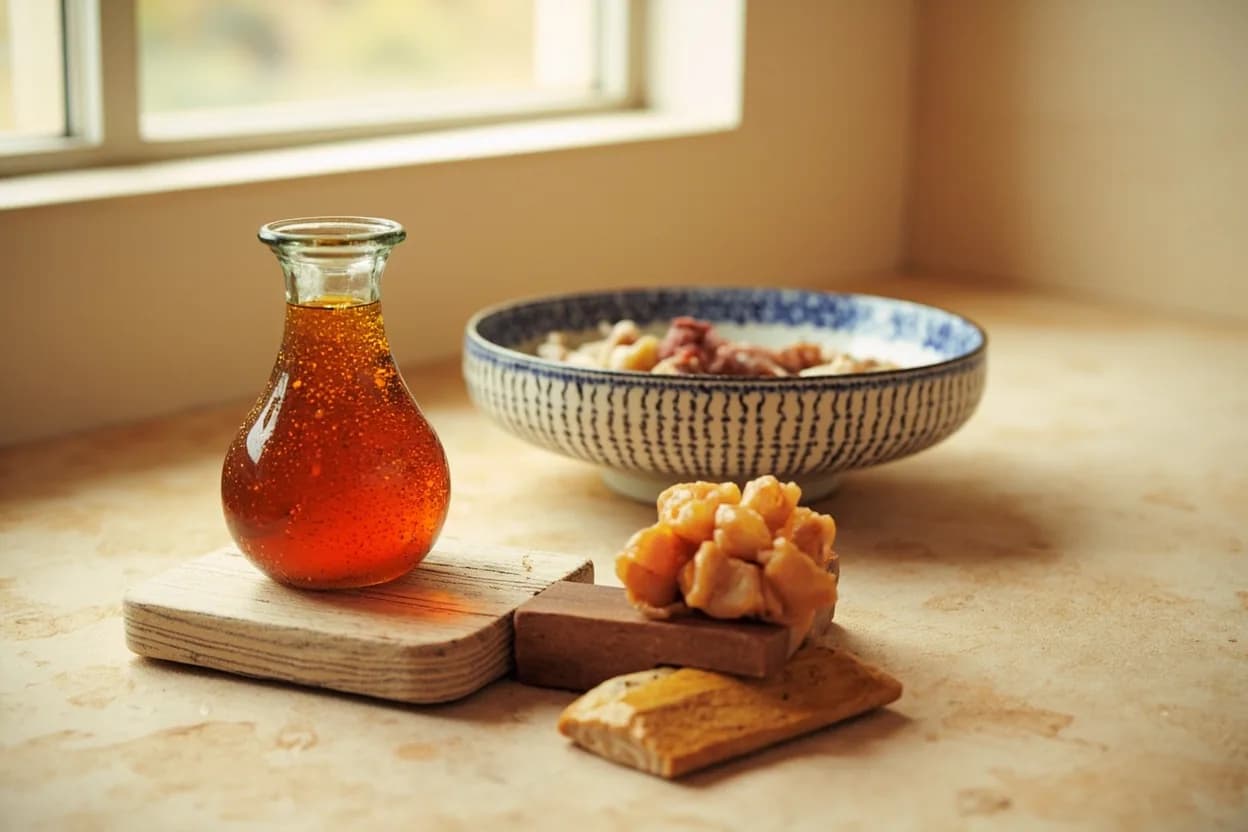
Ponzu is a Japanese condiment made by combining Japanese citrus juice (traditionally sudachi, yuzu, kabosu, or a combination thereof) with soy sauce, mirin, rice vinegar, and dashi (typically kombu and bonito-based). The citrus juice provides bright, tart, aromatic acidity; the soy sauce contributes salt and deep glutamate-rich umami; the mirin adds a touch of sweetness and depth; and the dashi provides a savory oceanic backbone. The result is a liquid that operates simultaneously as an acid, a salt, an umami amplifier, and a citrus aromatic. True ponzu is allowed to mature for several weeks to months in a cool place, during which the flavors integrate. Commercial ponzu shoyu is a ready-made, bottled version that approximates this character. The flavor is bright, savory, and refreshingly tart with layered complexity that plain soy sauce cannot match.
In photos

Flavour profile
Classic pairings
- Shabu-shabu (hot pot)Japanese
The defining accompaniment to shabu-shabu — thinly sliced wagyu or pork swished through hot dashi is dipped into ponzu, which cuts the fat and amplifies the meat's delicate sweetness.
- Grilled fish (yakizakana)Japanese
A standard table condiment for grilled fish at izakayas and home tables — ponzu's acid brightens the char and the umami reinforces rather than competes with the fish's natural savoriness.
- Tofu (hiyayakko)Japanese
Cold silken tofu with ponzu, grated ginger, and katsuobushi is one of Japan's simplest and most satisfying dishes — the sauce's citrus-soy character rescues an otherwise blank canvas.
- Gyoza (pan-fried dumplings)Japanese
Ponzu replaces or is mixed with chili oil and rice vinegar as a gyoza dipping sauce; the citrus note pairs well with pork-ginger filling where plain soy would be too blunt.
- Sashimi (particularly white fish)Japanese
An alternative to straight soy for sashimi, especially delicate white fish like flounder or sea bream — ponzu's acidity accentuates sweetness without overpowering.
- Daikon (grated)Japanese
Grated daikon (oroshi) is the classic ponzu companion — its mild peppery sweetness is a textural and flavor foil; the combination is served alongside grilled meats and fish across Japan.
- Green onion / scallionJapanese
Finely sliced scallion in ponzu is the standard hot-pot dipping sauce addition — its sulfurous bite contrasts the citrus brightness and adds fresh vegetable character.
Adventurous pairings
- Oysters
A ponzu mignonette — ponzu with minced shallot — is an exceptional oyster accompaniment; the citrus-umami depth plays into the oceanic brine of the oyster more harmoniously than wine vinegar.
- Avocado
Ponzu's acidity prevents avocado from browning while its umami complements the fat — drizzled over sliced avocado with sesame oil it becomes a Japanese-influenced salad that needs nothing else.
- Grilled chicken thighs (marinade)
Ponzu as a 30-minute marinade for bone-in chicken thighs creates lacquered, caramelized skin with a citrus-soy crust — better than straight soy because the acid tenderizes and the citrus oils survive the Maillard phase.
- Ceviche-style crudo
Thin sliced fish 'cured' for 3-5 minutes in ponzu (rather than lime juice) picks up citrus acidity along with soy umami — a Japanese-Latin fusion approach that yields a more complex cure than pure acid.
- Pasta (cold noodle salad dressing)
Ponzu thinned with sesame oil and tossed with cold soba or udon, cucumber, and sesame seeds makes a sharply flavored summer noodle salad — the citrus-soy combination scales beautifully to Western pasta too.
Tread carefully
- Cream-based saucesavoid
Ponzu's acidity will curdle cream if combined hot; its soy saltiness is also too assertive for delicate cream-based dishes where a squeeze of plain citrus would be far cleaner.
- Robustly spiced or heavily sauced dishesavoid
Ponzu's delicate balance of citrus, soy, and dashi is easily overwhelmed by bold spice blends, heavy tomato sauces, or aggressive vinaigrettes — it belongs where its nuance can be tasted.
- Red meat with strong marinades already appliedavoid
Adding ponzu to beef already marinated in a strong sauce simply adds competing salt and acid layers; ponzu works best as the primary or finishing seasoning, not a supplement.
How to use it
- Use as a dipping sauce straight, or thin with water (1:1) for a lighter finish
- Whisk with sesame oil and a touch of grated ginger for a quick dressing for greens or noodles
- Reduce ponzu by half in a pan to create a concentrated glaze for grilled or pan-seared proteins
- Substitute ponzu 1:1 for soy sauce in noodle soup broths to add aromatic citrus complexity
- Make homemade ponzu: combine 1 part sudachi or yuzu juice, 1 part soy sauce, ½ part mirin, dashi to taste, rest 48 hours before using
- Use as a curing agent for thin-sliced raw fish — its citrus acid denatures the surface proteins in 2-4 minutes for a ponzu crudo
Appears in
Related flavours
The most traditional citrus base for artisanal Tokushima-style ponzu; its sharper acidity gives more punch than yuzu
The premium citrus for ponzu — more floral, more complex, more expensive; yuzu ponzu commands a higher price and a gentler sourness
The umami and salt foundation of ponzu; ponzu is essentially soy sauce with citrus acid and dashi aromatic support
- Dashi (kombu and katsuobushi)
Provides the oceanic savory backbone that makes ponzu more than just soy-lime — without dashi it is thinner and less complex
- Grated daikon
The canonical textural companion to ponzu in hot-pot and grilled-fish settings across Japan
References
- 1.Japanese Farm Food — Nancy Singleton Hachisu (Andrews McMeel, 2012)
- 2.Washoku: Recipes from the Japanese Home Kitchen — Elizabeth Andoh (Ten Speed Press, 2005)
- 3.Japanese Soul Cooking — Tadashi Ono & Harris Salat (Ten Speed Press, 2013)
- 4.The Flavor Bible — Karen Page & Andrew Dornenburg (Little Brown, 2008)
Confidence: high
Notes
Commercial versus homemade
Bottled commercial ponzu shoyu (Mizkan and Kikkoman are the most widely distributed) is a convenient approximation, but real homemade ponzu — made with freshly squeezed sudachi or yuzu, quality soy sauce, hon-mirin, and kombu-bonito dashi, rested for at least 48 hours — is a categorically different product. The commercial version is saltier, more one-dimensional, and often sweeter; homemade ponzu has a rounded, layered quality that transforms simple preparations.
The citrus hierarchy
The best ponzu is made with a blend of Japanese citrus: sudachi for tartness and green citrus character, yuzu for floral complexity and aromatic depth, and sometimes kabosu for body. Single-citrus ponzu is common commercially; blended-citrus is the mark of a careful maker. If none of these are available, a 2:1 blend of lime juice and Meyer lemon juice is a workable Western substitute, though the aromatic complexity is substantially diminished.