Spice Blends
Berbere
Also: berbéré, Ethiopian chili blend, ye'imirt berbere
Ethiopia's fiery, complex spice blend that forms the aromatic backbone of wats and slow-braised dishes.
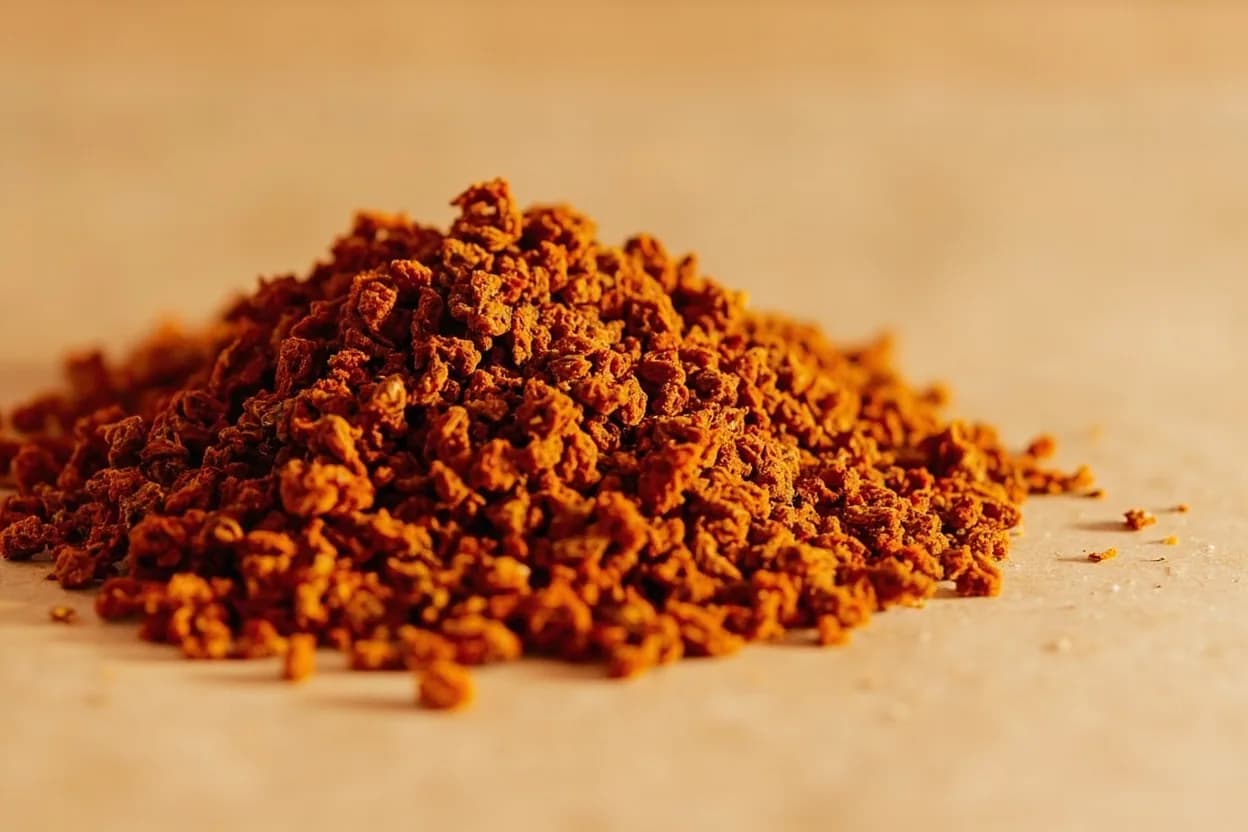
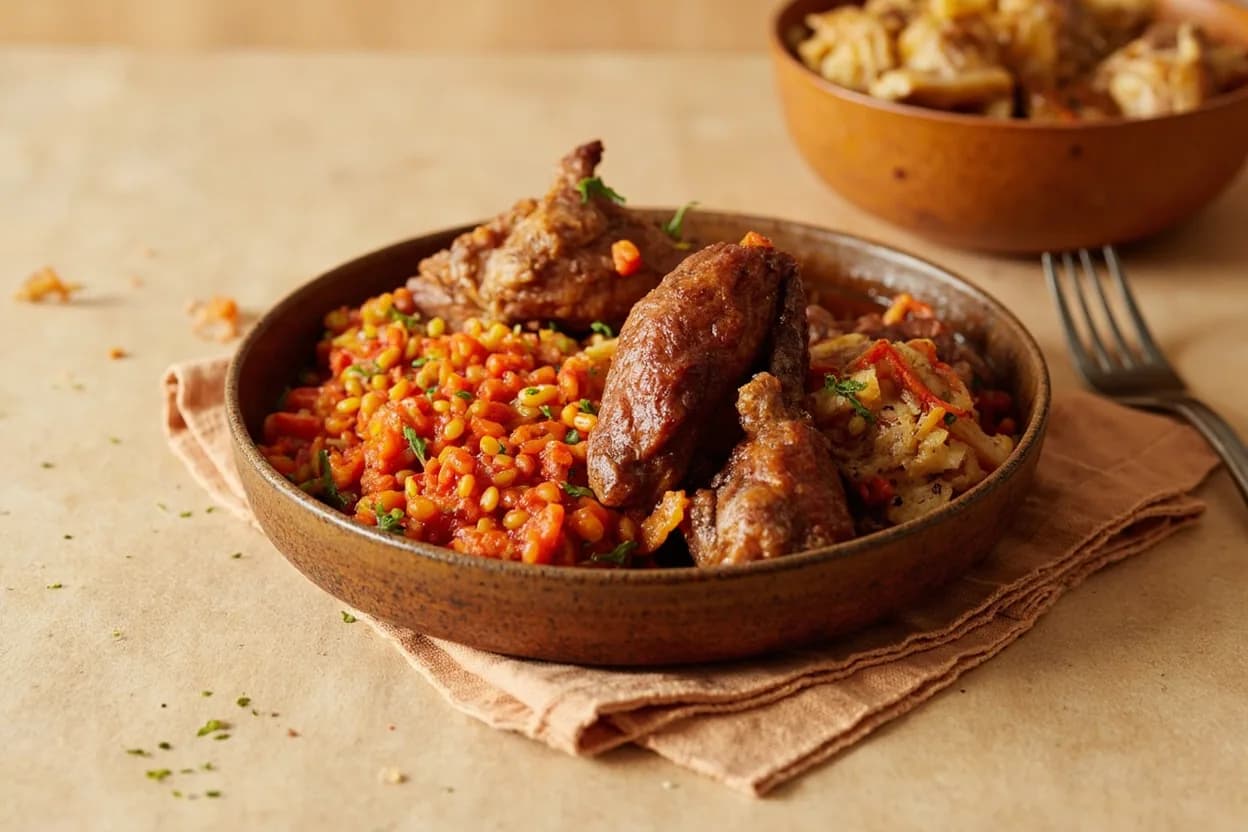
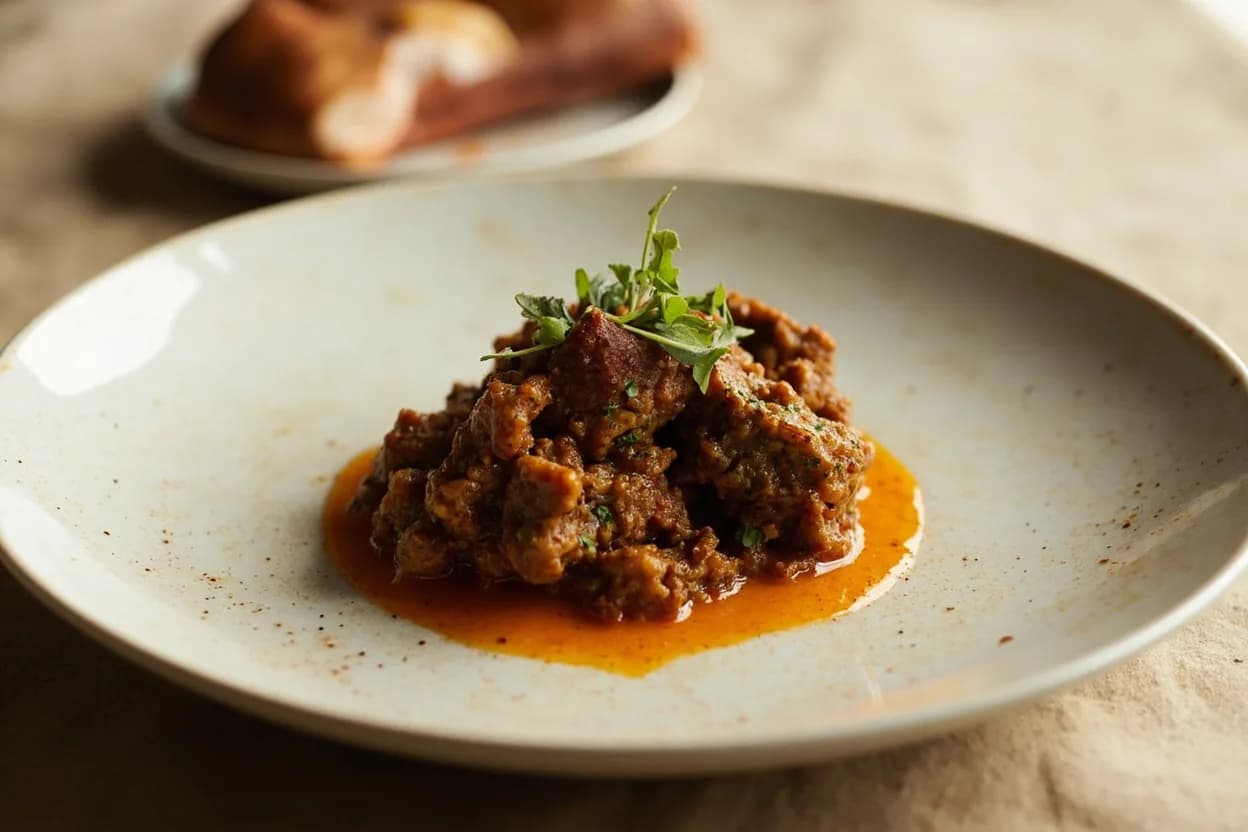
Berbere is a deeply layered Ethiopian spice blend built on dried red chilies — typically awaze or berbere peppers — ground with fenugreek, coriander, black pepper, korarima (Ethiopian cardamom), rue, ajwain, and sometimes dried onion and garlic. The result is intensely warm and moderately hot, with a ferrous depth from the chilies, a floral undercurrent from korarima, and a slight bitterness from rue that distinguishes it from any other chili blend in the world. It defines the flavor signature of doro wat, misir wat, and tibs.
In photos
Flavour profile
Classic pairings
- chickenEthiopian
The canonical partner: long-braised chicken legs in spiced niter kibbeh and onion create doro wat, Ethiopia's festive dish.
- red lentilsEthiopian
Misir wat — berbere-spiced red lentils cooked until silky — is the most consumed berbere dish; the legume absorbs heat and takes on a velvety, ochre richness.
- lambEthiopian
Lamb's gamey fat tames berbere's sharp edges and extends its warmth; key in tibs (sautéed lamb) and slow-braised wats.
- niter kibbehEthiopian
Ethiopia's spiced clarified butter is the cooking medium for most berbere dishes; its aromatics (turmeric, nigella, cardamom) reinforce the blend's complexity.
- injeraEthiopian
The sourdough flatbread's fermented tang cuts berbere's heat and acts as a neutral canvas for sauce-rich wats.
- beefEthiopian
Siga tibs — pan-seared beef with berbere, jalapeño, and rosemary — is a street-food staple; the maillard crust amplifies the blend's chili depth.
- split peasEthiopian
Kik alicha uses turmeric, but berbere-spiked kik wat is a popular variation; the starchy sweetness of split peas balances the heat.
Adventurous pairings
- dark chocolate (70%+)
The ferrous, chili-forward heat of berbere mirrors mole negro logic: high-cacao chocolate amplifies earthiness and rounds the fenugreek bitterness into something luxurious.
- roasted beets
Beet's earthy sweetness and deep ruby color play against berbere's heat magnificently; roast beets coated in berbere-spiced butter for an unexpected side.
- oysters (grilled)
Grilled oysters with a berbere-butter finish: the brine cuts through the fat while the korarima's floral note echoes the oyster's mineral sweetness.
- honey
Ethiopian tej (honey wine) was designed to accompany berbere dishes; a drizzle of raw honey on berbere-roasted carrots creates a heat-sweet contrast native to the tradition.
Creamy, mild burrata with berbere-spiced olive oil and charred bread bridges Ethiopian heat profiles into an Italian idiom — fat quenches the fire.
Tread carefully
- very delicate white fish (poached)avoid
Berbere's assertive heat and bitterness obliterates the subtle flavor of sole or turbot; use only on robust fish like salmon or swordfish.
- subtle white wines (Chablis, Muscadet)avoid
The blend's chili heat strips mineral-light wines of their character; opt for off-dry Gewürztraminer or cold tej instead.
- raw dairy cream saucesavoid
Cream's fat mutes berbere to the point of blandness; niter kibbeh or yogurt (acidic, cultured) are the correct dairy partners.
How to use it
- Bloom in niter kibbeh or neutral oil over medium heat for 2–3 minutes before adding aromatics
- Use as a dry rub for grilled meats, pressing into the surface 30 minutes before cooking
- Stir into tomato-onion bases for slow-cooked wats — allow at least 45 minutes for the raw spice bite to mellow
- Mix with yogurt or sour cream for a quick marinade or dipping sauce
- Add late (last 5 minutes) to a finished dish for a brighter, sharper heat profile
Appears in
Related flavours
Another complex African/Middle Eastern spice blend with chili-forward depth; similar pairing logic with lamb and legumes but with a more floral, rose-inflected character.
Turkish dried chili with similar ferrous, slow-building heat — a useful single-spice substitute for berbere's chili base.
The defining floral note within berbere; understanding korarima alone unlocks what makes berbere unique among chili blends.
References
- 1.Yohanis Gebreyesus, 'Ethiopia: Recipes and Traditions from the Horn of Africa' (2019)
- 2.Claudia Roden, 'The New Book of Middle Eastern Food' (2000)
- 3.Toni Tipton-Martin, 'Jubilee' (2019) — global spice blend context
- 4.Oxford Companion to Food, Alan Davidson (3rd ed., 2014)
Confidence: high
Notes
Homemade vs. Commercial
Commercial berbere loses volatile floral aromatics quickly; freshly ground blends where whole dried chilies, korarima, and fenugreek are toasted and ground together produce a dimensionally richer result. Ethiopian markets stock the correct dried chilies (awaze, mareko mitmita) that no generic blend replicates.
Heat Level Variation
Berbere ranges from mild (ye'imirt, herb-heavy) to searing (mitmita-boosted); recipes should specify which style. Many commercially available blends are significantly milder than authentic preparations.