Sweet Aromatics
Brown Sugar
Also: light brown sugar, dark brown sugar, soft brown sugar, muscovado
White sugar's earthier, more complex sibling — molasses turns sweetness into something deeper.
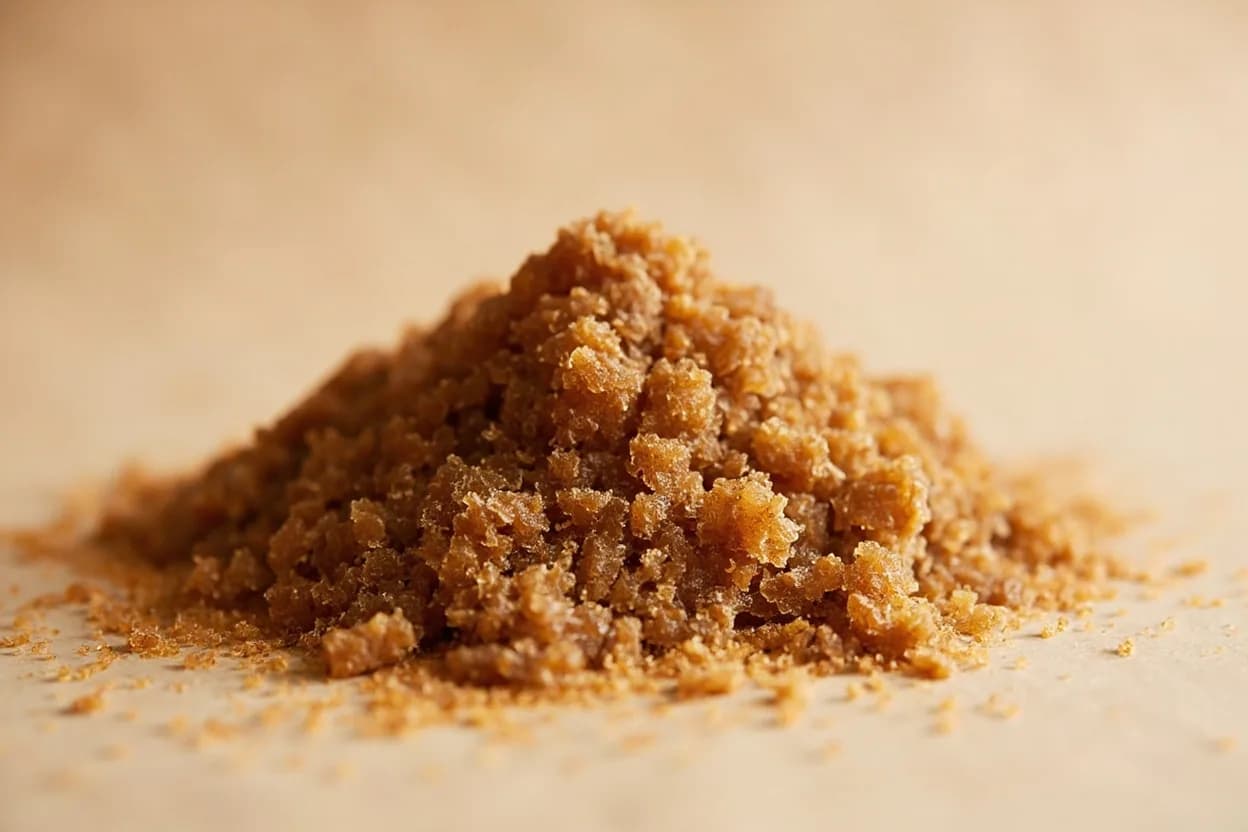
Brown sugar is refined white cane or beet sugar to which molasses has been reintroduced (or, in the case of muscovado and demerara, only partially removed). Light brown sugar contains roughly 3.5% molasses; dark brown sugar around 6.5%. The molasses fraction delivers toffee, caramel, and faint bitter-coffee notes alongside hygroscopic moisture, which keeps baked goods chewy and keeps BBQ rubs adhesive. Dark brown sugar has a more assertive, almost rum-like character; light brown sugar is milder and broadly versatile.
In photos
Flavour profile
Classic pairings
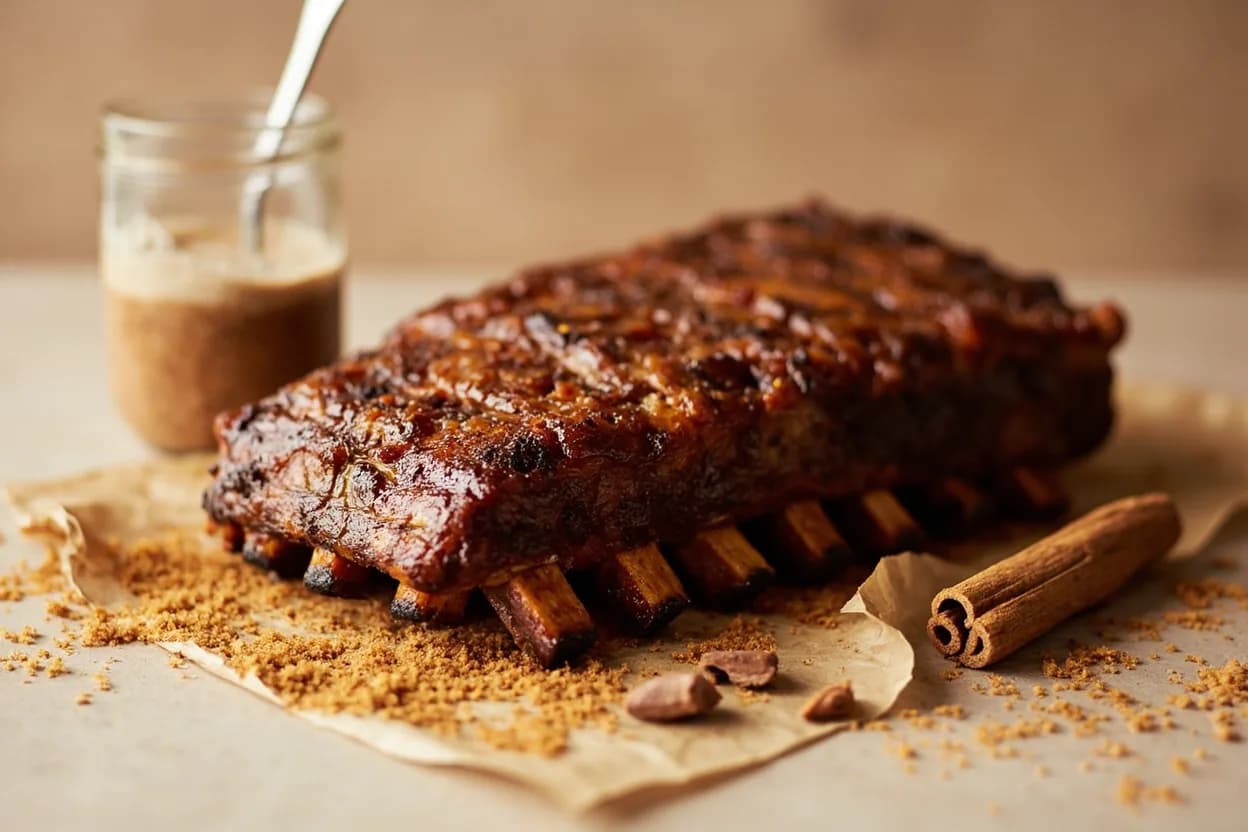
- Pork ribsAmerican BBQ
The molasses sugars caramelize at pit temperatures and form the bark's lacquered crust; they balance pork's savory fat without overpowering smoke.
- CinnamonAmerican / Latin American
A canonical marriage — cinnamon's aldehydes amplify brown sugar's toffee register, used in everything from coffee cake to churros.
- BourbonAmerican South
Shared caramel and vanilla notes from charred oak; brown sugar and bourbon reinforce each other in glazes, pecan pie, and cocktail syrups.
- OatsBritish / American
Brown sugar's molasses undertone bridges oats' earthy, grain character; the combination is the backbone of granola, flapjacks, and crumble toppings.
- Butter
Browned butter (beurre noisette) and dark brown sugar create shortcut toffee; the fat carries fat-soluble molasses aromatics for maximum depth in cookies and blondies.
- Sweet potatoAmerican South
Brown sugar amplifies sweet potato's natural carotenoid sweetness; a classic Thanksgiving pairing in casseroles and candied preparations.
- Soy sauceAsian-American
Umami-salt from soy and molasses-sweetness from brown sugar create a teriyaki-style glaze backbone used across East Asian–American cooking.
- Dijon mustardAmerican / French
The sharpness of mustard cuts the sweetness and the two emulsify into a sticky ham or salmon glaze; a classic cure component.
Adventurous pairings
- Miso (white or red)
Miso's fermented umami deepens brown sugar's toffee notes into something nearly savory-sweet; the pairing anchors miso-butter cookies and caramel glazes.
- Black pepper
The heat from piperine cuts the molasses stickiness and adds complexity in dry rubs and spiced caramels — a favorite in Carolina-style BBQ.
Espresso's bitter roasted compounds echo brown sugar's coffee-molasses undertones; together they create a bittersweet depth used in tiramisu variations and coffee rubs for beef.
- Cardamom
The floral-eucalyptus character of cardamom lifts brown sugar's heavy caramel into something almost perfumed; a natural bridge to South Asian-inspired sweets and Scandinavian baking.
Acid from the vinegar balances sweetness and creates a sweet-sour BBQ sauce dynamic; the molasses and vinegar together echo classic Eastern Carolina / Memphis profiles.
Tread carefully
- Delicate floral waters (rosewater, orange blossom)avoid
Brown sugar's assertive molasses overwhelms subtle floral notes; use plain white sugar or honey when floral clarity is the goal.
- Very pale, neutral doughs (financiers, madeleines)avoid
The molasses color and flavor intrude on recipes where a clean buttery sweetness and ivory crumb are essential.
How to use it
- Dry rub: pack with salt, spice, and pepper to form a bark on low-and-slow proteins
- Wet glaze: dissolve in butter or oil, brush repeatedly at the end of high-heat cooking
- Caramel shortcut: brown sugar with cream skips the sugar-dissolving step for quick butterscotch
- Creaming: beat with softened butter for chewy cookies — moisture from molasses inhibits full gluten development
- Brine and cure: use in pickling brines and salt cures for pork and salmon to add color and depth
- Compress: sprinkle on citrus or stone fruit before torching for a brûlée-style caramel crust
Appears in
Related flavours
The defining component of brown sugar's character; using straight molasses intensifies every quality brown sugar provides.
Unrefined Mexican cane sugar with deeper mineral and funk notes — a more complex substitute in Latin American preparations.
Shares caramel-toffee warmth but adds distinctive woody-forest notes; overlapping use cases in glazes and baked goods.
- Honey
Floral counterpart — where brown sugar is earthy and dark, honey is bright and varietal; both are hygroscopic sweeteners for baking.
References
- 1.On Food and Cooking — Harold McGee
- 2.The Science of Good Cooking — Cook's Illustrated / America's Test Kitchen
- 3.Salt, Fat, Acid, Heat — Samin Nosrat
- 4.Franklin Barbecue: A Meat-Smoking Manifesto — Aaron Franklin & Jordan Mackay
Confidence: high
Notes
Light vs. dark
The difference matters more in baking than in BBQ. Light brown sugar gives chewiness and mild caramel; dark brown sugar adds pronounced molasses flavor and extra moisture — critical for recipes like gingerbread or a deeply flavored barbecue bark. When a recipe doesn't specify, light brown sugar is a safe default.
Storing
Brown sugar hardens as the molasses-coated crystals dry out. Store airtight with a terra cotta disc or a slice of bread; revive hardened sugar by covering with a damp paper towel and microwaving in 20-second bursts.