Fermented Grains & Cereals
Buckwheat
Also: sarrasin, kasha, Buchweizen, grano saraceno, Fagopyrum esculentum
Not a grass but a pseudo-grain with a distinctive nuttiness and mineral earthiness that anchors galettes, soba, and Eastern European kasha with assertive, gluten-free character.
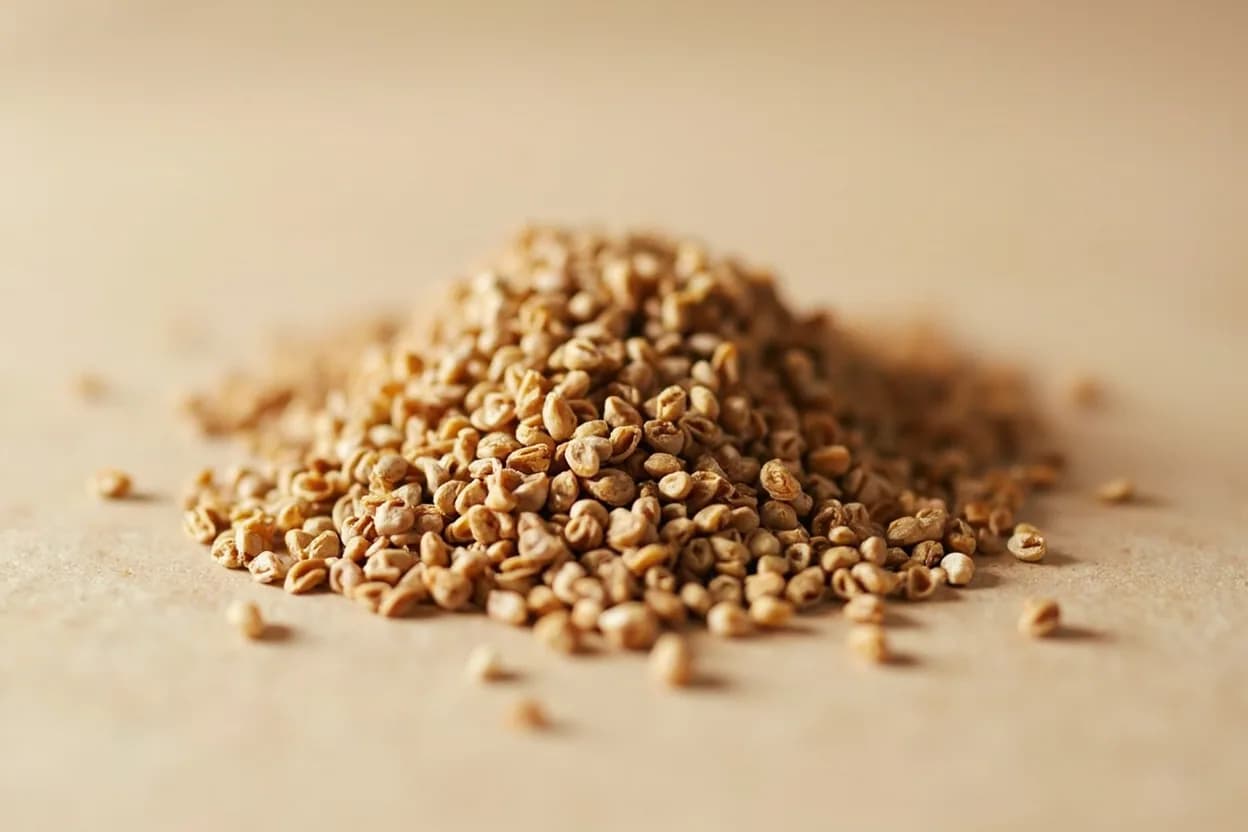
Buckwheat is the seed of Fagopyrum esculentum, a flowering plant unrelated to wheat or any grass — it is closer kin to rhubarb and sorrel. The hulled seed (groat) or its flour has a pronounced nutty, earthy flavour with bitter undertones, a faint floral note from rutin (a flavonoid it contains in high concentration), and a slight earthiness that deepens when toasted. When roasted, buckwheat becomes kasha, with a dramatic intensification of nuttiness and smoke. The absence of gluten makes it structurally challenging in baking but invaluable for gluten-free diets. It is a cornerstone grain across Brittany (galettes), Japan (soba), Russia (kasha), and Korea (naengmyeon).
In photos
Flavour profile
Classic pairings
- Crème fraîcheFrench (Breton)
Buckwheat's earthy bitterness finds its ideal foil in the cool, rich, lactic tang of crème fraîche — the foundation of Breton galette garnishes and Japanese soba dipping sauces' creamy variations.
- Smoked salmon / gravlaxFrench, Scandinavian
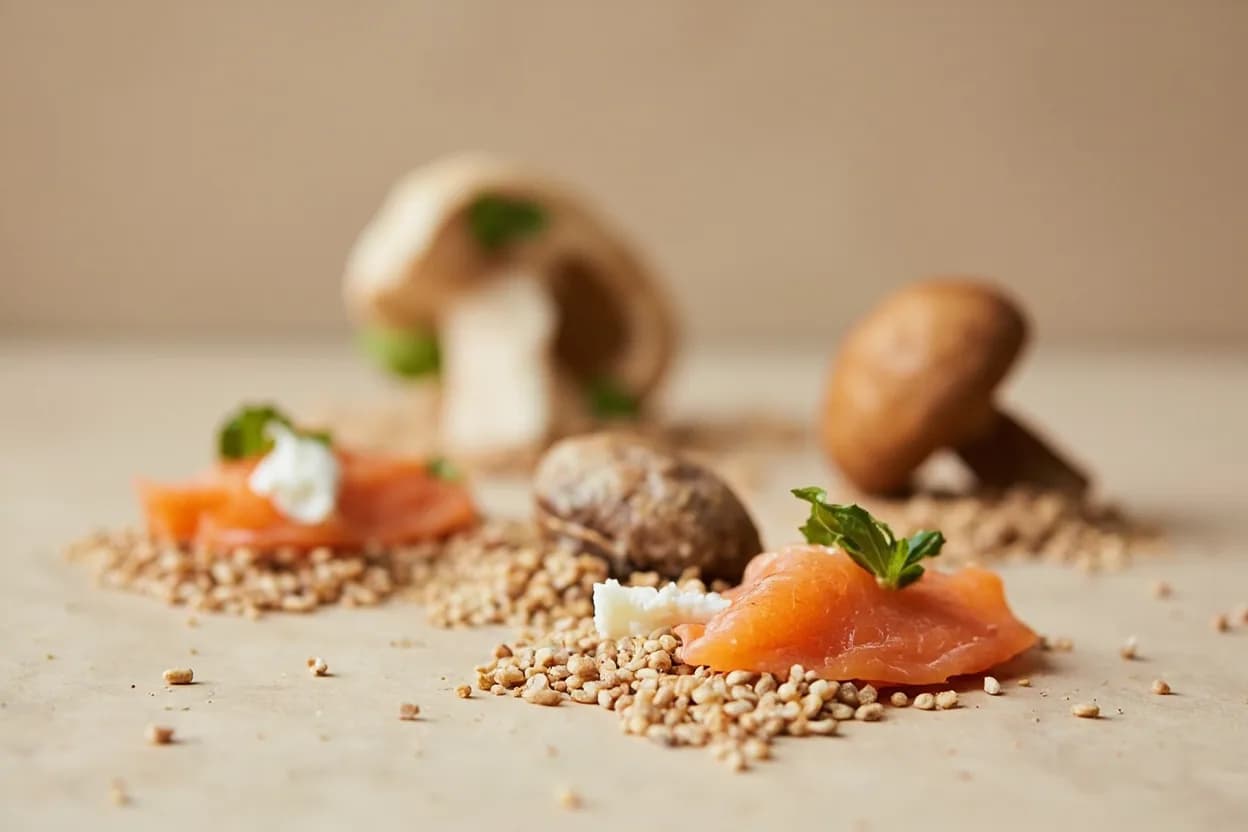
The salt-and-smoke intensity of cured salmon stands up to buckwheat's bitterness; this pairing defines Breton galettes and Scandinavian buckwheat blini equally.
- Mushrooms (especially porcini, shiitake)Eastern European, Russian
Buckwheat and mushrooms share the same earthy, umami-mineral register; kasha with sautéed mushrooms (kasha varnishkes in Ashkenazi cooking) is one of the world's most harmonious whole-grain combinations.
- Caramelised onionsEastern European
Slow-cooked onions bring sweetness and depth that balance buckwheat's bitterness; a necessary component of kasha varnishkes and many Eastern European pilafs.
- Dashi and soy (tsuyu)Japanese
Japanese soba's definitive pairing: the umami-mineral broth of kombu-bonito dashi with soy mirrors buckwheat noodles' own mineral depth, neither overwhelming the other.
- Dark honey (buckwheat honey)Global
Buckwheat honey is made from buckwheat flowers and shares the same earthy, molasses-floral character as the grain itself; together they create a doubled, introverted sweetness that is complex rather than cloying.
- Butter and eggsFrench (Breton)
Rich butter and egg are buckwheat's natural pairing in galette complète (ham, cheese, egg); fat rounds the bitterness while egg's sulphur compounds echo the grain's earthiness.
Adventurous pairings
- Miso (white or yellow)
Both buckwheat and miso are products of East Asian fermentation traditions with shared umami-mineral vocabulary; a buckwheat-miso vinaigrette or sauce bridges Japan and the grain's earthiness with seamless logic.
- Dark chocolate (65%+)
Buckwheat's bitter mineral notes harmonise with cocoa's roasted-bitter profile; buckwheat flour in chocolate cakes or brownies adds complexity without competing.
- Beet (roasted)
The earthy sweetness of roasted beet provides the sweetness counterpart to buckwheat's bitter-mineral base; a beet-kasha grain bowl is a natural match structurally and in flavour.
- Citrus zest (lemon or yuzu)
Bright, aromatic zest cuts through buckwheat's earthiness without obliterating it; yuzu particularly bridges buckwheat's Japanese soba context and adds a floral note that echoes its rutin character.
- Truffle (black or white)
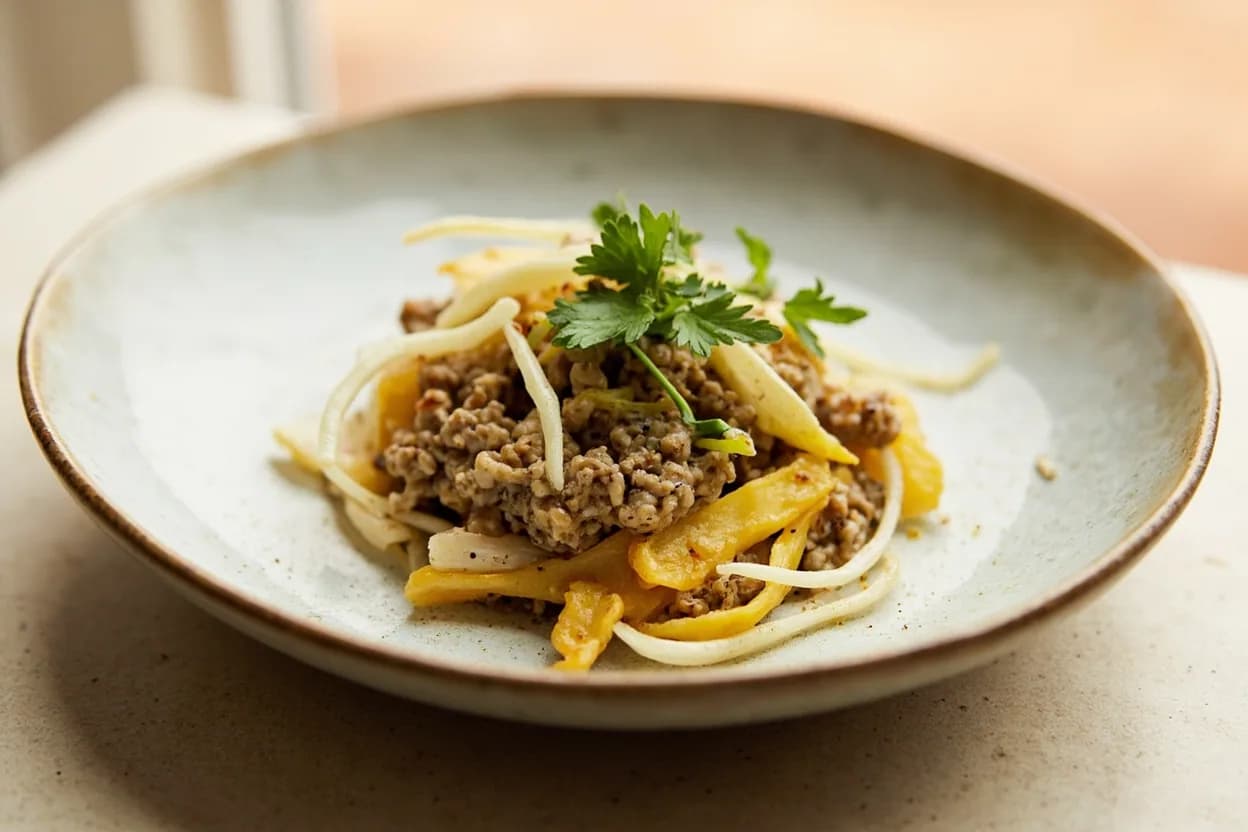
Truffle's earthy-sulphurous intensity meets its match in buckwheat; the two share a loam-mineral vocabulary and their combination in pasta or risotto variations is genuinely distinctive.
Tread carefully
- Very sweet, delicate dessert cream (panna cotta, crème brûlée alone)avoid
Buckwheat's bitterness and mineral edge clash with pure sweetness in delicate creams; it muddles what should be a clean flavour.
- Subtle tropical fruits (rambutan, lychee)avoid
The perfumed, gentle sweetness of tropical fruits is completely overwhelmed by buckwheat's assertive bitterness — the fruit's character disappears.
- Cream-based mild white sauces (plain béchamel)avoid
Buckwheat's earthiness turns plain béchamel dull and bitter; a béchamel needs additional character (Gruyère, mustard, nutmeg at minimum) to hold its own.
How to use it
- Toast whole groats dry before cooking to unlock full nutty, toasty character (this is the transformation from raw groat to kasha)
- Simmer groats 1:2 in salted water or stock for 15 minutes — for pilaf-texture, toast first; for porridge, leave raw
- Blend buckwheat flour 50:50 with wheat flour for galettes; for soba-style noodles, experiment with 70–80% buckwheat (juwari soba is 100% but requires skill)
- Use buckwheat flour in sourdough to add mineral depth: 10–20% substitution in wheat sourdough adds complexity without structural compromise
- For blinis, let buckwheat batter rest 30–60 minutes after mixing so the flour hydrates and bitterness mellows
Appears in
Related flavours
Another earthy, gluten-free pseudo-grain with mineral depth and whole-grain bitterness; share many pairing principles especially in pancake, porridge, and flatbread applications.
Both are Northern European dark whole-grain flours with lactic-acid fermentation histories and similar earth-bitter flavour registers; can be blended for complex flatbreads.
- Mushrooms (porcini)
Buckwheat's most reliable flavour amplifier — the earthy-umami partnership in kasha is one of the most coherent whole-grain pairings in world cuisine.
References
- 1.Ancient Grains for Modern Meals — Maria Speck
- 2.The French Kitchen — Michel Roux
- 3.Japanese Farm Food — Nancy Singleton Hachisu
- 4.The Zuni Café Cookbook — Judy Rodgers
- 5.On Food and Cooking — Harold McGee
Confidence: high
Notes
Kasha vs. raw buckwheat
In much of Eastern Europe and in North America, 'kasha' specifically means toasted buckwheat groats, which have a dramatically different flavour from raw groats — darker, smokier, and more bitter. In Russian, however, 'kasha' means any cooked grain porridge. This ambiguity matters at the grocery: raw groats (pale, yellowish) and kasha (brown, pre-toasted) behave differently in recipes, with kasha better for pilaf and raw groats better for porridge or when blending into flour.