Fats, Pastes & Condiments
Crème Fraîche
Also: crème fraîche, soured cream (French), cultured cream
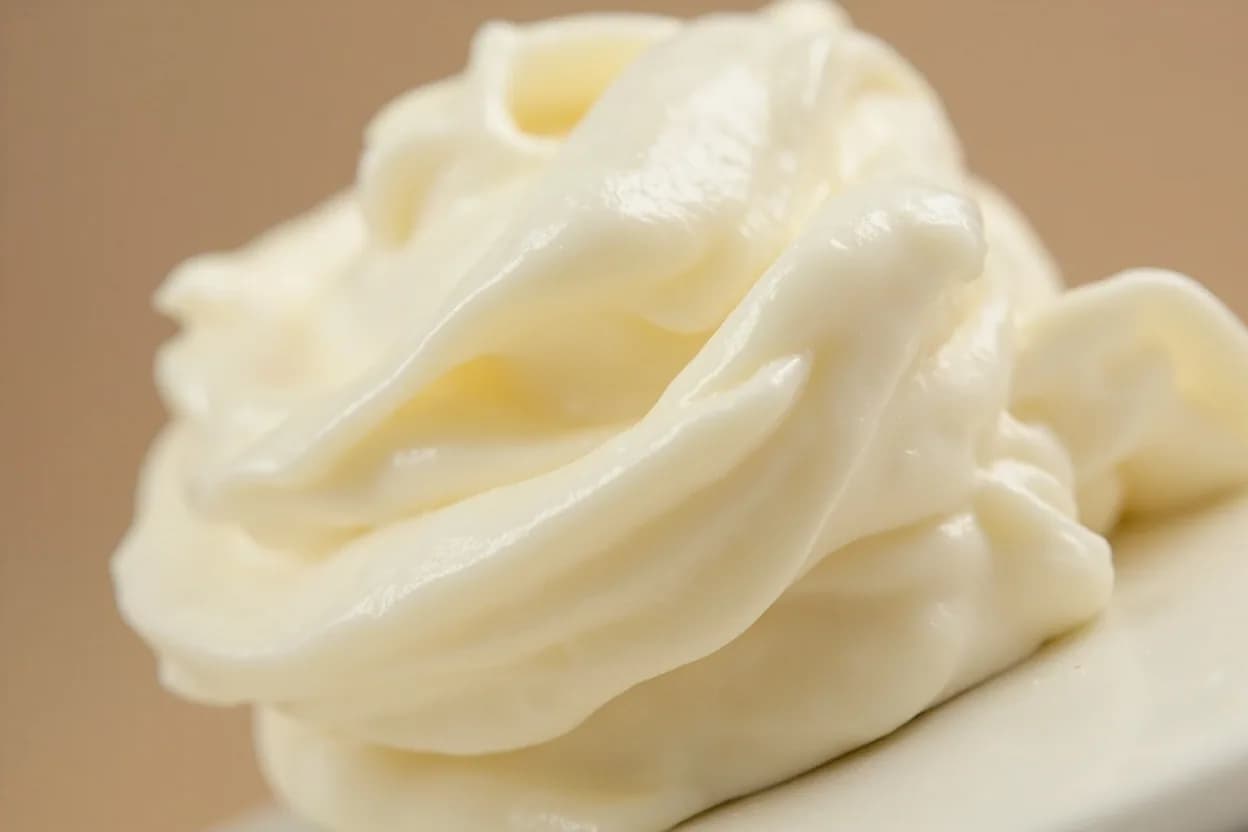
France's cultured cream — tangy, thick, and stable enough to stir into hot sauces without breaking.
Crème fraîche is cultured heavy cream allowed to ferment with lactic-acid bacteria until it thickens and develops a characteristic tang. At 30–40% butterfat, it is richer than sour cream (20%) and more stable — its high fat content means it does not curdle when heated, making it the preferred cream for French pan sauces and soups. Its flavor sits between fresh cream and a mild sour cream: lightly acidic, faintly yogurty, and richly fatty, with a pleasant lactic sharpness that brightens wherever it lands.
In photos
Flavour profile
Classic pairings
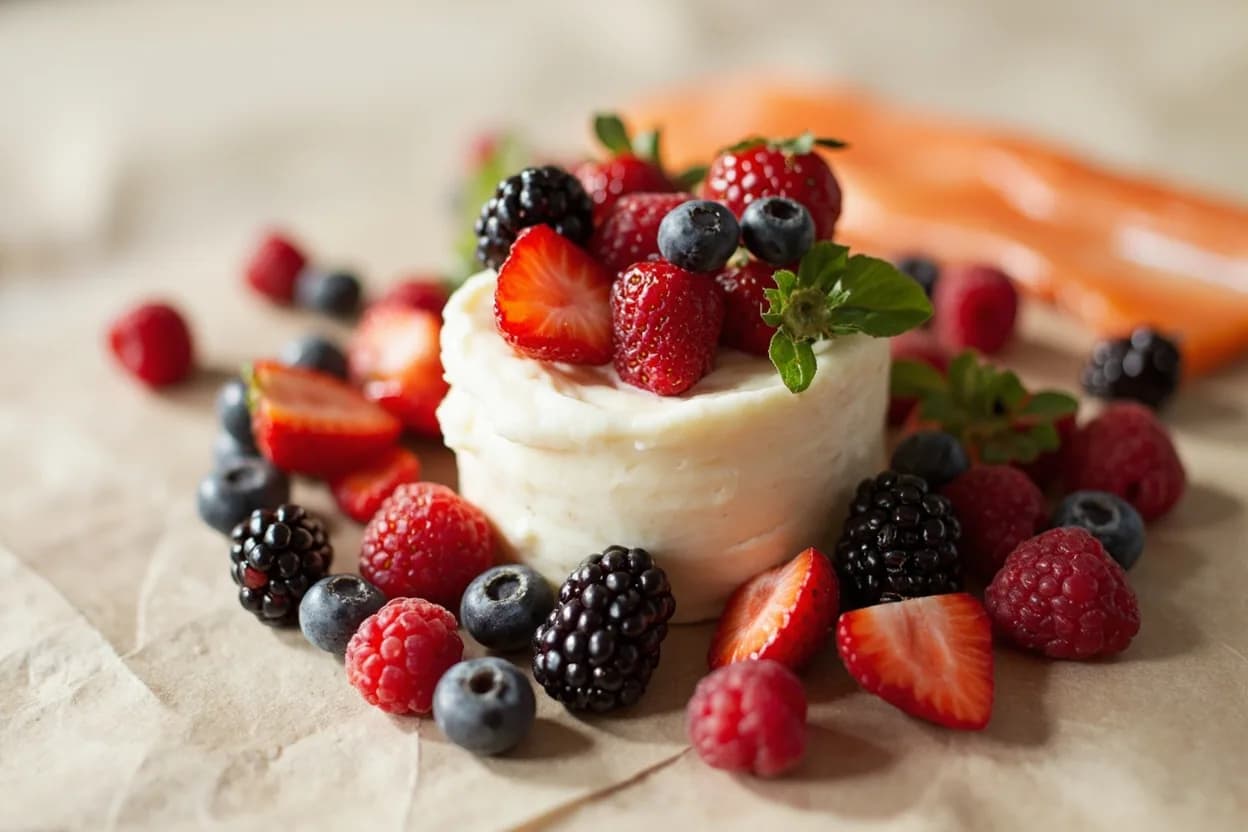
- Fresh berries (strawberries, raspberries)French
The acid-fat contrast is textbook: berries' sharp fruit brightness is cushioned and lengthened by crème fraîche's creamy tang.
- Smoked salmonFrench/Nordic
Crème fraîche is the canonical accompaniment to blinis with smoked salmon — the fat tames the salt and smoke while the tang cuts the oiliness.
- Mushrooms (pan sauce)French
A chicken-and-mushroom sauce finished with crème fraîche is a French bistro staple — the cream reduces without splitting and absorbs the umami of the mushrooms.
- ShallotsFrench
Reduced white wine, shallots, and crème fraîche form the foundational French pan sauce template; the shallot's sweetness is balanced by the cream's acidity.
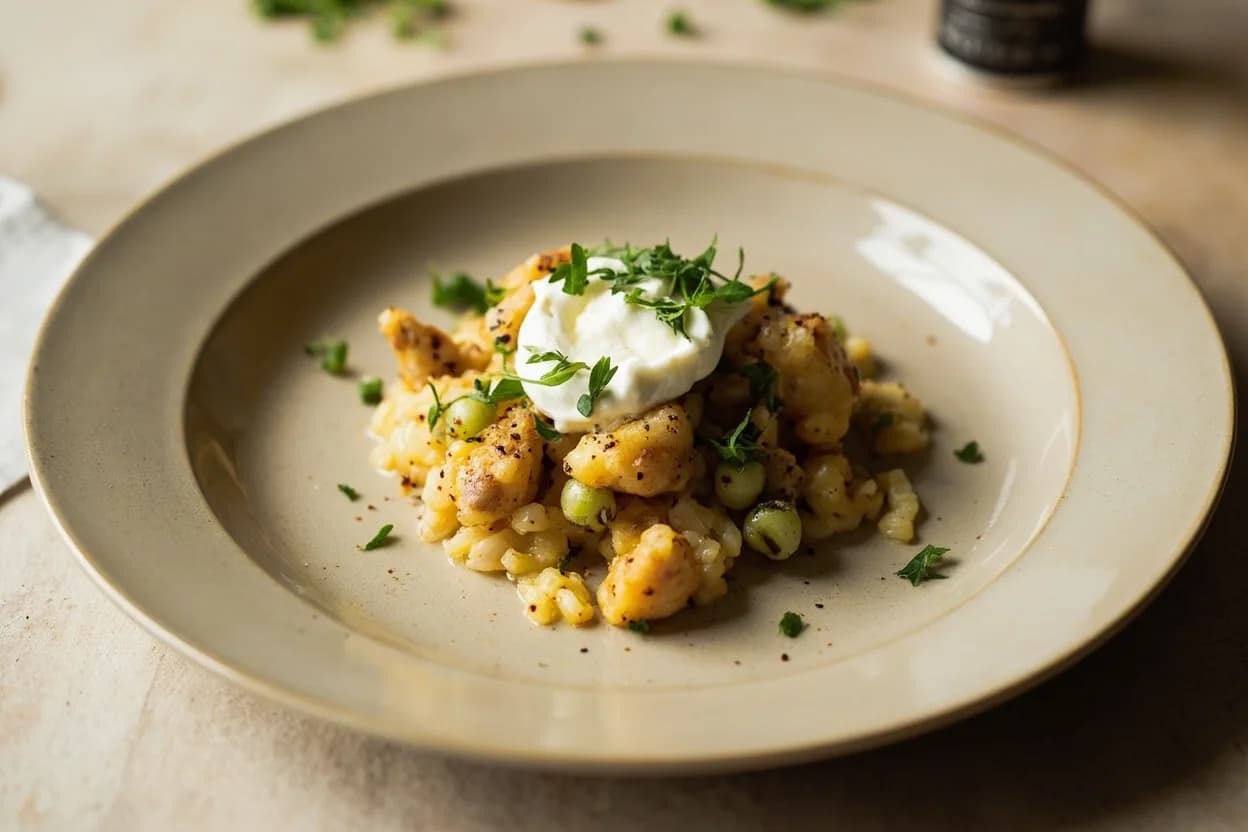
- Potatoes (gratins, mashed)French
A gratin dauphinois with crème fraîche instead of plain cream has additional tang that prevents the dish from tasting flat or cloying.
- Chives (and other mild herbs)French
The classic garnish pairing: a dollop of crème fraîche topped with snipped chives on soups, baked potatoes, or canapés.
- Tarte Tatin / fruit tartsFrench
Served alongside warm apple or pear tarts, crème fraîche provides creamy contrast and acidity that cuts the pastry's butteriness.
Adventurous pairings
A teaspoon of white miso whisked into crème fraîche creates an umami-spiked cream that elevates dressings, dips, and pasta sauces with savory depth.
Swirling harissa into crème fraîche produces a fiery, creamy condiment that works with roasted vegetables, lamb burgers, or as a dip for flatbread.
- Dark chocolate (ganache)
Substituting crème fraîche for heavy cream in ganache adds a gentle lactic tang that cuts through dark chocolate's bitterness and gives truffles unusual brightness.
- Cucumber and dill (Nordic-style)
A crème fraîche–cucumber–dill sauce borrows from Scandinavian gravlax tradition and pairs brilliantly with cold poached fish or grain salads.
Tread carefully
- Very high heat (boiling point) over extended periodsavoid
Though more stable than sour cream, crème fraîche will still separate if boiled aggressively for too long — add at the end of cooking and do not let it rapid-boil.
- Strong vinegar-based dressingsavoid
Adding crème fraîche to heavily acidified preparations risks curdling from additional acid overload — the fat content is not infinite protection against excessive acidity.
- Highly assertive blue cheesesavoid
Both crème fraîche and strong blue cheese carry intense lactic, acidic notes — the combination reads muddled rather than complementary; a neutral cream works better.
How to use it
- Stir into pan sauces off-heat or at very low simmer — never boil vigorously after adding
- Whip lightly (30 seconds by hand) to lighten texture for dessert service; it will hold soft peaks without becoming grainy
- Use as a base for cold dips: fold in herbs, lemon zest, or spice pastes — no cooking required
- Spread as a pizza bianca base before toppings: caramelizes at oven temperature and provides tangy, creamy contrast to cheese
- Make at home by combining 250ml heavy cream with 1 tbsp cultured buttermilk; leave covered at room temperature 12–24h until thickened
Appears in
Related flavours
- Sour cream
The American and Eastern European counterpart — lower fat, tangier, and less stable at heat; they substitute in uncooked applications but not in hot sauces.
- Mascarpone
Richer (>40% fat) and less tangy — where crème fraîche adds brightness, mascarpone adds density; they can be combined for a balanced cream.
- Lemon juice
A squeeze of lemon amplifies crème fraîche's existing acid signature and brightens finished dishes — a natural partner in dressings and desserts.
References
- 1.Julia Child, 'Mastering the Art of French Cooking', Vol. 1 (1961)
- 2.Raymond Blanc, 'Blanc Vite' (1998)
- 3.Michel Roux, 'Sauces: Sweet and Savoury, Classic and New' (1996)
- 4.Harold McGee, 'On Food and Cooking: The Science and Lore of the Kitchen' (2004)
Confidence: high
Notes
Why it doesn't break
Crème fraîche's high butterfat content (30–40%) means that even when heated, there is insufficient water relative to protein for the proteins to aggregate and curdle dramatically. This is the same reason heavy cream reduces into sauces while low-fat dairy breaks.
Tarte flambée
In Alsatian tarte flambée (Flammkuchen), crème fraîche is spread thinly over a very thin crust and blasted in a wood-fired oven — it sets to a lightly caramelized cream base rather than running. This is one of crème fraîche's most dramatic transformations.