Preserved & Cured Fish
Crayfish (Dried and Ground)
Also: ground crayfish, dried crayfish powder, ede (Yoruba), ose oji (Igbo), African dried crayfish
West Africa's umami powder — sun-dried freshwater crayfish ground into a pungent, intensely savoury seasoning that underpins the flavour architecture of countless soups and rice dishes.
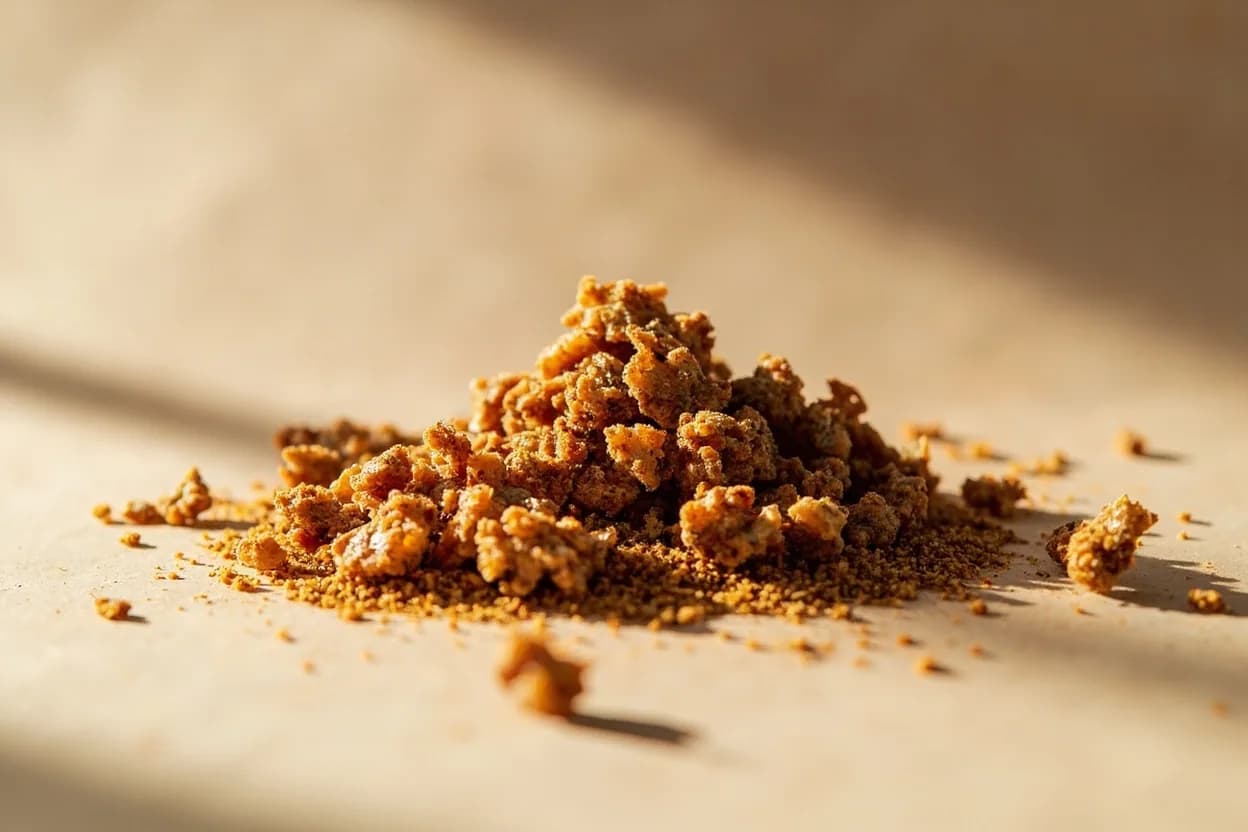
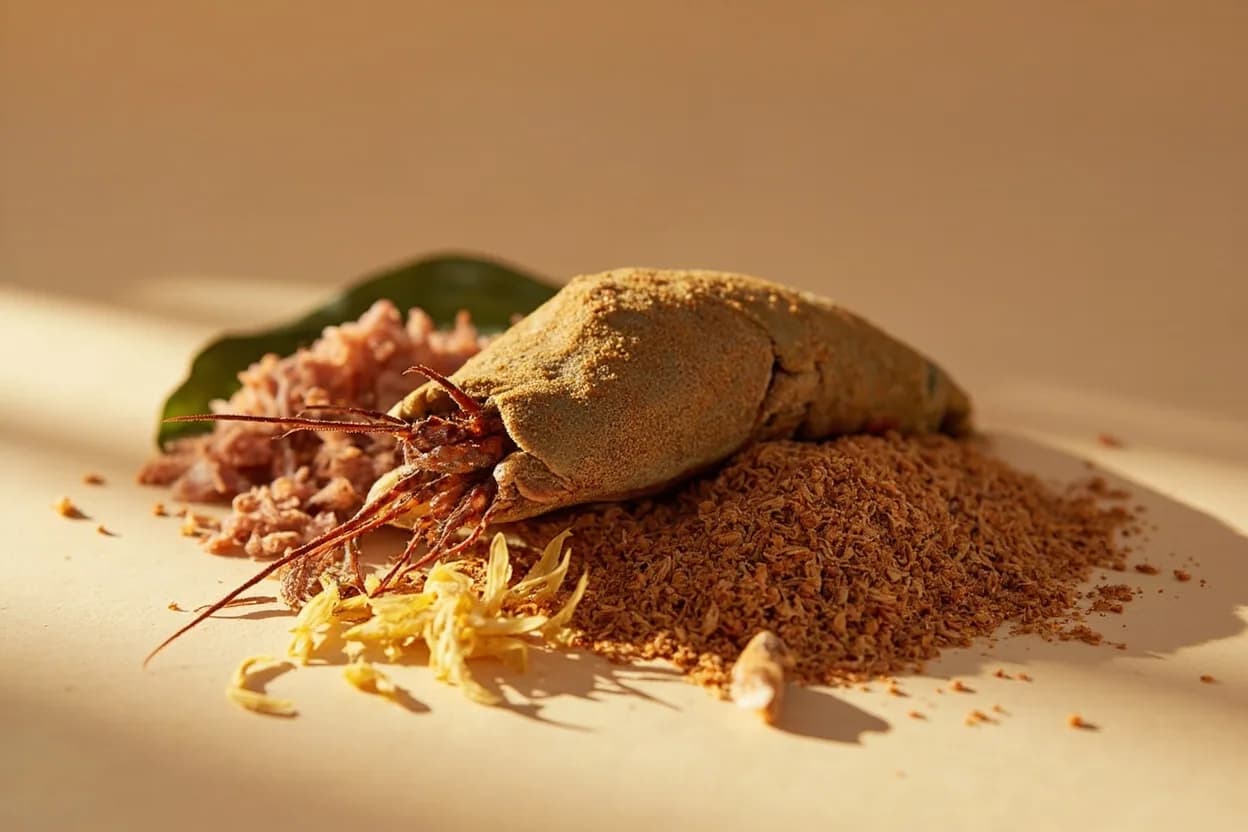
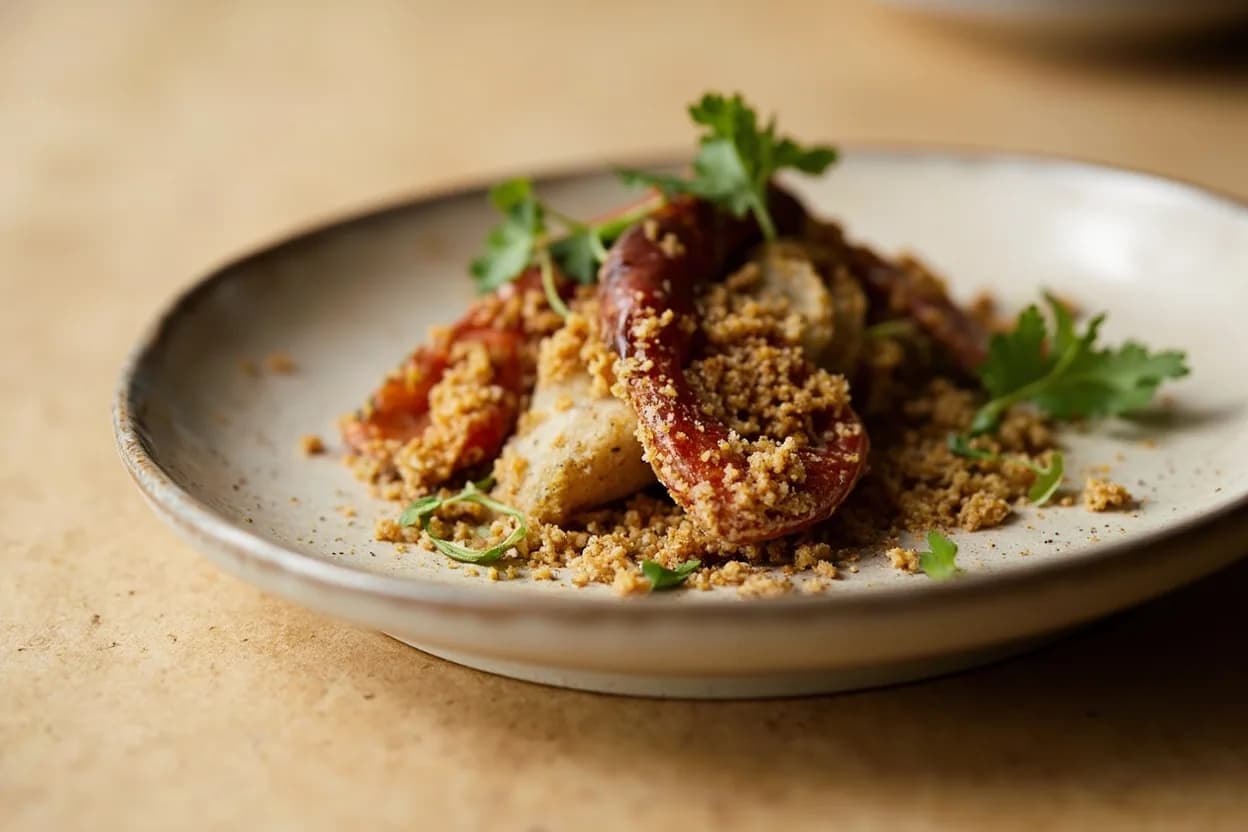
Dried and ground crayfish is produced from small freshwater crayfish (primarily Macrobrachium species in Nigeria) that are sun-dried to remove moisture, then milled into a coarse to fine powder or left in semi-crushed form. The drying concentrates proteins into free glutamates and nucleotides, and the Maillard and enzymatic reactions during drying produce complex roasted-shellfish aromas absent in fresh product. The result is an ingredient with a powerful, persistent umami depth, a distinctly fermented-briny character, and a sweet, faintly smoky roasted note. It is a cornerstone seasoning in Nigerian, Ghanaian, Cameroonian, and wider West African cooking, functioning as both a seasoning and a textural element.
In photos
Flavour profile
Classic pairings
- Palm oilWest African
Virtually every West African soup or stew that contains ground crayfish also uses palm oil — the oil carries fat-soluble aroma compounds from the crayfish and gives stews their signature red-orange body.
- Egusi (melon seeds)Nigerian
Egusi soup's characteristic savouriness depends on ground crayfish dissolving into the toasted melon seed paste, each amplifying the other's umami in a classic synergistic combination.
- Ede (cocoyam / taro)Igbo (Nigerian)
Ofe akwu and oha soups built on cocoyam as a thickener use dried crayfish as the primary seasoning; the starchy base absorbs the shellfish flavour deeply.
- Leafy greens (bitterleaf, oha, ugwu)Nigerian
The bitterness of oha or bitterleaf requires a strong savoury counterpoint; ground crayfish provides this without obscuring the vegetable's character.
- Stockfish (okporoko) and smoked fishNigerian
Ground crayfish and stockfish are dual umami layers in many Igbo soups — the dried crayfish gives immediate depth, the stockfish builds long-simmered backbone.
- Scotch bonnet and fresh tomatoWest African
The heat-acid punch of fresh tomato and scotch bonnet balances the pungent brine of ground crayfish; together they form the flavour triad of Nigerian party jollof and stews.
- Jollof riceWest African
Added to the tomato-pepper base before the rice, ground crayfish deepens the savouriness of jollof in a way that bouillon cubes approximate but cannot duplicate.
Adventurous pairings
A small amount of ground crayfish stirred into a white miso dashi adds a roasted shellfish note that enriches the broth without departing from a broadly Japanese flavour frame.
- Grits or polenta
In a nod to Southern US shrimp-and-grits, stirring ground crayfish into stone-ground grits during cooking creates an umami-infused base that needs no additional seasoning.
- Compound butter
Blended with softened butter, a pinch of dried thyme, and lemon zest, ground crayfish makes a shellfish butter for finishing grilled fish or grilled corn without requiring fresh seafood.
- Fermented black beans (douchi)
Both are intensely fermented, savoury seasonings — used together in small quantities in braised dishes they create a multi-dimensional fermented-shellfish-protein umami.
- Dark rye bread dough
Scandinavian-inspired bakers have incorporated ground crayfish at low percentages into rye dough, producing a subtly savoury cracker-bread that pairs with smoked fish without any additional topping.
Tread carefully
- Delicate white fish (steamed)avoid
The assertive pungency of dried crayfish overwhelms mild proteins like steamed sea bass or sole where you want to taste the fish itself.
- Dairy-based saucesavoid
The fermented briny notes clash with cream and milk fats, producing an unappealing fishy quality rather than the seamless umami integration it achieves in oil-based contexts.
- Fruit-forward preparationsavoid
The intensity of dried crayfish has no counterpart in fruit desserts or salads built around ripe tropical fruit — it reads as invasive rather than complementary.
How to use it
- Add early in the cooking process — dissolve in hot oil or frying base before adding liquids to bloom its aroma compounds
- Layer with stockfish or smoked catfish for compound umami rather than relying on a single dried protein source
- Grind to a fine powder for smooth soups (egusi, oha); use semi-crushed for textured rice dishes and stews
- Balance quantity carefully — 1–2 tablespoons per pot of soup is typical; excess produces bitterness
- Store in an airtight container in a cool, dark place; refrigerate in humid climates to prevent clumping and rancidity
Appears in
Related flavours
- Ogiri (fermented locust beans)
Both are fermented umami intensifiers in West African cooking; ogiri contributes a pungent, cheese-like funk while crayfish brings shellfish depth — often used together.
- Iru (dawadawa / locust bean)
The Yoruba fermented locust bean condiment fills a similar savoury function in Yoruba cooking, sometimes alongside dried crayfish in the same pot.
- Dried shrimp (Southeast Asian)
A functional analogue in Southeast Asian cooking — dried shrimp are smaller and less intensely flavoured, but can substitute in a pinch in non-West African dishes.
References
- 1.The Complete Nigerian Cookbook — Nky Lily Eze
- 2.Zoe's Ghana Kitchen — Zoe Adjonyoh
- 3.The Africa Cookbook: Tastes of a Continent — Jessica B. Harris
- 4.Journal of Food Science and Technology: Proximate composition and sensory properties of dried crayfish from West African freshwater species
Confidence: high
Notes
Sourcing and quality
Ground crayfish quality varies significantly. Whole sun-dried crayfish that you grind yourself at purchase are fresher and more aromatic than pre-ground commercial powders, which can go rancid or be adulterated with starch. Look for a bright orange-amber colour and a clean, assertive shellfish aroma — greyish powder or flat smell indicates age or poor handling.
Sustainability note
The artisanal harvesting of freshwater crayfish is an important livelihood for rural fishing communities across the Niger Delta and other West African river systems. Supporting producers who harvest sustainably — avoiding spawning seasons — maintains both the food culture and the ecosystem.