Fermented Vegetables & Pickles
Cornichon
Also: French gherkin, baby gherkin, petits cornichons
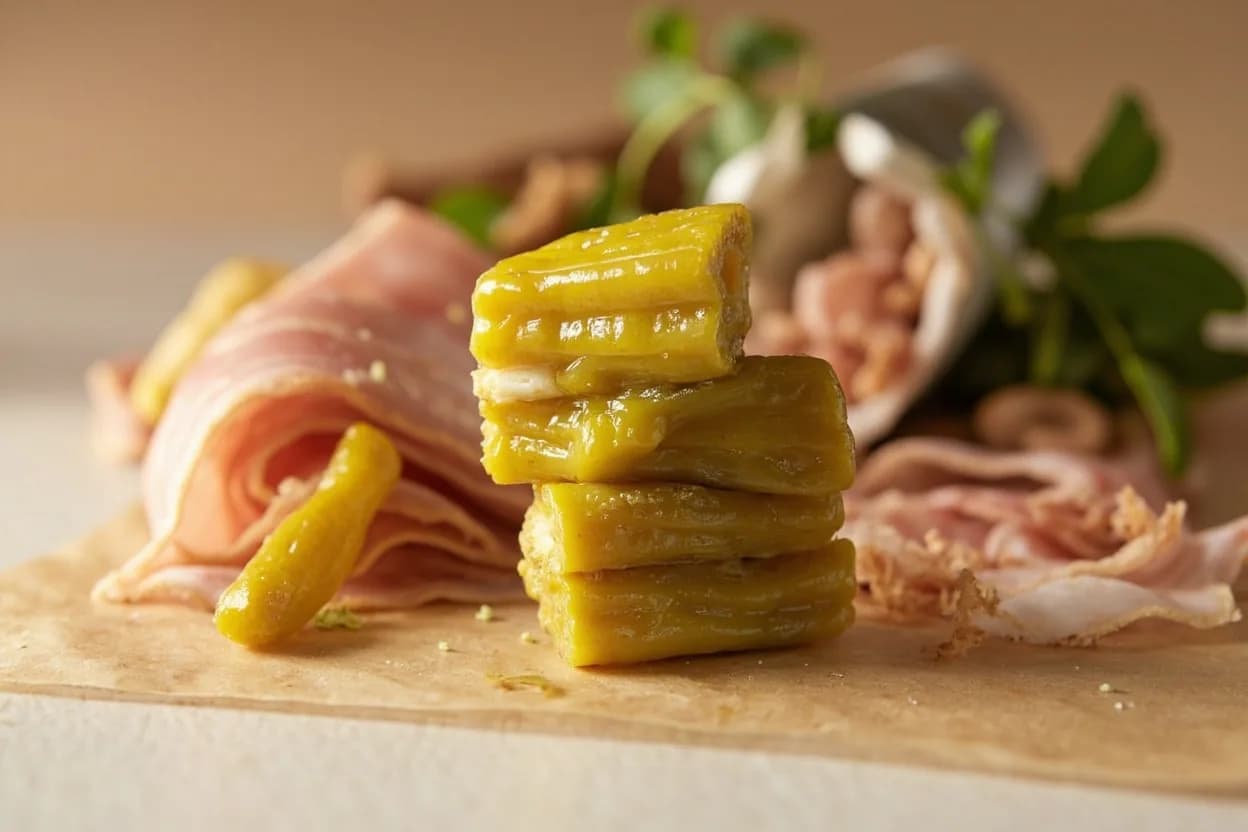
The French charcuterie board's indispensable tart crunch — tiny cucumbers pickled to a sharp, dill-kissed brightness.
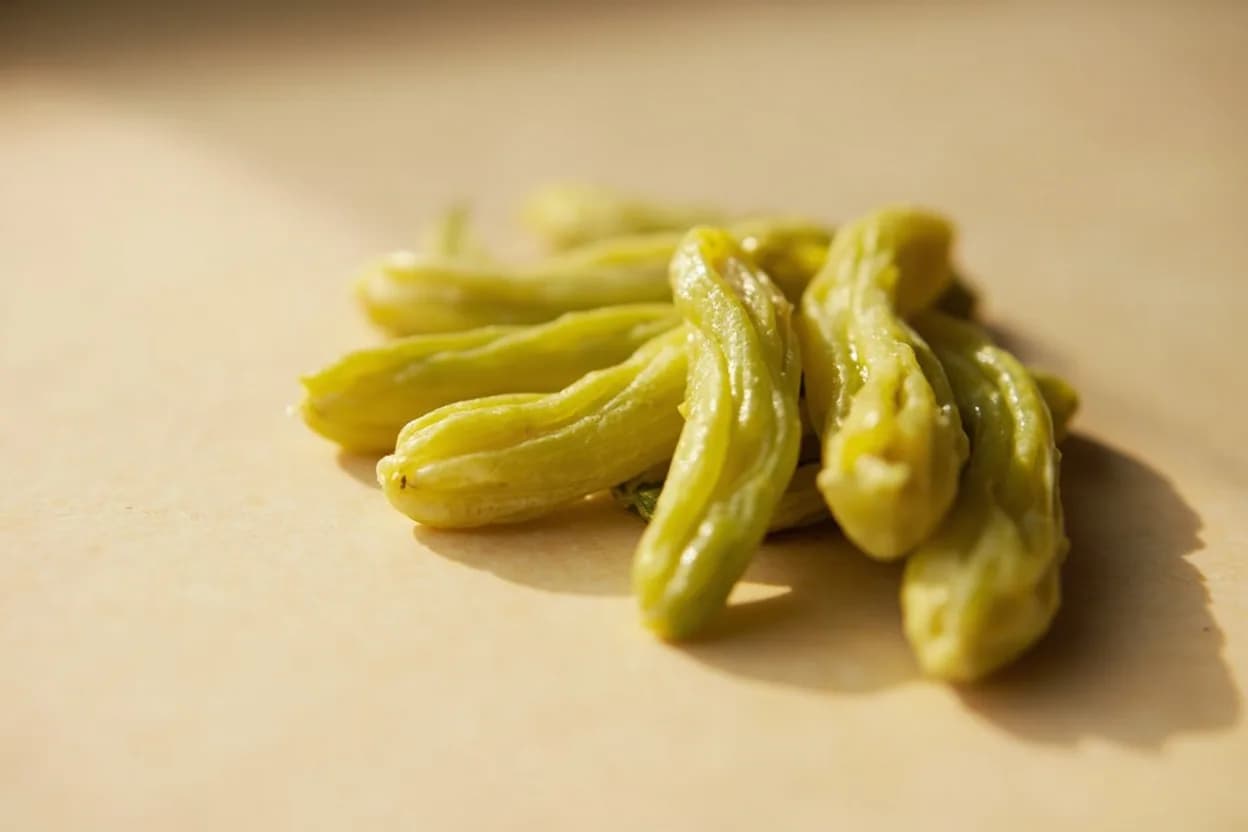
Cornichons are miniature cucumbers (Cucumis sativus), harvested at 3–5 cm and immediately brined in white wine vinegar with tarragon, pearl onions, and sometimes capers. The result is assertively sour, faintly briny, herbaceous, and intensely crunchy — a textural and acidic counterweight purpose-built for fatty, cured, or rich foods. Commercially, Maille and Amora are the French benchmark brands; artisan versions may use verjuice or champagne vinegar for gentler acidity.
In photos
Flavour profile
Classic pairings
- Pâté de campagneFrench
The cornichon's vinegar slices through the pork fat and liver richness, resetting the palate between bites.
- Jambon de Paris (cooked ham)French
A classic brasserie combination; the acid lifts the mild, pink ham without overwhelming its delicacy.
- Dijon mustardFrench
Both belong to the same French condiment grammar — mustard's pungency and cornichon's sourness are inseparable on a charcuterie board.
- RillettesFrench
Duck or pork rillettes spread on bread need cornichon's brightness to counter the confit fat.
- Gruyère and ComtéFrench / Swiss
Hard alpine cheeses with their nutty, long-aged depth are balanced by cornichon's fresh tartness.
- Tartar sauceFrench
Finely chopped cornichons are the backbone of classic sauce tartare, delivering acid and texture in mayonnaise.
- Roast beef sandwichesFrench / British
Sliced cornichons substitute for relish in European-style beef sandwiches, adding snap without sweetness.
Adventurous pairings
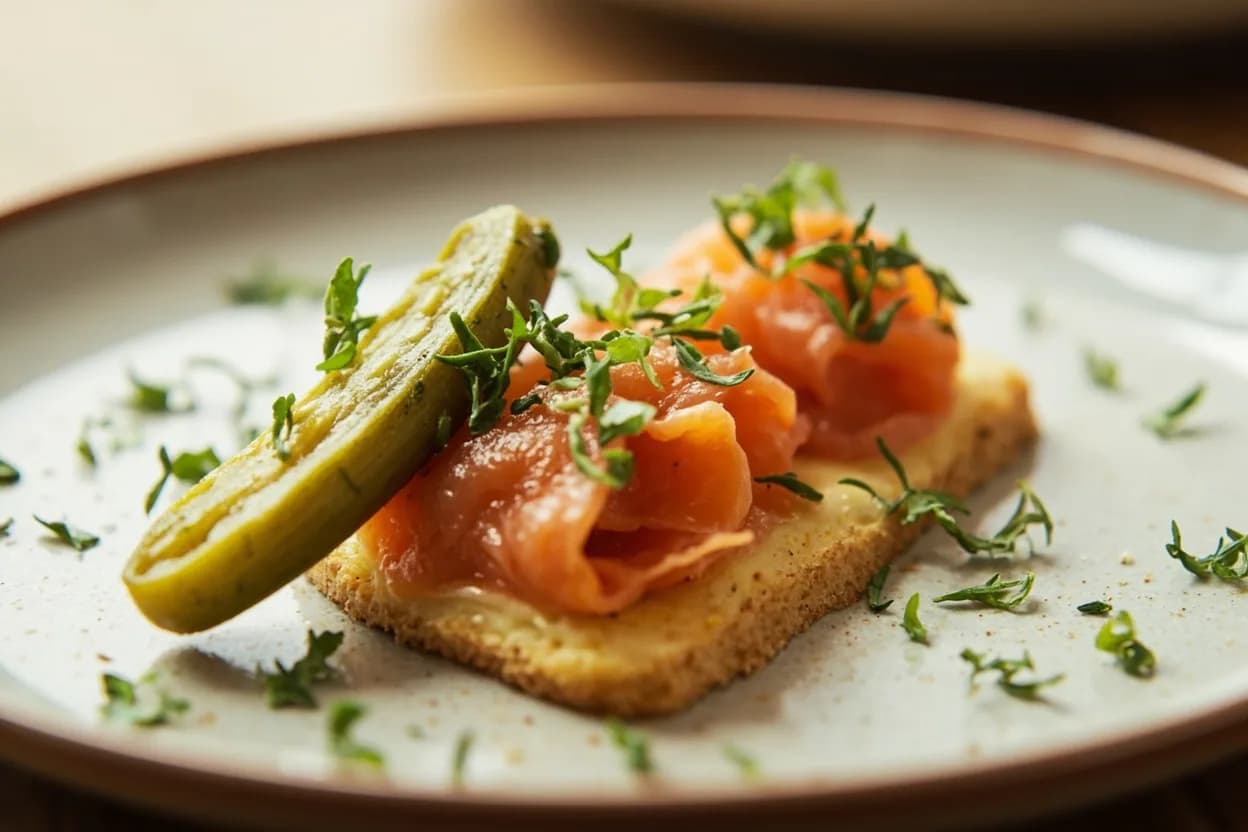
- Smoked salmon blini
Minced cornichon mixed into crème fraîche replaces capers — its tarragon note harmonises with dill-cured salmon.
A Nashville-style brine influence: thin-sliced cornichons on a fried chicken sandwich cut the grease with Gallic elegance.
- Blue cheese (Roquefort or Gorgonzola)
Counter-intuitive but effective — acidity tames the ammoniac spike of strong blue cheese, the brine echoing the cheese's own salinity.
Fold finely minced cornichon into the yolk filling: vinegar, tarragon, and egg yolk form a natural trio.
- Canned sardines on toast
The classic Portuguese tin-fish pairing gains a French accent — cornichon's acidity cuts the oily, iodine richness of sardines.
Tread carefully
- Delicate white fish (sole, turbot)avoid
The aggressive acidity overwhelms subtle marine flavours — use a gentler acid such as lemon or verjuice instead.
- Sweet dessertsavoid
No residual sweetness and high acidity make cornichons jarring against pastries, creams, or fruit.
- Light vinaigrette saladsavoid
Doubling up on vinegar-based elements makes the whole dish taste flat and one-dimensional.
How to use it
- Slice thinly lengthwise for sandwiches and burgers to maximise surface coverage
- Mince finely to fold into mayonnaise, crème fraîche, or compound butters (sauce gribiche, sauce tartare)
- Serve whole alongside charcuterie boards; never pre-cut — they lose crunch
- Use the brine as a deglazer for pan sauces (steak with cornichon pan jus)
- Bread and deep-fry whole cornichons for a crispy, tart bar snack
Appears in
Related flavours
Functionally similar — both add briny, sharp acidity; cornichon brings crunch where capers bring floral pungency.
The two are almost always deployed together in French cuisine as a unified acid-pungency condiment pair.
- Dill pickle
American cousin — brine-cured rather than vinegar-pickled, sweeter, and crunchier; less herbal than cornichon.
References
- 1.Charcuterie: The Craft of Salting, Smoking, and Curing — Michael Ruhlman & Brian Polcyn
- 2.Larousse Gastronomique (2009 English edition)
- 3.The Art of French Cooking — Julia Child, Louisette Bertholle & Simone Beck
Confidence: high
Notes
Vinegar matters
Authentic French cornichons use white wine vinegar, which lends a softer, more complex acidity than distilled malt vinegar. Brands using wine vinegar (Maille, Bonne Maman) taste markedly less harsh — worth specifying when cooking.
Not a dill pickle
American recipes sometimes substitute dill pickles, but the sweetness and garlic in American-style pickles shift the flavour profile significantly. For classic French applications, cornichons are not interchangeable.