Fats, Pastes & Condiments
Cultured Butter
Also: European-style butter, lactic butter, crème fraîche butter, beurre de culture
Tangy, lactic richness that turns bread and pastry into something worth remembering.
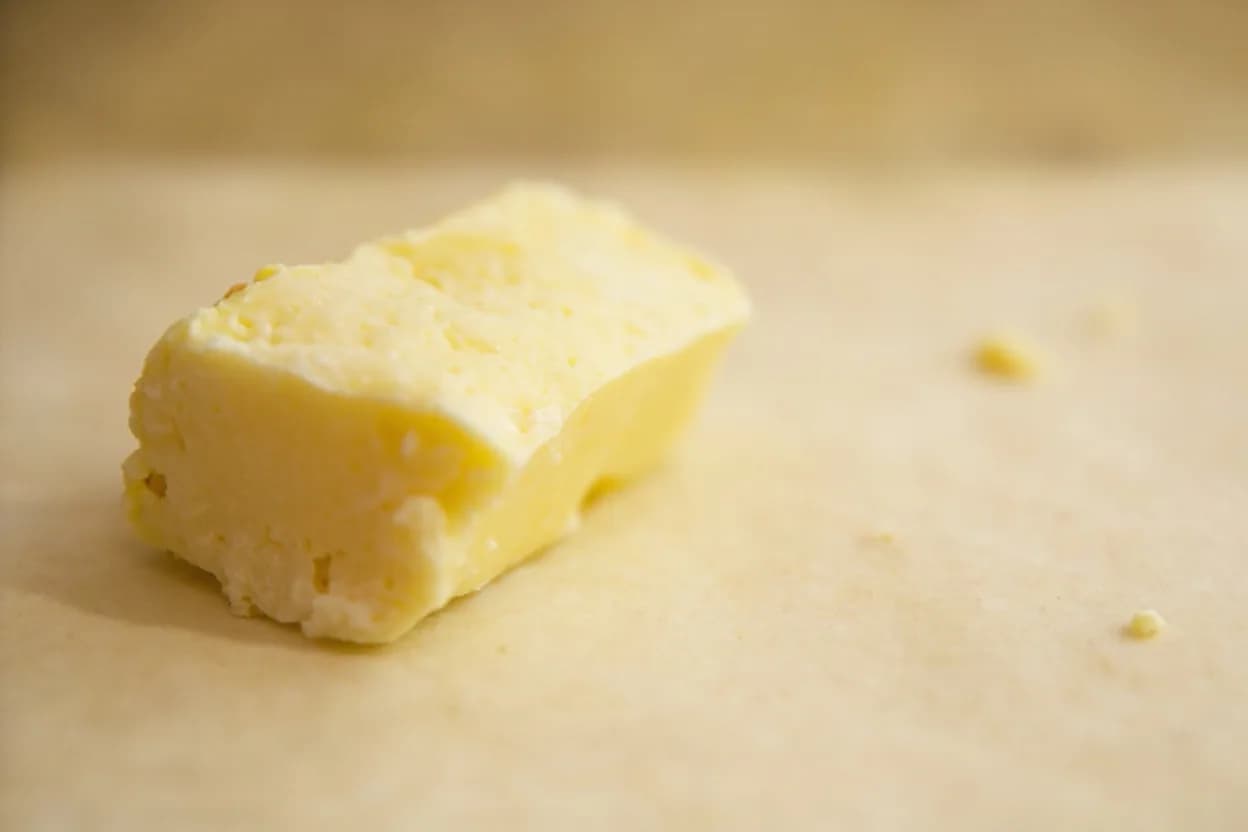
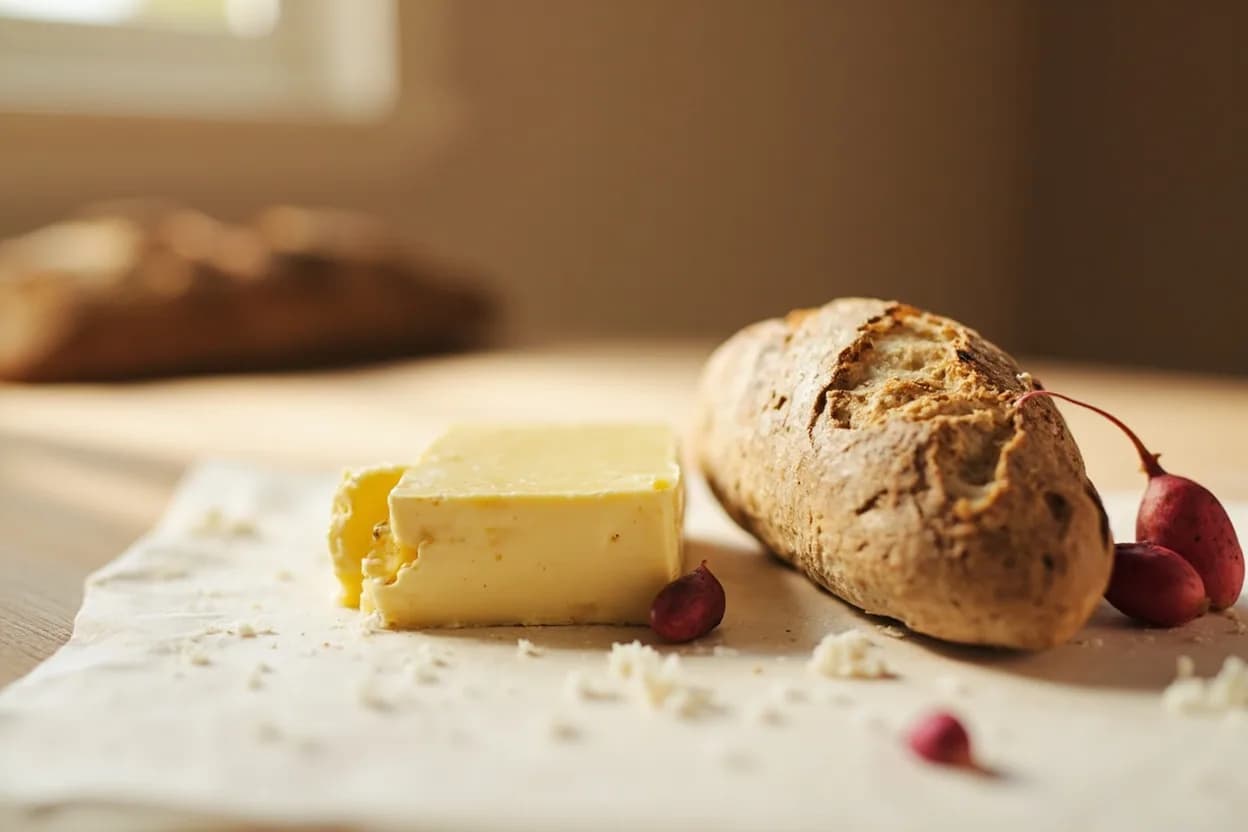
Cultured butter is made from cream that has been fermented with lactic-acid bacteria before churning, developing a complex, tangy flavour that sets it apart from sweet-cream butter. The fermentation produces diacetyl (butterscotch-adjacent), acetic acid (brightness), and a range of lactic esters that give the fat a yogurt-like depth. European-style cultured butters typically contain 82–84% fat vs the 80% floor of US sweet-cream butter, so they also carry richer mouthfeel. The tang is unmistakable on a warm baguette and transformative in laminated doughs, where the acidic backbone keeps layers distinct and flavourful.
In photos
Flavour profile
Classic pairings
- Sourdough or country breadFrench
The bread's own lactic fermentation echoes the butter's tang; both share acetate and diacetyl notes, creating harmonic resonance rather than contrast.
- RadishesFrench
The classic French tartine pairing — peppery bite of radish cuts straight through the fat while the butter's acidity mellows the raw bite.
- Flaky sea salt
Salt amplifies diacetyl and lactic notes; the crunch provides textural counterpoint to the creamy fat.
- Croissant and laminated doughFrench
High fat content and acid prevent gluten toughening during lamination; in the oven the lactic compounds caramelize into the pastry's distinct flavour.
- Eggs (scrambled or fried)French
Butter's dairy fat carries the eggs' sulphur compounds, softening them; the tang lifts the richness so the dish tastes bright despite being pure fat and protein.
- Fresh pasta or gnocchi (burro e salvia)Italian
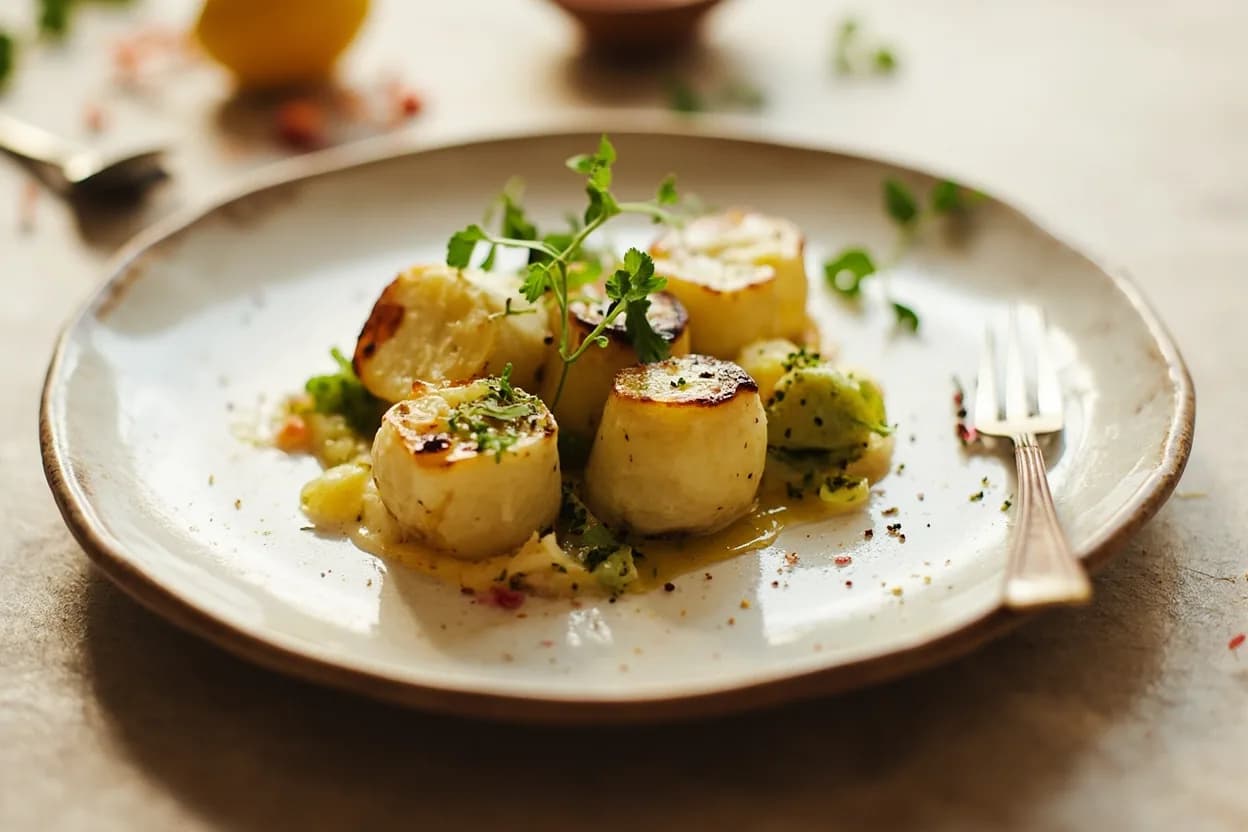
Browned cultured butter gives beurre noisette a tangier, more complex nuttiness that coats pasta without feeling heavy.
- Steamed or boiled new potatoesScandinavian
Starch absorbs the lactic fat beautifully; the butter's acidity prevents the dish from tasting one-dimensional.
- Pan sauces (classic French)French
Whisked into a deglazing liquid at the finish (monter au beurre), the lactic tang adds complexity and the high fat content builds emulsion quickly.
Adventurous pairings
- White miso
Two fermented umami bombs: miso's glutamate amplifies the butter's lactic richness; blend as a compound butter for steaks or corn.
- Buckwheat flour
Buckwheat's earthy, bitter-nutty character matches the butter's barnyard depth; together in galettes or pancakes they taste ancient and satisfying.
- Bottarga (cured mullet roe)
The butter's fat transports bottarga's concentrated brine and umami with no harsh edges; use as a finishing smear over warm pasta.
Fermented sweetness, molasses depth, and gentle acidity in black garlic rhyme with the butter's lactic tang; together they make a compound butter that needs nothing else.
- Green Szechuan peppercorn
Fresh citrus-floral tingle of green Szechuan short-circuits the fat's richness in an unexpected way; melted together over poached fish, the contrast is electric.
Tread carefully
- Delicate raw seafood (e.g., oysters on the half shell)avoid
The lactic tang competes with the sea-mineral clarity of a raw oyster; a clean, neutral mignonette serves the oyster better.
- Very acidic dressingsavoid
Adding more acid to an already tangy fat creates a sour, muddled impression; use sweet-cream butter as the base for vinaigrette emulsions instead.
- Strong blue cheese (e.g., Roquefort)avoid
Two aggressively fermented dairy products collide rather than complement; the combined acidity and funk overwhelm most palates.
How to use it
- Spread at room temperature on bread without adornment to appreciate the tang
- Brown into beurre noisette — lactic solids caramelize faster, yielding a deeper, more complex nuttiness than sweet-cream butter
- Use in laminated doughs (croissants, kouign-amann) where high fat and acidity improve layer definition
- Make compound butters: blend with herbs, citrus zest, miso, or anchovy and roll in parchment
- Finish pan sauces (monter au beurre) — whisk in cold over residual heat for glossy emulsion
- Clarify to ghee-equivalent for high-heat applications while retaining subtle lactic aroma
Appears in
Related flavours
Same lactic-fermentation origin; richer and pourable, used where the butter's solid structure isn't needed
- Sweet-cream butter
Non-fermented counterpart; milder, more neutral — choose for applications where tang would intrude
Clarified butter sibling; removes lactic solids for smoke-point cooking, sacrificing the tang
- Yogurt
Shares diacetyl and lactic-acid profile; yogurt marinades and cultured butter finishing create coherent lactic-forward dishes
References
- 1.On Food and Cooking — Harold McGee (Scribner, 2004)
- 2.The Flavor Bible — Karen Page & Andrew Dornenburg (Little, Brown, 2008)
- 3.Modernist Cuisine at Home — Myhrvold & Harlan (The Cooking Lab, 2012)
- 4.The Art of French Pastry — Jacquy Pfeiffer (Knopf, 2013)
Confidence: high
Notes
Reading the label
True cultured butter lists 'lactic acid cultures' or 'crème maturée' in the ingredients. Many 'European-style' butters sold in the US are simply higher-fat sweet-cream butters — perfectly good, but without the fermentation complexity. French AOC butters (Isigny Sainte-Mère, Beurre de Bresse) are benchmarks for cultured character.
Temperature matters
Serve cultured butter at around 16–18 °C (60–65 °F) — cold enough to hold a smear, warm enough for the volatiles to reach the nose. Butter straight from the fridge mutes the tang and aroma completely.