Spices & Dried Aromatics
Dried Pomegranate Seed (Anardana)
Also: anardana, anar dana, dried pomegranate, pomegranate powder
North India's secret souring agent — dried pomegranate seeds that deliver tart, jammy fruitiness where tamarind might overwhelm.
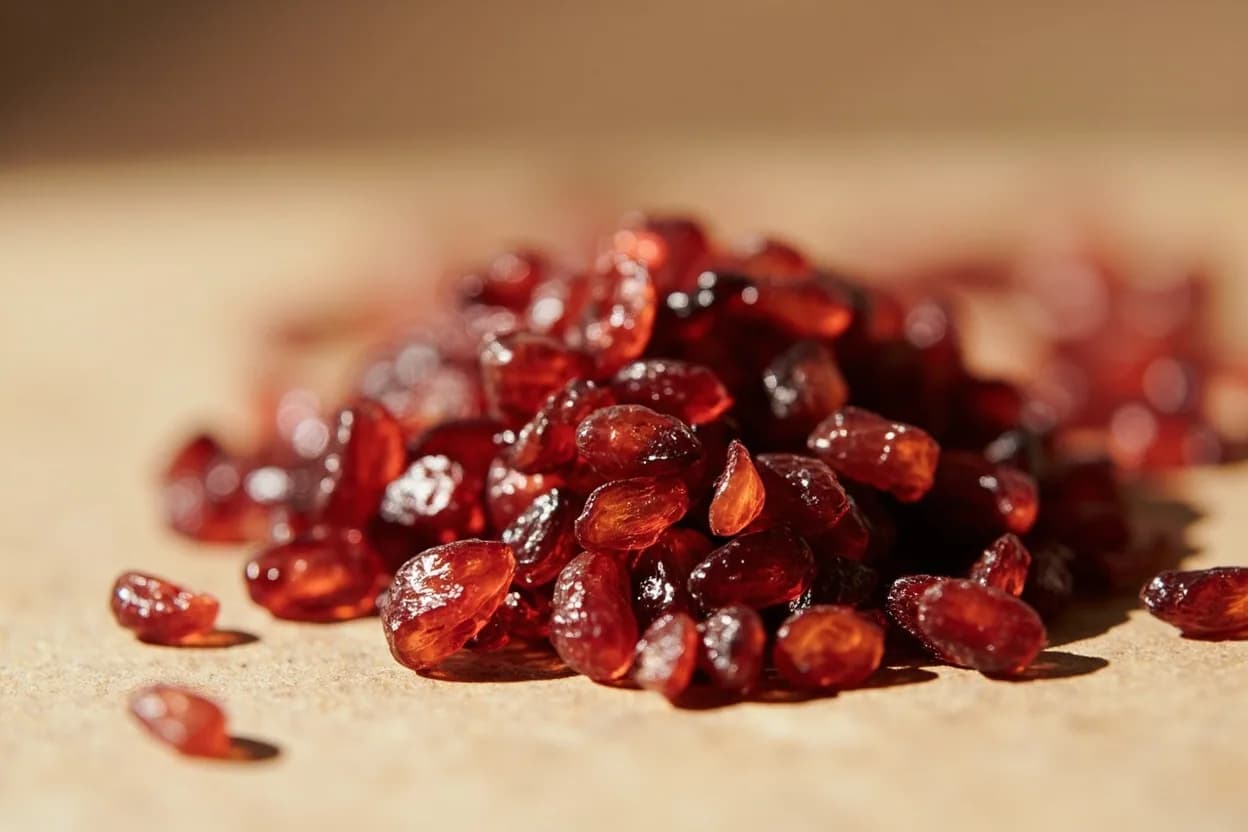
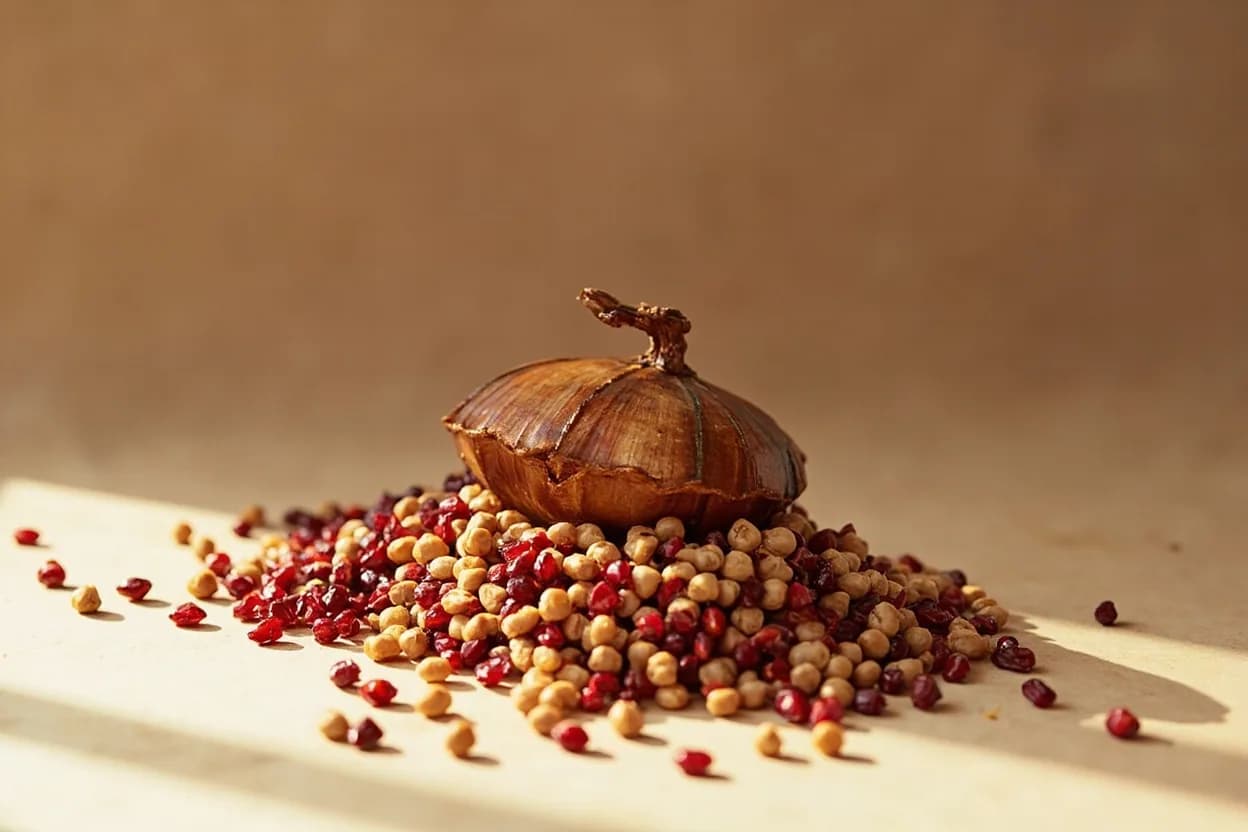
Anardana is made by sun-drying the arils (seed-flesh units) of wild or cultivated pomegranate (Punica granatum), typically the sour varieties grown in the foothills of Himachal Pradesh and the Hindu Kush. The drying process concentrates the pomegranate's natural acids (citric, malic, tartaric) while retaining fruity sweetness and a faint floral note from the tannin-rich membrane. The result is a tart, chewy spice that functions as a souring agent with fruit complexity absent from amchur (green mango powder) or tamarind. Ground anardana is darker and more fine-grained, used in spice mixes; whole seeds are chewed as digestive aids or pressed into chutneys.
In photos
Flavour profile
Classic pairings
- Chickpeas (chana)North Indian / Punjabi
Anardana is foundational to chana masala and Punjabi chole; its fruity acidity cuts through the dense legume starch and balances the heavy spicing without muddying the gravy.
- Lamb and muttonKashmiri / North Indian
Ground anardana in rogan josh-style marinades and stuffings (especially Kashmiri preparations) tenderizes meat with its acids while adding fruity-sour counterpoint to fat and spice.
- OnionIndian chaat
In raw chutneys and toppings, anardana mixed with finely diced onion, green chili, and cilantro creates the tart-pungent garnish that tops chaat, samosas, and dahi puri.
- PaneerNorth Indian
The mild, milky freshness of paneer needs acidic lift; anardana in the marinade or sauce introduces fruity sourness that enriches the protein without curdling it.
- Potato (spiced)Indian chaat
In aloo chaat and dum aloo, anardana powder dusted over fried or spiced potatoes delivers a sharp-sweet tang that ties together the chili heat, yogurt cool, and starchy base.
- Puff pastry and flaky doughs (samosa filling)Punjabi
In Amritsar-style samosa filling and stuffed paratha, whole or ground anardana seeds provide pops of sour fruitiness against the spiced potato or peas inside.
- Green herbs (cilantro, mint)North Indian street food
In green chutneys, anardana deepens the souring more gently than lemon juice; cilantro-mint-anardana chutney is a hallmark condiment of North Indian street food.
Adventurous pairings
- Walnut
Anardana and walnut appear together in Persian fesenjan-adjacent preparations; the tannins in both align, while pomegranate tartness brightens the walnut's bitter fat — an elegant bridge between North Indian and Persian flavor logic.
- Aged goat cheese
Dry anardana scattered over a chevre or aged chèvre log echoes the classic pomegranate-cheese affinity of the Middle East; the tartness of both cut harmoniously against each other.
- Duck breast
A dry rub of ground anardana, cumin, and black pepper on duck breast introduces pomegranate's classical affinity for poultry fat; the acids penetrate the skin during rest and caramelize into a lacquer during searing.
- Dark leafy greens (kale, Swiss chard)
The tannins in anardana parallel the iron-metallic note in bitter greens; a dressing built around anardana powder bridges them, drawing out sweetness while reinforcing the earthy mineral quality.
- Rye whisky or Mezcal (cocktail applications)
A shrub or syrup made from reconstituted anardana adds fruity, tart complexity to smoked spirits; the tannin note complements barrel char in a way that fresh pomegranate juice, lacking that dried-fruit concentration, cannot.
Tread carefully
- Cream-based saucesavoid
The citric and malic acids in anardana will curdle cream or milk-based sauces; add acidic souring agents only off-heat or use tomato-based mediums instead.
- Mild white fishavoid
Anardana's tannin and concentrated acidity overwhelm the gentle sweetness of cod, halibut, or tilapia; reserve it for robust meats and legumes.
- Chocolate dessertsavoid
Pomegranate fruit pairs beautifully with chocolate, but the tannin concentration in dried anardana creates a dusty, astringent aftertaste in ganache or mousse that fresh or molasses-like fruit syrups avoid.
How to use it
- Grind whole dried seeds in a spice grinder to a coarse or fine powder for use in spice blends and dry rubs
- Soak whole seeds in warm water for 15 minutes to soften before pressing into chutneys or incorporating into stuffings
- Add ground anardana to a dish in the final 5 minutes of cooking so volatile fruit aromatics are preserved
- Use as a finishing dust over chaat, salads, or yogurt-topped dishes for visual and flavor impact
- Combine with dried mango powder (amchur) for a layered double-sour effect in chaat masala
Appears in
Related flavours
- Amchur (dried green mango powder)
Fellow North Indian souring agent; anardana brings fruity complexity while amchur is sharper and more one-dimensionally sour — used together in chaat masala
The other major South Asian sourer; tamarind is heavier, molasses-like, and better for slow-cooked dishes; anardana is lighter and better for quick preparations and garnishes
The concentrated liquid form of pomegranate reduction used in Persian and Lebanese cooking; shares the fruit-acid profile but is sweeter and lacks the tannin of anardana's dried seed coat
Middle Eastern souring spice with similar fruity-tart character; both can be used as finishing dusts over salads, grilled meats, and dips
References
- 1.An Invitation to Indian Cooking — Madhur Jaffrey
- 2.The Complete Spice Book — Arabella Boxer
- 3.Indian Food: A Historical Companion — K.T. Achaya
- 4.Spices and Seasonings: A Food Technology Handbook — Donna Gorski
Confidence: high
Notes
Wild vs. cultivated anardana
The most prized anardana comes from wild pomegranates (Punica granatum var. nana) harvested in the Himalayan foothills, which have naturally higher acidity and more complex tannin than cultivated dessert varieties. Commercial anardana sold in Indian grocery stores is usually made from sweeter cultivated fruit, producing a milder, less austere product. When sourcing for serious cooking, seek out anardana labeled 'Himachali' or 'Doda' — these indicate provenance from the wild-harvest areas.
As a substitute and comparison to pomegranate molasses
Anardana and pomegranate molasses serve similar purposes but are not interchangeable. Molasses is concentrated, syrupy, and best for sauces and marinades where liquid integrates naturally. Anardana excels as a dry component — in rubs, spice blends, stuffings, and as a garnish — where pomegranate molasses would add unwanted moisture. The dried seeds also preserve the astringent tannin of the seed coat, giving anardana a more complex mouthfeel.