Seaweed & Sea Vegetables
Bonito Flakes (Katsuobushi)
Also: katsuobushi, hana-katsuo, kezuri-bushi, bonito shavings, dried bonito
Japan's fermented, smoked, and shaved bonito — oceanic, smoky, and deeply umami — the protein-rich soul of dashi and the waving garnish of okonomiyaki.
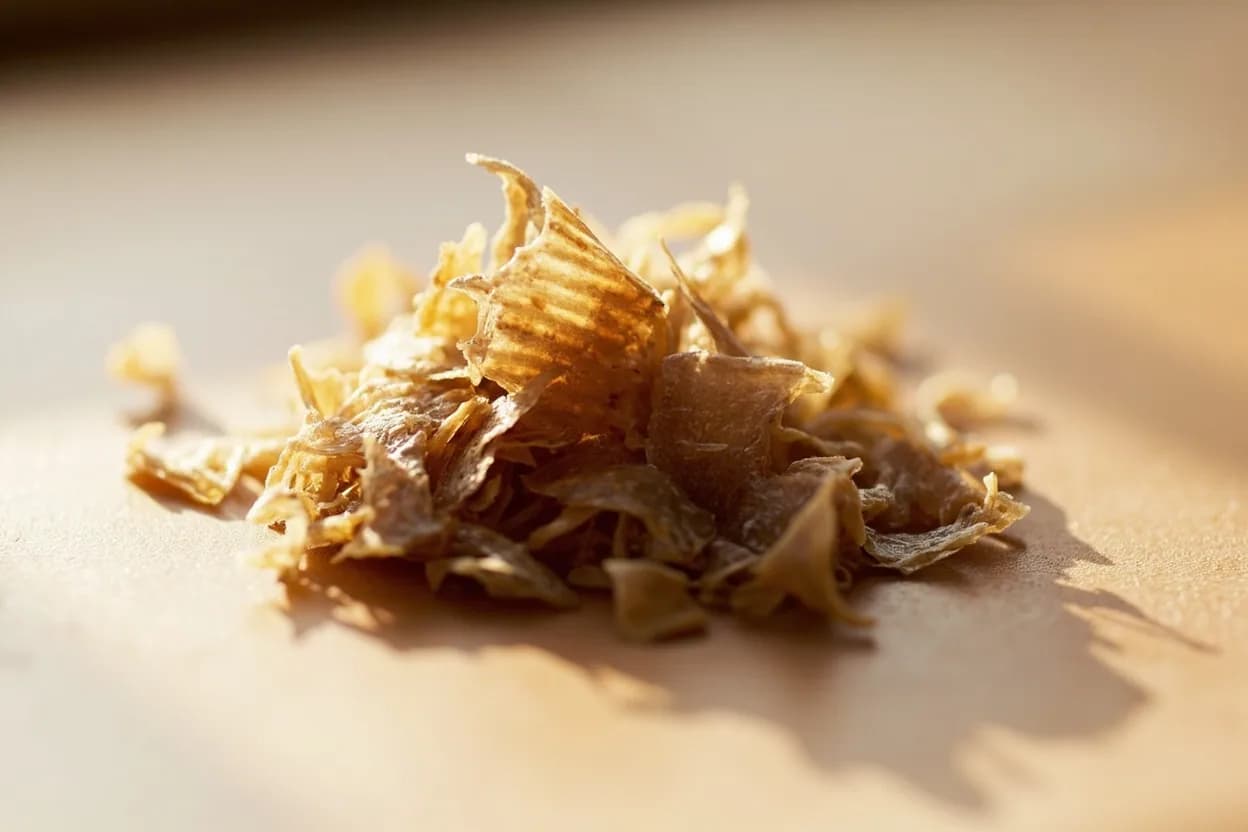
Katsuobushi is skipjack tuna (Katsuwonus pelamis) that has been filleted, simmered, smoked over oak or cherry wood, sun-dried, and inoculated with Aspergillus glaucus mold (the hon-karebushi variety) over a curing period of up to six months. The result is an incredibly dense, fermented protein block that is shaved paper-thin (kezuri-bushi) before use. Its flavor is an extraordinary convergence of smoke, the sea, fermented depth, and pure inosinate-glutamate umami. The dancing flakes characteristic of okonomiyaki and takoyaki garnishes are a product of their near-zero moisture and paper-thin structure — they move in the heat rising from the dish. Katsuobushi is the inosinate-rich counterpart to kombu's glutamate, and their combination in ichiban dashi creates a synergistic umami explosion greater than either alone.
In photos
Flavour profile
Classic pairings
- KombuJapanese
The foundational dashi pairing: kombu's glutamate and katsuobushi's inosinate create a synergistic umami response up to eight times more intense than either alone.
- Tofu (silken)Japanese
Hana-katsuo scattered over chilled silken tofu with soy and scallion (hiyayakko) is the simplest expression of katsuobushi as a garnish — its smoke and umami contrast the tofu's clean neutrality.
- Okonomiyaki (savory pancake)Japanese / Osaka
Bonito flakes waved across hot okonomiyaki are both flavor and theatre — the heat animates them while their smoke and salt deepen the Worcestershire-mayonnaise sauce.
- Soy sauceJapanese
Katsuobushi simmered in soy, mirin, and sake produces tsukudani, a shelf-stable relish used over rice — soy amplifies the inosinate with its own glutamate.
- Miso (white and red)Japanese
Miso soup made on katsuobushi dashi bridges the fermented depth of both ingredients — a core domestic preparation across Japan.
- RiceJapanese
Mixed into furikake (seasoned rice seasoning) with nori, sesame, and salt, katsuobushi powers the most universally eaten rice topping in Japan.
- Spinach (ohitashi)Japanese
Blanched spinach dressed in dashi soy and topped with katsuobushi is a canonical Japanese side dish (ohitashi) — the flakes act as seasoning, garnish, and umami amplifier.
Adventurous pairings
- Butter pasta
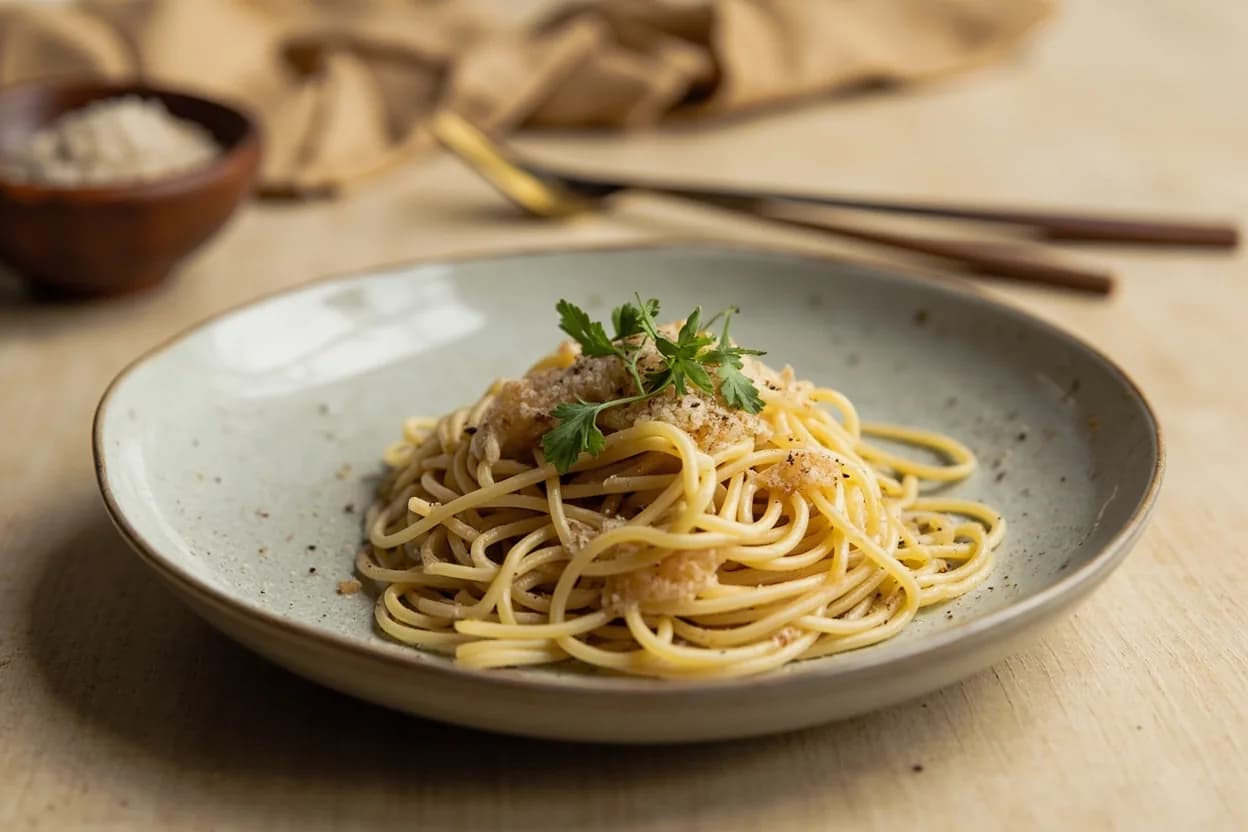
Katsuobushi flakes folded into pasta with butter and a splash of dashi create a Japanese-Italian hybrid of exceptional savory depth — smoky, oceanic, silky.
- Pizza dough
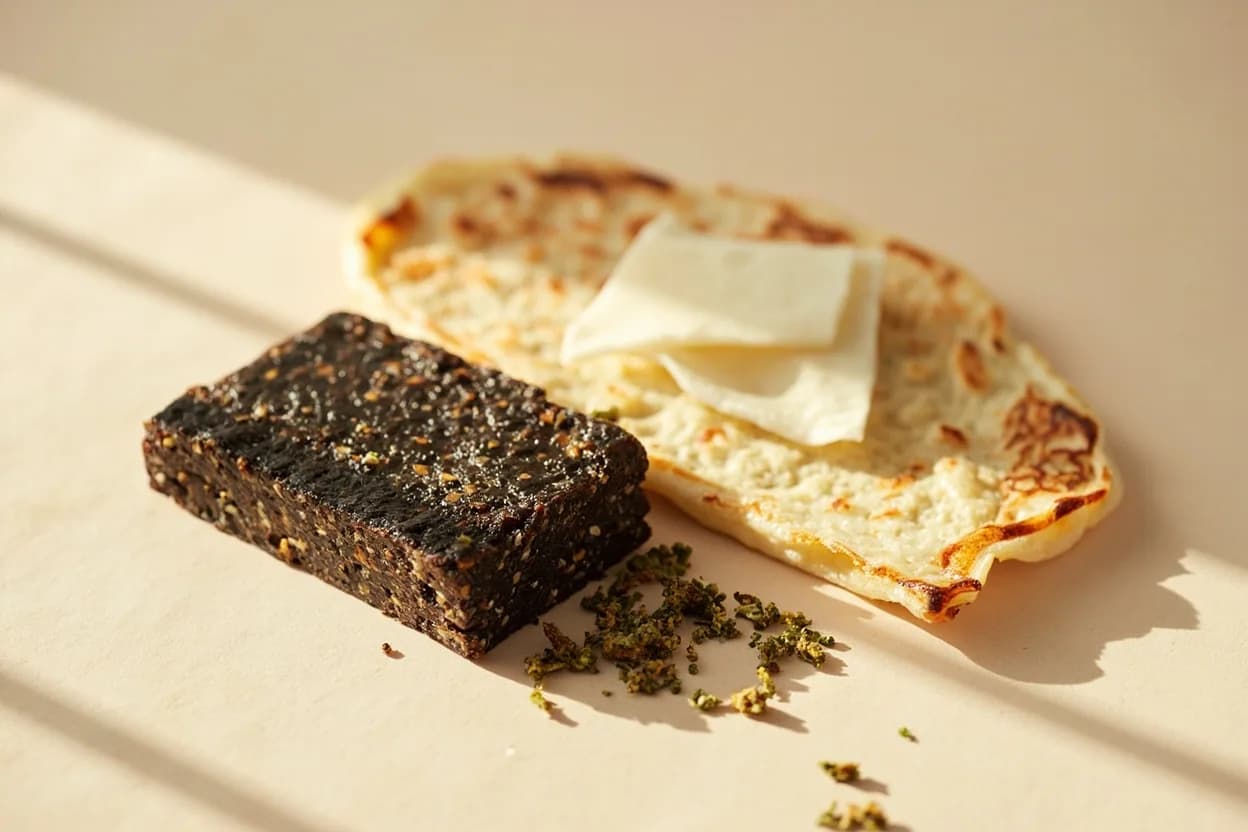
Brushed into the dough or scattered on top pre-bake, katsuobushi adds a deeply savory, slightly smoky char note that complements tomato and mozzarella.
- Scrambled eggs
Flakes stirred into barely-set eggs with a few drops of soy create a Japanese tamago that needs nothing else — all protein and umami, no salt required.
- Avocado toast
Katsuobushi, flaky salt, and yuzu on avocado toast is a credible modern brunch item — smoke and sea replace the pepper; umami replaces the lemon.
- Dark chocolate ganache
A pinch of ground katsuobushi in a 70% ganache creates a subtle savory undercurrent that deepens chocolate's bitterness without reading as 'fishy'.
Tread carefully
- Aggressively spiced curriesavoid
The delicate smoke and fermented note of katsuobushi is entirely masked by dominant curry spices — an expensive, invisible contribution.
- Vinegary preparations (aggressive pickles, ceviche)avoid
High acidity denatures the inosinate compound, flattening umami and turning the fish note sharp and unpleasant.
- Creamy cheese saucesavoid
The smoke note of katsuobushi conflicts with the lactic tang of cream-based cheese sauces, producing an off, fishy perception.
How to use it
- Cold-steep shaved flakes in hot (not boiling) water for exactly 3–4 minutes for ichiban dashi — strain immediately; do not press
- Scatter fresh flakes over hot dishes as a final garnish — heat animates them visually and releases aroma
- Grind to powder and mix with salt for a smoky umami seasoning (katsuobushi-jio)
- Simmer in soy sauce, mirin, and sake until dry for tsukudani (rice topping)
- Combine with sesame seeds, nori, and sugar for homemade furikake
Appears in
Related flavours
The canonical umami partner — glutamate (kombu) + inosinate (katsuobushi) = the synergistic foundation of Japanese dashi.
Both are umami-rich sea ingredients; combined in furikake or as rice toppings they cover multiple umami pathways.
- Dried shiitake mushroom
GMP from shiitake alongside inosinate from katsuobushi creates a layered umami in noodle broths and simmered dishes.
References
- 1.Dashi and Umami: The Heart of Japanese Cuisine — Eat-Japan / Cross Media Ltd
- 2.Japanese Farm Food — Nancy Singleton Hachisu
- 3.On Food and Cooking — Harold McGee (Scribner)
- 4.The Flavor Bible — Karen Page & Andrew Dornenburg (Little, Brown)
- 5.Umami: Unlocking the Secrets of the Fifth Taste — Ole Mouritsen & Klavs Styrbæk (Columbia University Press)
Confidence: high
Notes
The Aspergillus mold and fermented depth
The highest grade katsuobushi — hon-karebushi — undergoes repeated molding cycles (up to four) over six months or more. Each cycle dries the fish further while Aspergillus glaucus enzymes break proteins into free amino acids, deepening the inosinate content and adding the characteristically complex, slightly winey fermented note that distinguishes premium shavings from industrial (arabushi) grades. The difference matters in dashi: hon-karebushi produces a cleaner, more complex stock, while arabushi is perfectly adequate for flavoring simmered dishes and furikake where subtlety is less critical.
The kinetic garnish
The famous 'waving' of katsuobushi flakes on hot okonomiyaki and takoyaki is not a theatrical contrivance. The paper-thin shavings (often less than 0.1 mm) have a surface-area-to-mass ratio high enough that the convection currents rising from the dish are sufficient to visibly animate them. This effect is only possible with properly fresh-shaved, very thin flakes; pre-packaged thicker shavings sit inert. The motion signals freshness and quality to diners.