Seaweed & Sea Vegetables
Nori
Also: dried laver, yaki-nori, seasoned nori, kim (Korean), zicai (Chinese), Pyropia yezoensis
Japan's paper-thin dried seaweed — oceanic, umami-rich, and subtly mineral — the irreplaceable wrapper of sushi and onigiri.
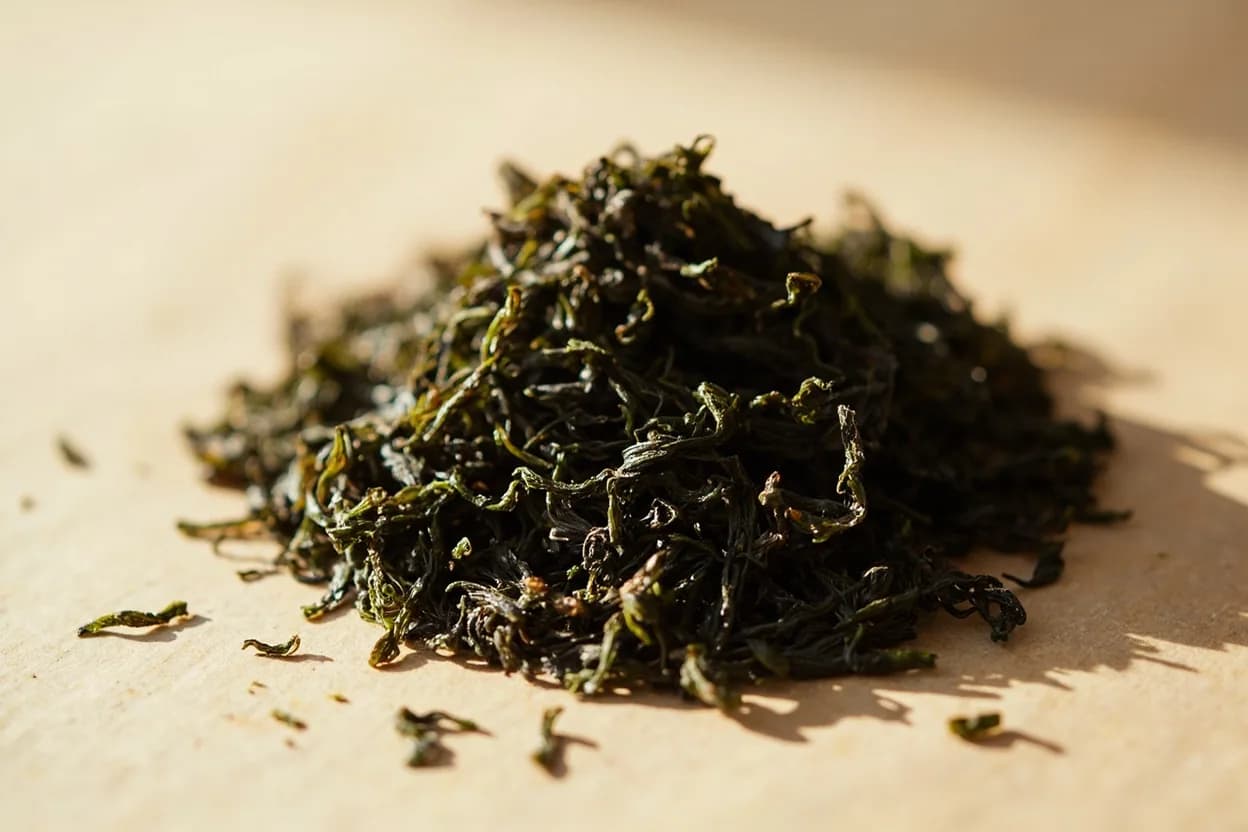
Nori is dried and pressed sheets of red algae, principally Pyropia yezoensis and P. tenera, farmed in tidal estuaries across Japan, Korea, and China. Toasted (yaki-nori) it becomes brittle, with a deep forest-green color and a concentrated flavor combining marine iodine, glutamate umami, and a faint nuttiness from the Maillard reaction. Raw, it is chewy and more intensely briny. Its flavor character is driven by free glutamates, dimethyl sulfide (the oceanic DMS compound), and inosinates — the same trio that defines Japanese dashi. A single sheet of nori contains more umami per gram than almost any other ingredient.
In photos
Flavour profile
Classic pairings
- Sushi rice (sumeshi)Japanese
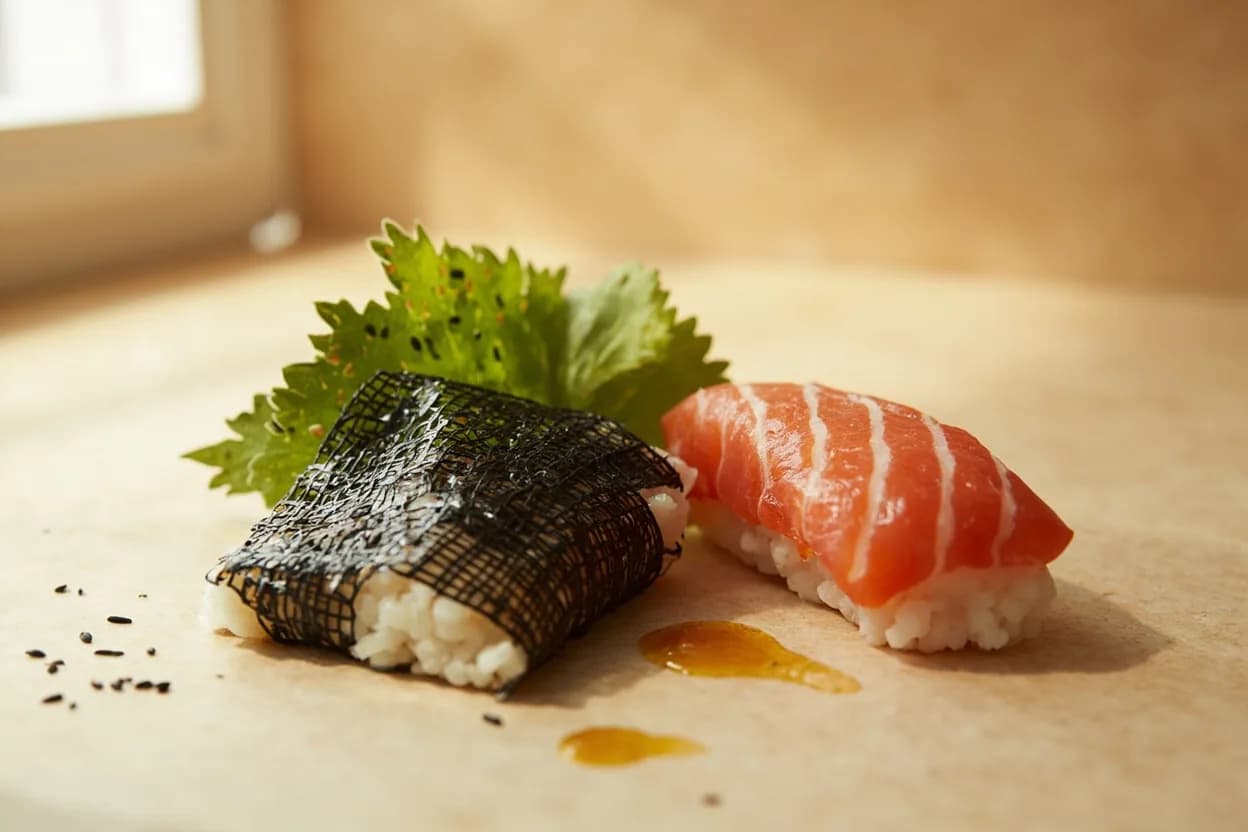
Vinegared, slightly sweet rice is nori's canonical partner — the contrast between crisp seaweed and yielding grain is the essence of maki and temaki.
- Raw fish (maguro, sake, hamachi)Japanese
Nori's umami amplifies the clean sweetness of raw tuna, salmon, and yellowtail without masking their delicate fat.
- Sesame oilKorean
A brush of sesame oil before toasting nori compounds its nuttiness and is the foundation of Korean gim (seasoned nori sheets).
- Soy sauceJapanese / Korean
Soy and nori share glutamate; together they create a doubled umami effect used in everything from ramen to onigiri dipping.
- CucumberJapanese
The cool, green crunch of cucumber inside a maki roll is relieved by nori's intensity — a textural and flavor counterpoint.
- AvocadoJapanese-American
Avocado's buttery fat and mild green flavor are grounded by nori's brininess — the California roll pairing that launched global sushi culture.
- Ramen broth (tonkotsu, shio)Japanese
A half-sheet laid across ramen softens into the broth, releasing umami while adding a marine counterpoint to pork fat or chicken stock.
Adventurous pairings
- Butter
Crumbled toasted nori folded into compound butter gives a deeply savory, oceanic finish to grilled steak or roasted corn — umami on umami.
The mineral and slight sulfurous note of nori cuts the sweetness of dark chocolate; nori-studded chocolate bark is a credible modernist confection.
- Cream cheese
Nori wrapping a cream-cheese-filled onigiri echoes the bagel-lox logic — fat soothes the brine; mineral lifts the dairy.
- Popcorn
Ground nori with sea salt and a touch of sugar creates furikake-style popcorn — a snack with more umami depth than any cheese powder.
- Goat cheese
The tangy lactic acid of goat cheese against nori's marine depth is a French-Japanese bridge — striking in a canapé or modern hors d'oeuvre.
Tread carefully
- Acidic citrus-heavy dressingsavoid
Excess citric acid softens nori's crisp texture almost instantly and turns its flavor sharp and metallic.
- Heavily spiced red curriesavoid
Nori's delicate marine nuance is completely obliterated by the dominant aromatics of curry pastes — a waste of an expensive ingredient.
- Very sweet preparations (jam, fruit coulis)avoid
The sulfurous sea note reads unpleasantly fishy against high sugar — the balance point collapses.
How to use it
- Toast briefly over a gas flame or in a dry pan to crisp texture and intensify nutty aroma
- Crumble or grind into furikake seasoning for rice, eggs, or popcorn
- Cut into thin strips (kizami nori) as a ramen or tofu garnish
- Soak briefly in water to rehydrate for a pliable wrapper in Korean gimbap
- Blend into sauces or butter as an umami base
Appears in
Related flavours
Both are umami-rich seaweeds; kombu is used in broths while nori is deployed as a wrapper or garnish — complementary in dashi-based dishes.
Katsuobushi and nori together cover both inosinate and glutamate umami pathways — the synergy behind Japanese soup stocks and furikake.
- Wakame
A softer, more delicate seaweed; wakame is preferred in salads and miso soup where nori's paper structure is not needed.
References
- 1.The Japanese Farm Food — Nancy Singleton Hachisu
- 2.Japan: The Cookbook — Nancy Singleton Hachisu
- 3.On Food and Cooking — Harold McGee (Scribner)
- 4.Seaweed: A Global History — Kaoru Kurlansky (Reaktion Books)
Confidence: high
Notes
Umami synergy
Nori's free glutamates (roughly 1,400 mg per 100g) combine with the inosinates in any fish it wraps to trigger the well-documented glutamate-inosinate synergy — producing a perception of umami up to eight times stronger than either compound alone. This is not culinary folklore; it is the biochemical logic behind why sushi tastes the way it does. When nori is paired with katsuobushi or anchovy, the same mechanism applies.