Vegetables & Fruits
Nopales
Also: nopal, cactus paddle, cactus pear pads, tuna cactus pads, prickly pear pads
Earthy, slightly tangy cactus paddles with a mucilaginous texture that rewards understanding — they absorb aromatics beautifully and anchor some of Mexico's most vital everyday cooking.
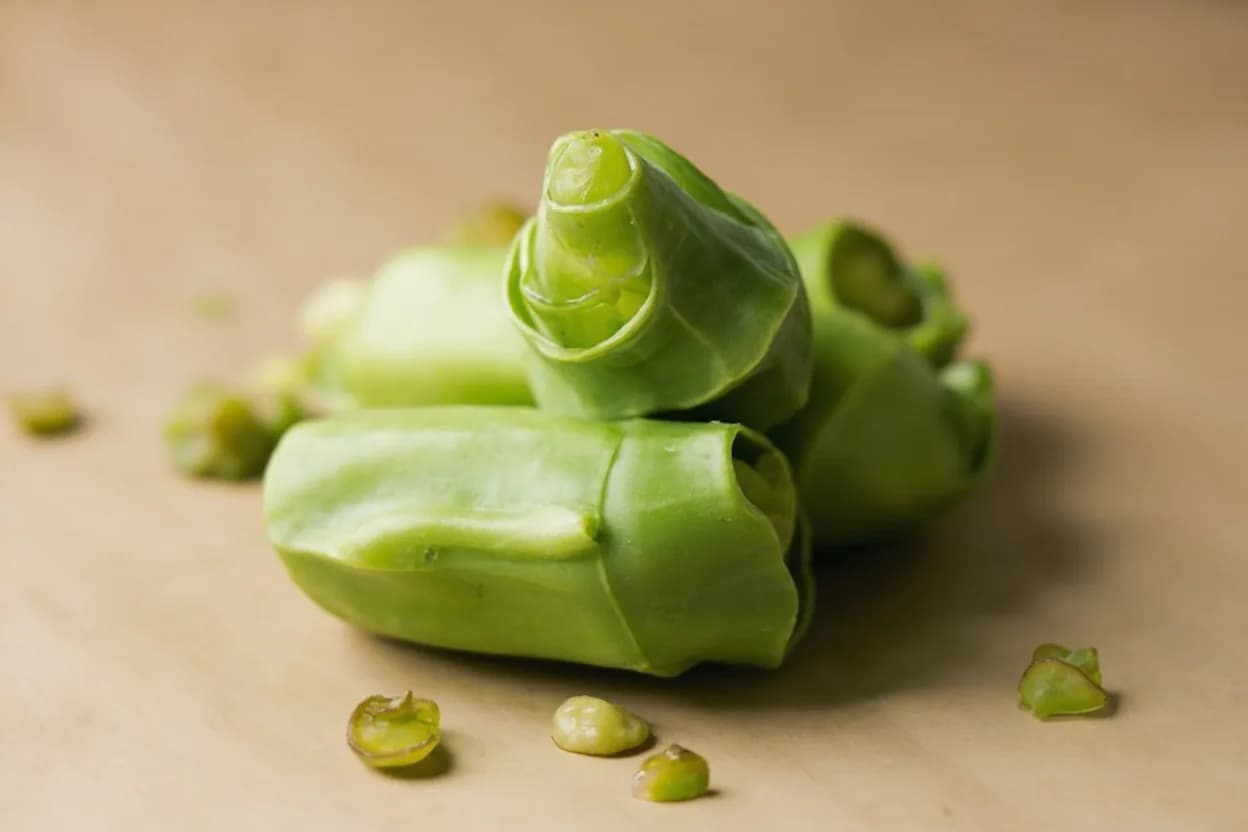
Nopales are the flat, fleshy pads of the Opuntia (prickly pear) cactus, a plant cultivated in Mexico for over 9,000 years and central to the national diet. When raw, they are firm and slightly crunchy with a grassy, slightly tart, vegetal flavor reminiscent of green beans with a hint of citrus. Cooked, they soften and release a mucilaginous gel similar to okra — a property that thickens sauces and smooths stews but can be minimized through dry-heat cooking (griddle, grill) or by salting and rinsing before use. Their flavor mellows and deepens when cooked, developing an earthy, slightly smoky note when charred. They are rich in fiber, calcium, and pectin.
In photos
Flavour profile
Classic pairings
- Eggs (huevos)Mexican
Nopales con huevos scrambled together is one of the most enduring Mexican breakfast preparations. The cactus's mild acidity and texture contrast the eggs' richness; the two cook together harmoniously, the nopales acting as a vegetable anchor.
- Serrano or jalapeño chileMexican
Fresh green chiles are nearly always present when nopales are cooked — their heat and sharpness offset the cactus's mild, slightly bland character and bring it alive. Chile is the flavor that nopales absorbs most willingly.
- White onionMexican
Charred or sautéed onion provides sweetness and savory depth that grounds the grassy nopales. Together with chile and garlic, onion forms the trinity of flavors in which nopales is almost always cooked.
- Queso frescoMexican
The crumbled, milky, slightly salty fresh cheese scattered over warm nopal salad or tacos de nopal is a foundational textural and flavor contrast — creamy dairy playing against the cactus's vegetal tang.
- TomatilloMexican
Nopales simmered in tomatillo sauce absorb the tangy brightness of the salsa verde and add body; together they create a classic Mexican side dish or taco filling that is greater than the sum of its parts.
- CilantroMexican
Raw cilantro's citrusy sharpness is the standard fresh herb finish for nopal salads and tacos; it cuts through any remaining vegetal muddiness and brightens the entire plate.
- Black beansMexican
Earthy black beans and nopales are a traditional pairing in Mexican vegetarian cooking; the beans provide protein and creaminess while the cactus contributes texture and the acid note that beans lack.
Adventurous pairings
The spicy, paprika-rich pork fat of Mexican chorizo renders into the pan and flavors nopales as they cook; a combination used in tacos de nopal con chorizo across Mexico City street markets.
- Pomegranate seeds
The jewel-like seeds add burst sweetness and tartness to raw nopal salad, creating a striking textural and flavor contrast that elevates the cactus into festive territory.
- Shrimp
Grilled shrimp with charred nopales is a Pacific coast Mexican combination where the sweet brininess of shrimp plays against the cactus's earthiness — popular in Jalisco and Michoacán coastal cooking.
- Feta or paneer
In diaspora and fusion contexts, feta or firm paneer replaces queso fresco and adds a more assertive saltiness and tang; particularly effective in grain bowl preparations outside Mexico.
- Mango and lime
Diced ripe mango with nopales in a lime-dressed salad is a summer preparation that plays the sweet tropical note against the cactus's vegetal tang — street-food friendly and colorful.
Tread carefully
- Rich cream saucesavoid
Nopales' mucilage and the dairy's protein can produce a textural result that is unpleasantly thick and gelatinous; cream-based sauces obscure the cactus's appealing characteristics without the heat of Mexican chiles to anchor them.
- Strongly acidic vinegars (added in excess)avoid
Nopales already carry inherent tartness; overdressing with sharp vinegars amplifies this into something abrasive, especially in salads. Lime juice is preferred — its volatile acidity lifts rather than accumulates.
- Bland grains cooked togetheravoid
Cooking nopales with mild grains like plain white rice without additional aromatics produces a texturally muddled, dull dish; the mucilage from the cactus makes the rice gummy.
How to use it
- Dry-griddling on a hot comal without oil — reduces mucilage and builds light char flavor, the most common preparation
- Salting diced raw nopales and letting them drain 20–30 minutes — pulls out mucilage before cooking
- Blanching in boiling salted water — quick method to reduce sliminess; finish in a hot pan to evaporate remaining moisture
- Grilling whole paddles over charcoal — produces the fullest smoky-earthy flavor, excellent for tacos
- Dicing raw into salads (ensalada de nopal) — uses the tartness and crunch before the mucilage develops
Appears in
Related flavours
The classic sauce base for cooked nopales; shares the same grassy-tangy profile and Mexican culinary context
- Okra
A cross-cultural analog sharing the mucilaginous property; similar preparation strategies (high heat, salting) apply
- Serrano Chile
The indispensable heat element that activates nopales' mild flavor profile in nearly all preparations
References
- 1.Mexico: The Cookbook — Margarita Carrillo Arronte
- 2.Truly Mexican — Roberto Santibañez
- 3.My Mexico City Kitchen — Gabriela Cámara
- 4.Decolonize Your Diet — Luz Calvo & Catriona Rueda Esquibel
Confidence: high
Notes
Managing the mucilage
Nopales' mucilaginous gel is the central cooking challenge — it can make unprepared cooks recoil. Two strategies work: dry heat (comal, griddle, grill) to evaporate it as it releases, or salt-drain-rinse before cooking to pull most of it out before the pan. In sauces and stews, the gel is not a problem — it thickens the liquid usefully, much as okra does in gumbo.
Seasonal and cultural significance
The Opuntia cactus is a symbol of Mexican national identity (it appears on the national flag). Nopales are among the oldest foods in the Mesoamerican diet and remain a key component of Mexican folk medicine as a blood-sugar moderator. Their peak season is spring, when young, thin pads are most tender, but they are available year-round in Mexican markets.