Spices & Dried Aromatics
Njangsa Seeds
Also: njansa, djansang, African walnut spice, Ricinodendron heudelotii, wama, munguella
An oily, earthy Central African seed that thickens soups while layering in a deep, slightly pungent savoriness.
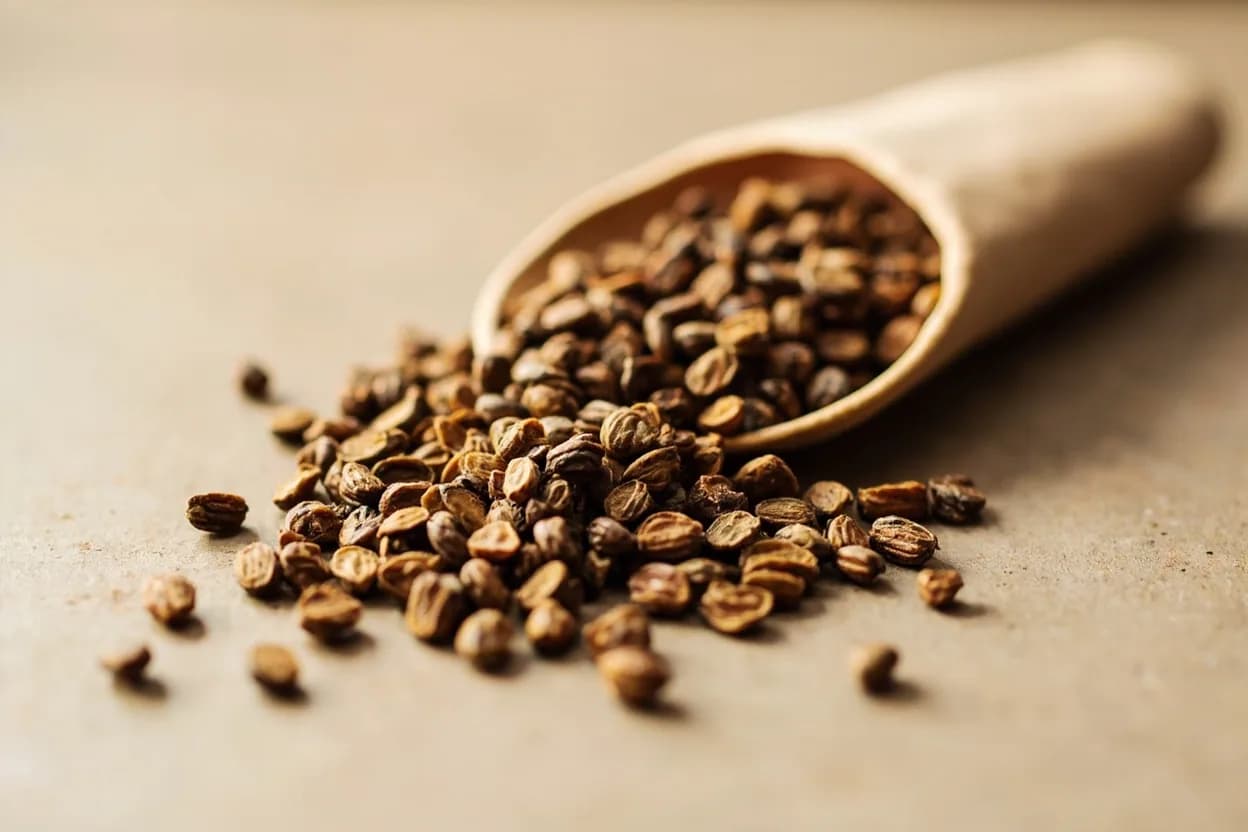
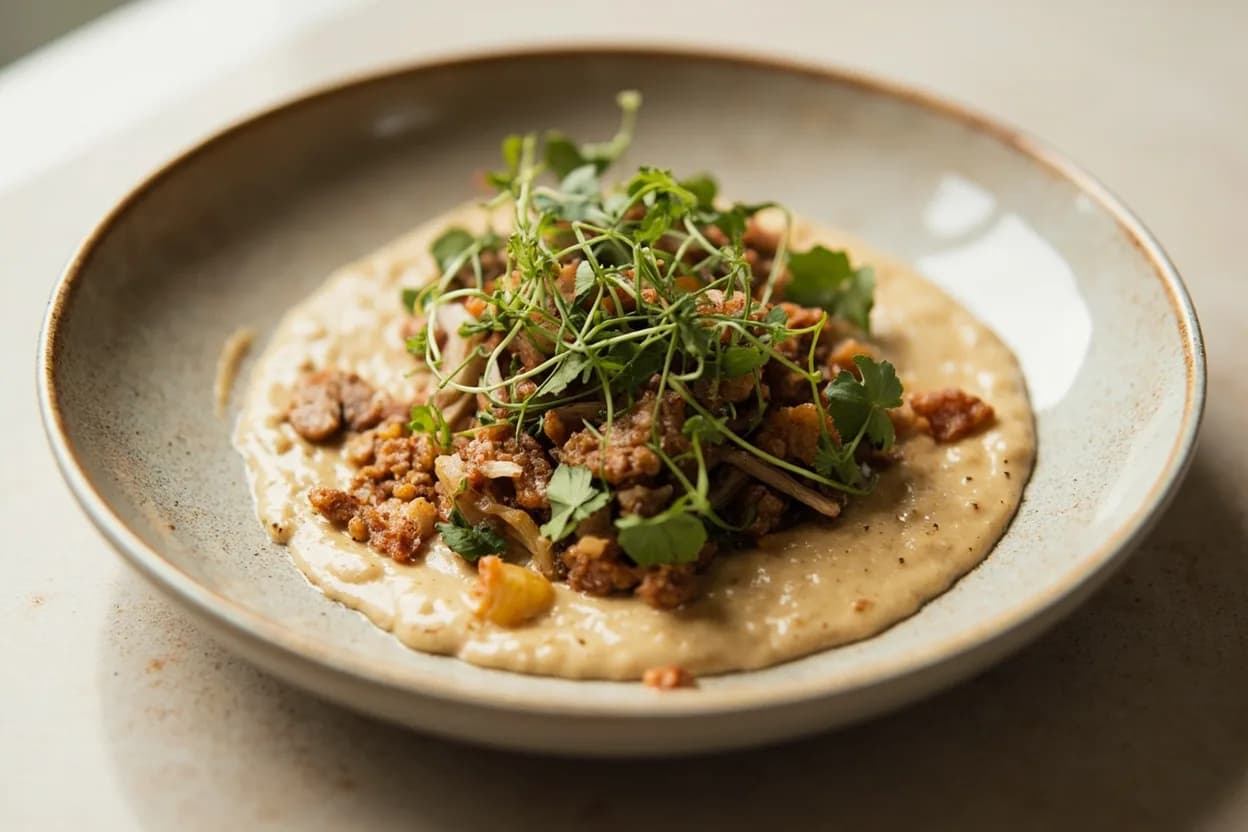
Njangsa seeds come from Ricinodendron heudelotii, a large forest tree found across Central and West Africa, particularly Cameroon, Nigeria, Gabon, and the Congo Basin. The dried seeds are pounded or ground into a paste that serves dual roles in cooking: as a flavoring agent — delivering earthy, slightly pungent, vaguely walnut-like depth — and as a natural emulsifier and thickener. Their high oil content gives soups a silky body while the roasted seed paste adds a distinctly African umami note. Njangsa is fundamental to Cameroonian cuisine, appearing in eru soup and various ndolé preparations.
In photos
Flavour profile
Classic pairings
- Eru leaves (Gnetum africanum)Cameroonian
The slightly bitter, fibrous eru leaf is the natural co-star of njangsa in Cameroonian eru soup — both are earthy and the seed's oil coats the tough leaf strands.
- Waterleaf (Talinum triangulare)Cameroonian / Nigerian
The mucilaginous texture of waterleaf complements njangsa's oil, creating the characteristic slippery richness of Cameroonian soups.
- Crayfish (dried ground shrimp)Central / West African
Intense dried seafood flavour echoes and amplifies njangsa's savouriness; together they form the umami core of most soups in the region.
- Palm oilCentral African
The fruity fat of red palm oil and njangsa's seed oil are mutually compatible; together they create a fully emulsified, richly coloured broth.
- Smoked fishCentral / West African
The char and brine of smoked catfish or mackerel give an additional dimension that njangsa's earthiness anchors rather than competes with.
- Ndolé (bitter leaves / Vernonia amygdalina)Cameroonian
In the eponymous Cameroonian dish, njangsa paste melds with blanched bitter leaves and peanuts; the bitterness of the leaves is tamed by the seed's unctuous oil.
- Goat meatCameroonian
The gamey intensity of goat absorbs njangsa's pungency beautifully over long braising; a classic combination in Cameroonian stewed-meat dishes.
Adventurous pairings
Both are oil-rich seed pastes with earthy, slightly bitter depth; blending njangsa paste into a tahini-based sauce creates a layered, intercontinental condiment for grilled meats.
- Miso (white shiro miso)
Njangsa's fermented-adjacent earthiness resonates with miso's umami; combining them in a marinade for grilled mushrooms or eggplant bridges West African and Japanese traditions.
- Walnut
Njangsa's roasted-nut profile is genuinely close to walnut; using both in a sauce or stuffing doubles the nutty depth with added African earthiness.
- Dark leafy greens (kale, collards)
Where eru is unavailable, njangsa's oil and pungency do similar work with tough collard greens — essentially a West African preparation style applied to diaspora pantry greens.
Tread carefully
- Cream-based saucesavoid
Njangsa's pronounced pungency and its own heavy oil make cream-based sauces feel overwhelming and unbalanced; they have no culinary affinity.
- Delicate seafood (scallops, sole)avoid
The earthy pungency of njangsa will drown the clean, sweet flavour of delicate shellfish or white fish.
- Sweet or dessert applicationsavoid
Unlike peanut or almond, njangsa's pungency is savoury-facing only; it has no tradition in sweet preparations and the bitterness clashes with sugar.
How to use it
- Dry-roast seeds before pounding to reduce raw bitterness and deepen flavour
- Pound in a mortar or blend with water to a smooth paste before adding to soups
- Add the paste mid-cook — early enough to integrate but not so early that the oils break
- Use as a thickener: the ground seed paste emulsifies liquid into a silky, cohesive broth
- Freeze excess paste in ice-cube trays for convenient portioning
Appears in
Related flavours
- Ogiri (fermented locust bean)
Shares the deep, pungent umami role in West and Central African soups; often used interchangeably as a flavour base.
- Egusi (melon seed)
Another oil-rich seed used as both flavouring and thickener; textural and functional cousin to njangsa.
Co-inhabits the same West-Central African spice vocabulary; both are earthy dried-seed aromatics used in soups and stews.
References
- 1.Cameroon: The Cookbook — Genevieve Awih & Felix Agbo
- 2.PROTA (Plant Resources of Tropical Africa) Vol. 3: Dyes and Tannins / Edible Oils
- 3.The Groundnut Cookbook — Duval Timothy, Jacob Fodio Todd & Folayemi Brown
Confidence: high
Notes
Sourcing
Njangsa seeds are sold whole or pre-ground at African grocery stores, particularly those stocking Cameroonian and Nigerian ingredients. The whole seeds keep for many months; ground paste should be used within a week or frozen.
Dual role as thickener
Unlike most spices that purely flavour a dish, njangsa's high oil and protein content means it genuinely changes the texture of soups, lending body similar to what egusi or ground melon seeds achieve. Factor this into recipe planning.