Spices & Dried Aromatics
Ehuru (African Nutmeg)
Also: ehiri, African nutmeg, Calabash nutmeg, Monodora myristica, ariwo
A musky, earthy West African spice that anchors Igbo soups with warm, resinous depth.
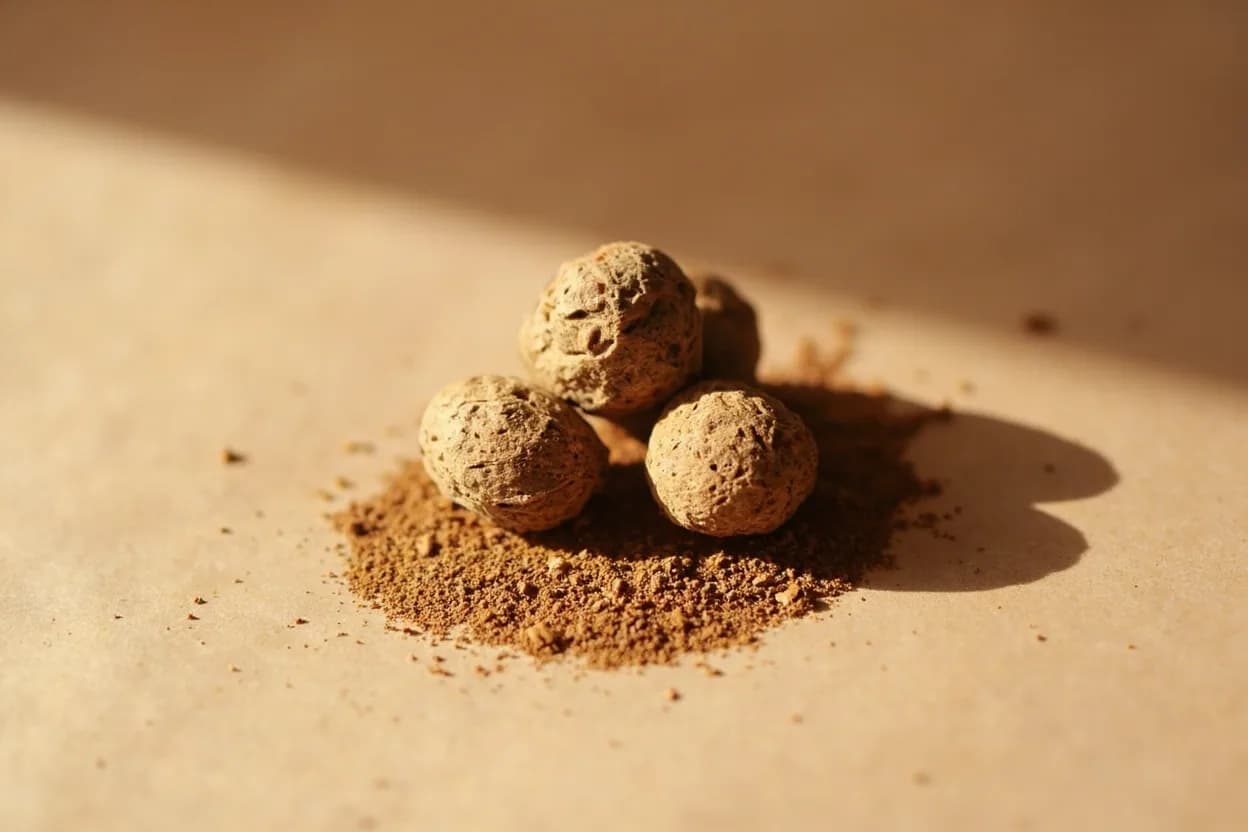
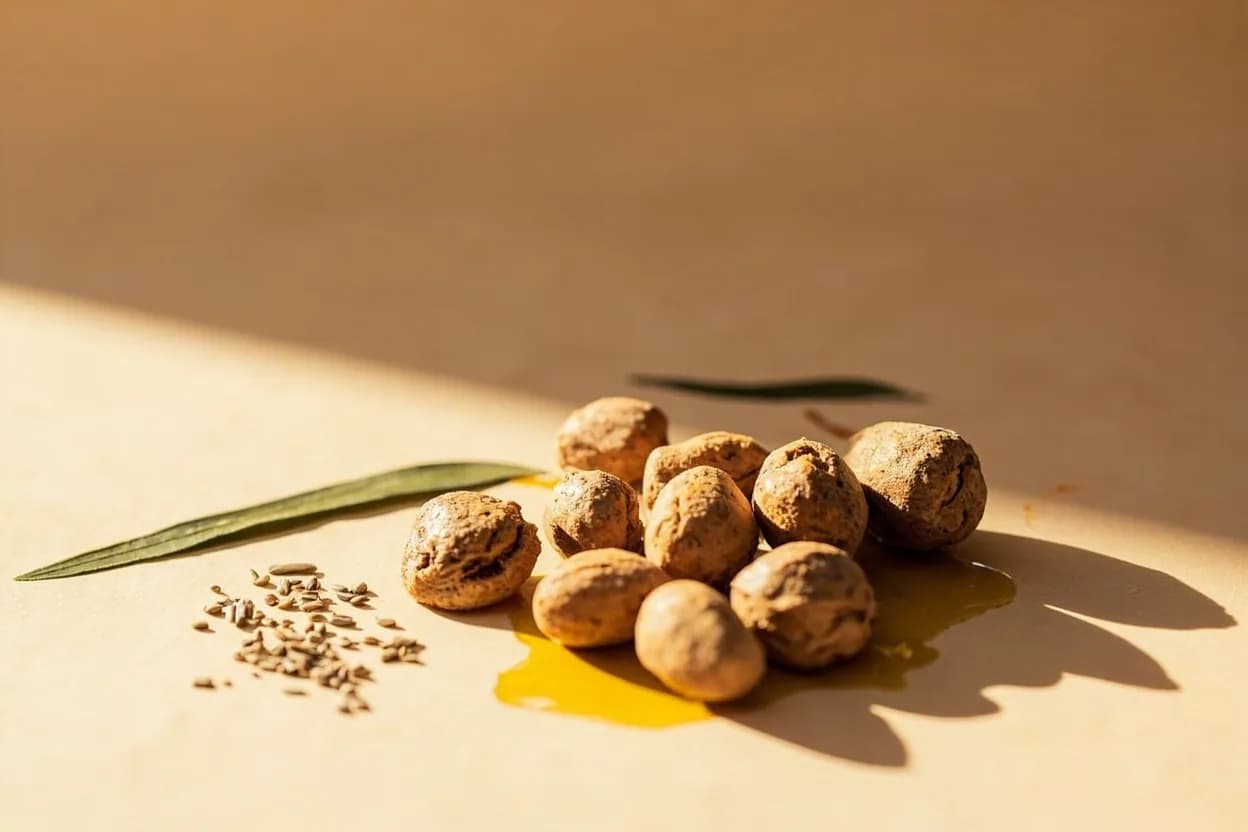
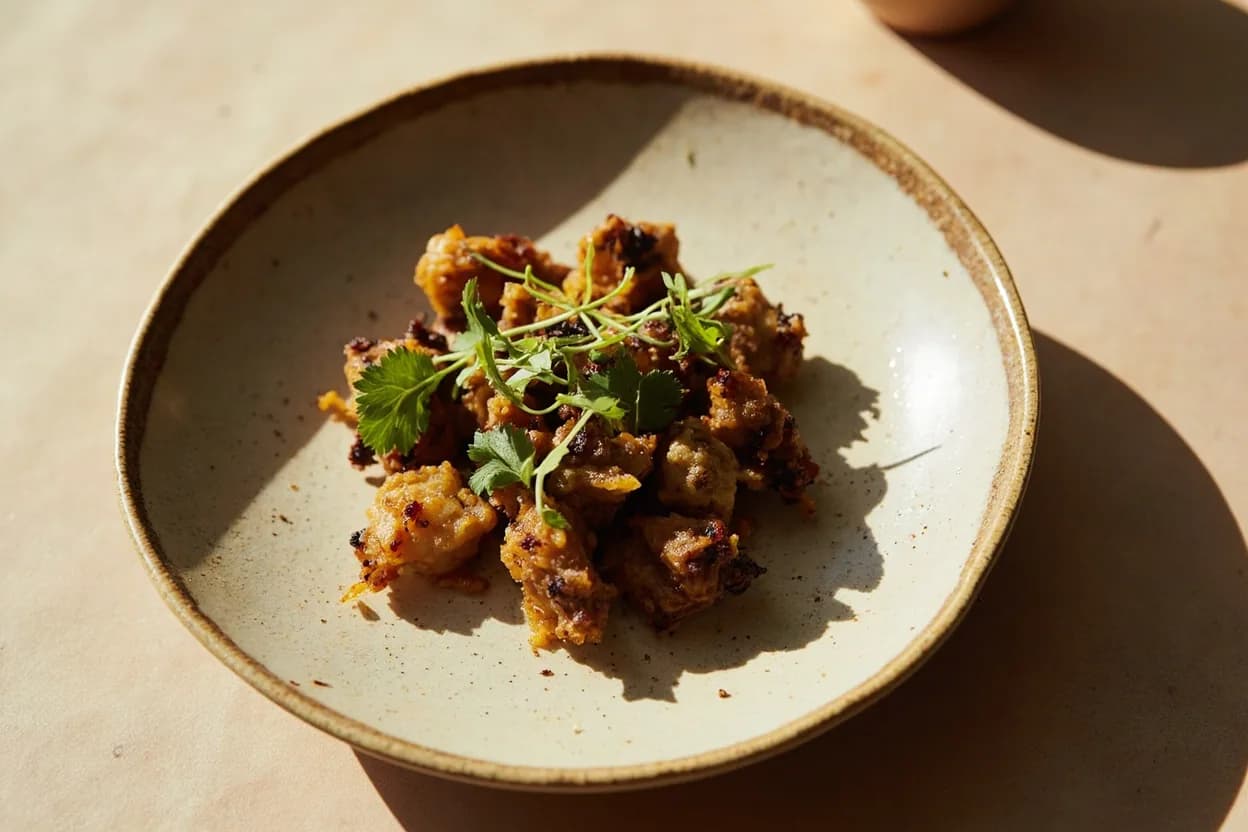
Ehuru is the dried seed of Monodora myristica, a flowering tree native to West and Central Africa. Despite sharing the 'nutmeg' name with the unrelated Myristica fragrans, ehuru has its own distinct character: deeply earthy and musky, with warm resinous notes, a hint of camphor, and far less sweetness than Caribbean nutmeg. It is ground and added to soups and stews primarily in Igbo cooking, where it forms part of a classic spice trio alongside uziza leaf and ogiri (fermented locust bean).
In photos
Flavour profile
Classic pairings
- Palm oilIgbo / Nigerian
The fruity richness of red palm oil softens ehuru's dry earthiness and carries its fat-soluble aromatics through an entire pot of soup.
- Uziza leafIgbo / Nigerian
The peppery, anise-like bite of uziza contrasts and lifts ehuru's musk; together they form the aromatic backbone of ofe akwu and ofe onugbu.
- Ogiri (fermented locust bean)Igbo / Nigerian
Ogiri's deep fermented umami amplifies ehuru's earthiness, creating the layered savouriness characteristic of authentic Igbo soups.
- Stockfish (Okporoko)Nigerian
The intense, preserved-fish depth of stockfish harmonises with ehuru's musty resin; both benefit from long, slow simmering.
- Oxtail and goat meatWest African
Fatty, collagen-rich cuts mellow ehuru's intensity and absorb its aroma as they braise, producing fall-off-the-bone tenderness with complex spice.
- Crayfish (dried ground shrimp)Nigerian
The savoury seafood punch of ground crayfish pairs seamlessly with ehuru's earthiness, both amplifying the umami depth of any broth.
- Bitter leaf (Vernonia amygdalina)Igbo / Nigerian
The cleansing bitterness of bitter leaf cuts through palm-oil richness, letting ehuru's resin read as warmth rather than heaviness.
Adventurous pairings
- Dark chocolate (70%+)
Ehuru's earthy, camphor edge mirrors the roasted bitterness in dark chocolate; grate a small amount into a mole-style sauce or chocolate bark for a West African accent.
- Roasted beets
The mineral sweetness of roasted beets grounds ehuru's musk; together they work in a warm salad or beet soup finished with palm-oil vinaigrette.
- Bourbon or dark rum
Musky, resinous spices like ehuru are natural companions to barrel-aged spirits; a whisper of ehuru in a rum cake or cocktail bitters adds unexpected West African depth.
- Black-eyed peas
The creamy nuttiness of black-eyed peas absorbs ehuru's earthiness beautifully; effective in a West African-style braised legume dish or soup.
Tread carefully
- Delicate white fishavoid
Ehuru's pronounced musk overwhelms the subtle flavour of sole or tilapia; reserve it for robust ingredients that can match its intensity.
- Fresh citrus or citrus zest (in large quantities)avoid
Bright citrus acidity clashes with ehuru's resinous earthiness, producing a discordant combination that tastes medicinal.
- Dairy creamavoid
Cream's richness turns muddy alongside ehuru's camphor notes; the two have no culinary tradition together and the result is flat and heavy.
How to use it
- Toast whole seeds dry in a pan over low heat for 2–3 minutes before grinding to mellow raw bitterness
- Grind fresh in a spice grinder or mortar — pre-ground loses potency within weeks
- Add early in the cooking process so the long simmer mellows its intensity
- Use sparingly — a typical pot of soup uses only 2–3 seeds
- Combine with ogiri and uziza in a pre-blended spice base before adding liquids
Appears in
Related flavours
- Uziza (Piper guineense)
The canonical pairing partner in Igbo soups; their aromas are complementary rather than competing.
Another West African dried pod spice with smoky-resinous notes; both are used in similar aromatic roles.
- Nutmeg (Myristica fragrans)
The global culinary relative by name only; much sweeter and more universally deployed, useful as a partial substitute in extreme shortage.
References
- 1.The Groundnut Cookbook — Duval Timothy, Jacob Fodio Todd & Folayemi Brown
- 2.Zoe's Ghana Kitchen — Zoe Adjonyoh
- 3.Roots, Leaves & Bark: West African Spice Use — PROTA (Plant Resources of Tropical Africa) Vol. 11(1)
Confidence: high
Notes
Not a substitute for nutmeg
Despite the common name, ehuru and Myristica fragrans are botanically unrelated and taste quite different. Substituting one for the other in a recipe designed for the other will produce noticeably different results. Treat each as its own ingredient.
Storage
Whole dried seeds keep up to a year in an airtight container away from light. Ground ehuru is more perishable — use within 4–6 weeks for best aroma.