Herbs
Uziza Leaf
Also: Piper guineense leaf, West African pepper leaf, ashanti pepper leaf
A peppery, resinous Nigerian herb that anchors egusi and afang soups with earthy heat and aromatic depth.
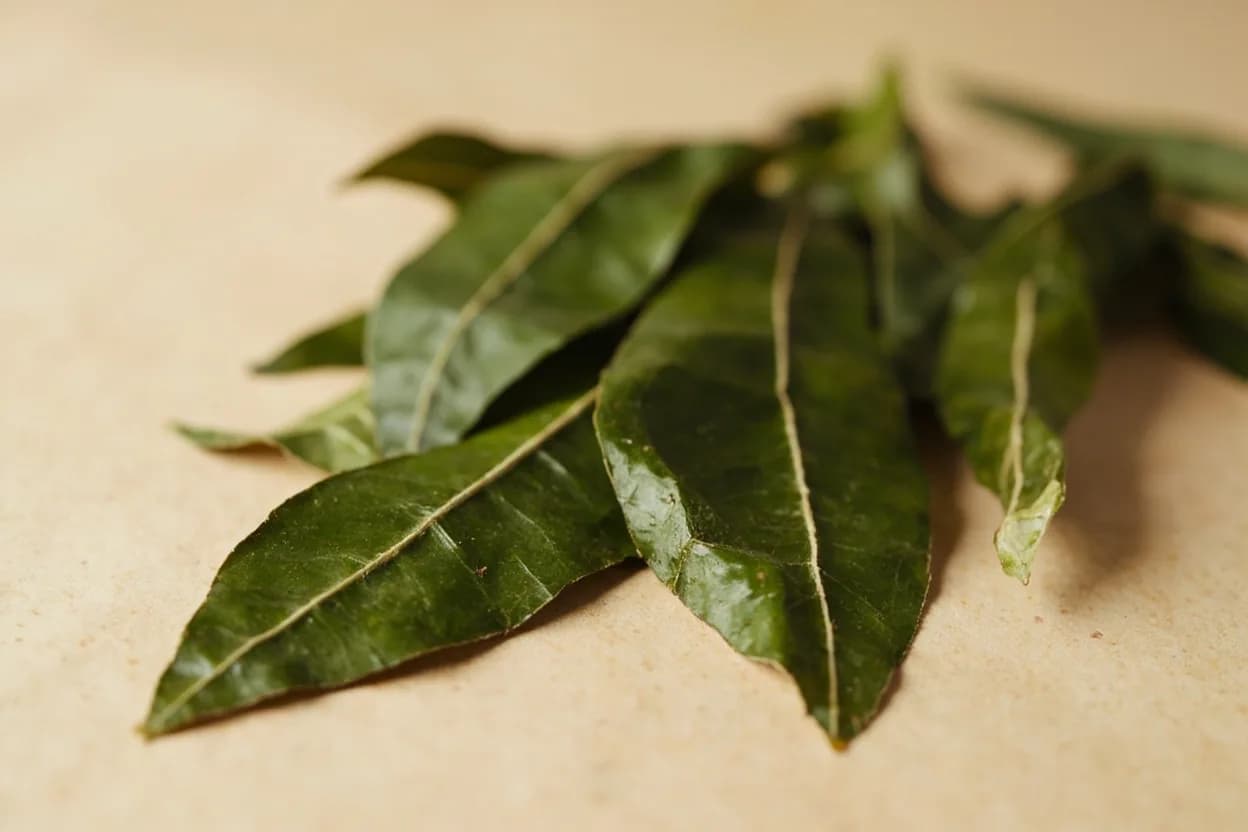
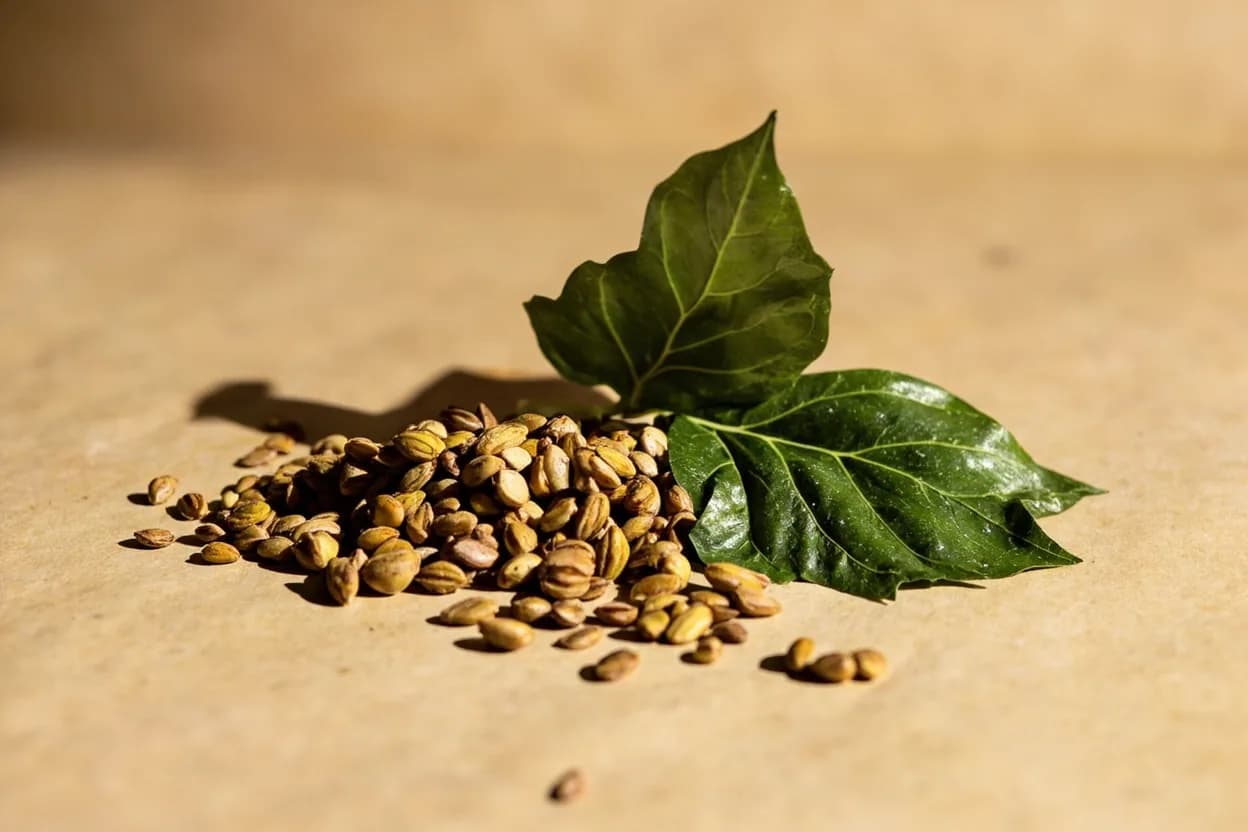
Uziza (Piper guineense) is a climbing pepper native to West and Central Africa, used both for its berries (a relative of black pepper) and its leaves. The leaves carry a sharp, peppery warmth combined with a bitter, almost piney resinousness and a faint eucalyptus undertone. In Nigerian cooking they function as both spice and herb — added in the last minutes of cooking so their volatile oils stay vivid.
In photos
Flavour profile
Classic pairings
- Egusi (ground melon seeds)Nigerian / Igbo
The creamy, nutty fat of egusi absorbs and mellows uziza's bite; the leaf is essential to authentic egusi soup.
- Afang leaves (Gnetum africanum)Nigerian / Efik-Ibibio
Paired together in Efik/Ibibio afang soup — uziza provides heat and aroma while afang gives body and mild bitterness.
- Stockfish (okporoko)Nigerian
The pungent, salted cod-like funk of stockfish is counterbalanced by uziza's bright pepperiness.
- Palm oilWest African
Palm oil's earthy sweetness is a traditional carrier for uziza's fat-soluble resins, blooming the herb's aroma.
- Periwinkles (isam)Nigerian / coastal
Briny periwinkles in soups benefit from uziza's peppery lift, cutting through the shellfish's salinity.
- Goat meatNigerian
The gaminess of goat is tempered by uziza's resinous heat — a combination foundational to many Nigerian pepper soups.
- Ofe onugbu (bitter leaf soup)Nigerian / Igbo
When uziza stands in for or augments bitter leaf, its bitterness adds complexity to the coco-yam-thickened broth.
Adventurous pairings
Uziza's piney bitterness mirrors the tannins in high-percentage chocolate; a chili-chocolate sauce with uziza reads as deeply complex.
The umami funk of white miso and uziza's peppery resinousness create a West-meets-East marinade for grilled fish.
Both are aromatic and camphorous; combining them in a broth creates a layered, floral-peppery depth that works beautifully with prawns.
The caramel-crystalline richness of aged gouda softens uziza's sharp edge; useful in a Nigerian-inflected cheese sauce.
Tread carefully
- Delicate white fish (sole, flounder)avoid
Uziza's assertive pepperiness overwhelms mild, flaky fish whose nuance is easily erased.
- Light cream-based saucesavoid
The leaf's bitterness turns metallic and unpleasant in pure cream without the counterweight of starchy or fatty bases.
How to use it
- Add shredded uziza leaves in the final 3–5 minutes of cooking to preserve volatile aroma oils
- Dry and grind to a powder as a seasoning rub for grilled meats
- Blanch briefly to reduce bitterness before incorporating into lighter preparations
- Combine with crayfish and dried fish in the base sofrito for compound umami
Appears in
Related flavours
- Uda (Negro pepper)
Shares the same aromatic pepper character; the two are often combined in pepper soup spice blends.
- Ehuru (calabash nutmeg)
A frequent co-spice in Nigerian soups, its nutmeg-warmth complements uziza's pepper heat.
- Scent leaf (African basil)
Both are aromatic Nigerian herbs used in soups; scent leaf is milder and more clove-forward.
References
- 1.The Groundnut Cookbook — Duval Timothy, Jacob Fodio Todd & Folayemi Brown
- 2.Zoe's Ghana Kitchen — Zoe Adjonyoh
- 3.Medicinal and Aromatic Plants of West Africa — Iwu, M.M. (CRC Press)
Confidence: high
Notes
Fresh vs. dried
Fresh uziza leaves are the standard in Nigerian markets and carry the fullest aroma. Dried leaves are acceptable for long-simmered soups where the volatile oils have time to rehydrate, but dried uziza lacks the bright top note of fresh. If only dried is available, add them earlier in cooking and increase the quantity by roughly one-third.