Cheeses
Aged Gouda
Also: Old Amsterdam, belegen kaas, oud kaas, overjarige kaas, aged Dutch Gouda
Caramel depth, crunchy tyrosine crystals, and butterscotch umami — the Dutch answer to Parmigiano.
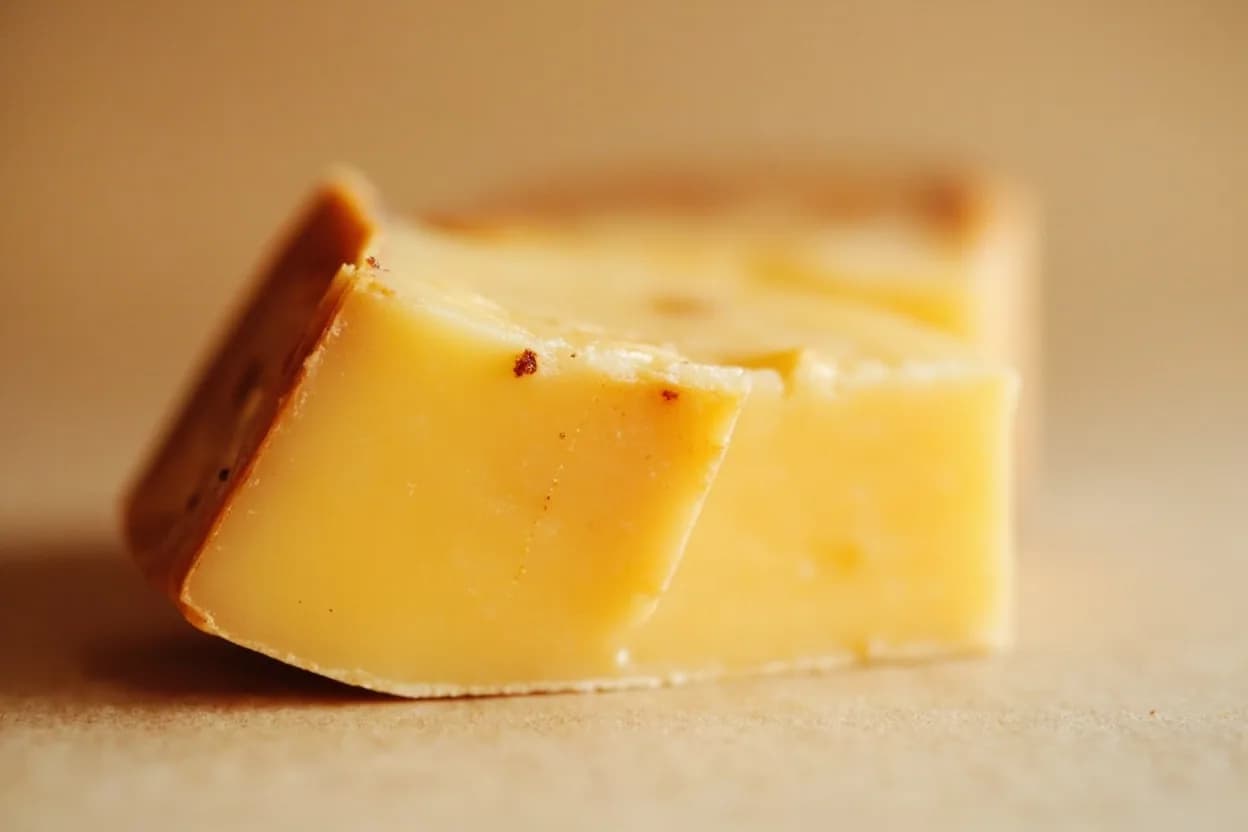
Aged Gouda (belegen to overjarige, 6 months to 5+ years) is a semi-hard to hard Dutch cow's milk cheese whose long maturation produces complex Maillard-driven flavors: caramel, toffee, toasted nuts, and profound umami amplified by crunchy tyrosine and calcium lactate crystals. Moisture drops as aging progresses, concentrating flavor to near-pungent intensity. The rind is waxed or natural; the paste turns from straw to deep amber-gold.
In photos
Flavour profile
Classic pairings
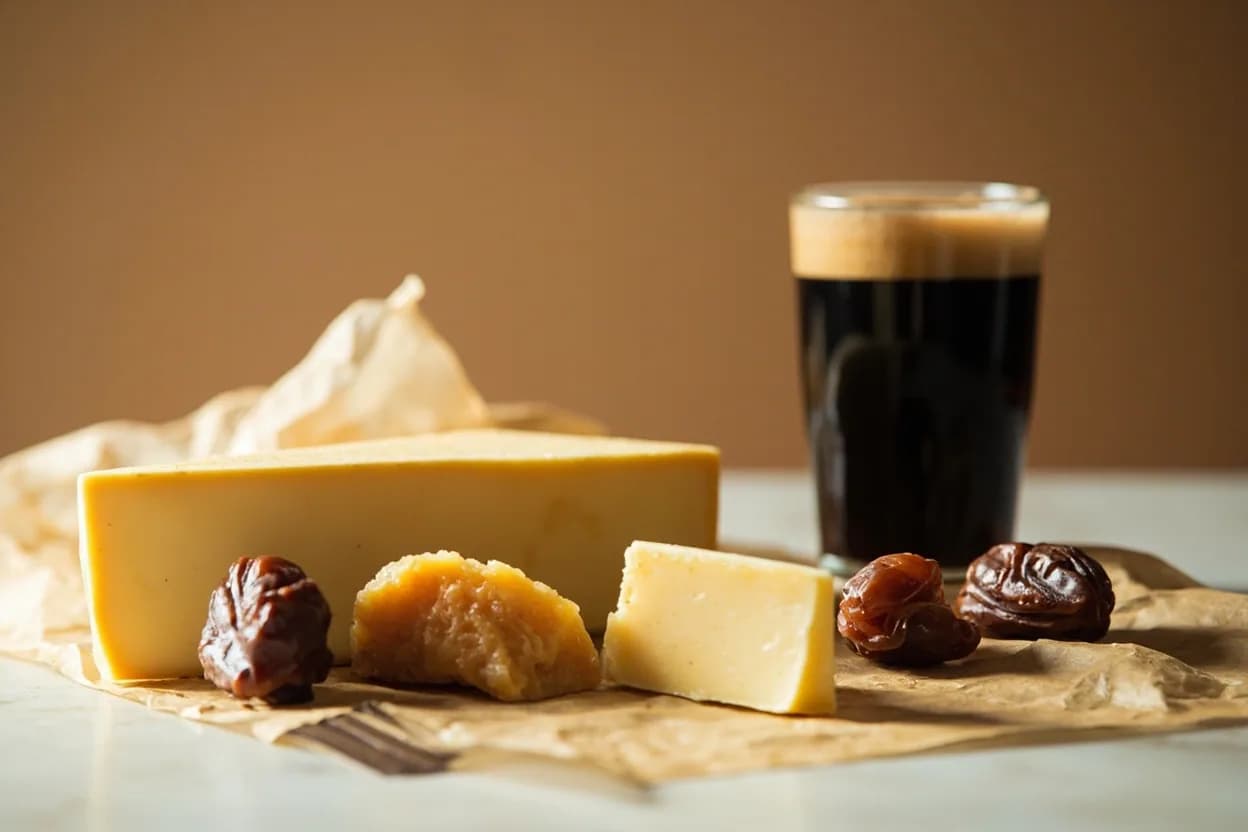
- Dark ale and porterDutch / Belgian
Roasted malt and caramel from dark beers mirror the toffee and nut notes of aged Gouda; carbonation cuts the fat cleanly.
- Dark chocolate (70%+)European cheese board
Bitter cacao tannins and chocolate's own caramel Maillard notes amplify the cheese's toffee-umami character in a near-seamless alignment.
- Medjool datesDutch cheese board
Dates' sticky caramel sweetness echoes the cheese's butterscotch notes while their fiber and sugar provide textural contrast to the dense paste.
- Marcona almondsEuropean
Fatty, mildly sweet Marconas share the same toasted-nut register as aged Gouda's tyrosine crystals and dissolve harmoniously on the palate.
- Amber or tawny portDutch/Portuguese
Tawny port's oxidative walnut and dried-fig notes are a textbook wine pairing with the crystalline depth of an 18-month-plus Gouda.
- Grain mustardDutch
Sharp, vinegary mustard cuts through the cheese's rich fat and contrasts the sweetness — standard accompaniment on Dutch cheese boards (boerenkaas).
- Rye bread (dense, seeded)Dutch
Dark rye's sour, earthy, mildly sweet character provides the ideal neutral vehicle for aged Gouda without competing; a canonical Dutch lunch pairing.
Adventurous pairings
- Espresso and coffee
Aged Gouda and a shot of espresso share roasted, slightly bitter, caramelised-sugar flavor compounds — a pairing embraced by Dutch cheesemakers at tasting events.
Aged Gouda's umami-caramel is mirrored and amplified by white or red miso cooked into a caramel sauce — both derive their savory sweetness from amino acid browning reactions.
- Smoked meats (brisket, pastrami)
The phenolic smoke and fatty depth of long-smoked meats find a complementary partner in the crystalline, caramelised umami of very aged Gouda.
- Sauternes or late-harvest Riesling
Honeyed botrytis wines echo the toffee register of aged Gouda, while their high acidity provides cut — a luxurious counterpart to the Roquefort-Sauternes classic.
- Bourbon-soaked dried cherries
The spirit's vanilla-oak-caramel and the fruit's tartness play against the cheese's crystalline texture and butterscotch notes for a balanced composed bite.
Tread carefully
- Delicate white fishavoid
The intense flavor concentration of very aged Gouda overwhelms the subtle sweetness of sole, sea bass, or similar fish — the pairing produces only cheese flavor.
- Light, high-acid unoaked white winesavoid
A crisp Muscadet or Pinot Grigio fights rather than complements aged Gouda — the wine seems thin and sour alongside the cheese's dense fat and umami.
- Fresh herbs (especially basil)avoid
Delicate aromatic green herbs are bullied by the caramelised intensity of old Gouda; their brightness disappears entirely.
How to use it
- Shave or chip off thin shards for cheese boards — use a cheese plane or the tip of a chef's knife to leverage off natural crystal-rich pieces
- Grate finely over pasta as a Parmigiano alternative — the umami depth and tyrosine crystals behave similarly
- Melt slowly into Dutch-style fondue (Goudafondue) with white wine and kirsch at low heat, stirring constantly to prevent seizing
- Slice thin and layer in grilled cheese (tosti) for the Netherlands' iconic kaas tosti — combine with an aged cheese for depth and a younger Gouda for melt
- Crumble into salads with bitter greens (radicchio, endive) to amplify the cheese's sweetness by contrast
Appears in
Related flavours
A functional peer in the crystalline-umami category; both achieve savory depth through long aging and share the tyrosine crystal phenomenon, though Parmigiano is sharper and less sweet.
- Manchego (aged)
Another aged pressed-curd wheel with nutty, grassy notes; Manchego is drier and more piquant where aged Gouda leads with caramel.
- Comté
French alpine cheese with similar nutty depth and crystalline texture at extended ages; Comté is more savory-fruity where Gouda is more caramel-forward.
References
- 1.The Oxford Companion to Cheese — Catherine Donnelly (ed.)
- 2.Mastering Cheese — Max McCalman & David Gibbons
- 3.The Cheese Primer — Steven Jenkins
- 4.Wine & Food — Fiona Beckett
Confidence: high
Notes
Age matters enormously
Young Gouda (4–8 weeks) is mild and springy — suitable with lager and fruit. Belegen (6–12 months) develops the first caramel notes and pairs well with amber ales. Oud (12–18 months) is fully crystalline and goes with port and dark chocolate. Overjarige (2 years+) is intensely concentrated and best treated like a grand cru — eaten in small chips with nothing but a sip of aged spirit or tawny port. Recipes that say 'Gouda' without specifying age will produce completely different results.
Tyrosine crystals
The white crunchy specks in aged Gouda are free tyrosine amino acids that crystallize as proteins break down over aging — a sign of quality, not spoilage. They contribute a satisfying textural crunch and concentrate umami flavor in each bite. The same crystals appear in aged Parmigiano and aged Cheddar.