Sweet Aromatics
Miso Caramel
Also: miso butterscotch, salted miso caramel, white miso caramel, umami caramel
A revelatory sweet-salty-umami sauce that collapses the distance between caramel and salt — where the salt is also savory, funky, and fermented.
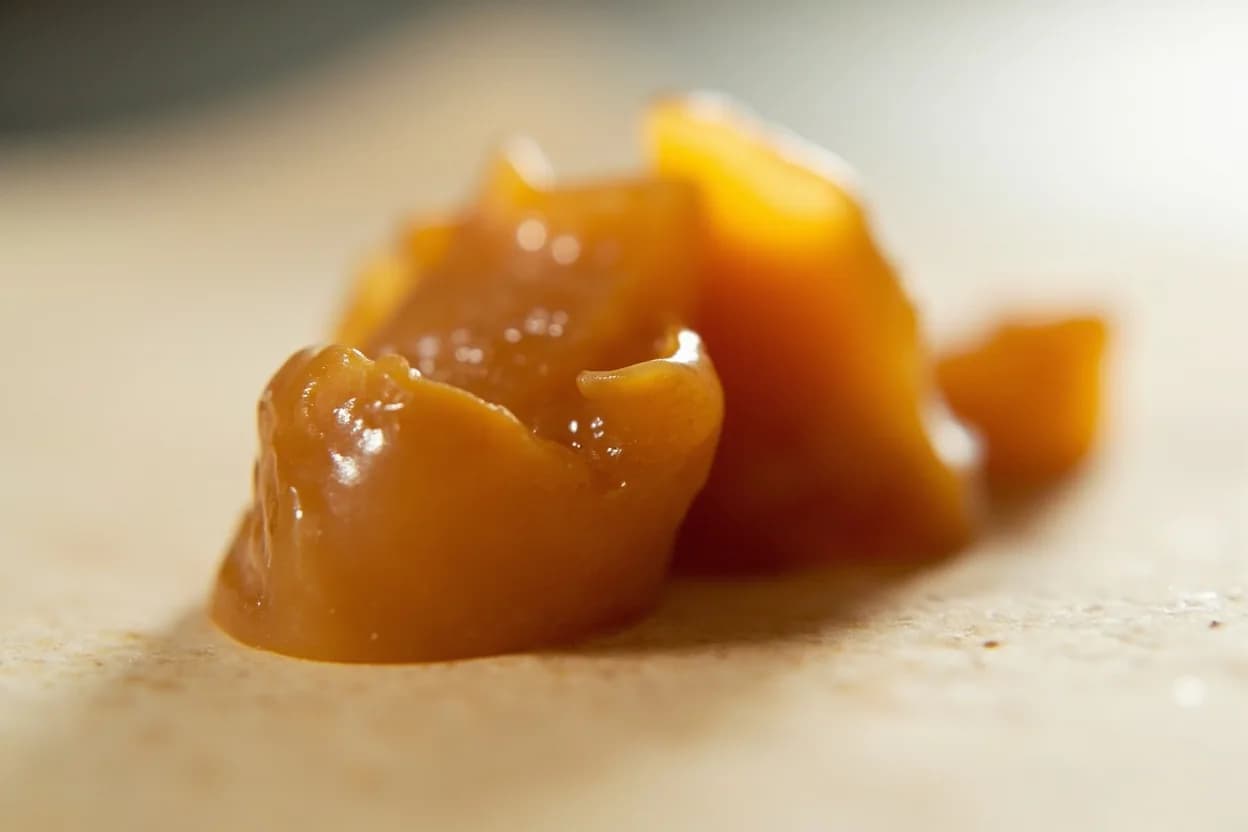
Miso caramel is a confection made by dissolving white or yellow miso paste into a conventional caramel (sugar cooked to amber + cream + butter), typically at the stage when the cream is added. The miso introduces salty, umami-forward fermentation compounds — glutamates, peptides, and organic acids — that interact with caramel's Maillard products (furans, diacetyl, caramelans) to produce something more complex than either ingredient alone. The result tastes at once deeply sweet, salty, creamy, and savory with a rounded butterscotch quality. White (shiro) miso is the standard choice for its mildness; red miso creates a sharper, more pungent version. Miso caramel rose to prominence in pastry kitchens in the 2010s as Japanese-Western crossover became mainstream, but its logic is timeless: fermented salt amplifying sweet caramel.
In photos
Flavour profile
Classic pairings
- Vanilla ice creamContemporary pastry
The most classic deployment — miso caramel drizzled over vanilla ice cream creates a perfect textural and flavor contrast: cold-sweet against warm-salty-savory. The vanilla's floral cream amplifies the caramel's depth.
- Dark chocolateContemporary pastry, Japanese-French
Miso caramel's salty umami resonates with chocolate's bitterness in the way salted caramel does — but miso's fermented depth adds another dimension, giving chocolate a savory backbone that salt alone cannot.
- Shortbread and butter cookiesContemporary pastry
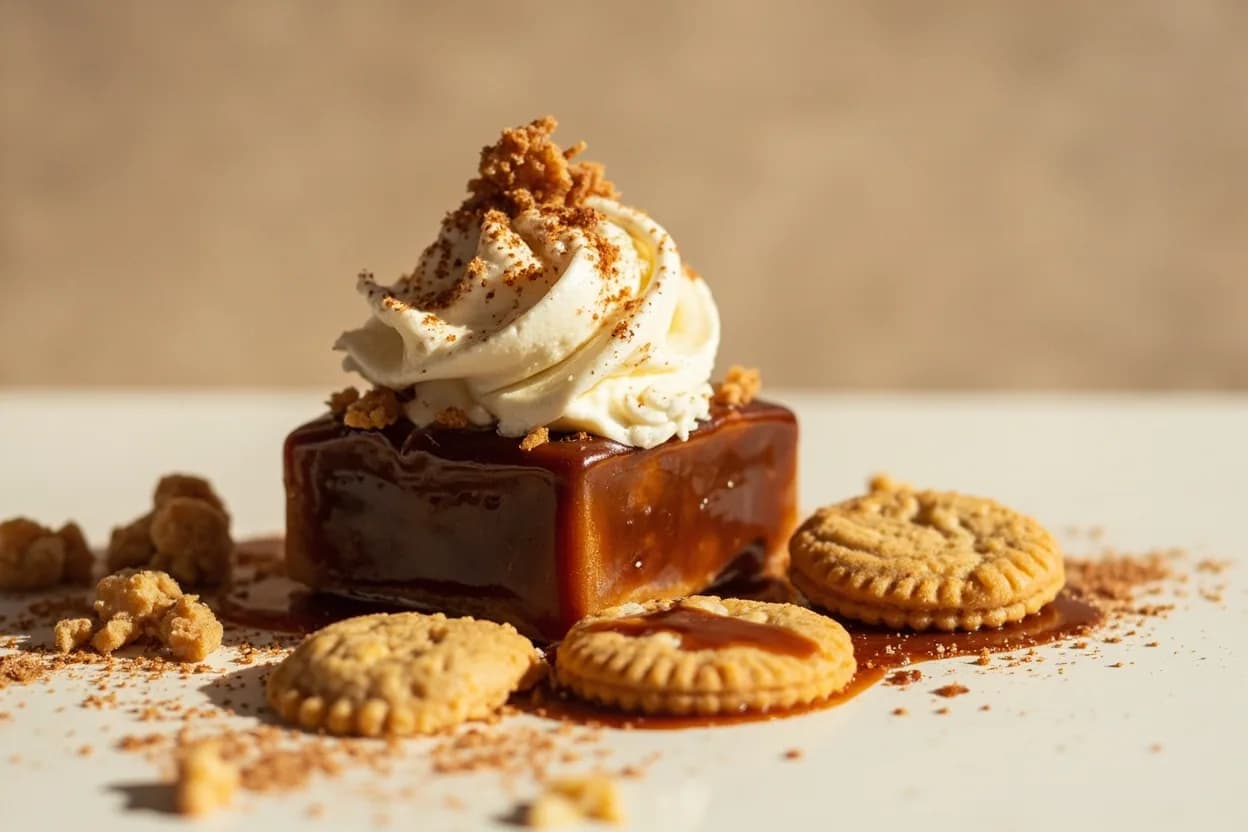
Buttery, crumbly shortbread meets miso caramel in a salty-sweet combination where the cookie's richness absorbs the caramel's umami — a natural pairing in miso caramel sandwich cookies.
- Apple and pearContemporary pastry
Miso caramel sauce over roasted apples or pears creates a savory-sweet combination with the fruit's tartness cutting through the caramel's richness — an autumn dessert of remarkable depth.
- Coffee and espressoSpecialty coffee, Japanese café culture
Miso caramel stirred into lattes or used as a coffee drink sweetener adds salty-umami depth to coffee's roasted bitterness — much more complex than vanilla or conventional caramel syrup.
- PretzelAmerican (contemporary)
The classic salty-sweet pairing (pretzel + caramel) amplified — miso deepens the salt to umami, and pretzel's lye-baked character adds a savory alkaline note that harmonizes with miso's fermentation.
- Brown butterFrench-Japanese pastry
Brown butter's nutty, toasted-milk character and miso caramel's fermented savoriness are close cousins in flavor — together in tarts, financiers, or glazes they create layered nuttiness.
Adventurous pairings
- Aged cheddar or Gruyère
Miso caramel as a cheese accompaniment — its salt and umami bridge into the savory territory of aged cheese while the sweetness provides contrast; particularly striking on a cheese board with walnuts.
- Roasted root vegetables (parsnip, carrot, sweet potato)
Miso caramel as a glaze for roasted roots takes the sauce fully into savory territory — the sugars caramelize on the vegetable surface while miso's umami functions as a seasoning, creating a remarkable sweet-savory side.
Tahini's bitter nuttiness and miso caramel's salty sweetness create a sophisticated confection in halvah-inspired truffles, miso-tahini cookies, or a sauce for banana — both fermented and roasted compounds resonate.
- Mango
Tropical mango's bright acidity and fruit sweetness cut through miso caramel's richness in ways apple cannot — a warm-weather pairing that reads as Japanese-tropical and is surprisingly clean.
Black sesame's bitter, nutty intensity makes miso caramel taste brighter by contrast — together in ice cream, tarts, or pudding they create a Japanese-leaning dessert with genuine complexity.
- Kombucha or rice wine vinegar
A small amount of fermented acid in miso caramel sharpens and brightens the whole sauce — adding a splash of rice wine vinegar during caramelization echoes the acidity found in aged caramel sauces and prevents crystallization.
Tread carefully
- Very delicate floral flavors (rosewater, violet, lavender)avoid
Miso's savory funk drowns the ethereal quality of floral flavors — there is no productive tension here, only the heavier note eliminating the lighter one.
- Red miso in large quantities with white chocolateavoid
Red miso's sharp fermentation notes fight white chocolate's sugar-dominant sweetness rather than complementing it — white miso is the correct choice if white chocolate is involved.
- Raspberry and other very high-acid berriesavoid
Raspberry's sharp, linear acid doesn't interact productively with miso caramel's savory richness — the flavors feel at odds rather than in tension. Low-acid fruits (strawberry, apple) work better.
How to use it
- Make dry caramel to amber (175°C / 347°F), whisk in warm cream off heat, then add butter and miso — blend smooth with an immersion blender
- Use white miso (shiro) for a gentle, balanced umami; yellow miso for more depth; avoid red miso unless deliberately seeking sharpness
- Add miso after removing caramel from heat to preserve its live cultures and subtle flavor nuances
- Thin with warm cream to sauce consistency; firm up with additional butter for a spreading caramel
- Use as a filling for filled chocolates, sandwich cookies, or layered in tarts under a fruit topping
Appears in
Related flavours
- Salted Caramel
The predecessor — miso caramel is essentially salted caramel with the salt replaced by fermented umami-salt; the logic is the same but the depth is greater
The defining ingredient — white miso on its own pairs with many of the same partners (chocolate, apple, root vegetables); the caramelization adds sweetness and fat that opens new combinations
Similar toffee-caramel sweetness profile but without the umami — dulce de leche pairings are a reliable reference point for miso caramel in dairy-forward applications
References
- 1.The Flavor Bible — Karen Page & Andrew Dornenburg (Little, Brown, 2008)
- 2.Japanese Farm Food — Nancy Singleton Hachisu (Andrews McMeel, 2012)
- 3.Salt, Fat, Acid, Heat — Samin Nosrat (Simon & Schuster, 2017)
- 4.Flavor: Making It and Faking It — Barb Stuckey (Atria Books, 2012)
Confidence: high
Notes
Which miso to use
White miso (shiro miso) is the near-universal choice for miso caramel because its fermentation is mild, sweet, and gentle enough that you taste the caramel first and the umami as a resonant undertone. Yellow miso (shinshu miso) gives a slightly earthier, more assertive result. Red miso (aka miso) is pungent and strongly fermented — a small amount adds real depth to dark chocolate desserts but easily overwhelms lighter preparations. Start with white miso and adjust from there.
The umami-sweet paradigm
Miso caramel represents a broader category of culinary thinking: fermented savory notes amplifying sweet desserts. The same logic appears in soy-sauce caramel (Japan and Vietnam), fish sauce caramel (French-Vietnamese chef tradition), and anchovy butterscotch (some British pastry kitchens). These combinations work because glutamates and sweet compounds stimulate different taste receptors simultaneously — the result is not merely sweeter or saltier but perceptually more complex and satisfying.