Alcohols & Vinegars
Dry Sherry
Also: Fino, Manzanilla, Amontillado, Palo Cortado, Oloroso, Jerez seco
Spain's oxidatively aged wine brings saline depth, walnut bitterness, and a bone-dry finish to sauces, braises, and sofrito.
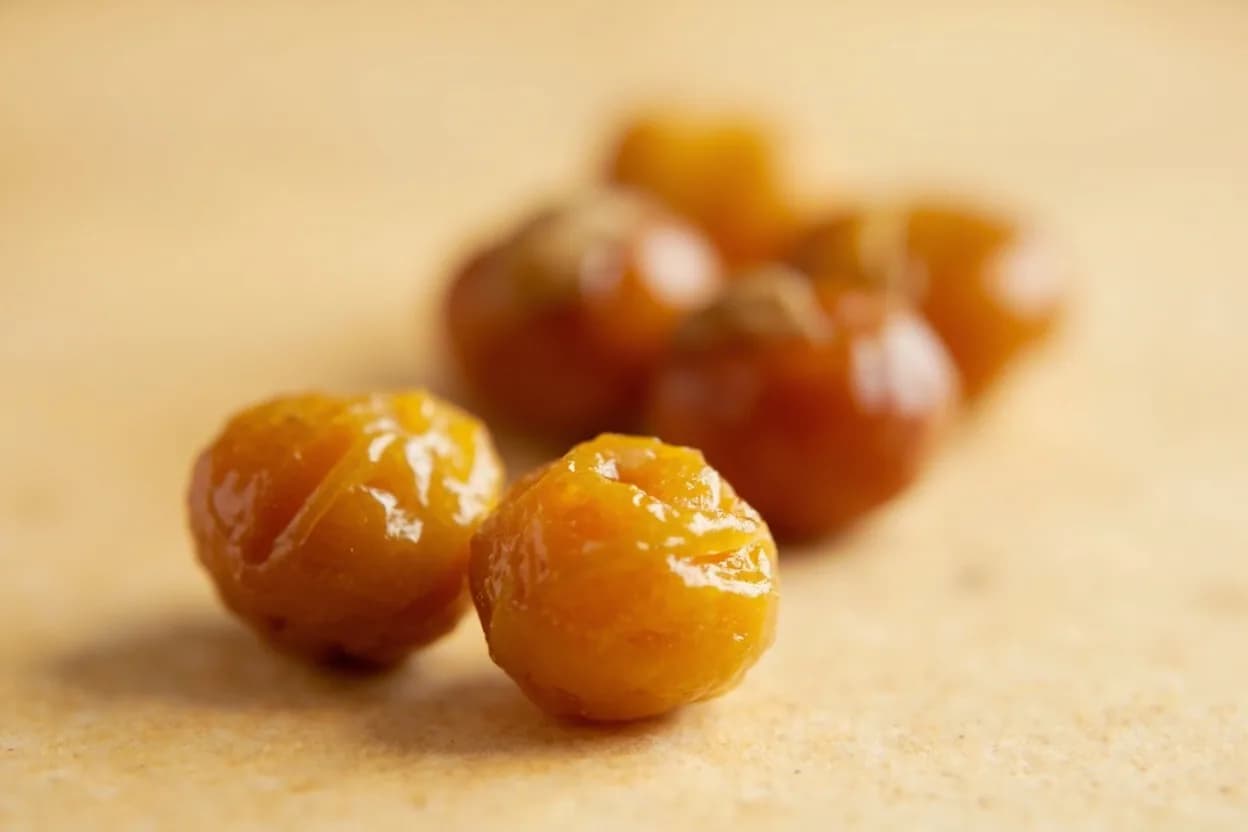
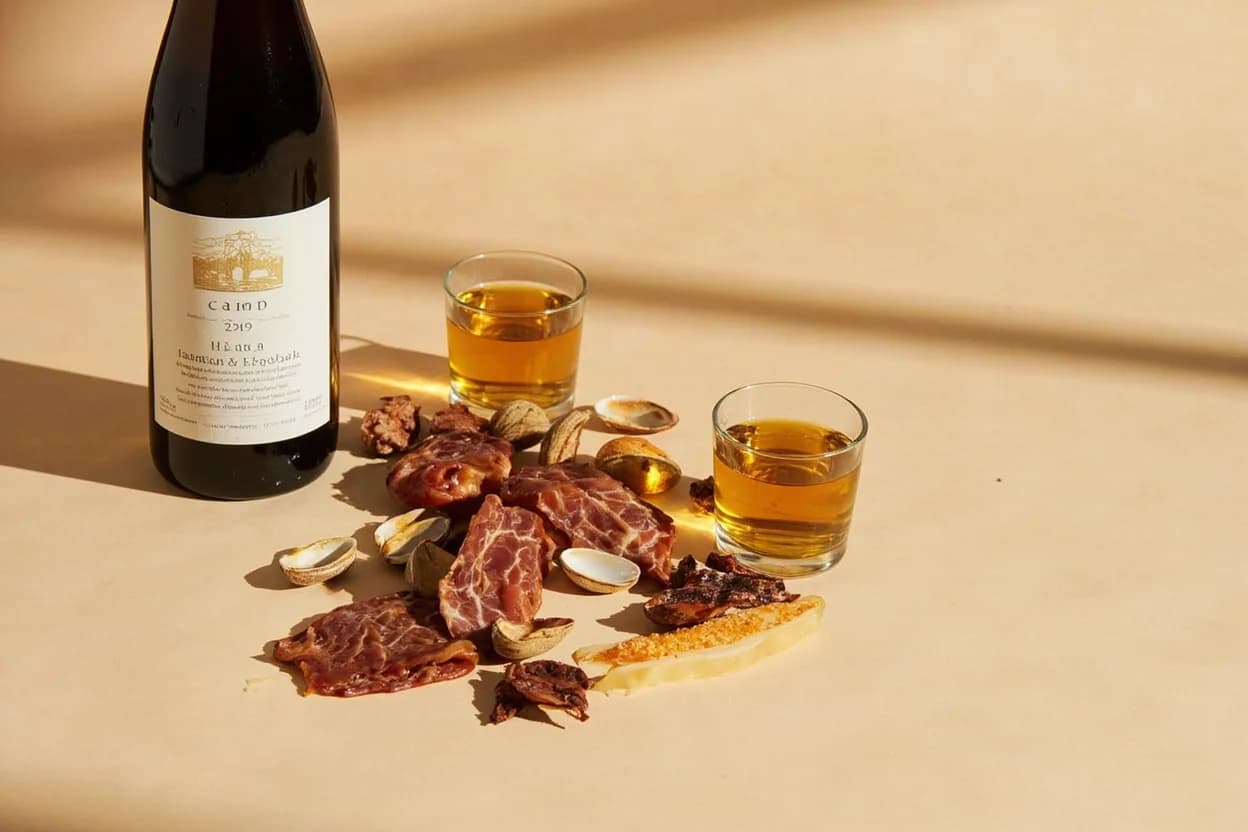
Dry sherry is a fortified wine from the Jerez-Xérès-Sherry DO of Andalusia, aged under a film of flor yeast (for Fino and Manzanilla) or through deliberate oxidation (Amontillado, Palo Cortado, Oloroso). The result is a spectrum from the pale, briny, almond-crisp character of Fino to the roasted-hazelnut, tobacco richness of aged Oloroso. In cooking, dry sherry adds oxidative complexity, umami amplification, and a fortified backbone that survives long heat far better than table wine.
In photos
Flavour profile
Classic pairings
- Clams and shellfishSpanish (almejas a la marinera)
Fino's brine and iodine mirror the ocean salinity of bivalves; a splash deglazes the pan and deepens the natural liquor.
- Jamón ibérico and cured charcuterieAndalusian tapas
The wine's nut-and-salt character echoes the acorn-fed fat and dry cure of Iberian pork; neither overwhelms the other.
- Chicken consommé and meat brothsClassical French / Spanish
A small pour of dry Oloroso or Amontillado at the finish adds roasted depth and rounds out the gelatin without muddying clarity.
- Sofrito base (onion, garlic, tomato)Spanish
Adding a splash of Fino after the onions are soft and before tomato go in lifts the sweetness with acidity and introduces a yeasty umami bridge.
- Mushrooms (especially dried porcini)Spanish, Italian-influenced
Oxidative sherry amplifies the glutamate richness of fungi; deglazing a mushroom sauté with Amontillado is a depth shortcut.
- Blue cheeseSpanish
Oloroso's nuttiness and slight sweetness cut the ammonia bite of Cabrales or Gorgonzola; a canonical pairing at the Spanish cheese course.
- Kidneys and offalSpanish (riñones al Jerez)
Riñones al Jerez is a canonical Spanish tapa: the wine's bitterness tempers the iron note of kidney while the alcohol renders the fat glossy.
Adventurous pairings
- White miso
Both are products of long yeast/microbe aging; a miso pan sauce finished with Fino achieves a double-umami punch with elegant salinity.
- Walnuts and walnut oil
Sherry's inherent walnut aromatic compounds (sotolon, aldehydes) echo and intensify when paired with actual walnuts in a Romesco or salad dressing.
- Saffron cream sauces
Fino Sherry's clean brine elevates saffron's honeyed-medicinal note; the combination appears in modern Valencian rice dishes and works brilliantly in pasta sauces.
- Roasted cauliflower
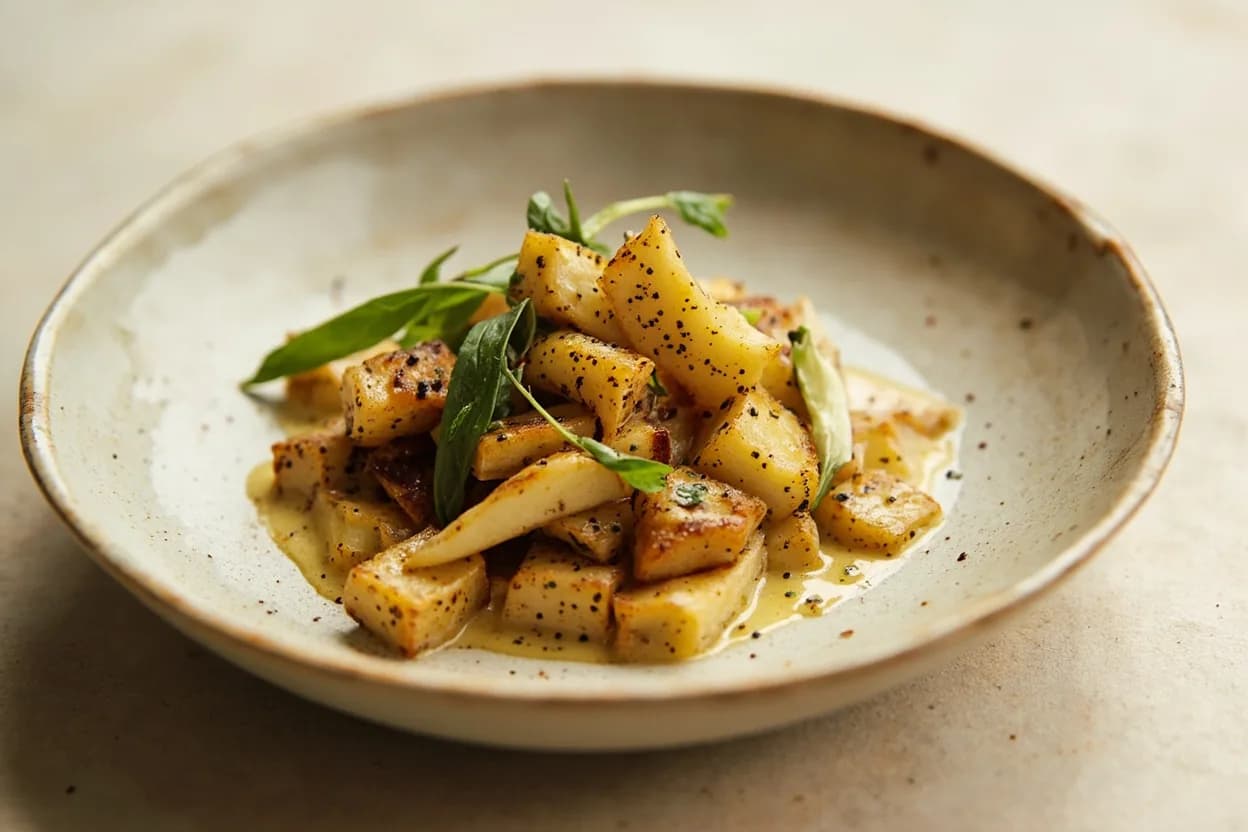
Oloroso deglazes the fond of caramelized cauliflower; the nutty-bitter pairing amplifies the Maillard compounds of both.
- Dark chocolate (70%+)
Pedro Ximénez is the famous pairing but a dry Palo Cortado with dark chocolate creates a more complex tension — bitter on bitter with oxidative fruit bridging.
Tread carefully
- Delicate white fish (e.g., sole, flounder)avoid
Even a small amount of sherry's oxidative character overwhelms the gossamer texture and mild flavor of thin white fillets.
- Herb-forward fresh sauces (chimichurri, gremolata)avoid
Sherry's nutty depth competes with raw green aromatics; the wine's oxidation reads as stale against fresh herb vibrancy.
- Creamy desserts with vanillaavoid
Dry sherry's bitterness and nut character clash with the sweetness of vanilla custards; sweeter PX sherry is the right tool there.
How to use it
- Deglaze pan sauces: add a generous pour to the hot fond, let alcohol flame off, then reduce by half before adding stock
- Flor-yeast enrich consommés: stir in 1–2 tbsp dry Fino off-heat to finish a clarified broth without clouding it
- Sofrito splash: add sherry after aromatics are soft, before acid (tomato) — it caramelizes briefly and integrates
- Marinate seafood: Fino brine in a 10-minute sherry-and-olive-oil marinade for prawns before grilling
- Reduce to a glaze: simmer Oloroso with stock to a syrupy sauce base for pork or duck
- Fortify compound butter: stir reduced Amontillado into room-temperature butter for a finishing nut-and-wine butter
Appears in
Related flavours
- Madeira
A close oxidative relative; where sherry is saline and nutty, Madeira is caramel-richer — swap in long braises
Shares sweetness and umami-amplification role; useful alternative when sherry's bitterness would dominate
- White wine vinegar
Adds sherry's brightness without the depth; use when cooking time is short and the oxidative note would be lost anyway
References
- 1.On Food and Cooking — Harold McGee
- 2.The Oxford Companion to Wine — Jancis Robinson (ed.)
- 3.Vino: The Essential Guide to Real Italian Wine — Joe Campanale & Joshua Greene
- 4.Sherry: A Modern Guide — Talia Baiocchi
- 5.The Foods and Wines of Spain — Penelope Casas
Confidence: high
Notes
Which style for cooking?
Fino and Manzanilla suit seafood and delicate sauces; Amontillado is the all-rounder for chicken and mushrooms; Oloroso stands up to red meat and long braises. Never use cream sherry (Harvey's Bristol Cream) as a cooking ingredient where a dry style is intended — the residual sugar throws off seasoning balance completely.
The 'cooking sherry' problem
Salted, stabilized 'cooking sherry' from supermarket shelves is an inferior product. Use a real Fino or dry Amontillado — a half-opened bottle keeps well under refrigeration for a month thanks to its fortification.