Spices & Dried Aromatics
Grains of Selim (Hwentia)
Also: hwentia, kani pepper, Senegal pepper, Negro pepper, Ethiopian pepper, Uda, Xylopia aethiopica
A primordial West African spice — the dried seed pods of a forest tree — delivering smoky, musky, peppered warmth that is fundamental to Ghanaian, Ivorian, Senegalese, and Nigerian cooking.
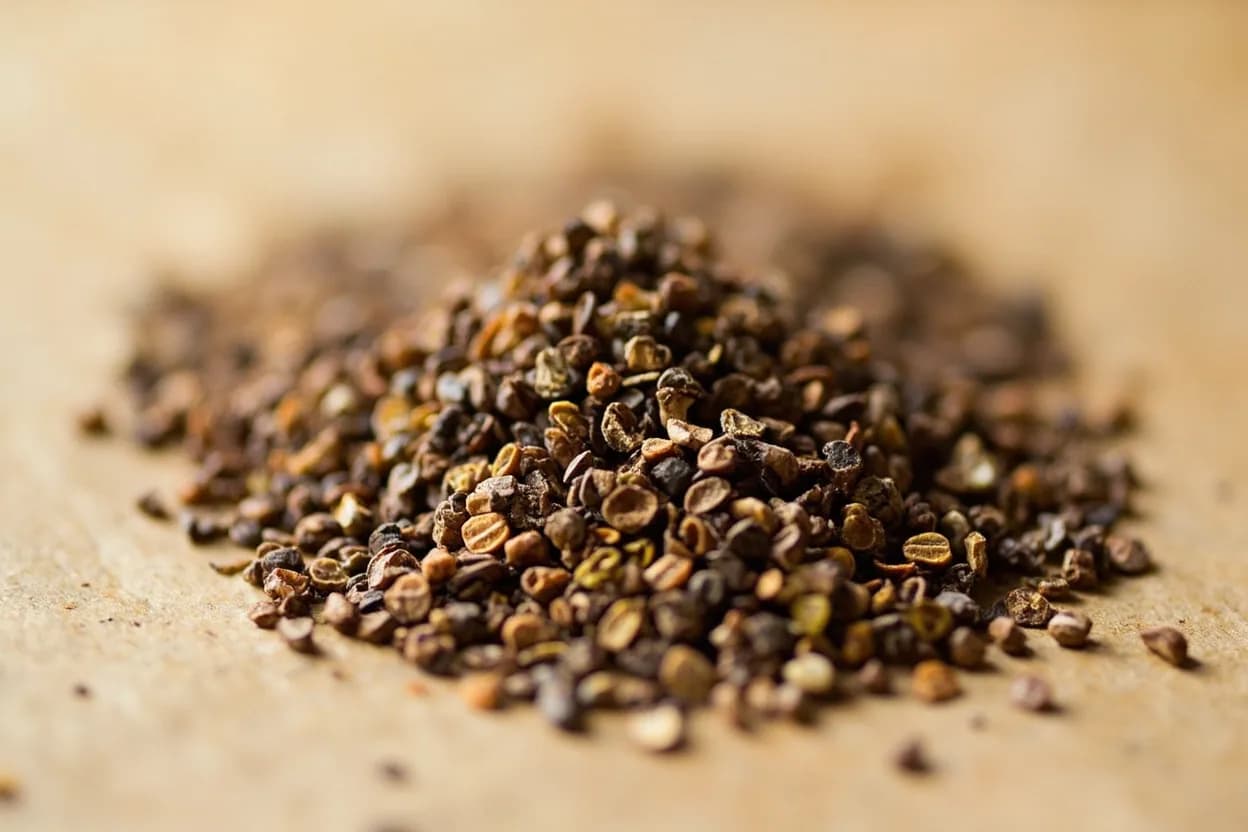
Grains of Selim (Xylopia aethiopica) are the dried seed pods of a tall tree in the Annonaceae family, native to the humid forests of tropical Africa from Senegal to Ethiopia and south to Angola. In Ghana, where it is called hwentia, it is an essential spice for pepper soups and palm nut soup; in Nigeria it is uda, critical to ofe onugbu and new-mother postpartum soups; in Senegal it is the djar in thiéboudienne. The whole dried pod, roughly 2-4 cm long and resembling a gnarled, segmented finger, is dark brown to black with aromatic seeds inside. Its flavor is singular: pepper-like in its bite, but earthier and smokier than black pepper, with a resinous, almost pine-like backdrop and a musky, slightly medicinal finish. It is typically used whole in long-simmered soups and stews, then removed before eating, though grinding is also practiced. Pre-colonial West African spice use, grains of selim was a pepper-trade commodity exported to Europe before black pepper displaced it.
In photos
Flavour profile
Classic pairings
- Palm nut soup (abenkwan, Ghanaian)Ghanaian
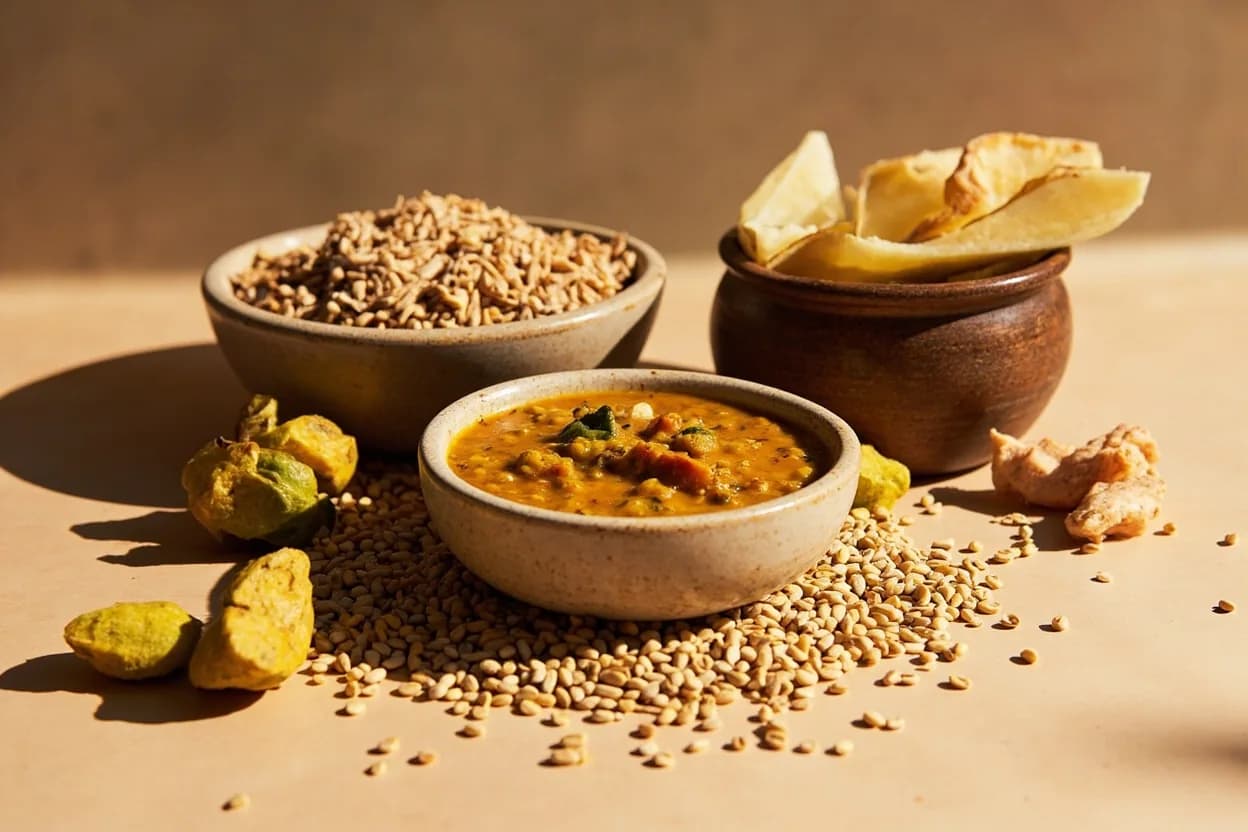
Hwentia is a core aromatic in palm nut soup alongside prekese (aidan fruit) and African pepper; it contributes the musky smoky layer that distinguishes this rich soup from any other palm-based preparation.
- Pepper soup (Nigerian)Nigerian
Uda is one of the 'holy trinity' of Nigerian pepper soup spices (with uziza and ehuru/calabash nutmeg); its smoke-and-pepper character is the structural backbone of catfish, goat, or oxtail pepper soup.
- Thiéboudienne (Senegalese rice and fish)Senegalese
In Senegal, where it is called djar, grains of selim is added whole to the fish stock that poaches the fish and cooks the rice; it imparts a characteristically West African smoke-pepper undercurrent that defines the dish's aroma.
- Dawadawa / suya spice blendNigerian / Sahelian
In northern Nigerian and Sahelian suya spice mixes (tankora), grains of selim ground with Selim, ginger, and groundnut powder creates the foundational dry rub that makes suya smoke and char in its distinctive way.
- Fermented locust bean (dawadawa / iru)West African (pan-regional)
Both grains of selim and fermented locust bean operate at the earthy-umami end of the West African spice register; together in soups and stews they create layered depth analogous to what miso and dried mushroom create in Japanese cooking.
- Goat and muttonWest African (pan-regional)
Grains of selim's musky warmth is particularly effective at taming the gaminess of goat and mutton while amplifying their savory depth; it appears in long goat braises across Ghana, Nigeria, and Côte d'Ivoire.
Adventurous pairings
- Dark rum
Grains of selim steeped in aged Caribbean dark rum for 48 hours produces an aromatic bitters-adjacent spirit base; the spice's smoke and musk resonate with rum's molasses barrel notes.
- Smoked beef short ribs
A West African dry rub built around ground grains of selim, calabash nutmeg, and ginger doubles the smoke register of barbecued beef ribs; the musky notes create an unexpected bridge to American BBQ traditions.
- Fermented black-eyed peas (bean waakye)
In Ghanaian waakye (rice and beans), a pod of hwentia added during cooking contributes a smoky background note that elevates the dish far beyond plain legume stew without announcing itself as a distinct spice.
- Wild mushrooms (porcini, chanterelle)
The resinous, earthy depth of grains of selim has an unexpected affinity with porcini's pyrazine earthiness; together in a broth or sauce they create a deeply savory, forest-scented preparation.
- Dark coffee (espresso base)
A small amount of ground grains of selim in Ethiopian-style spiced coffee (kahwa or coffee with spices) adds a smoky-pepper dimension distinct from cardamom's more familiar use, referencing its historical trade-route presence in East Africa.
Tread carefully
- Delicate fresh vegetables (peas, asparagus, lettuce)avoid
Grains of selim's heavy smoky-musky character annihilates the clean vegetal sweetness of spring vegetables; it belongs to long-cooked preparations, not raw or lightly cooked greens.
- Cream-based European saucesavoid
Its resinous, camphorated character creates a jarring medicinal note in dairy-forward preparations without the earthy anchor of starchy vegetables or legumes to integrate it.
- Citrus-forward light vinaigrettesavoid
High acidity and brightness strip away grains of selim's subtle complexity and expose only its bitter, piney edge.
How to use it
- Use whole pods in long-simmered soups and stews; remove before serving to control intensity
- Char lightly over an open flame or dry pan before adding to soups to amplify the smoky character
- Crack pods to expose the seeds for deeper flavor extraction in shorter cooking times
- Grind seeds and dried pod together for dry spice rubs (suya spice, pepper soup blend)
- Toast in dry pan before grinding — develops the musky, resinous notes more fully
- Combine in equal parts with calabash nutmeg (ehuru) and uziza seeds for a canonical Nigerian pepper soup spice base
Appears in
Related flavours
- Calabash nutmeg (ehuru)
The near-constant partner of grains of selim in Nigerian pepper soup spice; nutmeg-adjacent warmth counterpoints the smoky-pepper character
- Uziza leaf and seed
Piper guineense, a West African relative of long pepper; alongside uda, the third pillar of Nigerian pepper soup aromatics
Ghanaian aromatic pod used alongside hwentia in palm nut soup; contributes a sweet-funky note that complements grains of selim's smoke
- Fermented locust bean (dawadawa / iru)
Shares the earthy-umami register in West African soups; together they create layered savory depth without any single note dominating
References
- 1.Zoe Adjonyoh, 'Zoe's Ghana Kitchen' (2017)
- 2.Edna Lewis & Scott Peacock — West African spice diaspora notes referenced in 'The Gift of Southern Cooking' (2003)
- 3.Jessica B. Harris, 'The Africa Cookbook: Tastes of a Continent' (1998)
- 4.Andrew Dalby, 'Food in the Ancient World from A to Z' (2003) — historical trade context for Xylopia aethiopica
- 5.Tunde Wey, 'Lands of No' — contemporary Nigerian culinary writing on native spice vocabulary
Confidence: high
Notes
Historical scope
Before black pepper from South Asia became the dominant global spice trade commodity (post-15th century European expansion), grains of selim was one of several African 'peppers' exported through trans-Saharan trade routes to North Africa and on to medieval Europe. It appears in medieval European spice records under names including 'Senegal pepper' and 'Ethiopian pepper.' Its eclipse by cheaper, more abundant Piper nigrum was a function of trade economics, not flavor — within West African cuisine it never lost its centrality.
New-mother soups
Across multiple West African cultures — Igbo, Akan, Yoruba — grains of selim appears prominently in the pepper soups given to women in the postpartum period. Its traditional classification as a warming, blood-moving herb in West African ethnobotany overlaps with similar uses in Ayurveda and TCM for postpartum recovery. The medicinal and culinary functions are not separated in these cooking traditions.