Preserved & Cured Fish
Nuoc Cham
Also: nước chấm, Vietnamese dipping sauce, nuoc mam pha, sweet fish sauce dressing
Vietnam's essential table sauce — fish sauce, lime, chili, sugar, and garlic in perfect sour-sweet-salty-spicy equilibrium.
Nuoc cham (nước chấm, literally 'dipping water') is the fundamental condiment and dressing of Vietnamese cuisine, built from a ratio-precise balance of fermented fish sauce (nuoc mam), fresh lime or rice vinegar, sugar, water, garlic, and fresh chili. Unlike undiluted fish sauce, nuoc cham is diluted, sweetened, and acidified to create a sauce that is simultaneously salty, sour, sweet, and spicy — in Vietnamese culinary theory, the four-flavor harmony (mặn, chua, ngọt, cay) is its defining character. Every family and region has a ratio; Hanoi versions tend brighter and less sweet, Southern (Saigon) versions lean sweeter and more fragrant. It is used as a dip, dressing, pouring sauce, and marinade finishing element across nearly every Vietnamese meal.
In photos
Flavour profile
Classic pairings
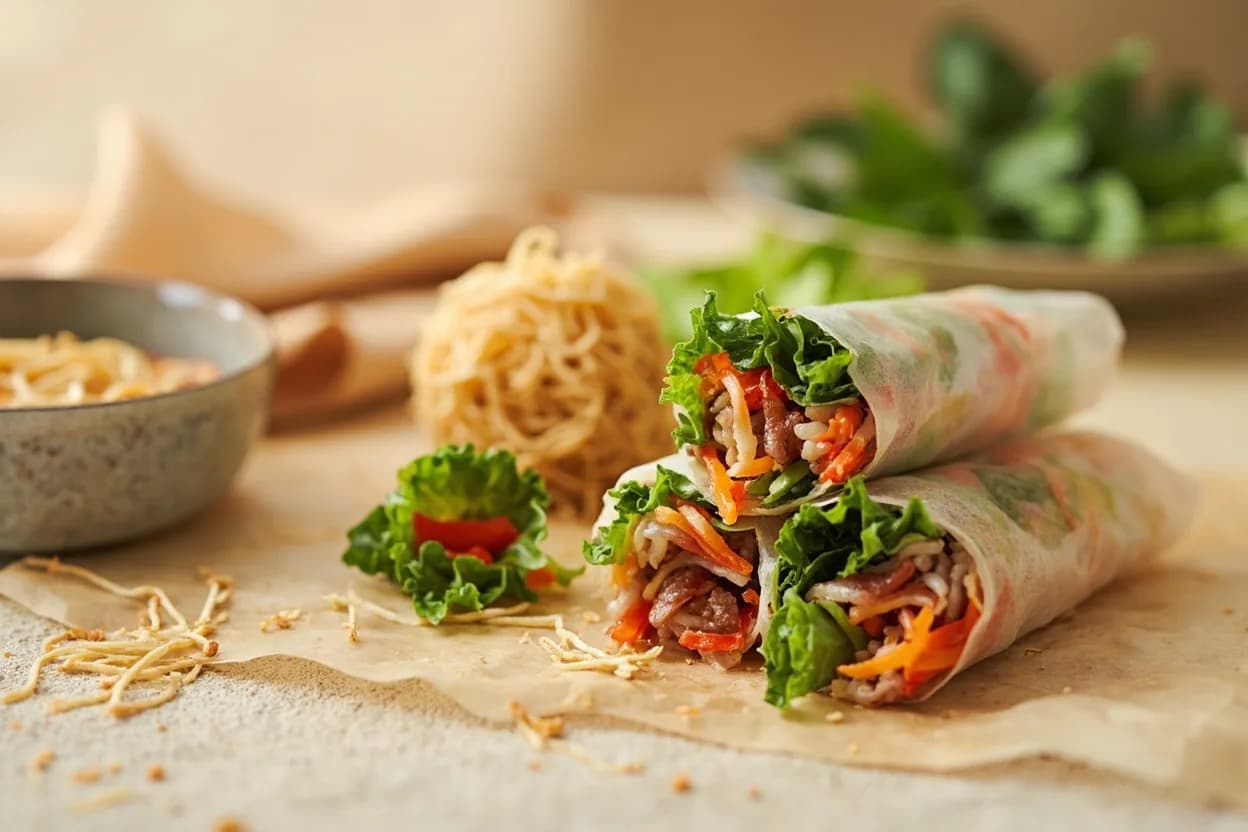
- Gỏi cuốn (fresh spring rolls)Vietnamese
The definitive nuoc cham application: rice paper rolls filled with shrimp, pork, herbs, and rice vermicelli are dunked in nuoc cham — the sauce's acidity and salt animate the neutral wrappers and fresh herbs.
- Bún (rice vermicelli noodles)Vietnamese
Cold bún dishes (bún bò xả ớt, bún thịt nướng) are served in a bowl and nuoc cham is poured over the top; the noodles absorb the salt-acid, while herbs and pickled vegetables float in it.
- Chả giò (fried spring rolls)Vietnamese
The counterpoint to the fried shell's fat and crunch — nuoc cham's acid cuts the grease and its sweetness amplifies the pork and mushroom filling.
- Grilled meats (thịt nướng)Vietnamese
Charred pork, chicken, or beef skewers are dipped or spooned with nuoc cham at the table — the lime brightens the char notes, sugar rounds the smoke.
- Bánh cuốn (steamed rice rolls)Vietnamese
The delicate steamed rice sheets need nuoc cham's salt and acid to taste like anything — it is structurally essential, not optional.
- Green papaya salad (gỏi đu đủ)Vietnamese
Shredded green papaya with herbs, peanuts, and dried shrimp is dressed in nuoc cham — the sauce provides all the seasoning; the papaya provides crunch and neutrality.
- Bánh xèo (Vietnamese sizzling crêpes)Vietnamese
Crispy rice flour crêpes stuffed with shrimp and bean sprouts are torn and wrapped in lettuce with herbs, then dunked in nuoc cham; the sauce does the seasoning work the crêpe batter doesn't.
Adventurous pairings
- Raw oysters
A few drops of nuoc cham (particularly the lime-forward Hanoi version) over raw oysters is a brilliant alternative to mignonette — the umami from fish sauce mirrors the oyster's own brininess, lime performs the same function as shallot vinegar.
Nuoc cham as a table sauce for roast chicken — particularly thighs or wings — works on the same logic as pan drippings + lemon: it seasons, brightens, and adds fermented depth in one.
- Avocado
Sliced ripe avocado dressed with nuoc cham and fresh herbs (cilantro, mint) makes a Vietnamese-inflected version of a guacamole-adjacent dish — the lime-chili-salt combination is structurally identical.
- Watermelon
Cold watermelon cubes with a drizzle of nuoc cham and torn mint — sweet-salty-sour on a hot day; a common street-food combination in Southeast Asia.
- Fried eggs
A nuoc cham pour over a fried egg on rice turns a basic plate into a fully seasoned, vibrantly acidic meal — the yolk acts like butter to soften the chili heat.
- Fish tacos
Substituting nuoc cham for the standard crema-and-lime drizzle on fish tacos adds more umami depth and a Thai-fusion heat character that works logically with the lime-cilantro base.
Tread carefully
- Cream-based saucesavoid
The acid in nuoc cham curdles cream-based preparations; and the flavors — fermented fish + dairy fat — compete rather than complement.
- Very starchy, neutral-baked goods (white bread, plain rice cakes)avoid
Without fat, protein, or vegetable mass to absorb and balance nuoc cham's salt-acid load, it overwhelms — the sauce needs substance to work against.
- Robust red meat (steak, beef short rib)avoid
The light, bright character of nuoc cham is overwhelmed by the iron-rich depth of red meat; soy-based or heavier dipping sauces (nuoc leo / peanut sauce) suit beef better.
How to use it
- Build in ratio: 1 part fish sauce : 1 part lime juice : 1 part sugar : 2–3 parts water — then adjust
- Dissolve sugar fully in the fish sauce before adding lime — undissolved sugar creates a layered sweetness that doesn't integrate
- Add garlic and chili last and let sit 10 minutes minimum before serving — raw garlic mellows; chili blooms
- For a Northern (Hanoi) style: reduce sugar, increase lime, omit garlic for some preparations
- For a Southern (Saigon) style: increase sugar, add a touch of coconut water or diluted coconut soda
- Use rice vinegar instead of lime when making in bulk — it holds longer without becoming bitter from lime pith oxidation
- Strain out garlic and chili solids for a cleaner presentation over delicate dishes (e.g., raw fish or oysters)
Appears in
Related flavours
- Fish sauce (nuoc mam)
The base ingredient — nuoc cham is diluted, balanced fish sauce; understanding the undiluted product clarifies the formula
- Lime
The acid backbone; fresh lime is non-negotiable in authentic nuoc cham — bottled juice produces a flatter, less aromatic sauce
The standard heat source — its thin skin infuses quickly without overwhelming; Thai chili is interchangeable
- Tamarind dipping sauce
Thai cousin — replaces lime with tamarind for a deeper, earthier sour note; used with similar applications
- Nuoc leo (peanut sauce)
Vietnamese parallel condiment — richer, creamier, used particularly with beef and heartier meats
References
- 1.The Food of Vietnam — Luke Nguyen (Murdoch Books, 2009)
- 2.Into the Vietnamese Kitchen — Andrea Nguyen (Ten Speed Press, 2006)
- 3.Vietnamese Home Cooking — Charles Phan (Ten Speed Press, 2012)
- 4.Pleasures of the Vietnamese Table — Mai Pham (HarperCollins, 2001)
Confidence: high
Notes
The four-flavor principle
Vietnamese cooking theory requires dishes and sauces to hit mặn (salty), chua (sour), ngọt (sweet), and cay (spicy) simultaneously — nuoc cham is the most elemental expression of this principle. A nuoc cham that tastes 'off' is almost always unbalanced in one of these four dimensions; fixing it means adding more of the missing flavor, not masking with an extra ingredient.
Regional variation
Northern Vietnamese nuoc cham (Hanoi and surroundings) is paler, lighter, less sweet, and sometimes uses rice vinegar rather than lime, with minimal or no garlic. Central Vietnamese versions (Hue) are more complex — sometimes including ginger, fried shallots, or sesame. Southern (Saigon/Ho Chi Minh City) versions are noticeably sweeter, deeper gold, and more fragrant, often with a slight coconut undertone.